
Victorian Mahogany Chairs Set
When you search for a victorian mahogany chairs set, you enter a world of robust timber and generous dining seats shaped by nineteenth-century craft.
Victorian Mahogany Chairs Set
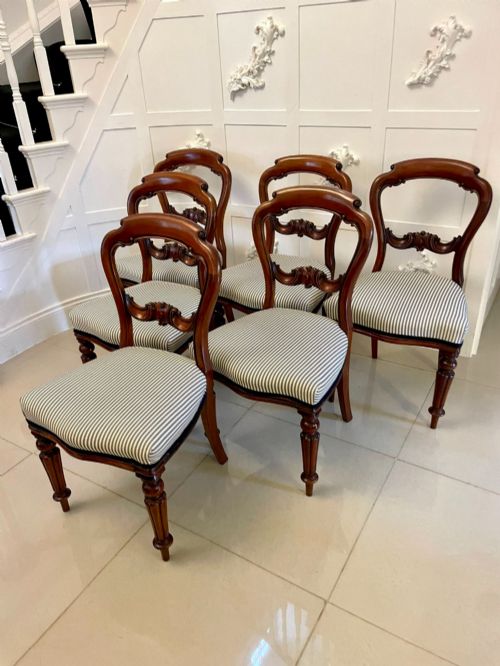
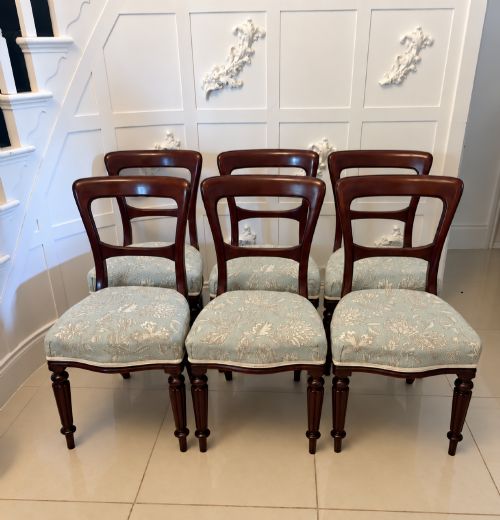
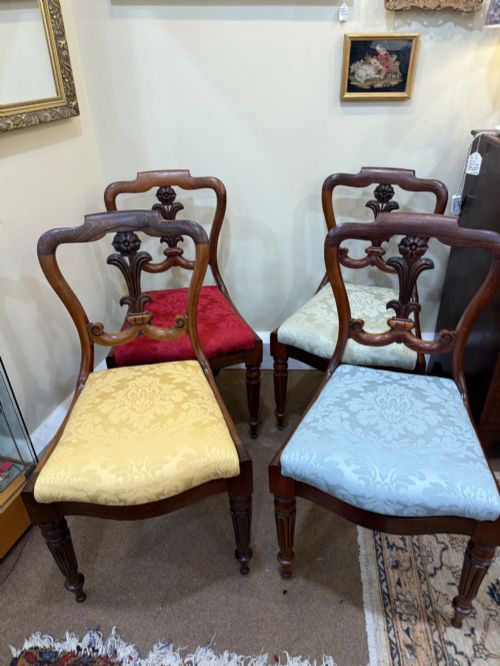
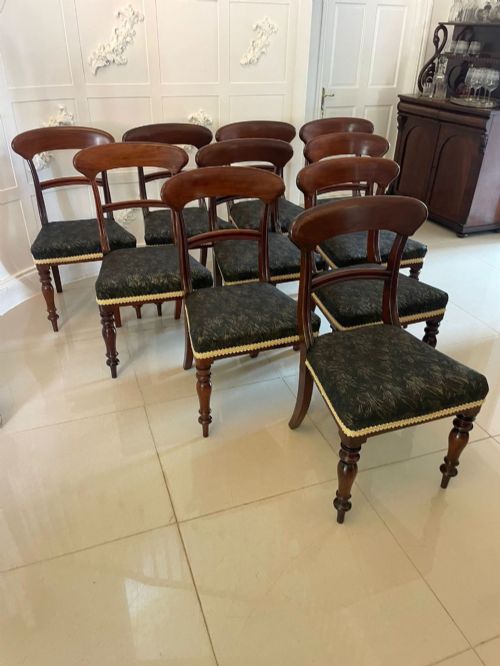
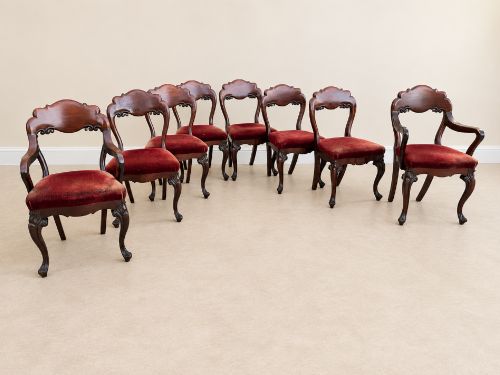
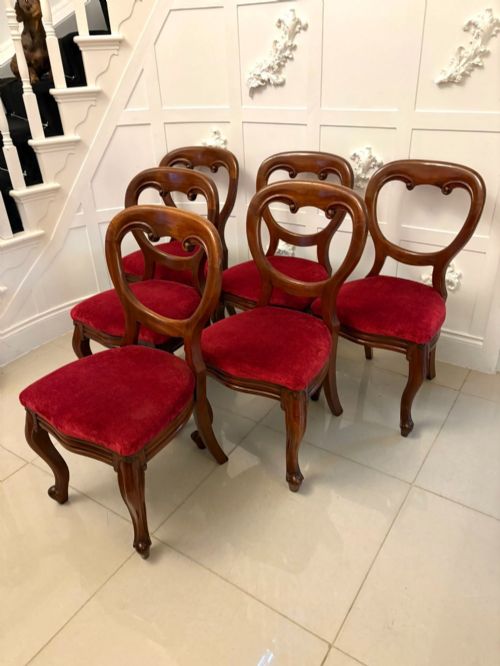
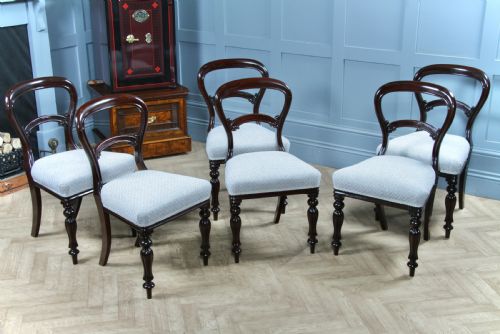
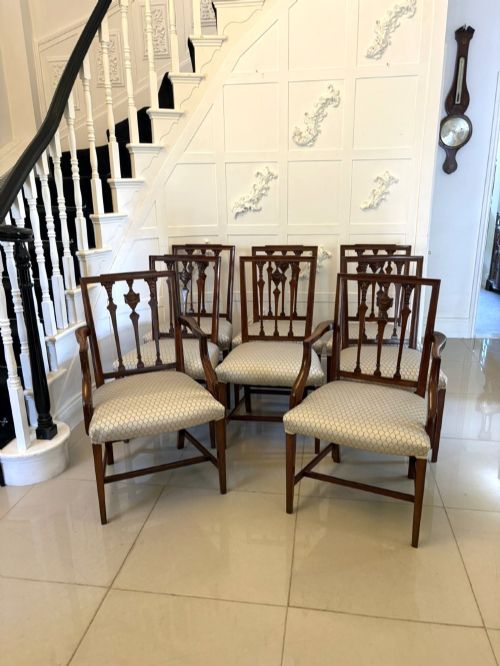
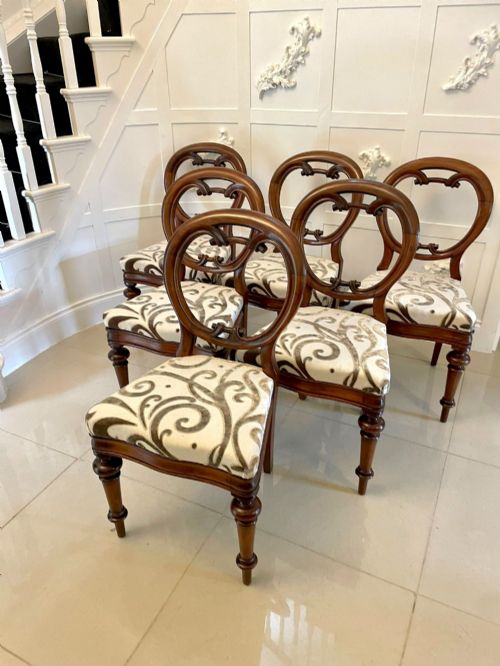
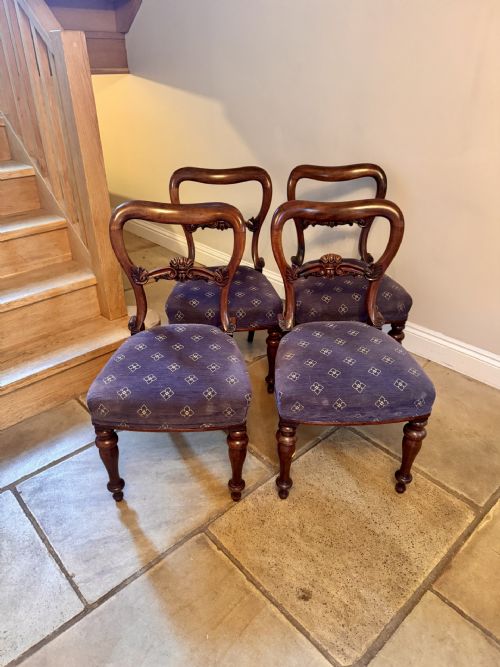
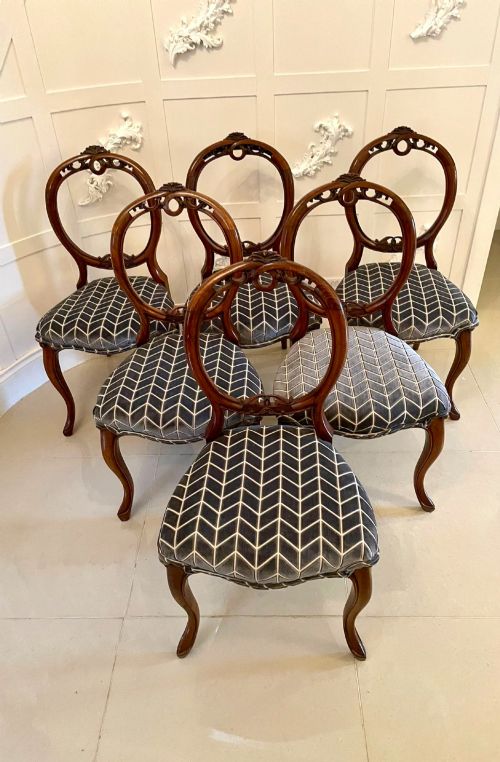
A victorian mahogany chairs set brings together multiple seats designed for dining rooms, drawing rooms, and parlours during the nineteenth century. Buyers searching this phrase most frequently encounter matched groups of four, six, or eight dining chairs featuring solid timber frames.
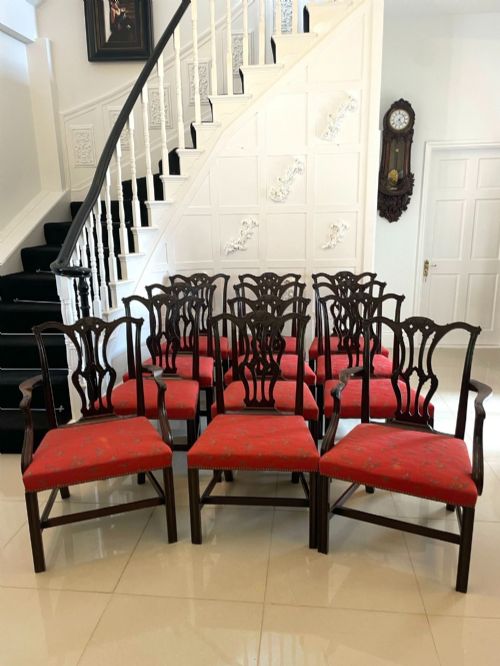
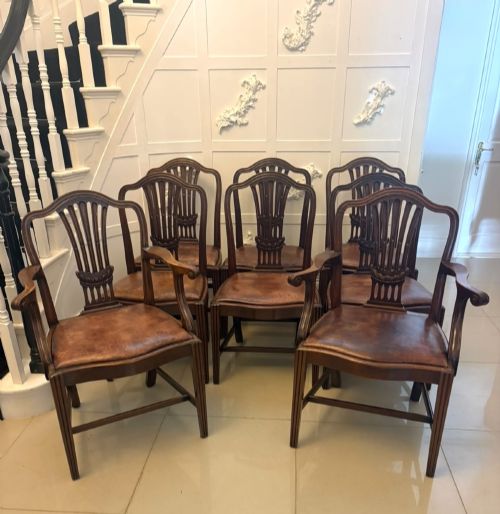
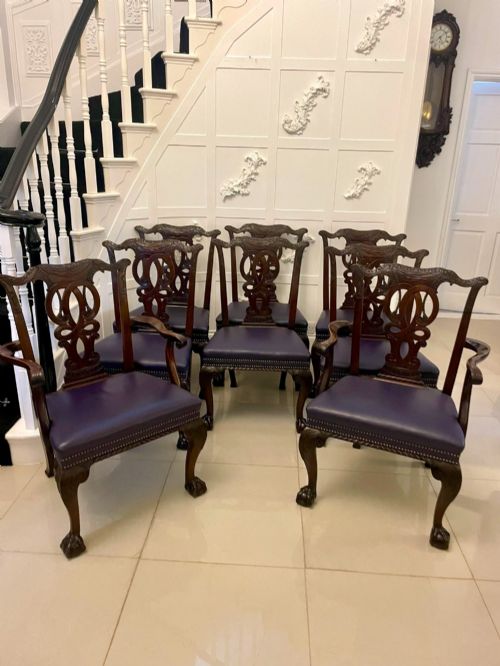
The selections span distinct regional workshops and revival aesthetics, from simple balloon backs to elaborate Chippendale and Hepplewhite reinterpretations. Alongside standard dining chairs, the category accommodates larger boardroom settings and salon suites with matching occasional seating.
Materials and construction
Cabinetmakers relied heavily on solid mahogany for its dense grain and structural strength, allowing slender back splats and carved details to support daily use. Frames were joined using traditional mortise and tenon techniques, often reinforced with corner blocks concealed beneath the seat squab.
Seating platforms utilised webbing or lopsprung foundations upholstered in horsehair, textile, velvet, or leather. Brass castors frequently appeared on the feet of heavier armchairs and carvers to ease movement across heavy carpets.
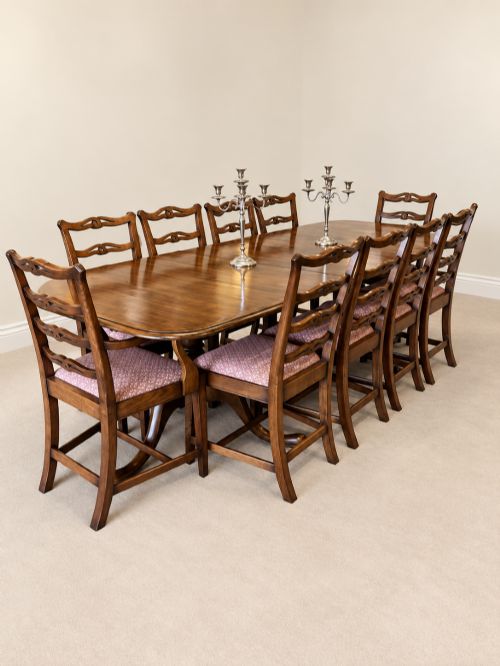
Cabinetmakers produced balloon backs, shield backs, and ladderbacks with upholstered squabs in various configurations.
Distinctions in craftsmanship
Superior sets display crisp, hand-carved ornamentation on the crest rails and knees rather than shallow machine moulding. The choice of mahogany timber dictates visual depth, with finer grain patterns and deep natural figuring elevating the overall presence.
Rigidity of the frame construction and the integrity of the original joints separate workshop masterpieces from utilitarian production. Matched sets that retain their uniform colour and original timber patination command greater regard than composite assemblies.
Warings·Gillows·Wylie and Lochhead
The Victorian Mahogany Chairs Set Glossary
- Balloon back
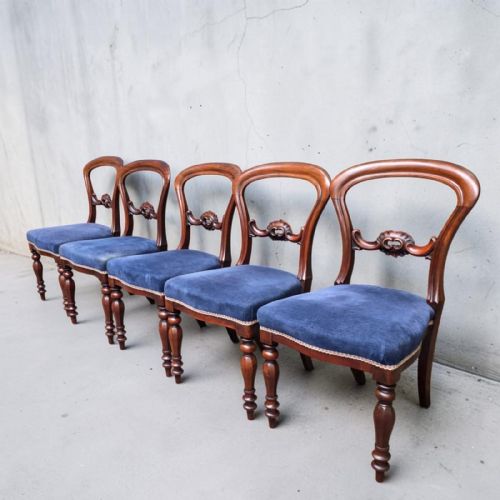
- A rounded, oval-shaped chair back resembling an inflated balloon that became popular during the mid-nineteenth century. This contour provided ergonomic lower back support while offering expansive surfaces for carved wood embellishments.
- Carver
- An armchair designed with armrests, traditionally placed at the head of a dining table or paired with matching single chairs. These larger seats often mirrored the decorative motifs of the smaller dining chairs in the set.
- Chippendale revival
- A decorative style popular in the late nineteenth century that reinterpreted eighteenth-century Chinese and Gothic fretwork designs. Makers applied these intricate carved patterns to standard dining chair frames.
- Shield back
- A spade-shaped or shield-shaped chair back associated with Hepplewhite designs revived during the Victorian era. The openwork splats inside the shield frequently incorporated carved wheat ears or drapery swags.
Victorian Mahogany Chairs Set: Frequently Asked Questions
How many chairs came in a standard set?
Nineteenth-century dining sets typically ranged from four to twelve chairs, often including two carvers with armrests alongside several single chairs. Larger configurations suited substantial Victorian dining rooms and extended family tables.
Finding sets of eight or ten remains entirely possible, though matched groups exceeding twelve chairs usually required bespoke commission or professional cabinetmaker assembly.
What is the difference between single chairs and carvers?
Single chairs feature an open frame without armrests, designed to tuck neatly beneath the dining table when not in use. Carvers incorporate matching armrests and wider proportions to accommodate the host.
Most larger sets combine six or eight singles with a pair of carvers to balance formality and practical seating arrangements.
How do I identify balloon back chairs?
Balloon back chairs feature a continuous curved top rail and vertical side stiles that sweep into an oval or loop shape resembling a balloon. This silhouette emerged around the middle of the nineteenth century.
Makers frequently decorated the centre of the oval loop with carved leaf motifs or pierced splats to add visual interest.
Should upholstery be kept original or restored?
Upholstery decisions depend on the condition of the internal webbing, horsehair stuffing, and outer fabric layers. Many surviving chairs feature later recovering that protects the structural timber beneath.
Preserving historic leather or early textiles appeals to certain collectors, while modern reupholstery in velvet or hide ensures daily utility.