
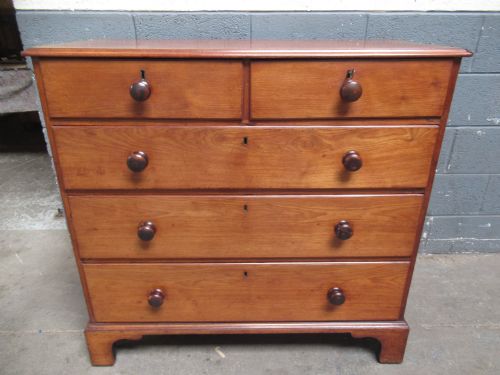
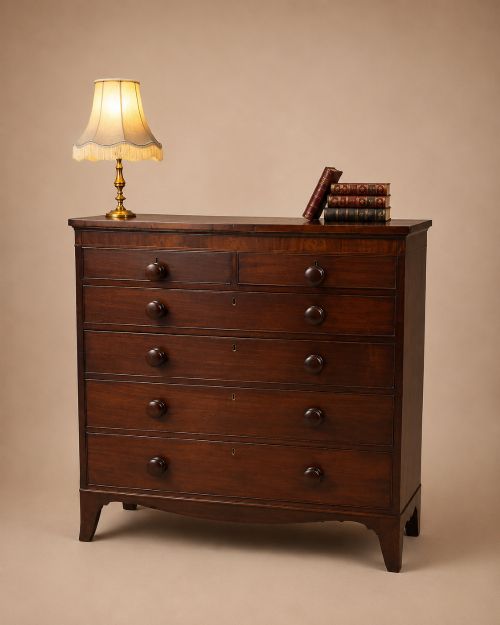
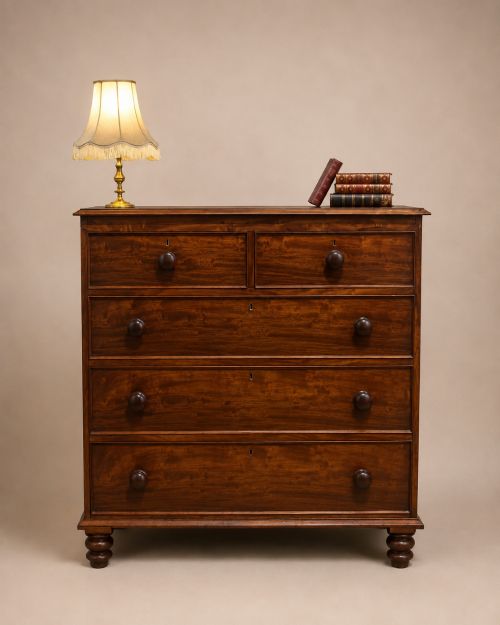
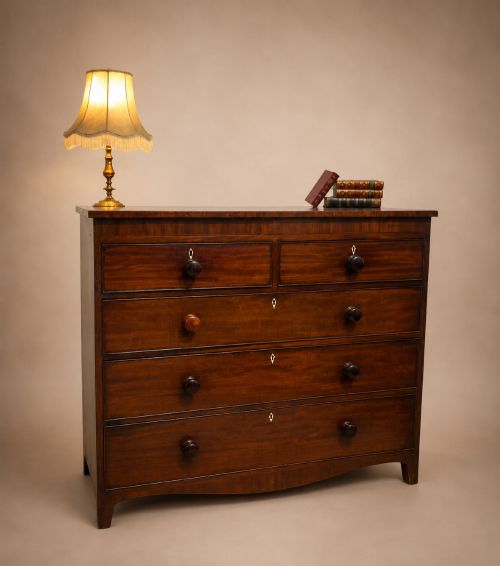
Victorian Mahogany Bedroom Dresser
A victorian mahogany bedroom dresser is a sturdy timber storage piece designed for personal quarters, offering deep drawers for daily garments.
Victorian Mahogany Bedroom Dresser
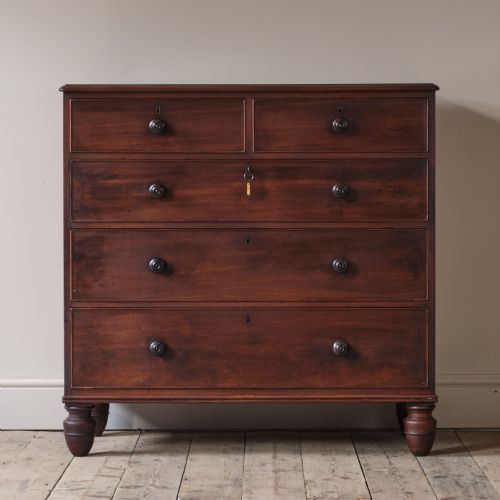
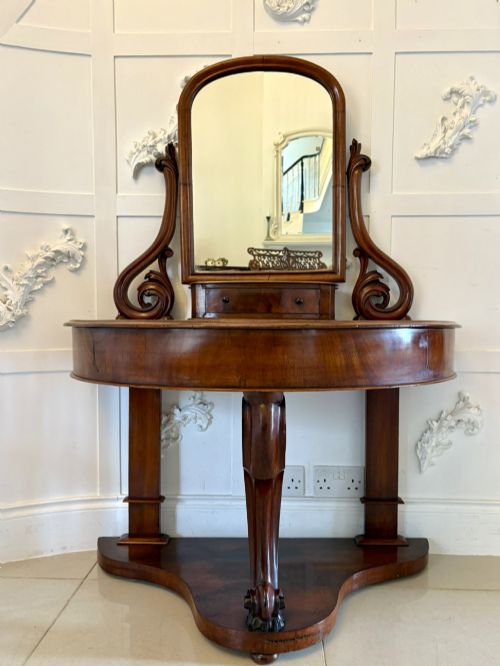
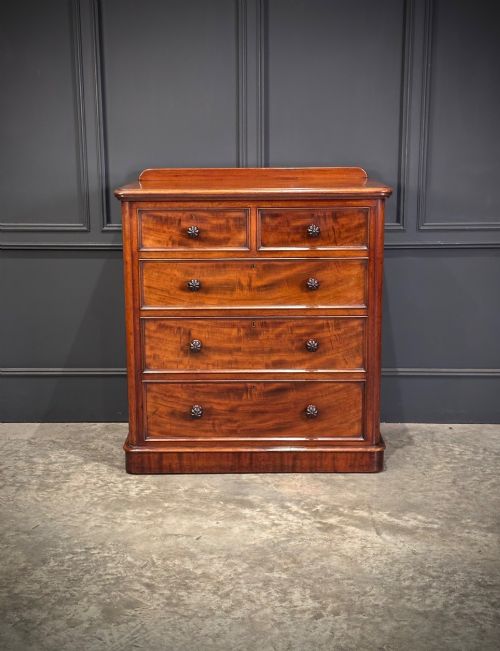
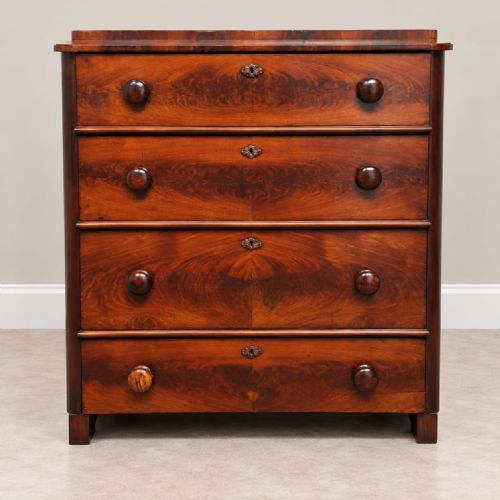
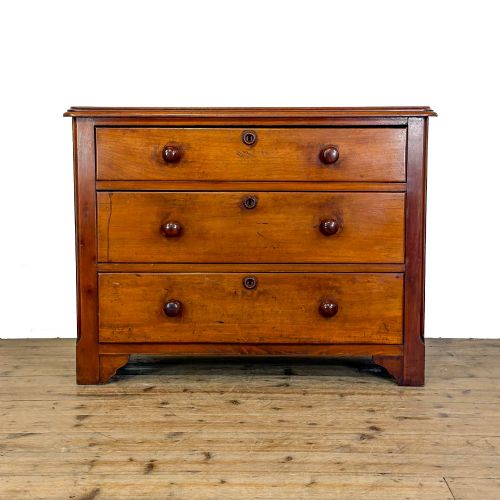
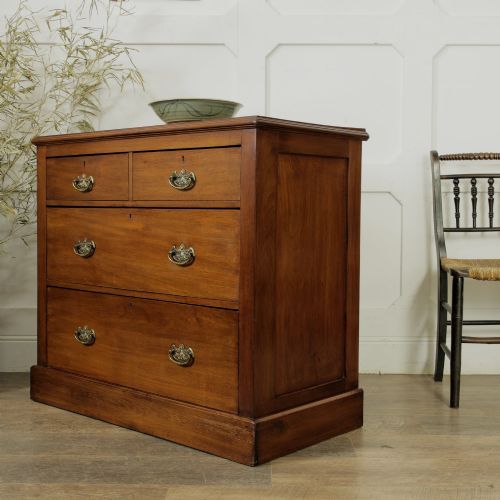
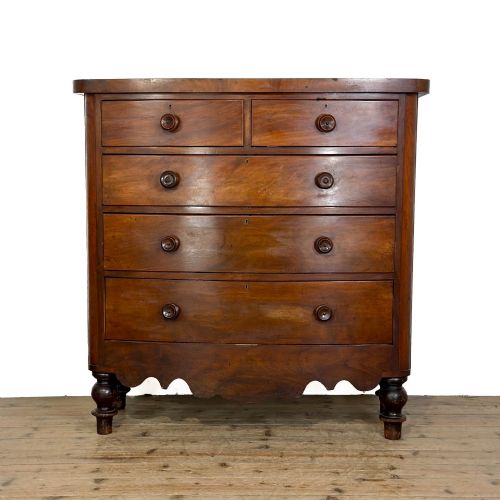
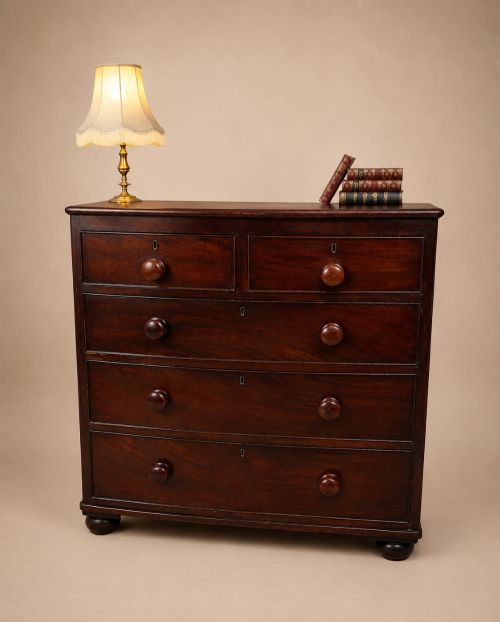
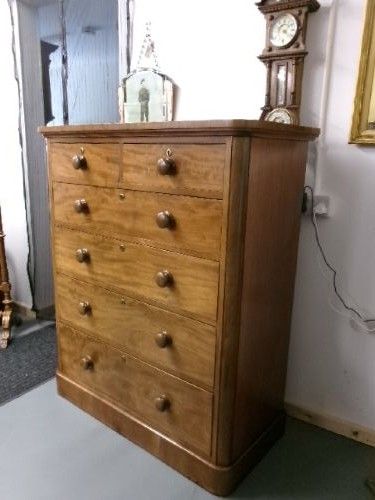
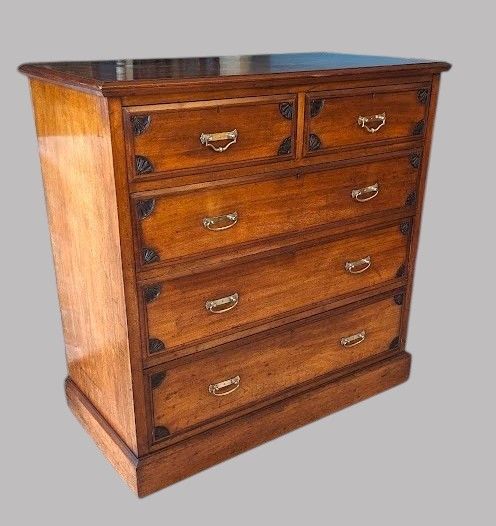
A victorian mahogany bedroom dresser typically appears as a chest of drawers or a dressing table made during the nineteenth century. Most examples on this page are upright chests, ranging from standard four-height designs to taller Scotch chests and large storage units.
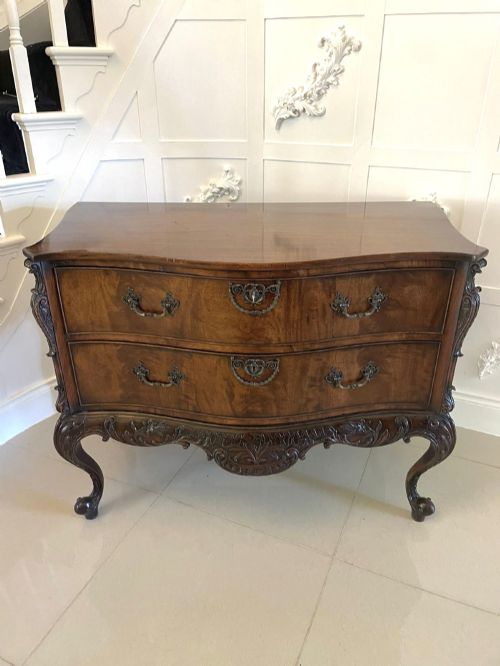
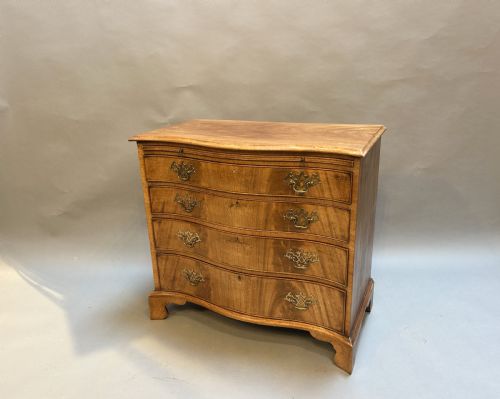
Makers shaped these forms in straight fronts, curved bow fronts, and serpentine outlines. Secondary timbers like pine and oak often appear inside the carcass and drawer linings, supporting the solid mahogany and flame mahogany veneers visible on the exterior.
Materials and Construction
Cabinet makers built these pieces using solid mahogany and flame mahogany veneer applied over secondary woods like pine and oak. Brass hardware, glass mirrors on dressing tables, and tongue and groove boarding in the internal construction provide structural stability.
Joinery methods include hand-cut dovetails for the drawers and robust framing to hold the heavy timber. Timber selection governed the visual impact, particularly where figured or flame grain was matched across the drawer fronts.
Several pieces feature a secret top drawer tucked just beneath the upper moulding, designed for keeping small valuables out of sight.
Quality and Proportion
Quality rests in the choice of timber veneer and the precision of the drawer construction. Better pieces exhibit matched flame mahogany across the drawer fronts and well-defined serpentine or bow front curves that maintain clean architectural lines.
The integrity of the secondary woods, the weight of the brass handles, and the smoothness of the drawer action separate standard utility furniture from finer workshop production. Proportion and restrained ornamentation also indicate higher workshop standards.
T & G Seddon·Druce & Co
The Victorian Mahogany Bedroom Dresser Glossary
- Bow front
- A convex curved cabinet front that projects outward in the centre. This shape requires skilled joinery to bend veneers and shape solid timber.
- Flame mahogany
- A decorative veneer figure resembling flickering flames, cut from the fork of the mahogany tree. Cabinet makers prized this timber for prominent drawer fronts.
- Scotch chest
- A tall chest of drawers originating in Scotland, typically featuring a deep top drawer over multiple smaller and larger graduated drawers. These pieces often include cushion-moulded top drawers.
- Serpentine
- A cabinet front featuring an undulating line that curves outward in the middle and inward at the sides. This complex profile denotes careful craftsmanship.
- Tongue and groove
- A method of fitting boards together where a protruding edge fits into a matching slot. This joint secures backboards and drawer bottoms.
Victorian Mahogany Bedroom Dresser: Frequently Asked Questions
What is a scotch chest?
A scotch chest is a tall nineteenth-century chest of drawers featuring a deep secret or cushion-moulded top drawer above several graduated drawers.
These pieces provide substantial vertical storage capacity and often display prominent flame mahogany veneer across the upper sections.
How do I identify a bow front?
A bow front has a rounded, convex facade that arcs outward from the corners toward the centre of the chest.
This curved design appears frequently on nineteenth-century bedroom pieces to soften the rectangular silhouette of the furniture.
What is flame mahogany?
Flame mahogany is a highly figured wood veneer cut from where branches join the main trunk, creating a pattern like flickering flames.
Cabinet makers used this decorative grain on drawer fronts to catch the light and add visual depth to the piece.
Where were secondary woods used?
Secondary woods like pine and oak appear inside the carcass, drawer linings, and backboards of these pieces.
These functional timbers provided structural strength while keeping costs down and allowing expensive mahogany veneers to face outward.