
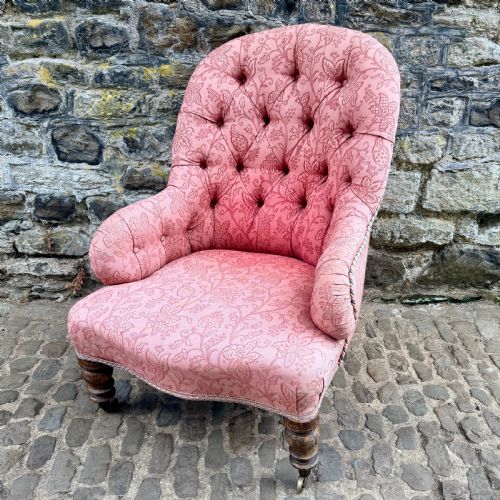
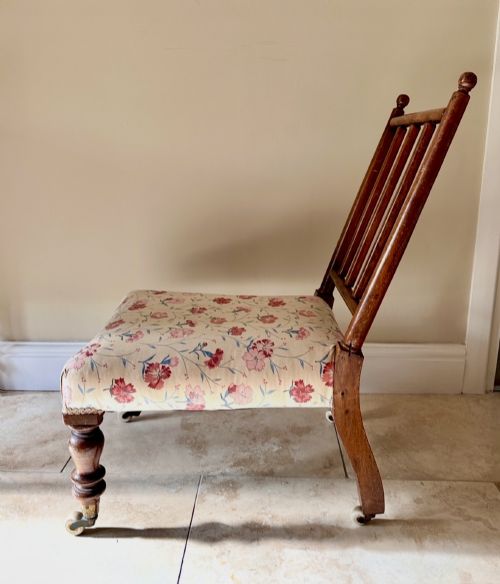
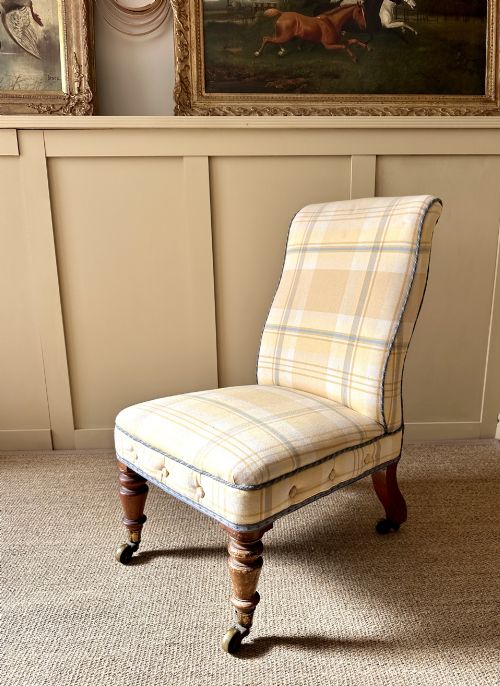
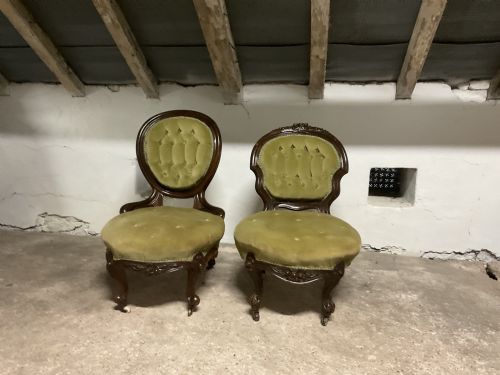
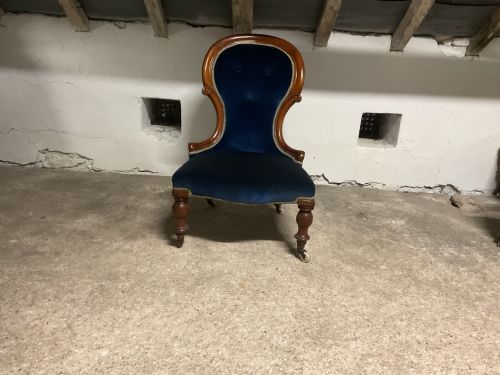
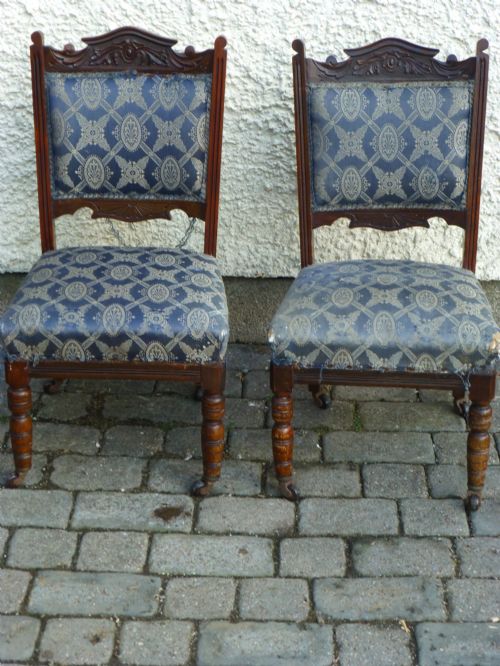
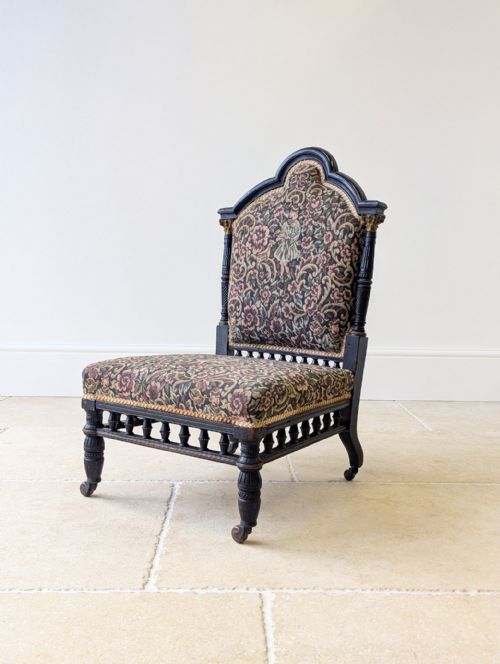
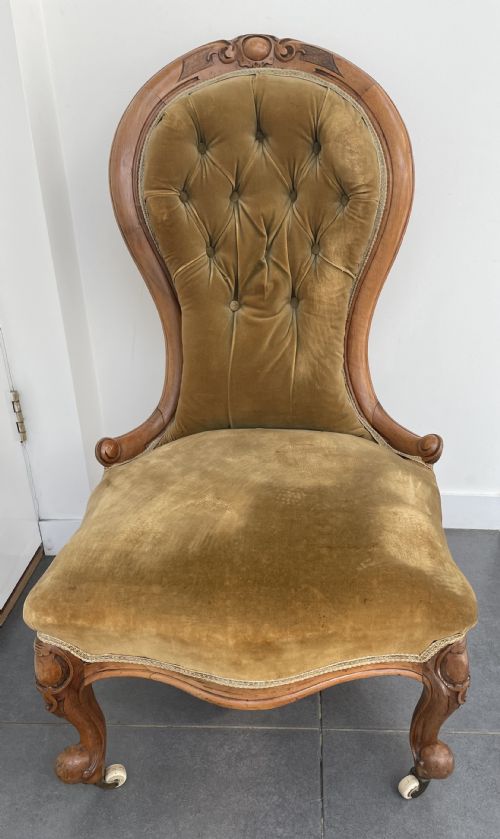
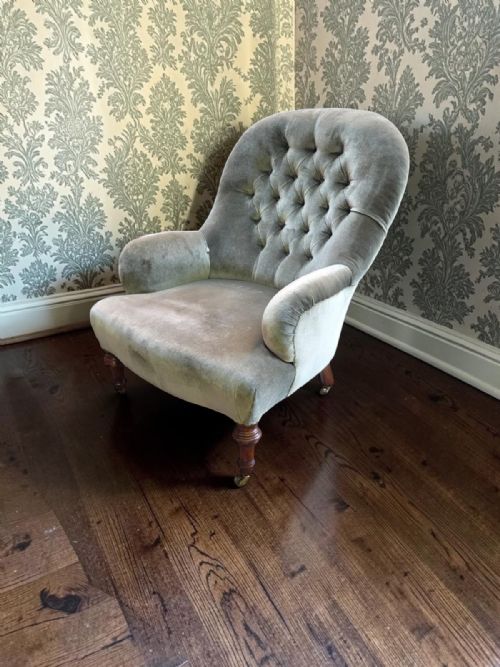
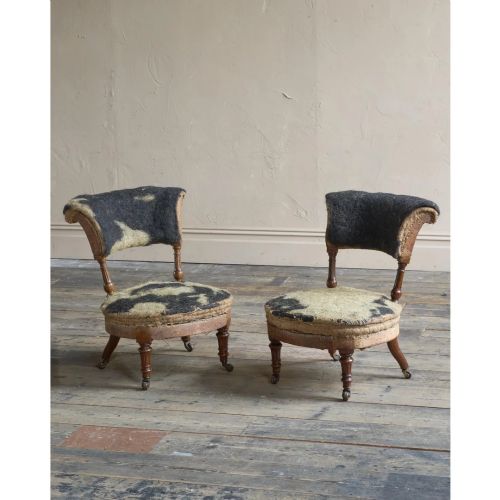
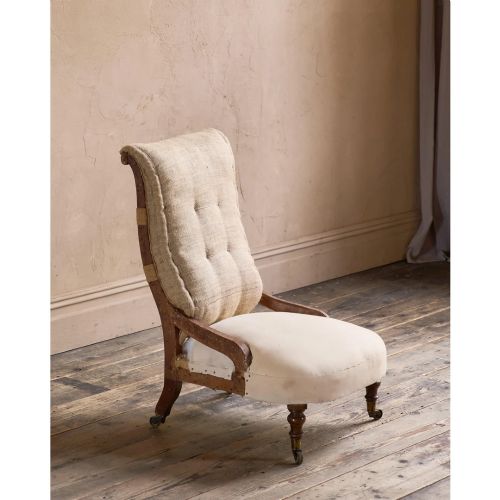
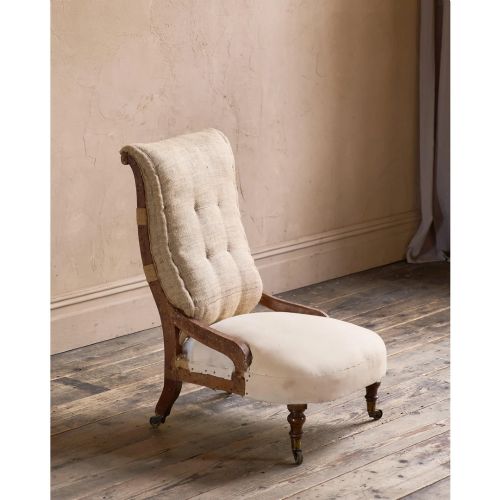
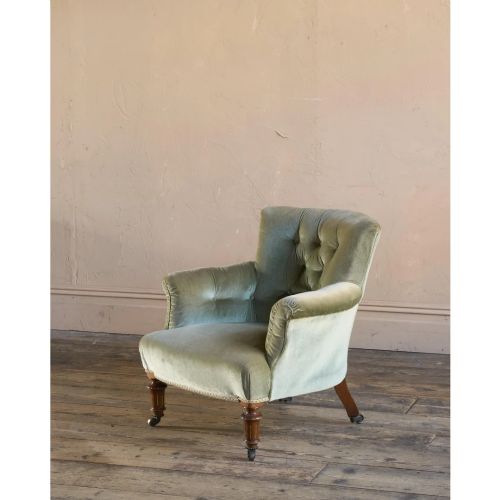
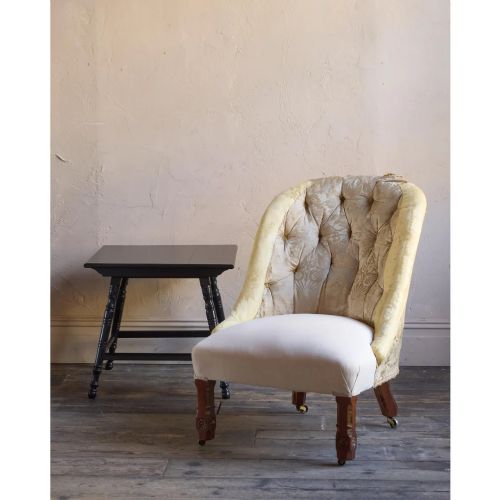
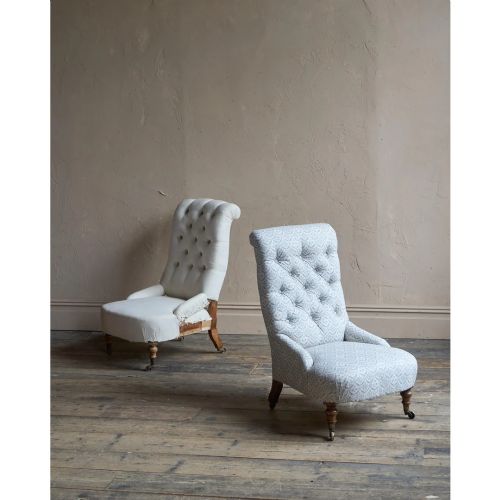
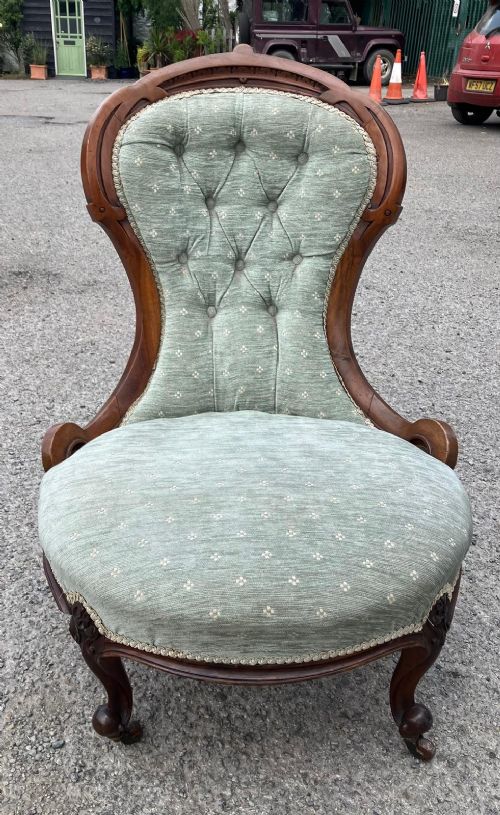
Victorian Low Slipper Chair
A victorian low slipper chair is a compact, low-seated resting seat built for comfort near a bedroom fire or dressing table.
Victorian Low Slipper Chair
A victorian low slipper chair sits low to the ground to allow someone to put on shoes or stockings with ease. These pieces emerge chiefly across the nineteenth century, spanning periods from the 1850s through to Edwardian times.
The selections here include related forms such as nursing chairs, bedroom chairs, and salon chairs alongside standard slipper chairs. Mahogany and walnut form the primary wooden frames, paired with fabric, velvet, and leather upholstery.
Makers and origins encompass English workshops, French Napoleon III designs, and Anglo-Indian variants. Many examples arrive ready for re-upholstery or wear period button-backed and fringed finishes.
Materials and construction
Makers constructed the timber frames using hardwoods like mahogany, walnut, rosewood, and occasional ebonised wood or birds-eye maple. Brass and metal components appear on castors or structural supports, whilst ceramic details sometimes feature on castors.
Upholstery techniques relied on deep buttoning, sprung seats, and traditional stuffing secured with fabrics such as velvet, tapestry, and leather. Carved details on walnut and giltwood frames reflect prevailing styles including the Aesthetic Movement and Louis XVI influence.
Listings feature walnut, mahogany, rosewood, and birds-eye maple alongside textiles including velvet, leather, and tapestry.
Judging quality
Quality rests upon the crispness of the timber carving and the architectural proportion of the low frame. Finer pieces demonstrate robust joinery in walnut or mahogany rather than softer secondary woods.
The distinction between standard output and superior work often lies in the maker's hand, seen in celebrated workshop stamps like Gillows or Howard and Sons. Intricacy in button-backed upholstery and the integrity of the original wood grain elevate certain examples above utility items.
Howard and Sons·Gillows
The Victorian Low Slipper Chair Glossary
- Slipper chair
- A low-seated upholstered chair designed originally for a bedroom or dressing room without restrictive armrests. This profile made changing footwear straightforward.
- Nursing chair
- A low chair with an upholstered seat and back intended for holding an infant or nursing. They share many physical characteristics with slipper chairs.
- Button back
- An upholstery method where depressions are created by pulling tufting buttons deep into the padding. This secures the filling in a geometric pattern.
- Ebonised
- Wood finished with a black stain or paint to imitate ebony. This treatment grew particularly popular during the Aesthetic Movement.
- Giltwood
- Timber coated with a thin layer of gold leaf or gold paint. It appears on decorative frames from the nineteenth century.
Victorian Low Slipper Chair: Frequently Asked Questions
What is a victorian low slipper chair used for?
These low seats were originally kept in bedrooms or dressing rooms to assist with putting on stockings and footwear.
Today, their compact proportions make them suitable as accent seating in living rooms or bedrooms where space is limited.
How do I date a victorian low slipper chair?
Dating relies on observing the timber types, turning details, and stylistic clues such as Aesthetic Movement ebonising or heavy buttoning. Mid-nineteenth-century examples often utilise walnut or mahogany frames with specific Victorian scrollwork.
Examining any underlying construction methods or stamps helps narrow down the decade of manufacture between the 1850s and the end of the century.
Are slipper chairs and nursing chairs the same?
They share very similar low profiles, but nursing chairs traditionally offered specific support for women tending to infants. Slipper chairs focused more on personal dressing tasks.
In modern descriptions, the terms frequently overlap due to their nearly identical dimensions and low-slung seating.
Can I use antique velvet on a daily basis?
Original nineteenth-century textiles like old velvet or tapestry can be fragile after generations of use. Many buyers choose to display them carefully or have them sympathetically recovered in matching period fabrics.
Modern reproduction textiles or Robert Kime fabrics are often selected to preserve the aesthetic while providing practical durability.