

Victorian Lounging Chairs
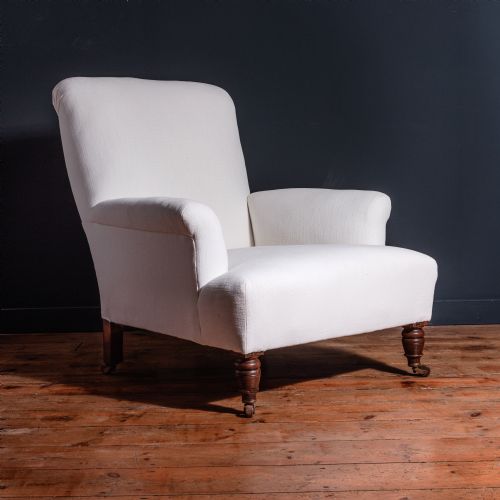
Victorian lounging chairs offer generous, low-slung seating designed for repose, combining deep upholstery with robust timber frames.
Victorian Lounging Chairs
When searching for victorian lounging chairs, buyers encounter a diverse selection of seating forms built for comfort, ranging from low armchairs to chaise longues and daybeds. These pieces date principally from the nineteenth century, encompassing early, mid, and late Victorian eras alongside related regional styles like English country house and Napoleon III.
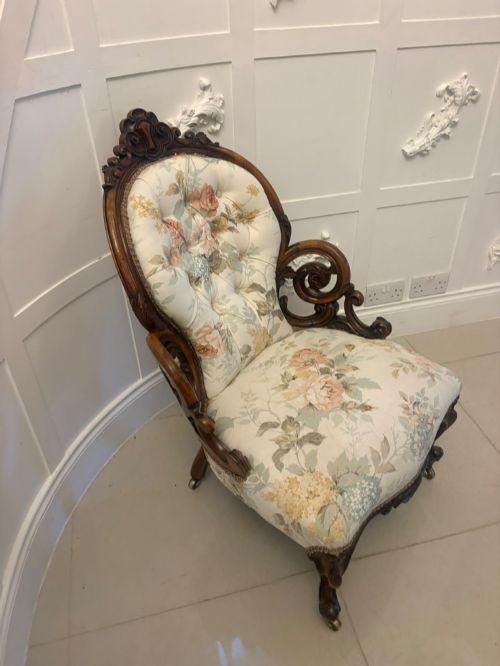
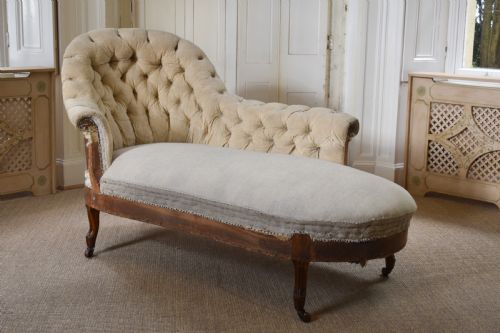
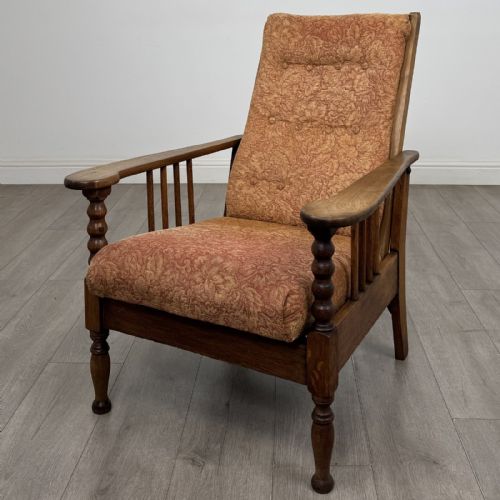
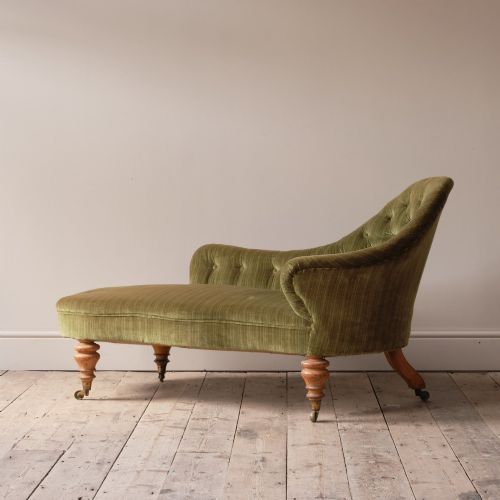
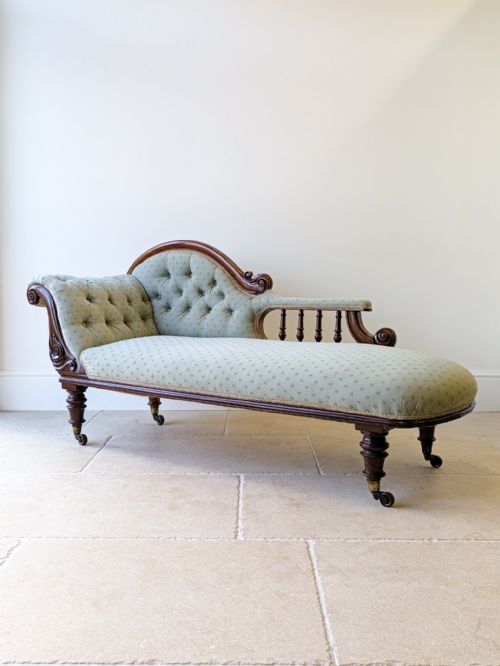
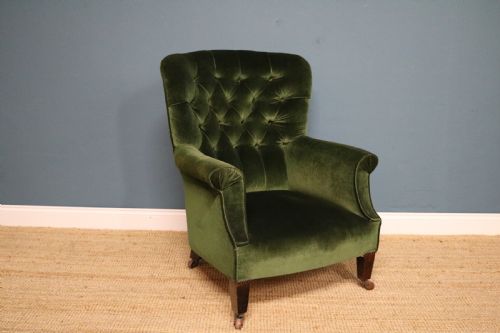
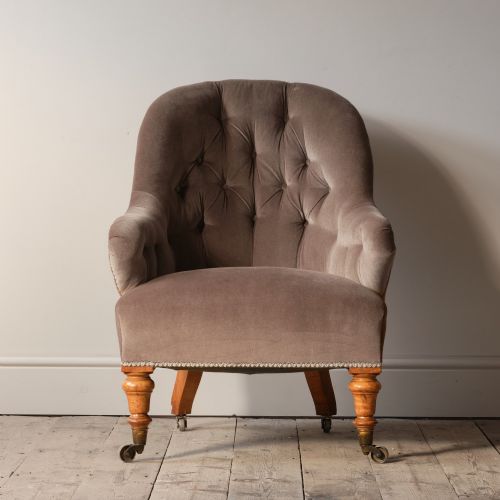
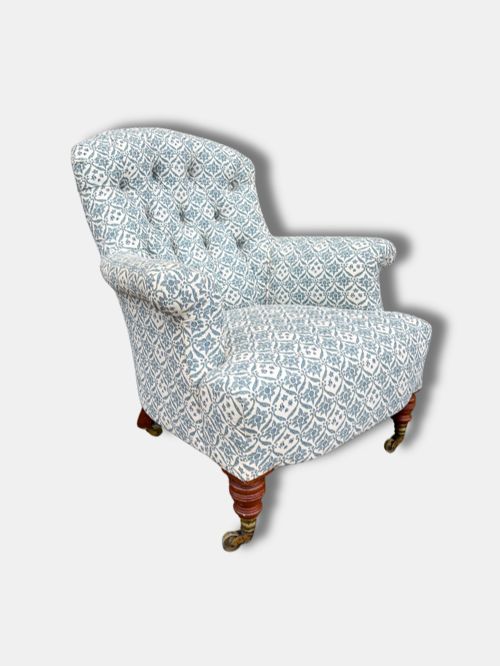
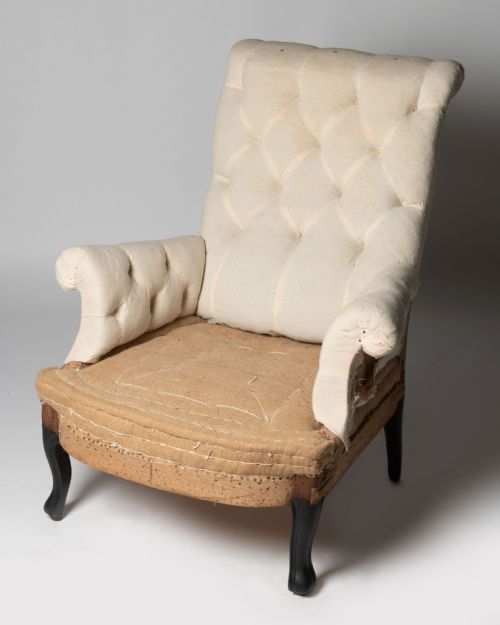
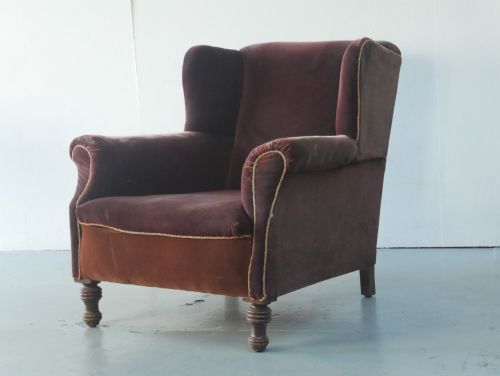
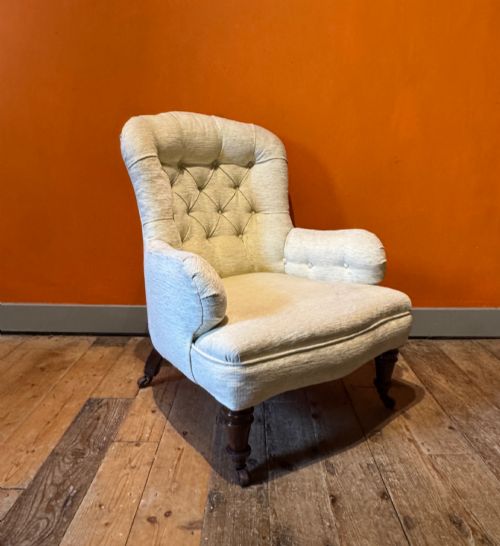
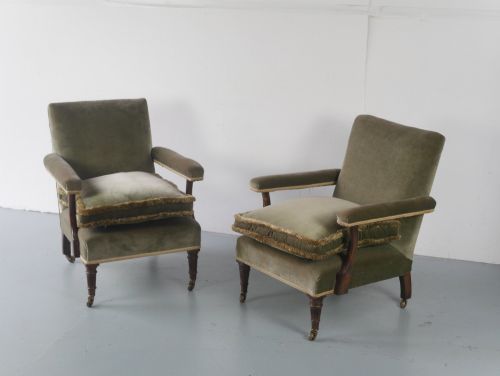
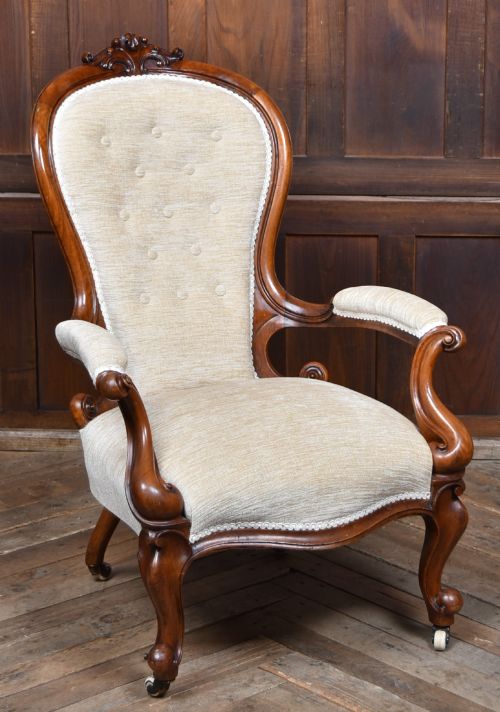
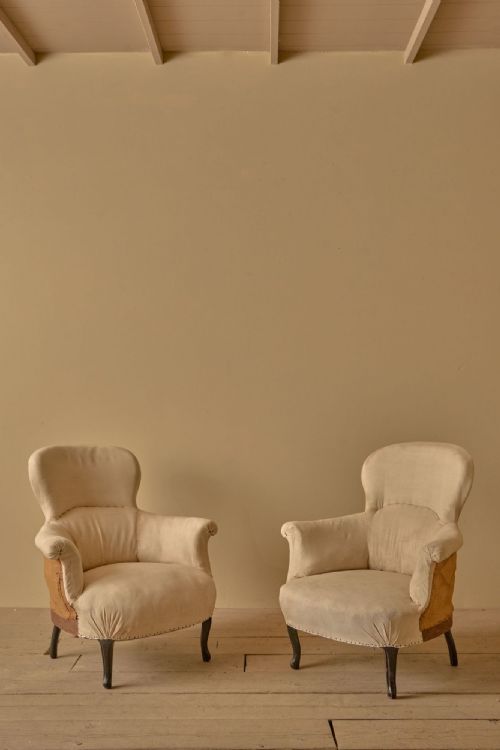
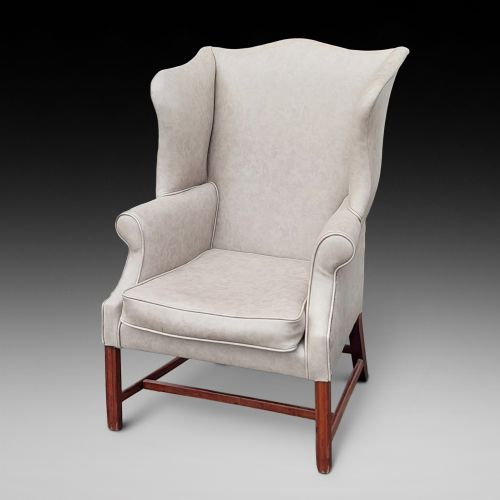
The most common examples on this page are armchairs featuring button-backed upholstery, spoon backs, or high backs, often accompanied by chaise longues and daybeds. Timber frames in mahogany, walnut, oak, and rosewood support heavy padding covered in velvet, fabric, calico, or hessian, reflecting domestic relaxation rooms of the period.
Makers and workshops across Britain and France produced these seats to suit various domestic settings, from formal libraries to informal bedrooms and drawing rooms. The selection reflects a heavy reliance on sturdy wood construction paired with sprung seats and deep padding intended for sustained leisure.
Materials and construction methods
Makers constructed the structural frames of these seats using dense hardwoods such as mahogany, walnut, oak, and rosewood, which provided the necessary strength to support heavy internal springing. Turning, carving, and polishing shaped the exposed wooden arms, legs, and crest rails to match prevailing aesthetic movements like Arts and Crafts or Regency.
Upholstery techniques relied on webbing and coiled metal springs secured within the seat base, layered with stuffing and covered in durable textiles including velvet, brocade, calico, and hessian. Brass castors frequently fitted to the feet allowed heavy chairs and chaise longues to move smoothly across carpets and floorboards.
Victorian Lounging Chairs Retail Price Guide 2026
Typical asking prices for victorian lounging chairs among the pieces listed under this phrase on Sellingantiques today, from the lower quarter to the upper quarter. They describe what is for sale here now, not the wider market.
Cast iron made a surprise appearance in nineteenth-century daybeds, giving homeowners a surprisingly heavy piece of garden furniture that stayed put.
Distinctions in craftsmanship
The standard of timber carving and the weight of the underlying wood frame set finer examples apart from standard production pieces. Dense hardwoods like mahogany and walnut show crisper carved details on show-wood frames compared to simpler turned or plain supports.
Interior construction depth and the precision of hand-tied springs dictate how well a chair maintains its supportive shape over decades of use. Superior upholstery work involves careful pleating, deep buttoning, and the use of quality heavy-grade fabrics that withstand physical wear.
Strahan and Co Dublin·Howard and Sons
The Victorian Lounging Chairs Glossary
- Chaise longue
- An elongated upholstered chair designed for reclining, combining a seat with a backrest and sometimes a single arm.
- Button back
- An upholstery style where depressions are formed in the padding by pulling buttons deep into the stuffing at regular intervals.
- Bergere
- An enclosed armchair featuring woven cane panels on the back and sides within an exposed wooden frame.
- Spoon back
- A padded chair back shaped like the bowl of a spoon, curving inward to fit the contour of the sitter's spine.
- Brass castor
- A small swiveling wheel attached to the base of furniture legs, often made of brass to ease movement.
Victorian Lounging Chairs: Frequently Asked Questions
What defines a Victorian lounging chair?
These pieces comprise heavily padded armchairs, daybeds, and chaise longues engineered specifically for relaxation and leisure during the nineteenth century. They generally feature sprung seats, deep upholstery, and exposed wooden frames.
Makers utilised durable hardwoods like mahogany and walnut, covering the frames in materials such as velvet, wool, and patterned fabric. Their generous proportions distinguish them from straight-backed dining or parlour seating.
Where were these chairs placed?
Homeowners typically positioned these seats in drawing rooms, libraries, bedrooms, and country house morning rooms where family members gathered to read or rest. Chaise longues and daybeds suited private chambers or informal sitting spaces.
Smaller occasional tub chairs and bedroom chairs found places in dressing rooms and parlours, while heavy library armchairs occupied studies alongside bookcases.
How do I care for antique upholstery?
Maintaining fabric upholstery requires regular gentle vacuuming using a soft brush attachment to remove dust and prevent fibre degradation. Direct sunlight should be avoided to prevent fading on delicate velvet and woven textiles.
Exposed wooden frames benefit from occasional dusting with a dry cloth and sparing application of appropriate wax polish to nourish the antique timber surface.
How can I tell the period?
Early Victorian examples often feature heavy mahogany construction with simpler curved lines, whereas later nineteenth-century pieces embrace styles like Arts and Crafts oak or Napoleon III buttoned upholstery. Details such as turned legs, cast brass fittings, and wood choice offer chronological clues.
Stamps or paper labels left by makers on the wooden frame or webbing can also confirm precise dates and workshop origins.