
Victorian Log Scuttle
When you search for a victorian log scuttle, you are looking for a practical hearthside vessel made to hold heavy fuel beside the fire.
Victorian Log Scuttle
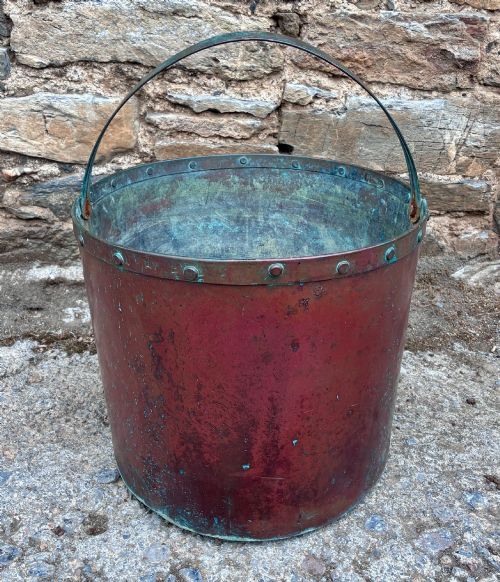
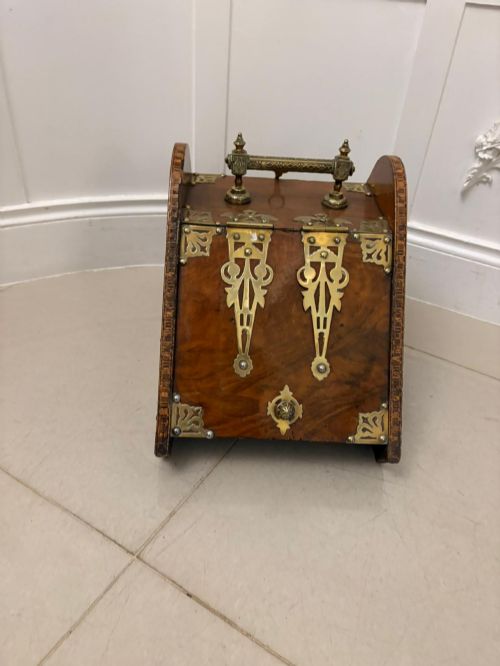
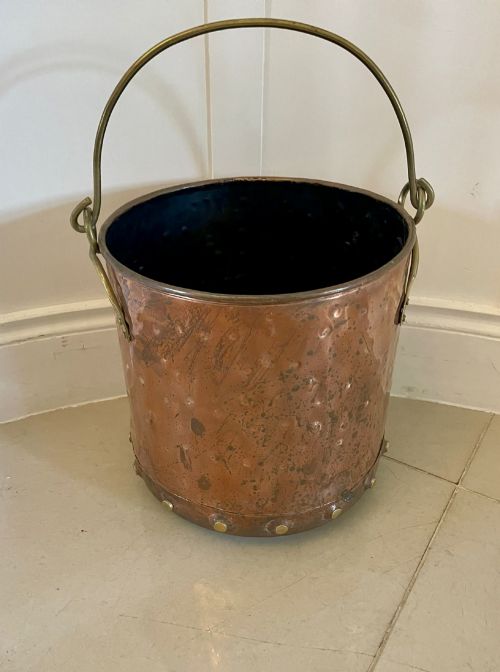
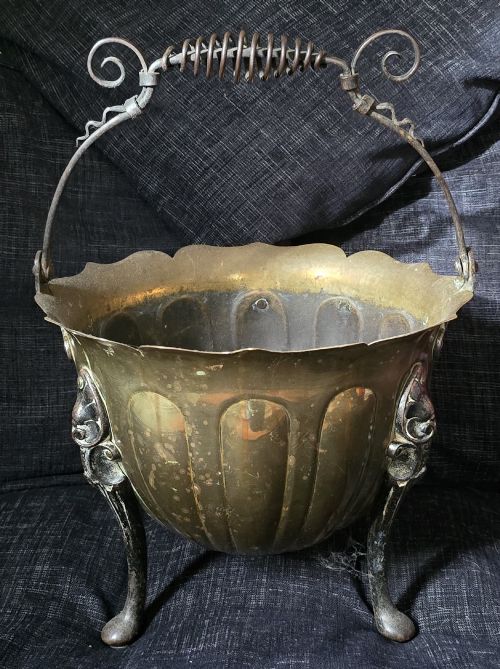
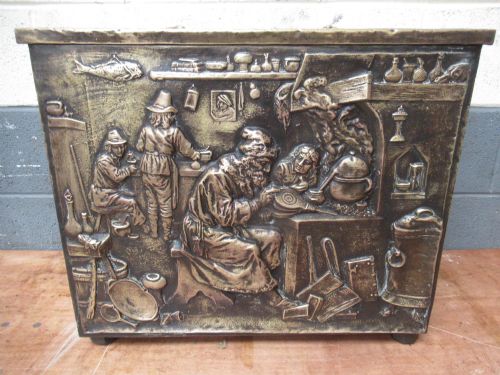
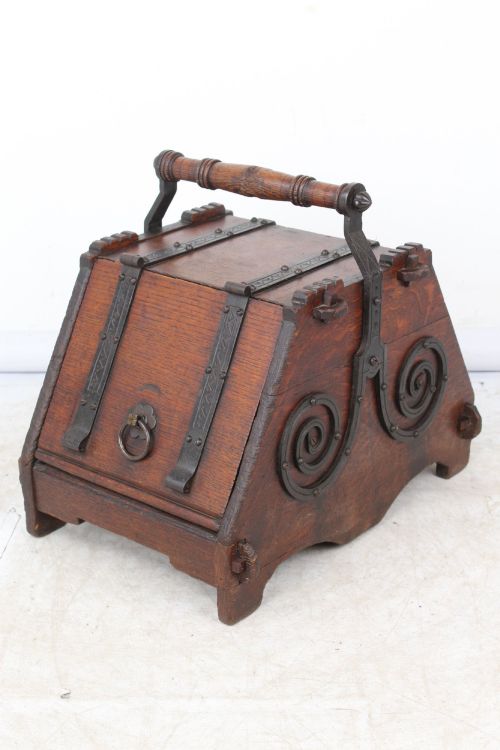
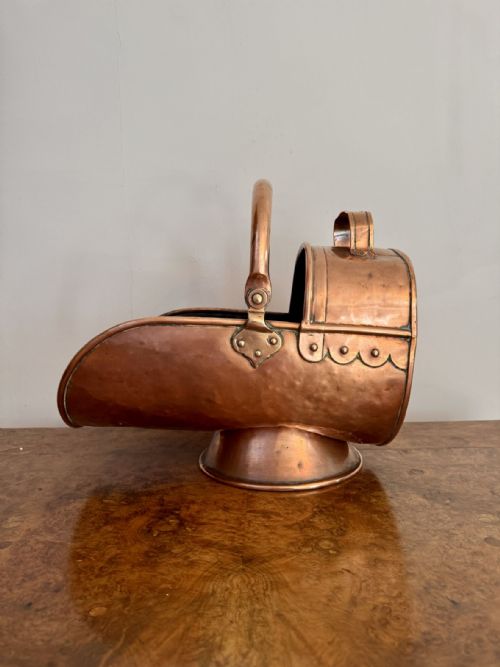
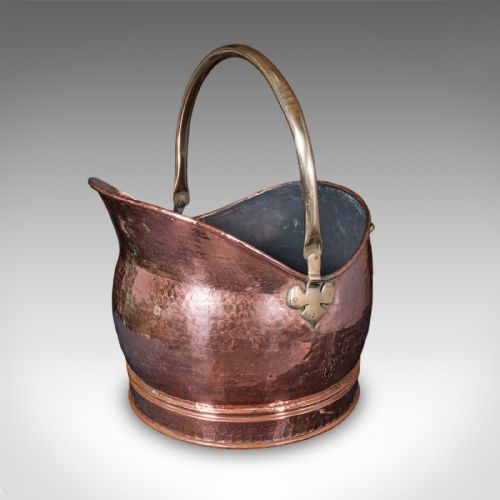
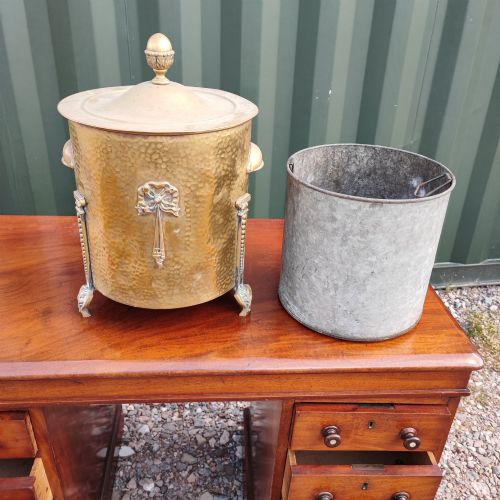
A victorian log scuttle is a fireside accessory designed to store and carry logs, coal, or peat for an open hearth. These pieces appear in forms ranging from traditional helmet-shaped buckets to heavy wooden boxes and coopered bins.
Most examples found on this page date from the nineteenth century and the early twentieth century. Makers constructed them to sit permanently by the fireplace, combining utility with decorative metalwork or timber.
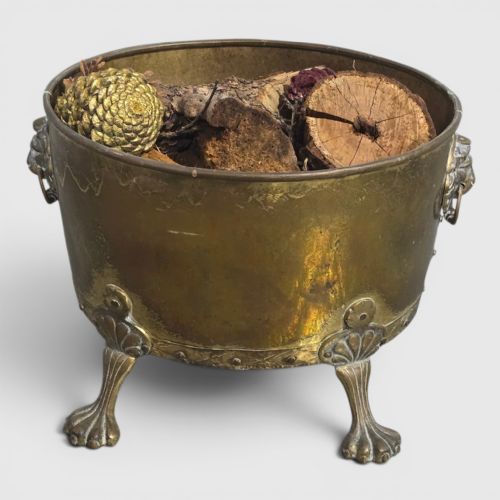
The objects serve as both functional fuel stores and decorative hearth accessories. Many examples bridge multiple domestic roles, functioning interchangeably as planters, jardinières, or waste bins.
Materials and construction
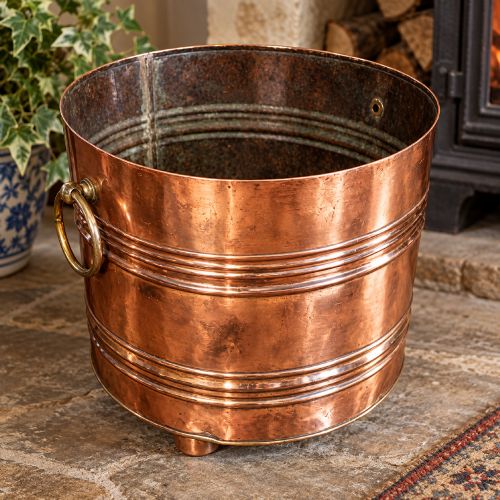
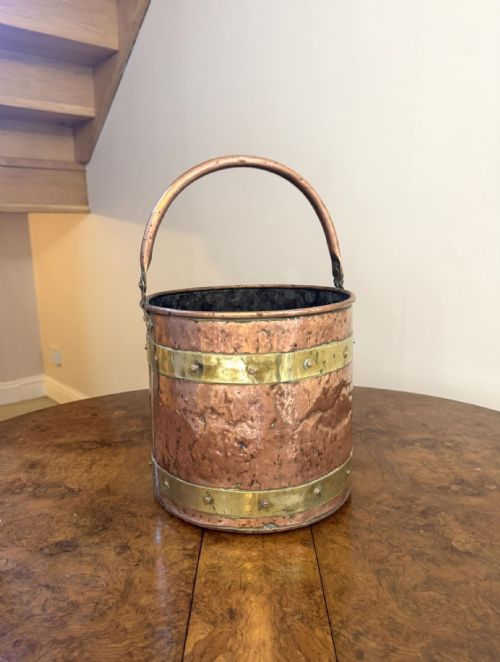
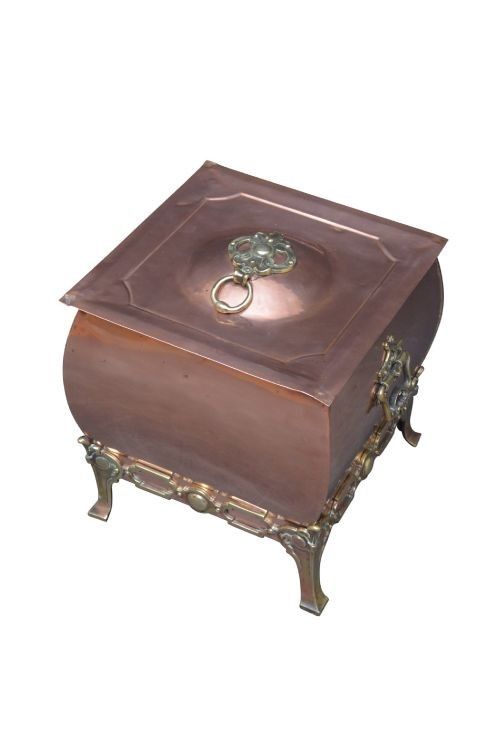
Makers built these vessels using durable metals and sturdy timbers suited to heavy domestic service. Brass and copper feature prominently, often hammered, riveted, or banded to reinforce the bodies against dense loads of wood and coal.
Wooden examples rely on traditional joinery, including coopered oak staves bound with metal hoops, alongside solid mahogany and inlaid rosewood boxes. Wrought iron and standard iron appear in handles and structural fastenings.
Artisan workshops integrated decorative movements into the metalwork, applying Arts and Crafts, Gothic Revival, and Art Nouveau motifs directly to the surface of the copper and brass bodies.
Several heavy metal buckets spent their youth hauling coal before retiring to a peaceful life holding ferns.
Quality and manufacture
Quality rests in the weight of the metal gauge, the tightness of the cooperage, and the firmness of the riveting. Superior pieces feature thick, hand-finished copper or heavy brass sheets that resist denting under the weight of heavy fuel.
Artisanal detail separates ordinary production pieces from finer items. Look for hand-hammered texturing, crisp embossing, and the inclusion of original matching shovels or scoops designed specifically for the bin.
The integrity of internal linings and structural handles dictates daily usability. Well-made examples maintain rigid form and balance when lifted, even when filled completely with logs or coal.
Henry Loveridge·Christopher Dresser·Petrus Ramus·Henry Loveridge Co
The Victorian Log Scuttle Glossary
- Purdonium
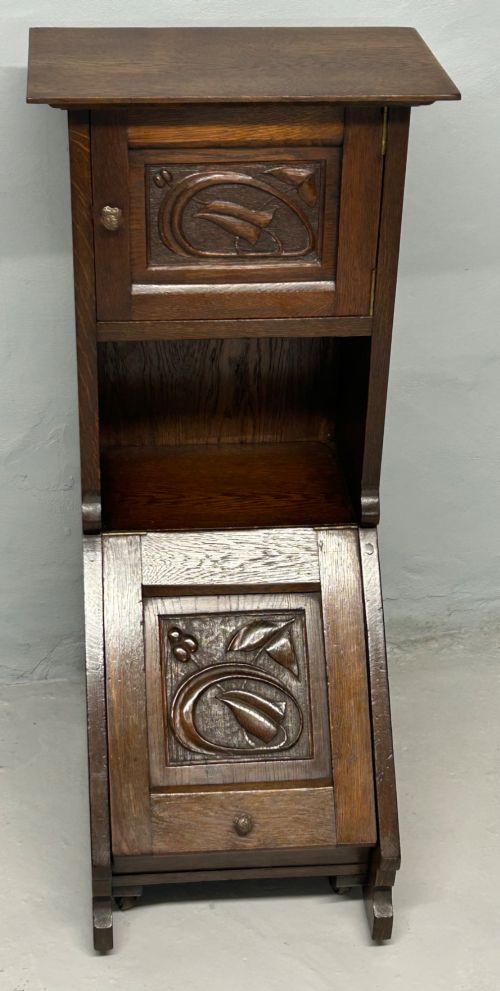
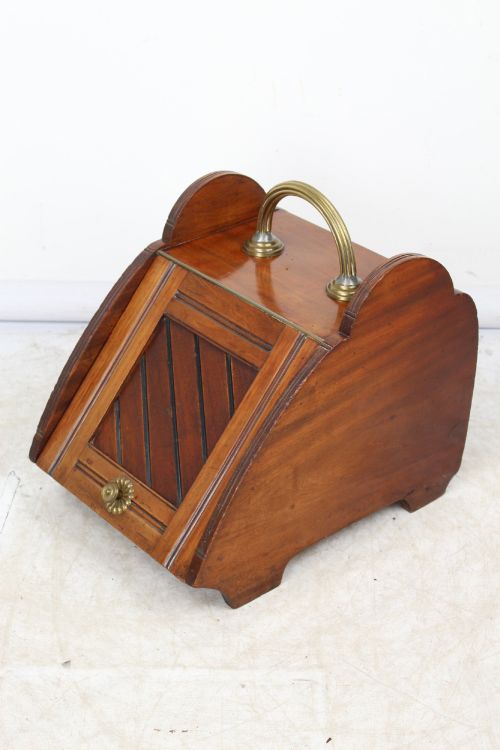
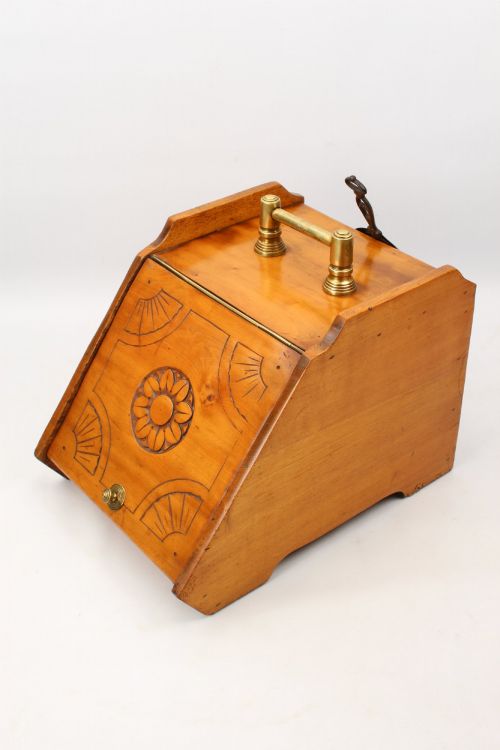
- A specialised coal box featuring a sloping front or a tipping mechanism to dispense fuel easily. These wooden containers often included an interior metal liner.
- Helmet scuttle
- A bucket shaped with a high flared back and a pointed lip resembling a classical helmet, designed to pour coal cleanly onto the fire. They typically feature a swinging handle above.
- Coopered
- A method of construction where tapered wooden staves are joined side by side and bound with metal hoops, much like a traditional water barrel. This technique provided great strength for oak log bins.
- Jardinière
- An ornamental pot or receptacle designed to hold growing plants or flowers. Many metal coal scuttles share this exact form and serve this decorative purpose today.
- Riveted
- Joined together using metal bolts hammered flat at the ends to secure overlapping plates. This method ensured strong, permanent seams on heavy copper and brass buckets.
Victorian Log Scuttle: Frequently Asked Questions
What is a purdonium?
A purdonium is a dedicated wooden coal box, usually fitted with a hinged lid and a sloping front or an internal tipping scuttle. These enclosed boxes kept domestic coal stores tidy and out of sight beside the hearth.
Victorian homes used them extensively in formal reception rooms. They frequently incorporated metal liners to catch dust and small coal fragments.
How do you clean antique brass?
Antique brass requires gentle cleaning to preserve the natural patina accumulated over decades of use. Avoid harsh modern abrasives that strip away the historical surface character.
A soft cloth and mild soapy water usually suffice for everyday care. Specialised metal cleaners should be used sparingly on unlacquered brass.
Are these bins waterproof?
Many copper and brass bins feature riveted seams and metal bodies that hold water effectively. This construction allows them to double as plant holders and indoor planters.
Wooden models rely on interior metal liners to contain moisture. Without a proper liner, damp logs or wet soil will damage the surrounding timber staves.
What distinguishes Arts and Crafts scuttles?
Arts and Crafts pieces emphasise visible hand craftsmanship over machine-made uniformity. They often feature hammered copper surfaces, exposed rivets, and bold, unpretentious forms.
Designers from this movement valued honest materials and utility. The resulting fireside vessels prioritize robust construction and simple decorative lines.