





Victorian Library Decor
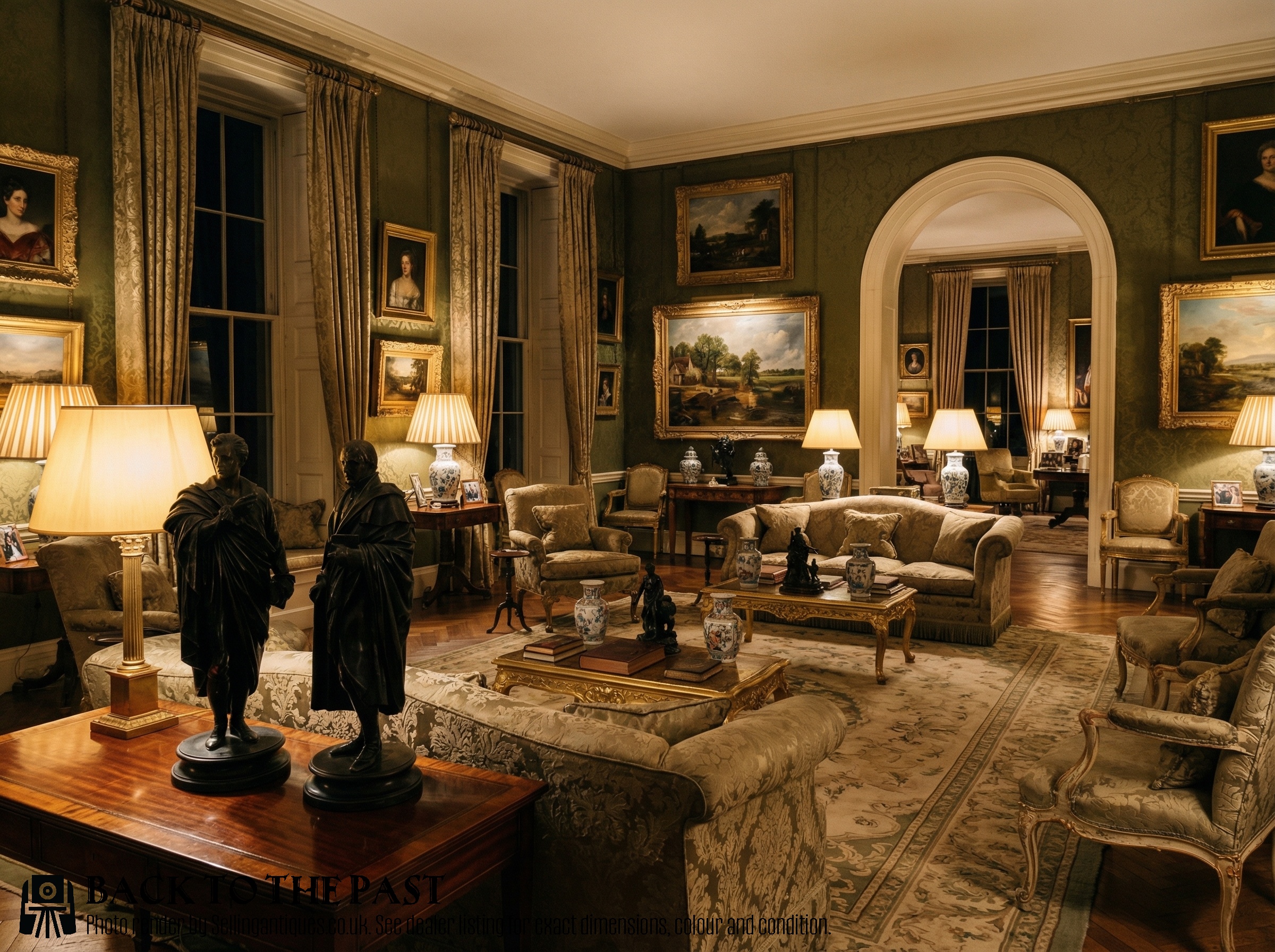
Victorian library decor brings together nineteenth-century leather-bound books, bronze sculptures, and scientific instruments to create a scholarly interior.
Victorian Library Decor
Victorian library decor encompasses the furnishings, instruments, and literature that defined nineteenth-century studies and drawing rooms. When searching for Victorian library decor, buyers frequently encounter bound book sets, globes, and decorative obelisks.
The objects span from the 1850s to the close of the nineteenth century, reflecting periods such as the Victorian era and the Gothic Revival style. Forms range from utilitarian desk accessories and barometers to ornamental busts and framed prints.
Originating largely from British workshops and publishers, these items were designed to display learning and taste. The selection ranges from multi-volume philosophical works to carved wooden chess sets and marble table pieces.
Factors of quality
The distinction between tiers rests upon the precision of the hand-carving and the choice of primary materials. Superior examples employ dense hardwoods, crisp bronze casting, and finely tooled leather bindings with genuine gold leaf.
Completeness and uniformity dictate the standing of book sets and matched pairs. Uniform publisher or binder bindings command greater regard than mismatched volumes assembled later.
The integrity of the original components, such as legible cartography on globes and working movements in barometers, separates standard utility pieces from collector examples.
An antique cow horn table gong sits quietly among the scholarly books and marble obelisks.
Thomas Malby·Crunchley·Henry Young and Son
The Victorian Library Decor Glossary
- Obelisk
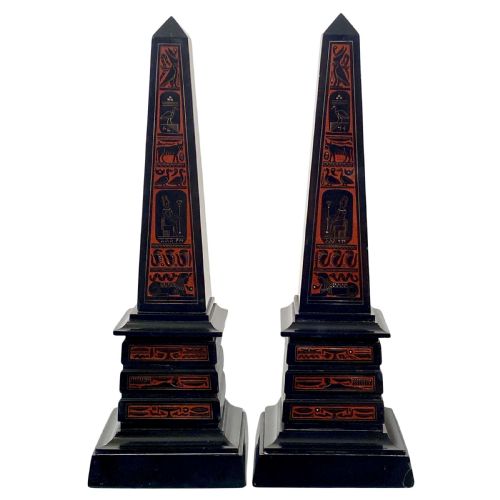
- A tall, four-sided, narrow tapering monument which ends in a pyramid-like apex at the top. These decorative versions were often carved from marble during the Grand Tour period.
- Barometer
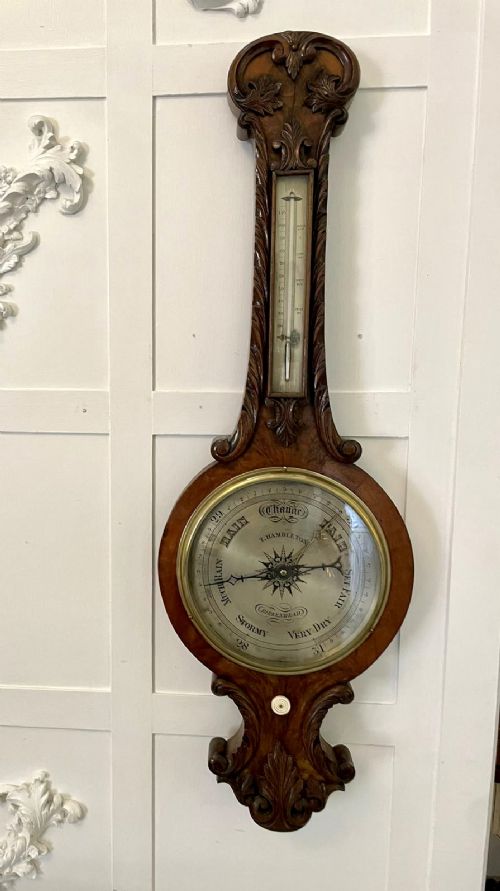
- An instrument used for measuring atmospheric pressure in order to forecast weather. Nineteenth-century models often incorporated wheel or banjo configurations housed in carved timber frames.
- Gore
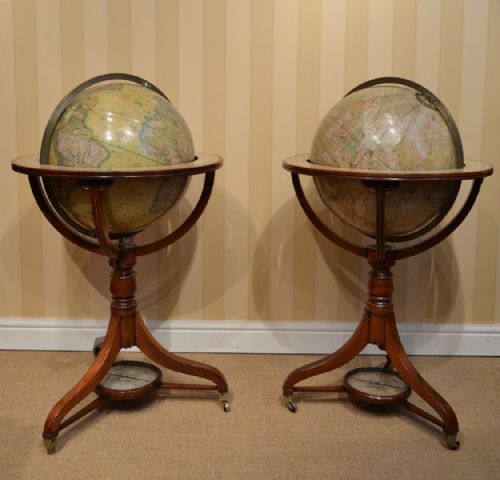
- A tapering strip of printed paper applied to a sphere to form a map of the earth or heavens. These were hand-applied to globes produced by makers like Malby or Crunchley.
- Spy print
- A satirical or portrait illustration published in Vanity Fair magazine during the Victorian era. They were lithographed in colour and are collected as framed prints.
- Rouge Griotte
- A rich red marble with white and grey veins, quarried in Belgium. It appears frequently in nineteenth-century decorative objects and obelisk pairs.
Victorian Library Decor: Frequently Asked Questions
How do I style Victorian library decor at home?
Group matching book sets together on open wooden shelving alongside bronze busts or framed prints to recreate a nineteenth-century study atmosphere. Mixing scientific instruments like barometers with carved wooden accessories adds texture to mantelpieces and desk surfaces.
Keep larger items grounded on sturdy mahogany or oak surfaces, allowing materials like brass and leather to catch natural light. Balance heavier architectural pieces, such as marble obelisks, with lighter paper collections.
What periods do these pieces cover?
The pieces span the nineteenth century, with specific dates clustering around the 1850s to the 1880s alongside occasional early twentieth-century items. Styles range from standard Victorian manufacturing to Gothic Revival and Egyptian Revival aesthetics.
Most items reflect the height of Victorian production, drawing on classical motifs and Grand Tour influences popular amongst collectors of the era.
Are the book sets complete?
Many literary listings consist of complete multi-volume sets, such as eight-volume memoirs or multi-part novel collections by authors like Sir Walter Scott. Individual sets note their specific volume counts directly within the title.
Uniformly bound selections are gathered together by binders or publishers to maintain consistency in colour and shelf presentation.
How were table globes used?
Table globes served as both educational reference tools and decorative objects for the gentleman's study or library desk. They allowed readers to trace explorations and understand geographical discoveries of the period.
Mounted on turned wooden plinths, they were positioned near windows or reading chairs for easy consultation.