
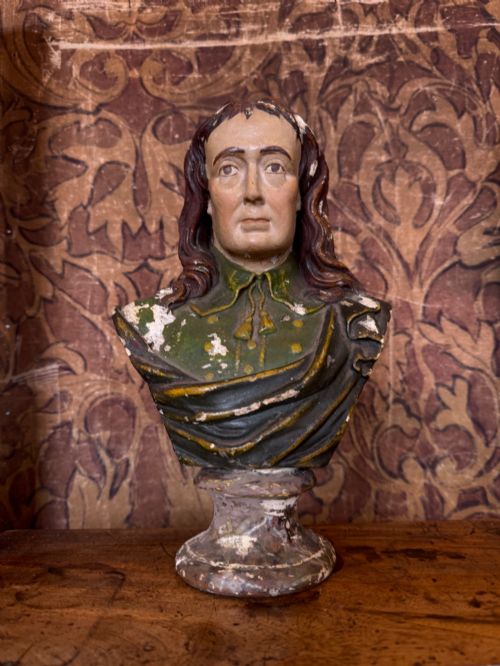
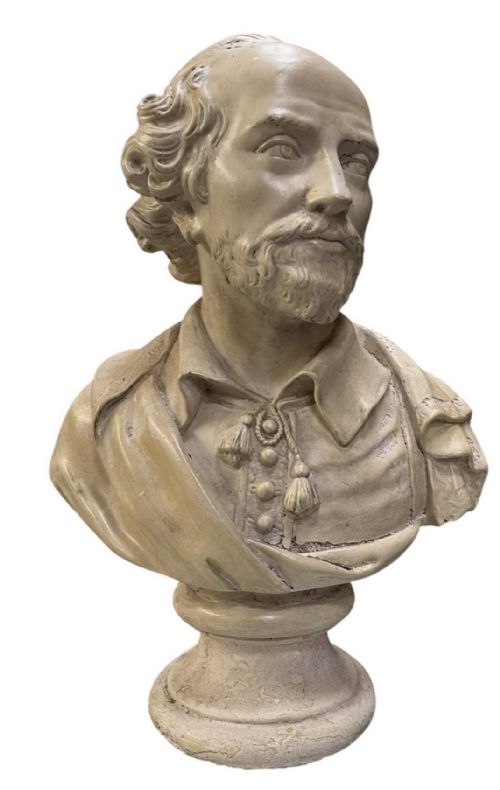
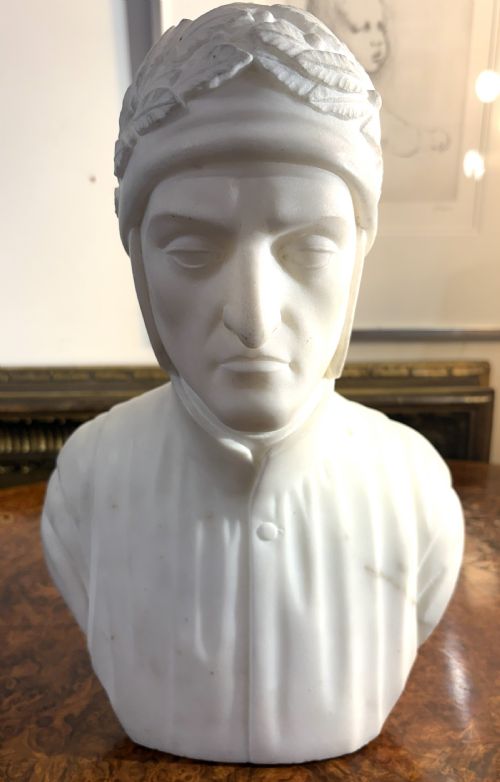


Antique Literary Busts
Antique literary busts bring classical writers into the study, offering sculpted likenesses of poets and playwrights in marble, bronze and plaster.
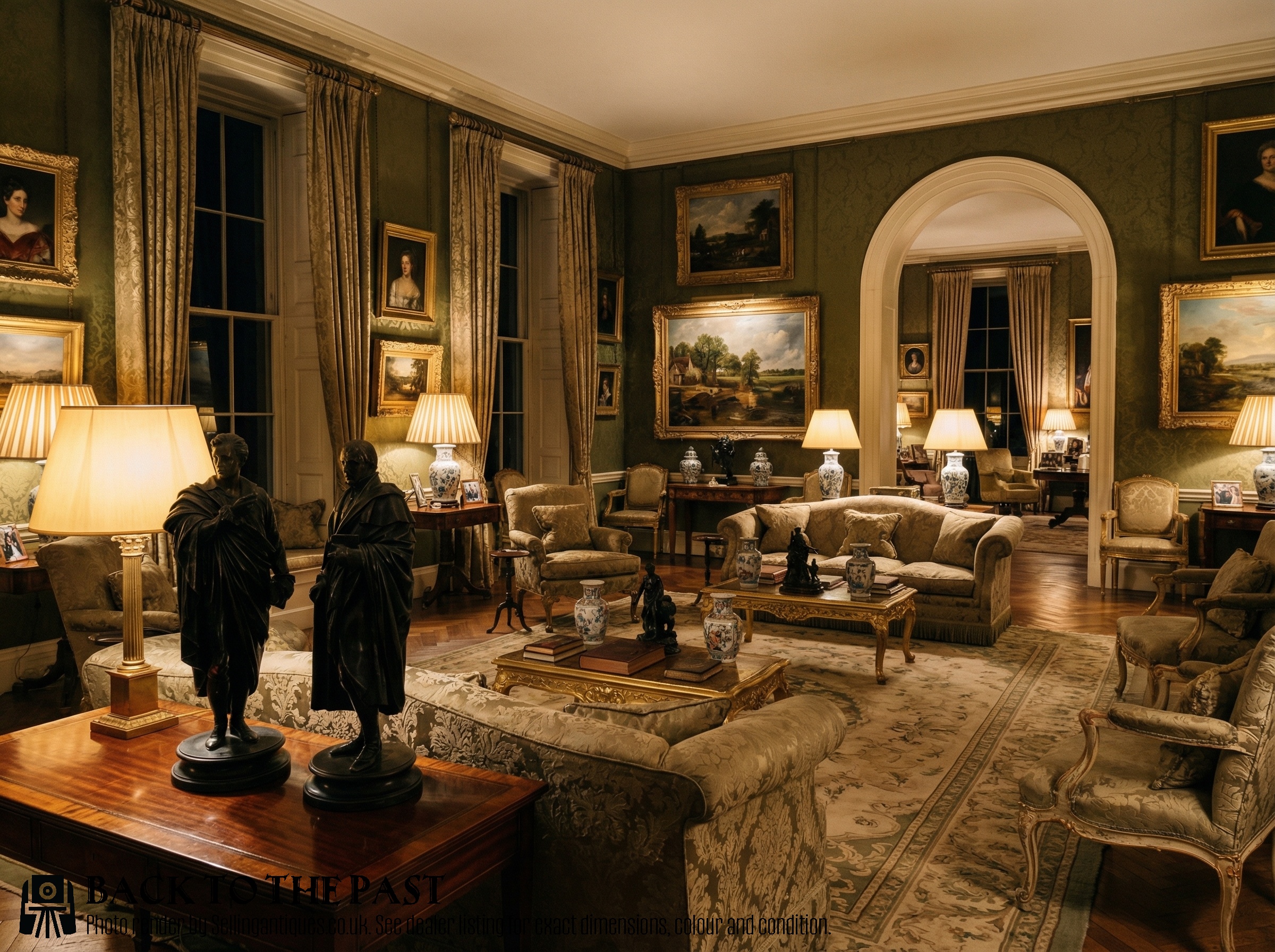
Antique Literary Busts
When you search for antique literary busts, you encounter sculptural portraits of canonical figures such as William Shakespeare, Dante Alighieri, Sir Walter Scott, John Milton, Lord Byron and Dr Samuel Johnson. These pieces take the form of library busts, mantel clocks, bookends, brackets and fine art paintings spanning the eighteenth, nineteenth and early twentieth centuries.
The nineteenth century yields the highest volume of these portrait sculptures, drawing heavily on classical revival and neoclassical styles from English, French and Italian workshops. Figures like Shakespeare appear frequently across multiple materials, reflecting enduring nineteenth-century reverence for national and European literary giants.
How they were made
Makers utilised traditional sculptural materials including carved marble, cast bronze, moulded plaster, earthenware, pearlware, onyx and gesso. Plaster and bronze versions often rested on dedicated marble plinths, brackets or mixed-material bases.
Techniques ranged from foundry casting in bronze and metal to hand-carving in solid marble and onyx, alongside Staffordshire earthenware pottery production and painted canvas works.
William Shakespeare watches over the room from mantel clocks, bookends, pottery and bronze alike.
What varies in quality
Quality rests upon the crispness of the modelling and the fidelity of the portraiture to the historical subject. Finer works display meticulous facial expression and garment detailing, while simpler Staffordshire pottery or cast metal bookends prioritize domestic utility and decorative mass appeal.
The choice of base materials also distinguishes the work, with solid carved marble and patinated bronze representing the upper tiers of production compared to painted plaster or standard gesso finishes.
Raffaelo Monti·Sir Joshua Reynolds
The Antique Literary Busts Glossary
- Library bust
- A sculptural portrait intended for display on bookshelves or desks. These pieces typically capture authors and philosophers in profile or three-quarter view.
- Gesso
- A plaster-like material applied to surfaces as a base for painting or gilding. It provides a smooth ground for decorative detailing.
- Neoclassical
- An artistic movement drawing inspiration from the classical art and culture of ancient Greece and Rome. It emphasises austere dignity and proportion.
- Bracket
- A architectural support projecting from a wall. Literary busts occasionally mount directly onto these structural ledges.
Antique Literary Busts: Frequently Asked Questions
Which authors appear most often in these busts?
William Shakespeare dominates the selection, appearing across plaster, bronze, earthenware and metal bookends.
Dante Alighieri, Sir Walter Scott, John Milton, Lord Byron and Dr Samuel Johnson also feature in marble and bronze.
Where were antique literary busts displayed?
Owners placed these sculptures in libraries, studies and drawing rooms to signal intellectual pursuits.
Smaller examples served practical functions as bookends or integrated into mantel clocks.
How do I distinguish nineteenth century from earlier pieces?
Nineteenth century examples often display Victorian classical revival styles and use materials like onyx and cast bronze.
Earlier eighteenth century items tend to rely on Staffordshire pottery and earthenware production methods.
Are these busts made from solid marble?
Many library busts utilise solid carved marble, while others combine bronze figures with contrasting black marble plinths.
Alternative versions employ lighter plaster cast constructions set upon brackets.