
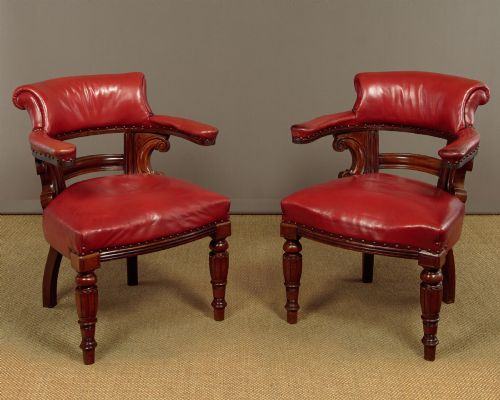
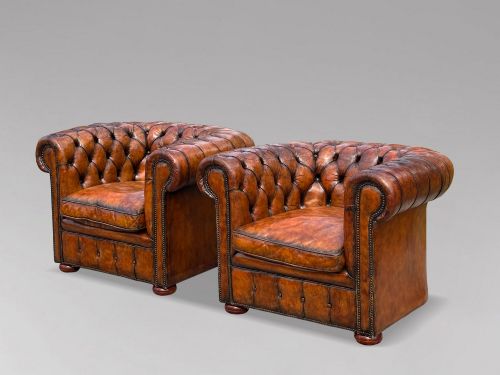
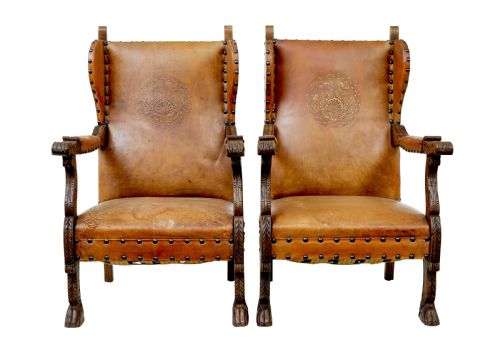
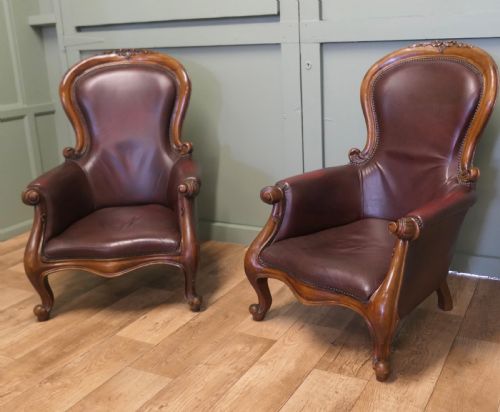




Victorian Leather Armchair Pair
A victorian leather armchair pair brings matching domestic comfort and enduring nineteenth-century craftsmanship into a room.
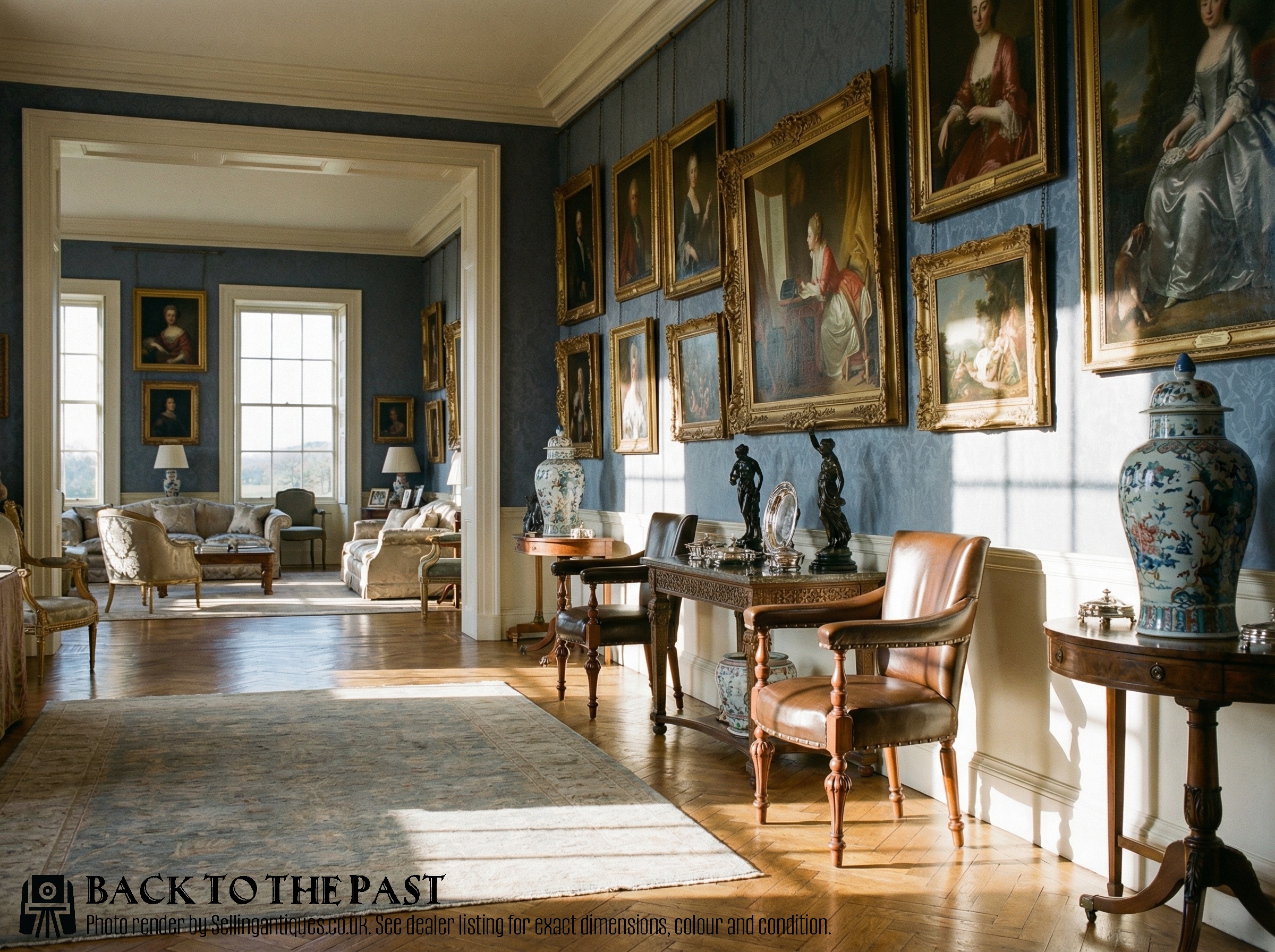
Victorian Leather Armchair Pair
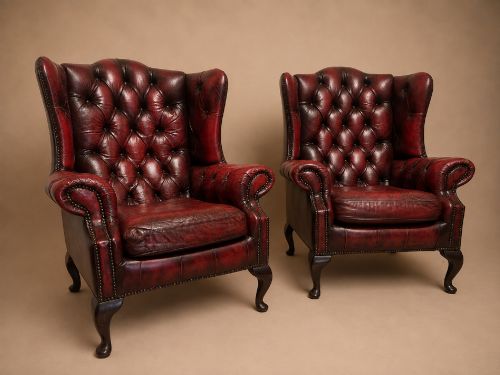
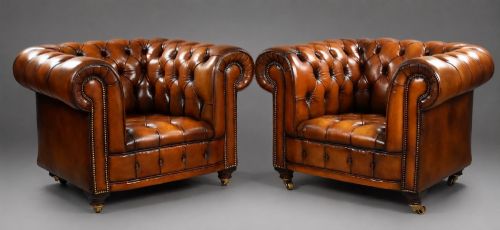
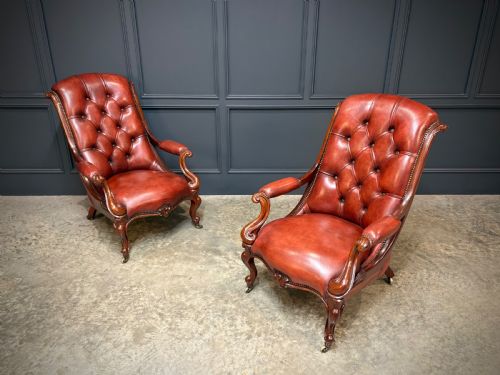
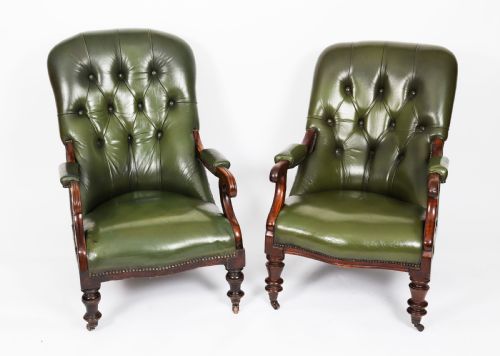
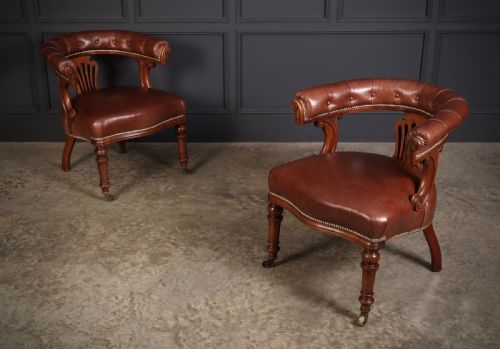
A victorian leather armchair pair comprises two matching seats intended for parlours, libraries, and studies, surviving from the nineteenth century. Buyers encounter forms ranging from low spoon backs and buttoned library chairs to substantial Chesterfield club chairs and wing backs.
Most examples originate from the Victorian era and the decades immediately following, utilising timbers like mahogany, walnut, and oak. These sets frequently reflect revival styles, incorporating Gothic, Chippendale, or Carolean decorative motifs into the wooden frames.
Materials and construction
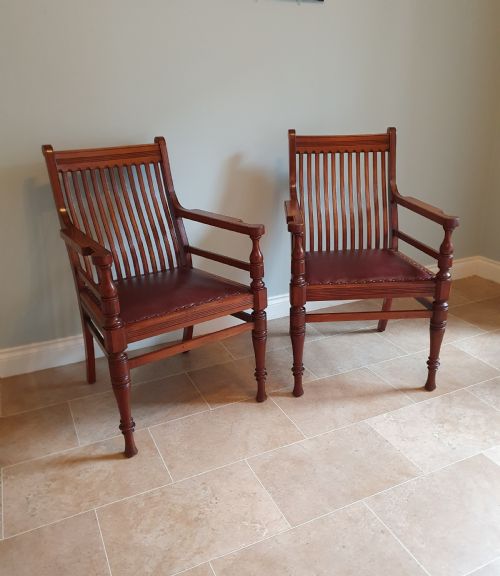
Cabinet makers built the structural frames using hardwoods such as mahogany, walnut, oak, and ash, often carving details by hand into show wood sections. Brass tacks frequently secure the leather upholstery directly to the wooden framework.
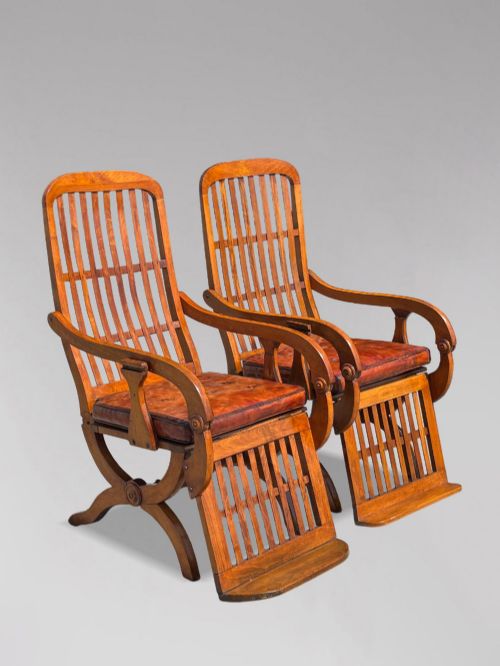
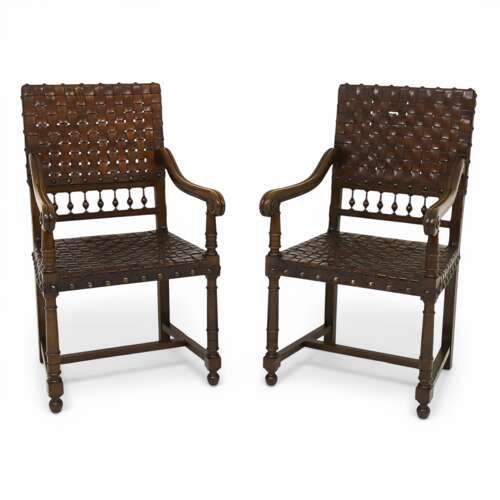
Upholsterers stretched leather over internal padding, occasionally employing deep buttoning or embossed techniques to finish the seating surfaces. Some variants integrate woven leather panels or hand-dyed hides into the design.
One exceptional pair once resided at the Royal and Ancient Golf Club of St Andrews.
Assessing quality in matching pairs
The distinction between standard seating and superior examples lies in the depth of timber carving, the choice of hardwoods, and the integrity of the frame. Robust construction in walnut or mahogany indicates a higher grade of manufacture.
The treatment and preservation of the leather also divide the range, with hand-dyed, embossed, or well-maintained hides commanding greater appreciation. Matching pairs that retain uniform fading and original framing elements demonstrate superior provenance.
The Victorian Leather Armchair Pair Glossary
- Chesterfield
- A deep-buttoned, heavily upholstered seating style characterised by arms and back of the same height. This form provides traditional club room comfort.
- Spoon back
- An upholstered chair back shaped to resemble the bowl of a spoon, popular during the Victorian period. It offers ergonomic support with a distinct curved silhouette.
- Show wood
- Exposed timber framework on an upholstered chair where the polished grain remains visible. Carved walnut and mahogany often serve this decorative purpose.
- Gothic Revival
- An architectural and decorative style drawing inspiration from medieval design. Pieces in this manner feature pointed arches and heavy oak construction.
Victorian Leather Armchair Pair: Frequently Asked Questions
How do I date these armchairs?
Dating relies on stylistic clues, framing timbers, and construction techniques evident in the piece. Mid-nineteenth-century items often display mahogany frames and spoon backs, whereas later decades favour oak or walnut club designs.
Examining the underside, joinery methods, and the type of leather provides further chronological context. Comparing the frame style to documented revival periods helps narrow the manufacturing decade.
Were these pairs originally made together?
Makers constructed matching seating sets simultaneously for country houses and gentlemen's clubs, ensuring identical timber selection and upholstery. His and hers pairs were also built together with slight variations in scale for comfort.
Matching wear patterns and identical frame dimensions confirm that two chairs belong together as an original set. Subtle discrepancies in wood grain or brass tack placement can indicate matched pairs assembled at a later date.
How should I care for antique leather?
Preserving historical leather requires regular dusting with a soft cloth and avoiding direct sunlight or excessive heat sources. Maintaining stable indoor humidity prevents the hide from drying and cracking over time.
Applying appropriate leather balms or conditioners helps maintain suppleness without altering the original finish. Professional conservation advice should be sought before attempting any deep cleaning or restoration.
Where were these chairs placed historically?
These seats found homes in nineteenth-century libraries, studies, and drawing rooms where durability and comfort were essential. Larger club and wing variants furnished gentleman's retreats and smoking rooms.
Library desks and writing tables were frequently paired with matching desk chairs for daily administrative use. Country house drawing rooms utilised gentleman's and ladies' variations for formal entertaining.