



Victorian Lake District Painting
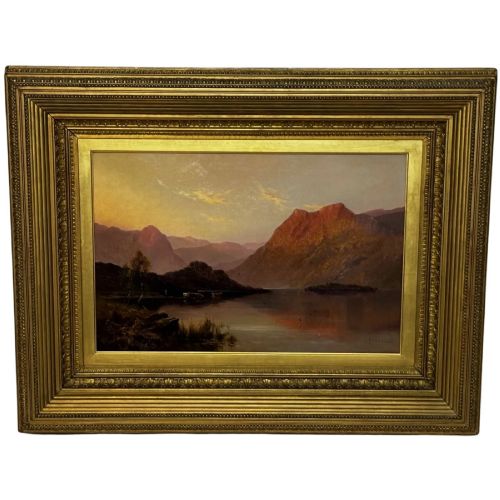
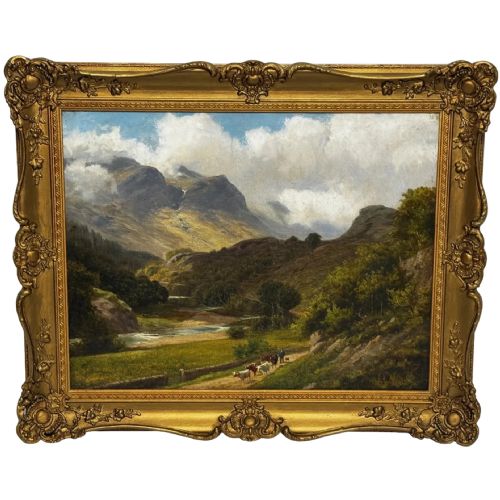
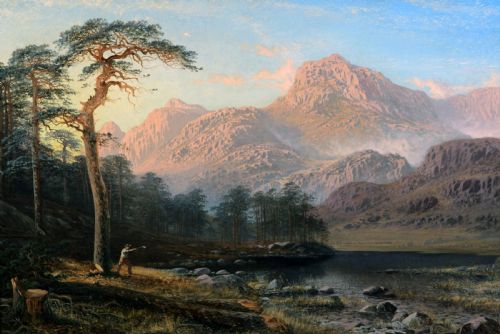
These Victorian lake district painting works capture the dramatic fells and tranquil waters of the north, offering a direct window into nineteenth-century topographical art.
Victorian Lake District Painting
A victorian lake district painting captures recognizable northern landmarks such as Windermere, Coniston Water, and the Langdale Pikes through the conventions of nineteenth-century landscape art. These works range from expansive oil compositions on canvas to detailed watercolours on paper, reflecting the era's fascination with domestic scenery.
The pieces listed on this page predominantly showcase Victorian aesthetics, featuring specific locations across Cumberland and Westmorland. Artists of this period often positioned their viewpoints near familiar tarns and river valleys to emphasise the dramatic scale of the fells.
How They Were Made
Artists built these compositions using oil paint on canvas or watercolour pigment on paper, applying mediums directly suited to capturing changing northern light. Canvases frequently received layers of oil paint to build texture across mountain slopes and water surfaces.
Finished works were traditionally housed within wood frames, often embellished with gesso and gilt wood details to enhance the visual weight of the landscape. These frames formed an integral part of the presentation, framing the painted scene for nineteenth-century domestic interiors.
Artists frequently braved persistent northern rain showers to sketch cattle grazing beside windswept Cumbrian tarns.
What Varies in Quality
Quality rests upon the artist's ability to render atmospheric light and topographical accuracy across specific locations like Borrowdale or the River Duddon. Stronger works demonstrate confident brushwork in the depiction of water and fells, whereas lesser examples rely on formulaic foliage and generalized skies.
The treatment of framing materials, particularly the depth and preservation of original gilt wood and gesso ornamentation, also separates standard works from finer salon-ready pieces.
Alfred Fontville de Breanski Jr·James Gunson Atkinson·Stephen Enoch Hogley·Alfred de Breanski·Frederick Tucker·Sidney Richard Percy·Cornelius Pearson·Tom Dudley·William Mellor·Charles Pettitt
The Victorian Lake District Painting Glossary
- Canvas
- A heavy woven fabric stretched across a wooden frame to serve as a stable support for oil paint. It provides the primary surface for many nineteenth-century landscape compositions.
- Gesso
- A plaster-like mixture applied to wooden frames before gilding to create smooth surfaces for decorative mouldings. It allows intricate relief details to catch the light.
- Gilt Wood
- Timber treated with a thin layer of gold leaf or metallic powder to achieve a bright, reflective finish. This material defined framing styles throughout the Victorian era.
- Watercolour Pigment
- Finely ground colour suspended in a water-soluble binder for application on paper. It allows artists to achieve transparent washes and delicate atmospheric effects.
- Victorian Romanticism
- An artistic movement emphasising emotional response to nature, dramatic weather, and sublime landscapes. It heavily influenced how northern topography was portrayed.
Victorian Lake District Painting: Frequently Asked Questions
What subjects do these paintings show?
These works depict recognizable northern topography including lakes, tarns, fells, and river valleys across Cumberland and Westmorland.
Artists focused on specific regional landmarks such as Windermere, Coniston Water, and the Langdale Pikes.
Are these works oils or watercolours?
The selection includes both oil paint on canvas and watercolour pigment on paper supports.
Both mediums were utilised extensively by nineteenth-century artists recording the scenery of the region.
How should I frame a Victorian painting?
Traditional presentation involves wood frames finished with gesso and gilt wood to complement the aesthetic of the period.
Original frames often feature decorative mouldings that match the visual weight of nineteenth-century landscapes.
How do I identify the period of a landscape?
Dating relies on stylistic markers associated with nineteenth-century British landscape painting and Victorian Romanticism.
Signatures, artist records, and traditional framing techniques further help establish the era of creation.