



Victorian Lady Watercolour
These delicate works capture a bygone era, offering a glimpse into personal history through the precise brushwork of victorian lady watercolour paintings.
Victorian Lady Watercolour
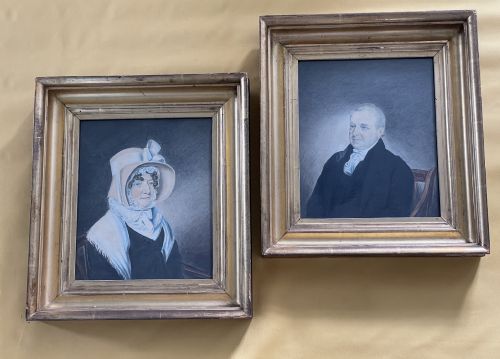
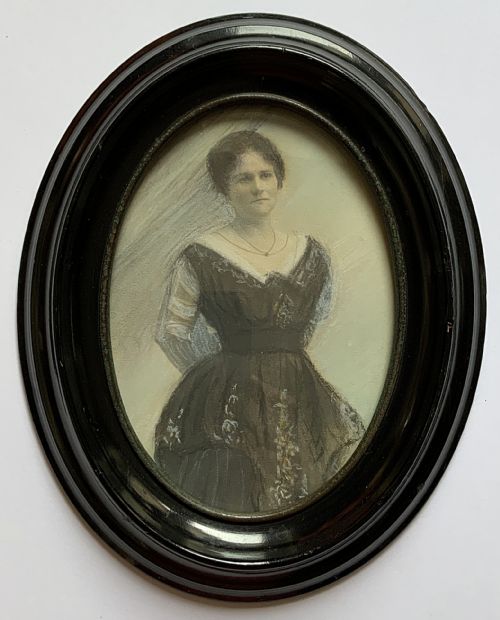
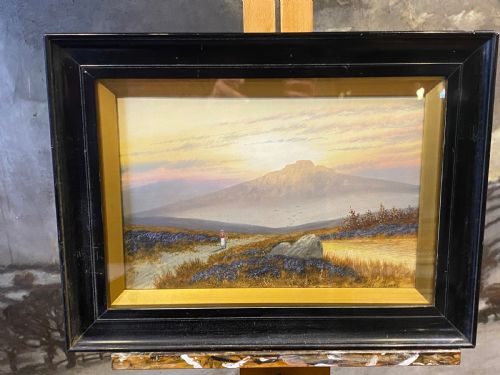
A victorian lady watercolour captures the likenesses of women from the nineteenth century, rendered by artists working in transparent and opaque pigments on paper or card. These portraits range from intimate miniature paintings housed in small frames to larger framed works depicting sitters in domestic or pastoral settings.
The pieces on this page span the nineteenth century, including examples from the Georgian period through to the year nineteen hundred. You will encounter both signed works by known artists and unsigned examples attributed to the English School.
Subjects appear in various guises, from profile silhouettes and head and shoulder studies to full compositions featuring elaborate dress, floral garlands, and interior drawing rooms. Many retain their original frames, often fashioned from ebonised wood, maple, or paper mache.
Materials and technique
Framing materials played a crucial role in the presentation and preservation of these fragile works, utilising glass to protect the painted surface. Ebonised wood, gold leaf, brass, and maple formed the structural borders, often complemented by card mounts.
The documented periods span the Georgian era, early Victorian years, and the late nineteenth century up to nineteen hundred.
Assessing quality
The integrity of the preservation matters significantly, including the stability of the paper support and the clarity of the pigments beneath the glass. Original frames matching the period of the painting add to the cohesion and desirability of the piece.
Alice Anne Renshaw·Edward Smyth·Frederick Thomas Baynes·Mary Eley·Frederick Tayler·Alfred Graham
The Victorian Lady Watercolour Glossary
- Watercolour
- A painting method in which the paints are made of pigments suspended in a water-based solution. This medium allows for translucent washes of colour.
- Gouache
- An opaque water-based paint that includes a white pigment added to the watercolour, creating a heavier and more solid finish on paper.
- Silhouette
- A portrait represented as a solid shape of a single colour, usually black, outlined and filled in on paper or card. Some examples incorporate subtle watercolour washes.
- Miniature painting
- A diminutive portrait created with minute detail, often framed for intimate display on a wall or desk during the nineteenth century.
- Ebonised wood
- Timber treated to resemble ebony, frequently used for dark, polished picture frames surrounding nineteenth century portraits.
Victorian Lady Watercolour: Frequently Asked Questions
How do I date a watercolour portrait?
Dating relies heavily on costume, hair styling, and framing methods associated with specific decades of the nineteenth century. Inscriptions on the reverse or signature dates also provide direct evidence.
Paper stock and mounting techniques can further narrow down the decade in which the portrait was executed.
Where were these portraits displayed?
These works typically hung in domestic drawing rooms, parlours, or private chambers as personal mementos of family members or acquaintances. Miniature versions were also kept on desks or carried as keepsakes.
Their intimate scale suited the domestic interiors of the Victorian home.
Are these paintings signed by the artist?
Some pieces bear the signature or initials of the artist on the front or verso, while many others remain unattributed. Unsigned works are frequently attributed to regional English schools of the nineteenth century.
Documentation or old inscriptions on the back often record the sitter's identity rather than the painter.
How should I care for antique watercolours?
Watercolour pigments are sensitive to direct sunlight and high humidity, which can cause fading and paper degradation. Displaying them away from windows in stable environmental conditions protects the fragile medium.
Original glass should be left intact to shield the delicate paper surface from dust and atmospheric moisture.