





Bonnet Woman Portrait
A bonnet woman portrait captures character and costume through the lens of past centuries, offering a window into historical fashion and intimate portraiture.
Bonnet Woman Portrait
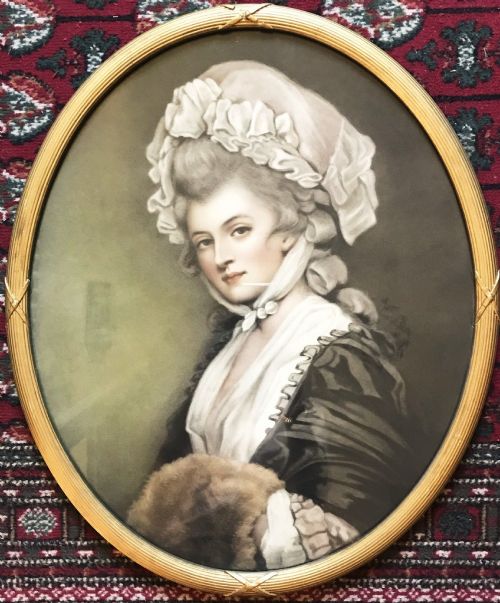
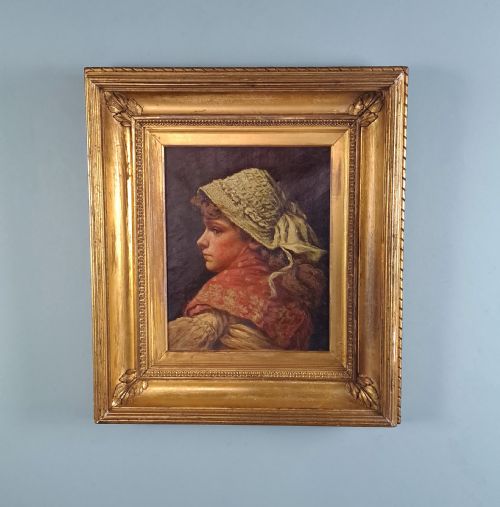
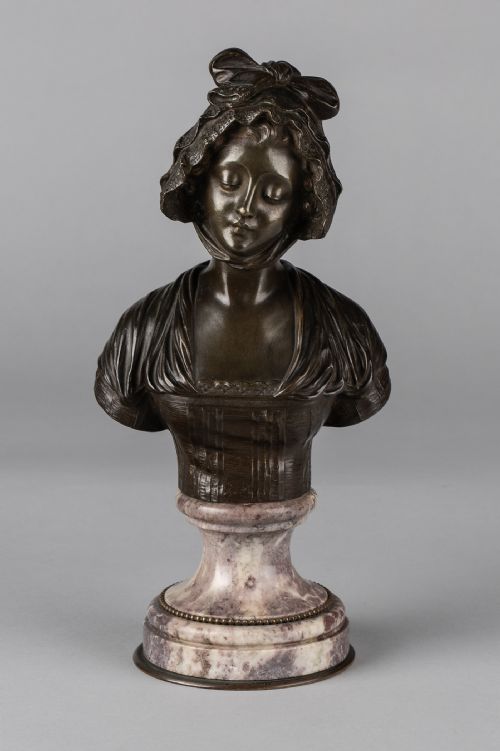
A bonnet woman portrait depicts female subjects wearing distinctive historical headwear across various periods including the nineteenth century and the Edwardian era. These works appear primarily as oil paintings on canvas, framed watercolours, and occasionally sculptures in bronze or alabaster.
Buyers encountering this search phrase frequently find traditional portraiture rendered in oil paint or watercolour, housed in period frames such as ebony, maple, or giltwood. The subjects range from Victorian ladies and Quaker women to young girls captured in detailed studies.
The selection encompasses both original nineteenth-century canvases and later interpretations, including oval glazed portrait prints that reproduce earlier works. Each piece preserves the distinct millinery styles and aesthetic preferences of its specific decade.
Materials and methods
Original frames play a crucial role in the presentation, constructed from wood with decorative elements such as gold leaf, gesso, and giltwood. Makers also employed maple and ebony to house these portraits securely.
Listings feature paper, oil on canvas, wood, glass, gold leaf, gesso, oil paint, and alabaster across the nineteenth century and Edwardian periods.
Evaluating quality and execution
The distinction between standard works and finer examples lies in the precision of the brushwork and the expressive depth captured in the subject's face. Superior oil paintings demonstrate careful handling of light upon fabrics, particularly the intricate details of a crocheted or straw bonnet.
The integrity and originality of the surrounding frame heavily influence the piece, with period maple, ebony, and giltwood frames adding substantial character. The presence of a recognised artist's hand elevates the work beyond anonymous studio production.
C S Lidderdale·L Sommer·Mary Eley·Eugene Laurent·Dominique Erra
The Bonnet Woman Portrait Glossary
- Oil on Canvas
- Pigments bound in a drying oil applied to stretched fabric. This medium allows for deep colour saturation and gradual blending of tones.
- Giltwood
- Wood carved and prepared with gold leaf or metallic powder. It provides an ornate and reflective border for traditional artwork.
- Gesso
- A plaster-like mixture applied to wood frames before gilding. It creates a smooth base for intricate carved details.
- Watercolour
- A paint method using water-soluble pigments on paper. This technique produces translucent washes and delicate effects.
- Alabaster
- A fine-grained mineral carved into sculptural forms. Its soft texture permits smooth contours and gentle translucency.
Bonnet Woman Portrait: Frequently Asked Questions
What periods do these portraits come from?
The pieces span the nineteenth century, including specific decades such as eighteen seventy, eighteen eighty, and eighteen ninety, alongside Edwardian examples.
Creator signatures and framing styles often help anchor the exact era of production.
Are all these pieces original oil paintings?
While many listings feature original oil on canvas works, the category also includes watercolours on paper and sculptural pieces in bronze and alabaster.
Some items consist of period portrait prints reproducing earlier painted works.
How do I care for a framed oil painting?
Keep the artwork away from direct sunlight and fluctuating humidity to protect both the canvas and the wooden frame.
Dust the surface gently with a soft, dry brush without applying liquid cleaners.
What framing materials should I expect?
Common framing materials include traditional giltwood, maple, and ebony wood, often accented with gold leaf or gesso.
Original frames are frequently preserved to maintain the historical context of the portrait.