





Victorian Ladies Armchair
A victorian ladies armchair offers low-slung, upholstered seating designed for smaller rooms, combining carved timber frames with period textiles.
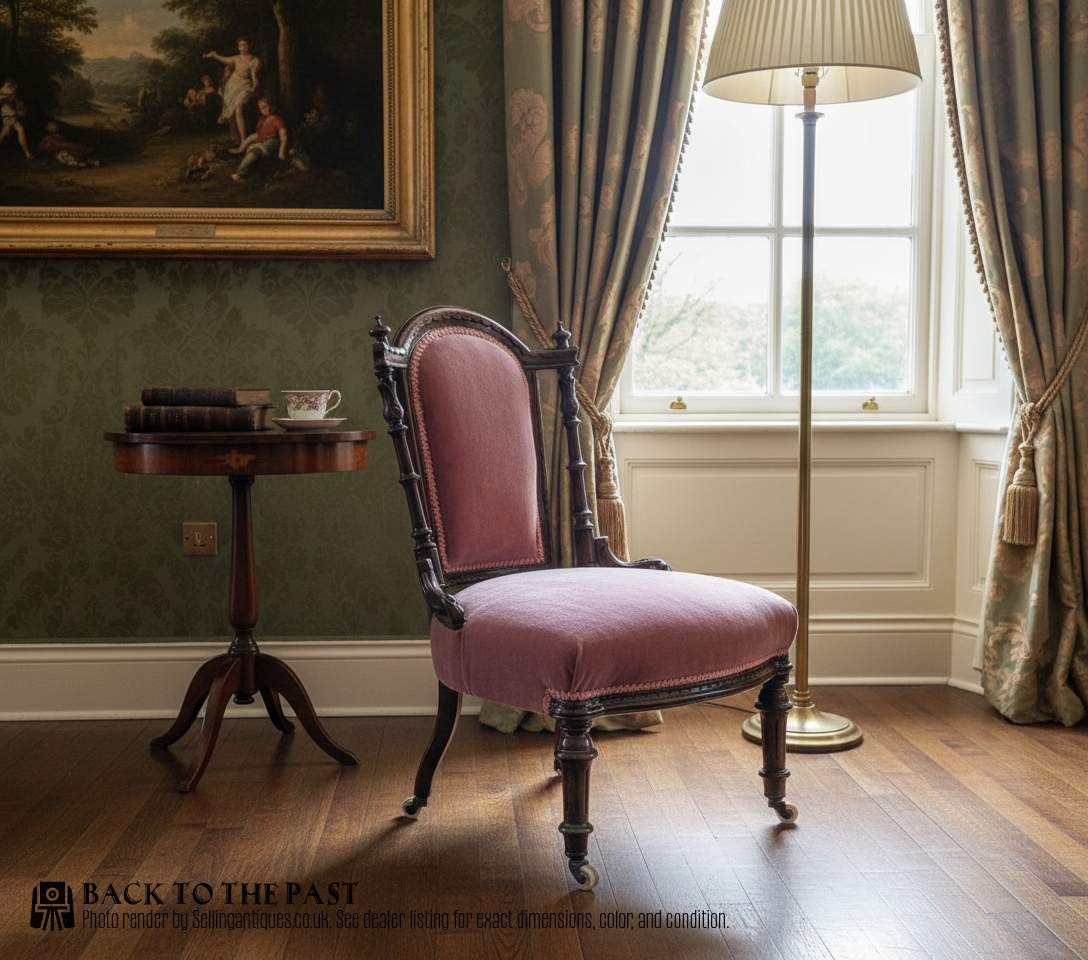
Victorian Ladies Armchair
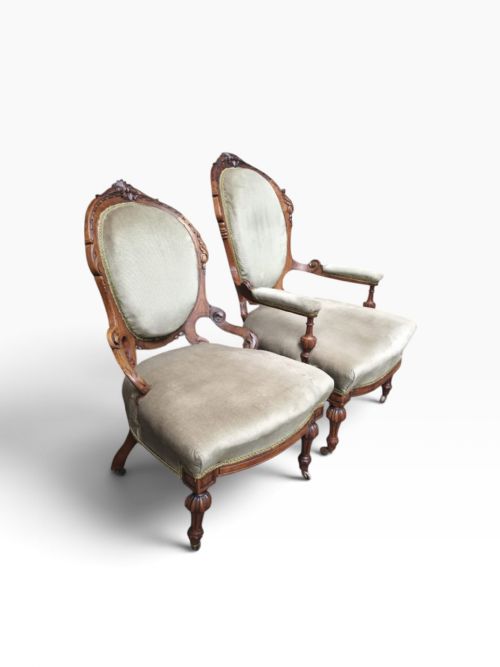
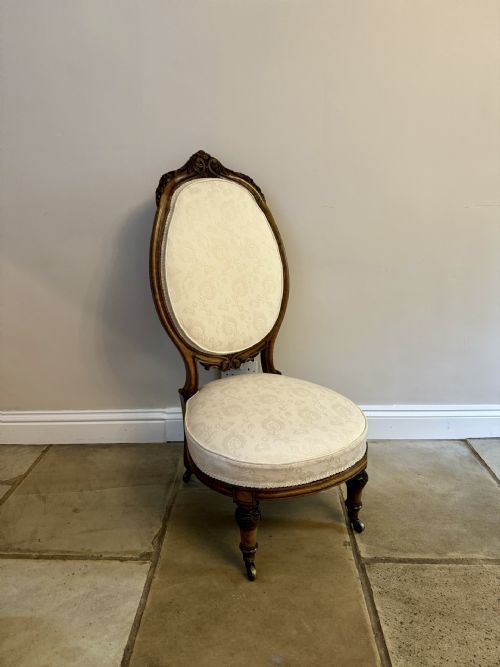
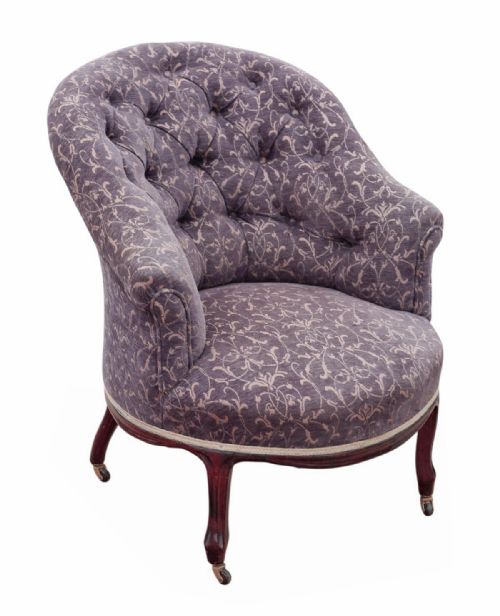
A victorian ladies armchair takes many forms across the nineteenth century, appearing as nursing chairs, salon seats, tub chairs, and fireside companions. These pieces typically feature compact proportions tailored for nineteenth-century domestic spaces.
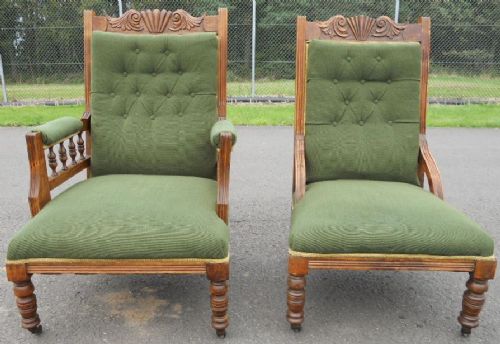
Walnut, mahogany, and rosewood frame constructions dominate the available pieces, often accompanied by matching gentleman's armchairs in pairs or larger suites. The seating surfaces utilise traditional button backing, open arms, or fully upholstered wings.
Makers occasionally produced adjustable reading versions, ebonised aesthetic variants, and inlaid shield-back designs, though standard carved walnut frames remain the most common form on this page.
How they were made
Cabinetmakers shaped the timber frames from dense hardwoods like walnut and mahogany, employing hand-carved floral motifs and scrollwork along the crest rails and cabriole legs. Turnings and applied mouldings frequently accent the structural supports.
Upholsters built the sprung seats using traditional stuffing materials before covering them in textiles such as velvet, wool, or leather, secured with brass tacks.
Victorian Ladies Armchair Retail Price Guide 2026
Typical asking prices for victorian ladies armchair among the pieces listed under this phrase on Sellingantiques today, from the lower quarter to the upper quarter. They describe what is for sale here now, not the wider market.
Button-backed upholstery appears frequently across both salon chairs and fireside armchairs.
What varies in quality
The crispness of the hand-carving on the wooden frame separates standard production from exceptional examples, with deeper undercut foliage and refined scrolls marking superior workshop output. Timber selection plays an equal role, where highly figured walnut or pollard oak elevates a piece.
The integrity of the original frame construction and the subtlety of the proportions determine the overall balance, distinguishing well-proportioned salon seating from heavier, utilitarian chairs.
Edwards & Roberts·Maple & Co
The Victorian Ladies Armchair Glossary
- Button back
- A traditional upholstery method where deep depressions are formed by sewing through the padding and securing the fabric with tufted buttons.
- Cabriole leg
- A furniture leg that curves out and then in, resembling the leg of an animal, common in mid-nineteenth-century revival styles.
- Ebonised
- Wood finished to imitate ebony, achieved by staining or painting dark pigments onto timber surfaces.
- Tub chair
- A seating form featuring a continuous curved back and arms that wrap around the user in a single rounded shell.
- Shield back
- A chair back shaped like a heraldic shield, frequently inlaid with contrasting veneers in late nineteenth-century iterations.
Victorian Ladies Armchair: Frequently Asked Questions
How do I date a victorian ladies armchair?
Dating relies on stylistic shifts and timber choices recorded across the nineteenth century, moving from early rosewood frames to mid-century walnut revival and late ebonised aesthetic pieces.
Examining the structural joinery and upholstery techniques further helps narrow the decade of production.
What is the difference between ladies and gentlemans chairs?
Ladies chairs were built with lower seats and shorter, open or armless frames to accommodate nineteenth-century dress fashions. Gentleman's chairs provided wider proportions and higher armrests for male occupants.
Both forms frequently share identical carved walnut frames when sold as matching pairs.
Where should I place a ladies armchair?
These compact chairs suit bedrooms, dressing rooms, and smaller drawing rooms where standard armchairs overwhelm the floor space. Their low profiles work well beside firesides and reading corners.
They function individually as accent seating or alongside a matching sofa in a salon.
Did these chairs always come in pairs?
Makers produced both single occasional chairs and matched 'his and hers' pairs for Victorian drawing rooms. Many survive today as pairs or larger salon suites.
Single examples appear just as frequently as standalone bedroom or nursing chairs.