





Dark Walnut Salon Chair
A dark walnut salon chair offers deep timber tones and rich upholstery, bringing formal seating character straight into your sitting room.
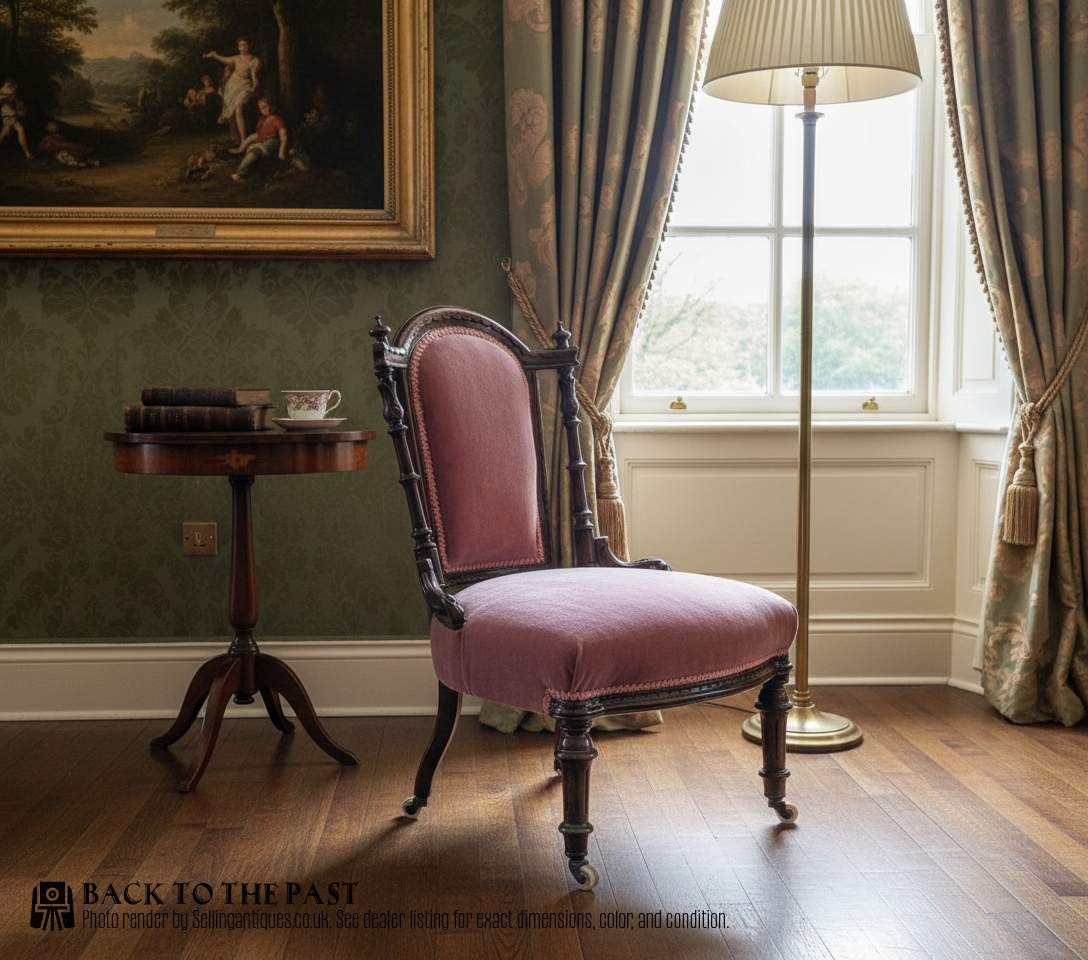
Dark Walnut Salon Chair
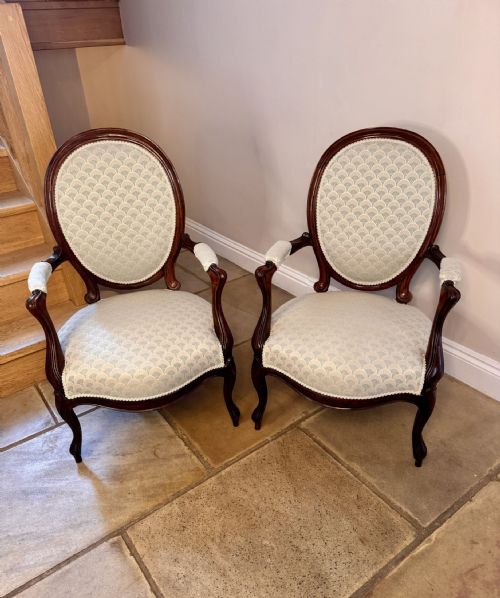
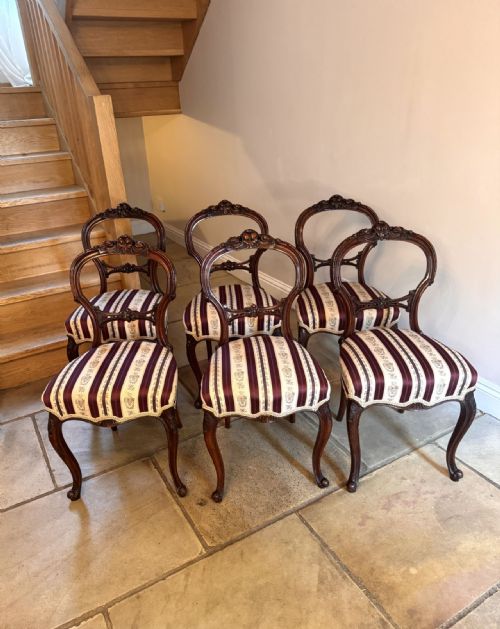
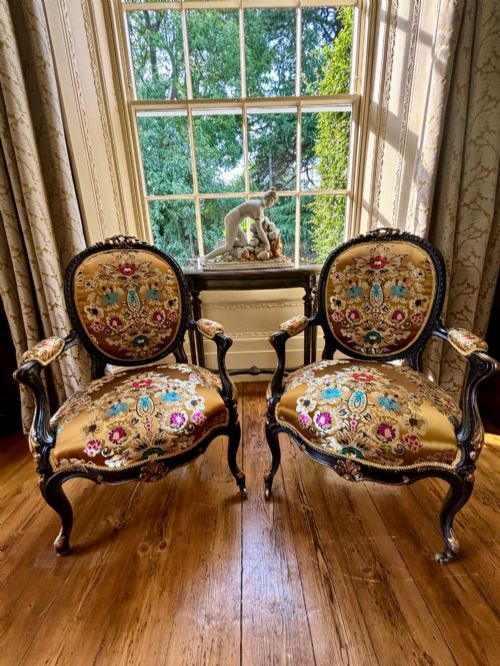
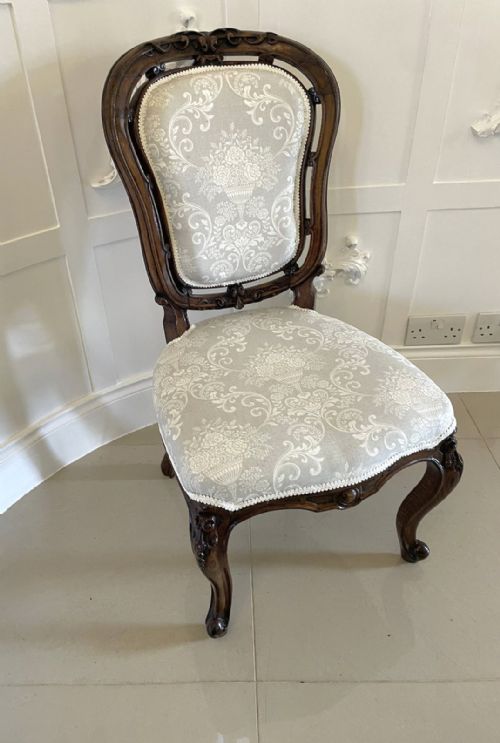
When you search for a dark walnut salon chair, you find mid to late nineteenth-century seating built for formal reception spaces. These items include balloon back dining chairs, carved ladies chairs, and French open armchairs made from rich timber.
The versions you meet most frequently on this page date from the Victorian period, alongside Edwardian examples and Louis XV revival pieces. They appear individually, in pairs, or in sets of four and six.
Makers shaped these dark woods into cabriole legs and open arm designs, often pairing the timber with silk brocade, velvet, or needlepoint tapestry panels. They function as both occasional seating and decorative focal points.
How they were made
Cabinet makers worked with walnut and occasionally mahogany, shaping the dense timber through hand carving. Structural stability relied on turned legs and joinery suited to frequent use.
Upholstery techniques involved stuffing fabric, velvet, or silk brocade over internal webbing and springs. Brass tacks and decorative cord finished the edges where textile met timber.
Dark Walnut Salon Chair Retail Price Guide 2026
Typical asking prices for dark walnut salon chair among the pieces listed under this phrase on Sellingantiques today, from the lower quarter to the upper quarter. They describe what is for sale here now, not the wider market.
Listings span from eighteen-fifty through the Edwardian era, featuring walnut, mahogany, velvet, and silk brocade materials across various chair forms.
What varies in quality
The distinction between standard examples and superior pieces rests on the depth and crispness of the timber carving. Sharp relief work on the crest rail and cabriole legs marks out a higher grade of manufacture.
Selection of the walnut veneer and solid framing timber creates visual depth across the surface. Finer examples retain harmonious proportions and integrated upholstery schemes that complement the wood grain.
The Dark Walnut Salon Chair Glossary
- Cabriole leg
- A furniture leg that curves outward and then tapers inward, finishing in a foot. This form appeared frequently on mid-nineteenth century seating.
- Balloon back
- A chair back shaped in a continuous oval curve resembling a balloon. It provides ergonomic support while maintaining an elegant silhouette.
- Needlepoint tapestry
- Hand-stitched canvas embroidery utilising wool or silk yarn. These panels frequently decorate the backs and seats of French armchairs.
- Spoon back
- A padded chair back hollowed out in the centre to resemble the bowl of a spoon. It fits the human spine closely.
- Ladies chair
- A low-seated upholstered chair designed without arms to accommodate the voluminous skirts of the period. They allow comfortable upright sitting.
Dark Walnut Salon Chair: Frequently Asked Questions
What is a salon chair used for?
These chairs served in formal reception rooms and parlours for receiving guests or engaging in conversation. Their lighter scale compared to heavy library seating allowed them to be moved around the room as needed.
Today, they function well as occasional seating in living areas, bedrooms, or studies, adding period character without overwhelming smaller floor spaces.
How do I identify a Victorian chair?
Victorian seating is characterised by the use of dark walnut or mahogany, often featuring elaborate hand-carved details on the crest rail. Common forms include balloon backs, spoon backs, and cabriole legs.
Construction details such as traditional joinery, brass hardware, and period textile choices like velvet or needlepoint help confirm the era of manufacture.
Are these chairs comfortable for daily use?
Most pieces were built with sprung or padded seats intended for formal sitting rather than lounging. Their upright proportions encourage good posture during meals or conversation.
While historic upholstery provides firm support, sitting comfort depends on whether the internal webbing and padding have been historically maintained or restored.
Can I mix these chairs with modern decor?
Dark walnut timber and traditional carved details contrast effectively against clean modern surfaces and neutral walls. Pairing an antique armchair with contemporary furniture creates a balanced, collected interior.
Matching the wood tone or fabric palette with existing furnishings helps integrate the piece into a modern room layout.