





Victorian Ladderback Armchair
These Victorian ladderback armchairs combine sturdy vernacular timbers with supportive rush or sea grass seating, offering honest comfort for daily use.
Victorian Ladderback Armchair
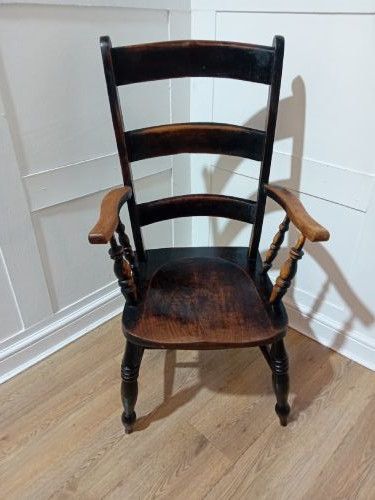
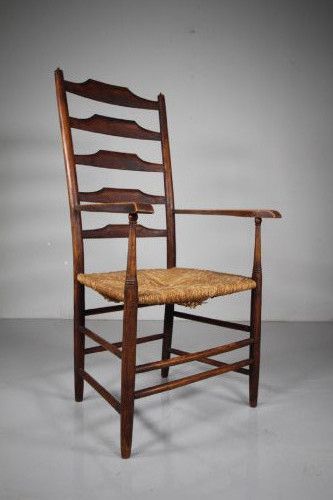
A victorian ladderback armchair brings together traditional rural craftsmanship and nineteenth-century domestic utility, spanning styles from English country vernacular to Shaker and Jacobean revival. Buyers seek these chairs for their honest construction and supportive ladderback frames, which provide an upright sitting position suited to both studies and farmhouse kitchens.
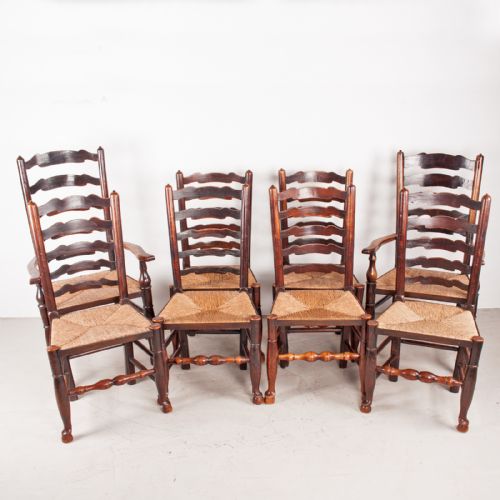
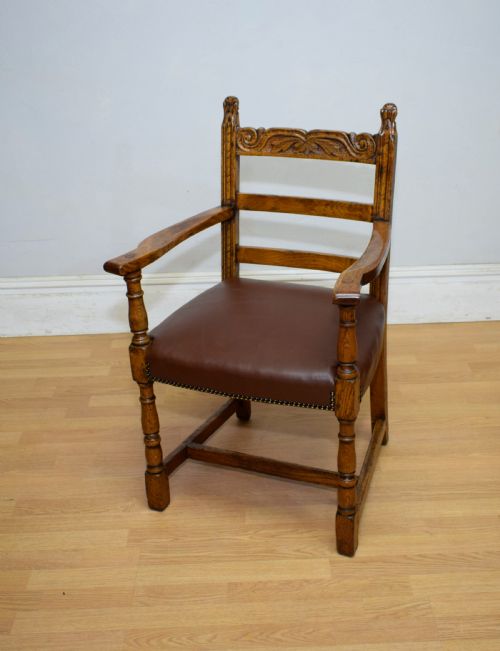
The pieces on this page appear in various forms, including straightforward kitchen armchairs, rocking chairs, and adjustable steamer versions fitted with castors. Elm, ash, and oak predominate among the frameworks, often paired with woven rush, sea grass, or fabric seats that reflect regional English traditions.
How they were made
Maker-joiners constructed these frames using local hardwoods such as ash, elm, oak, beech, and mahogany, turning spindles and shaping rails on lathes before assembling them with traditional mortise and tenon joints. Such methods ensured the structural resilience required for daily use in country houses and rural cottages.
Seats were hand-woven using natural rush or sea grass, wrapped tightly around the wooden seat rails to form a durable, flexible surface that supported the sitter. Certain examples utilised turned arm supports and carved crest rails, balancing functional utility with regional decorative preferences.
Some chairs come mounted on castors, proving Victorians loved mobile lounging long before office chairs existed.
What varies in quality
Quality in these chairs rests upon the selection and pairing of timbers, the tightness of the woven rush or sea grass, and the integrity of the original joints. Pieces retaining their early or original surface finishes hold greater character than those stripped down or heavily refinished.
The refinement of the turned ladder rails and the balance of the proportions distinguish standard utility seating from finer artisan pieces, such as those associated with known makers. Finer examples maintain their structural rigidity without excessive replacement parts or compromised stretchers.
Philip Clissett
The Victorian Ladderback Armchair Glossary
- Ladderback
- A chair back featuring horizontal slats or bars between the upright posts. These slats are often curved to fit the contours of the sitter's back.
- Rush
- A marsh plant used for centuries to weave durable, flexible chair seats. Skilled artisans twist the dried stems into cords before weaving them tightly across the seat rails.
- Vernacular
- Everyday utilitarian furniture made by local regional joiners using accessible native woods. These pieces prioritize practical function over high-style academic design.
- Harlequin set
- A group of similar chairs that match in general style and period but vary slightly in minor details, often gathered together over time rather than purchased as an original set.
- Spindle back
- A chair back constructed with numerous thin, turned wooden rods rather than solid wooden splats. This technique reduces weight while maintaining structural strength.
Victorian Ladderback Armchair: Frequently Asked Questions
Are these chairs comfortable for daily use?
Most of these armchairs provide an upright, supportive posture designed for dining, desk work, or relaxing by the hearth.
The woven rush and sea grass seats offer a degree of natural give that conforms gently to the sitter's weight.
How do I date a ladderback chair?
Examine the turned components, tool marks, and timber species to help determine whether a piece originates from the mid or late nineteenth century.
Subtle shifts in the curvature of the ladder rails and the style of the arm supports also provide clues regarding the manufacturing period.
Can I use an armchair at a dining table?
Armchairs work well at the heads of a dining table, provided the arm height clears the underside of the table surface.
Checking the seat height alongside your table dimensions ensures comfortable legroom and seating alignment.