





Victorian Lacquer Furniture
Victorian lacquer furniture brings together glossy orientalist surfaces, papier-mâché, and bamboo to transform everyday rooms with exotic colour.
Victorian Lacquer Furniture
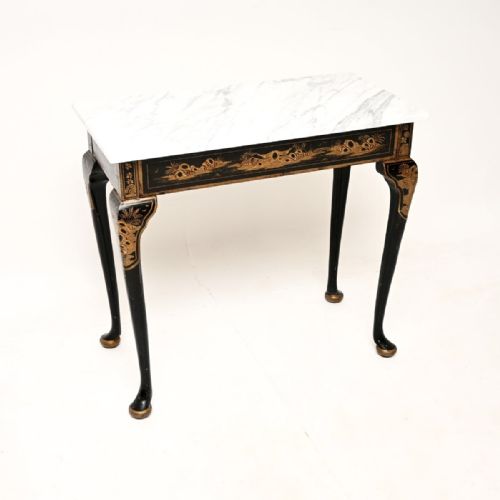
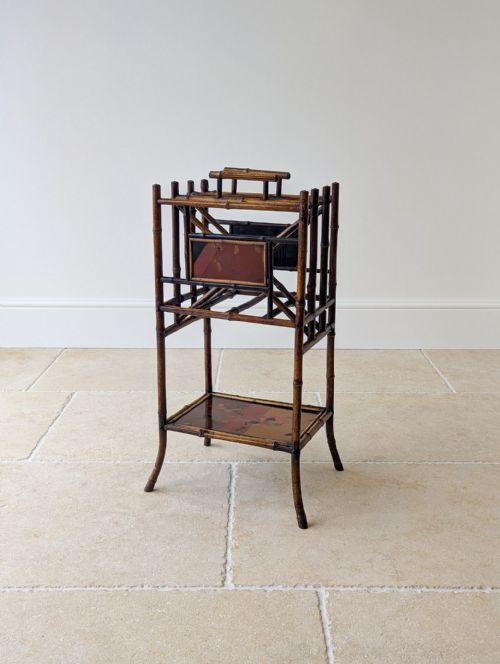
Victorian lacquer furniture encompasses portable display pieces, occasional tables, and cabinets produced during the nineteenth century under the influence of Chinoiserie, Japonisme, and the Aesthetic Movement. When searching for victorian lacquer furniture, buyers encounter a rich variety of forms including side tables, nests of tables, tray tables, sewing tables, and bamboo magazine racks.
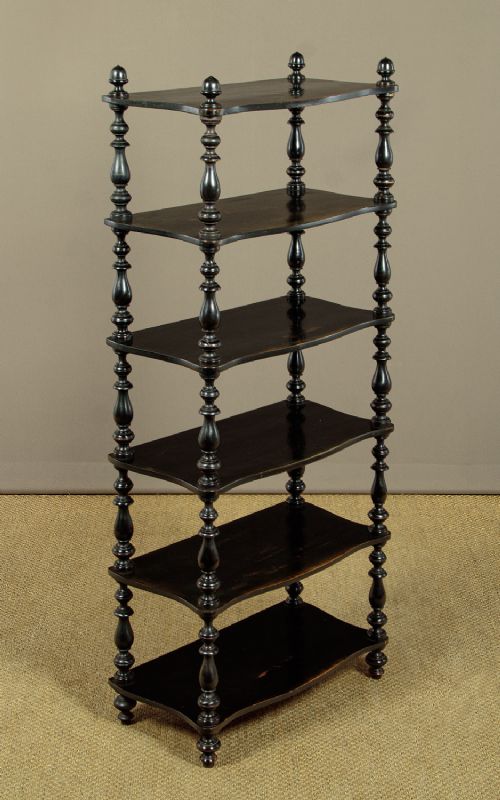
The objects span from the mid nineteenth century to the eighteen-nineties, drawing on diverse origins such as Chinese export workshops, French etagere designs, and English production. Papier-mâché trays mounted on later stands and ebonised wood structures appear frequently alongside bamboo frameworks.
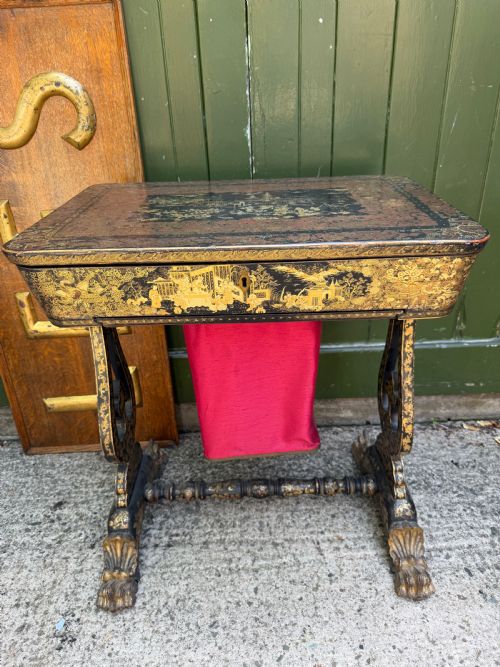
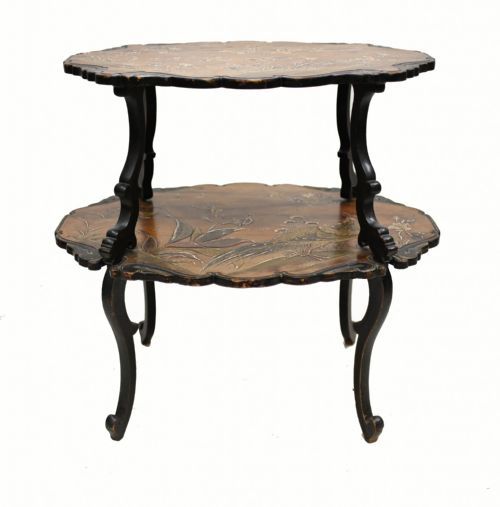
Domestic spaces of the period welcomed these items for specific utility, utilising sewing tables, card tables, and tiered dumb waiters in drawing rooms and halls. The overarching style looks to oriental motifs, oriental lacquerwork, and japanning to create striking black and decorated surfaces.
Materials and Construction
Construction relies heavily on wood, papier-mâché, and tiger bamboo, paired with surface treatments like japanning, ebonised wood, and true lacquer. Artisans built sturdy foundational frames from bamboo or timber before applying layered finishes and decorative schemes.
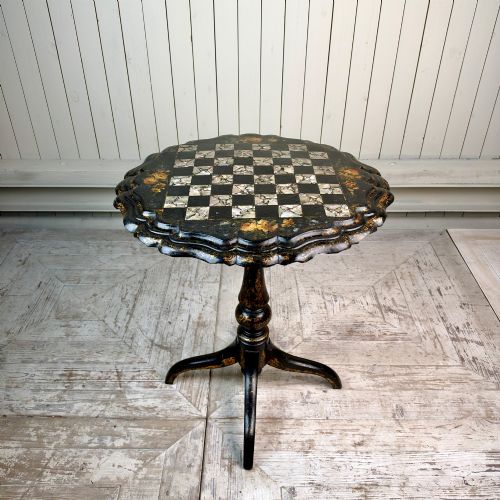
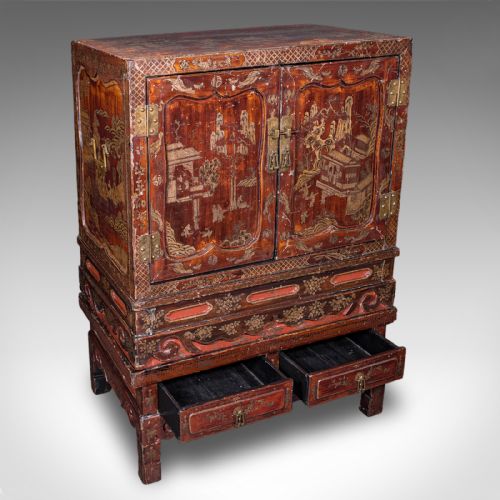
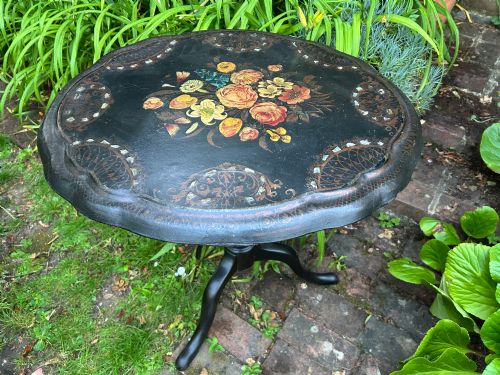
Gilt decoration, painted scenes, and mother-of-pearl inlay enhance the dark lacquer grounds, particularly on papier-mâché tilt-top tables and trays. Brass hardware, glass elements, and cane seats supplement the primary materials in cabinets, side chairs, and étagère tables.
Victorian Lacquer Furniture Retail Price Guide 2026
Typical asking prices for victorian lacquer furniture among the pieces listed under this phrase on Sellingantiques today, from the lower quarter to the upper quarter. They describe what is for sale here now, not the wider market.
Listings feature diverse forms including papier-mâché tilt-top tables, bamboo hall stands, and nesting tables spanning the nineteenth century.
Variations in Quality
Quality rests upon the crispness of the hand-painted Chinoiserie detail and the depth of the lacquer or japanning finish. Superior examples display meticulous brushwork and integrated mother-of-pearl work that remains stable across the wooden or papier-mâché core.
The structural integrity of the bamboo framing or ebonised joints dictates standard longevity, alongside the original pairing of trays with their floor stands. Pieces retaining their matching nests, uncompromised gilt highlights, and intact japanned surfaces occupy the upper tier of the range.
The Victorian Lacquer Furniture Glossary
- Japanning
- European imitation of East Asian lacquerwork, created by applying layers of varnish and heat-treating the surface. This technique gave nineteenth-century makers a durable black gloss finish.
- Chinoiserie
- European interpretation of Chinese artistic motifs and styles, popular in furniture decoration. It incorporates imaginary landscapes, figures, and pagodas.
- Papier-mâché
- A composite material made from paper pulp or layers of paper mixed with glue and resin, pressed into moulds. It provided a lightweight, smooth base for painting and inlay.
- Etagere
- An open piece of furniture with multiple shelves for displaying ornaments and small objects. These tables became fashionable in nineteenth-century interiors.
- Canterbury
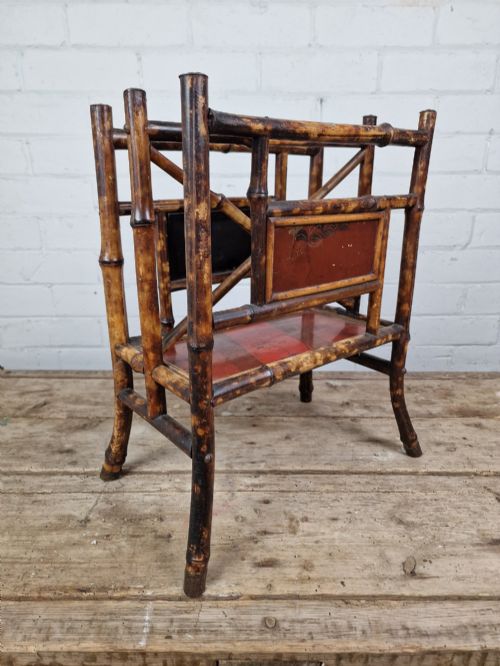
- A low stand fitted with partitions for holding sheet music, magazines, or newspapers. They often incorporated bamboo or lacquered panels.
Victorian Lacquer Furniture: Frequently Asked Questions
How do I clean Victorian lacquer furniture?
Dust surfaces gently with a soft, dry microfiber cloth to prevent scratching the delicate japanned or lacquered finish. Avoid liquid cleaners, modern polishes, and excessive moisture, which can permanently damage the historic surface.
Keep pieces away from direct sunlight and heat sources to prevent the lacquer from crazing or the underlying wood and bamboo from warping. Professional conservation is recommended for any deeper restorative care.
Were these pieces made in Britain or Asia?
Production occurred across both British workshops and Asian export centres, with many items reflecting European adaptations of Eastern styles. Chinese export pieces arrived directly, while domestic makers produced substantial quantities of papier-mâché and bamboo goods locally.
English manufacturers drew heavily on imported design motifs, resulting in a hybrid tradition that combined Asian decorative arts with Victorian domestic utility.
How do I identify Aesthetic Movement pieces?
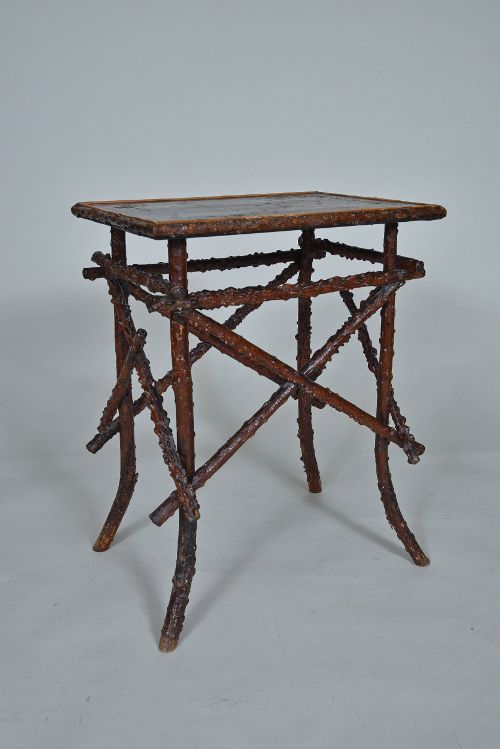
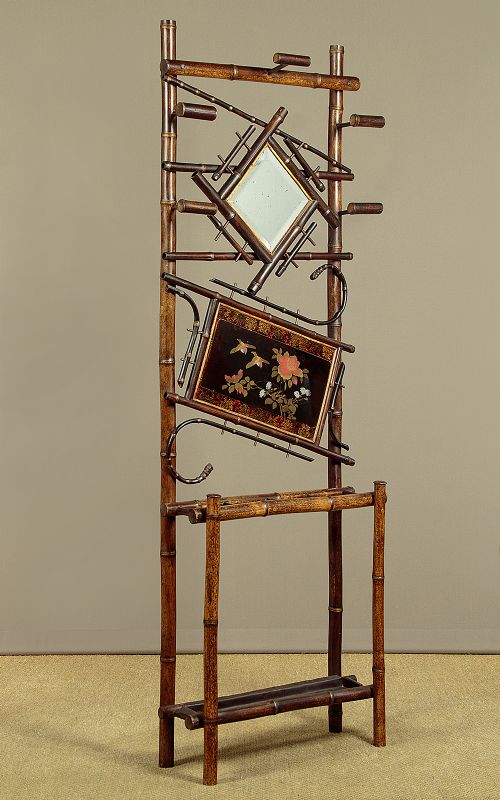
Aesthetic Movement items often feature unadorned structural honesty, frequently utilising tiger bamboo frames combined with contrasting black lacquered panels. The decoration prioritises simplicity and artistic harmony over heavy Victorian revival ornamentation.
Look for clean lines, Japanese-inspired motifs, and multifunctional designs like side tables, hall stands, and magazine racks produced toward the end of the nineteenth century.
What is a papier-mâché tray table?
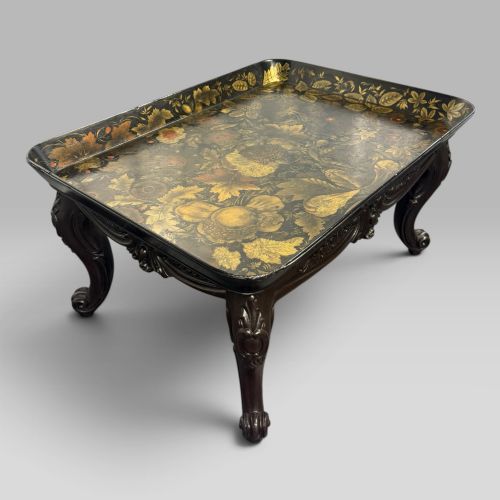
A papier-mâché tray table consists of a moulded, painted, and often mother-of-pearl inlaid tray resting upon a folding or fixed wooden stand. These portable tables allowed Victorians to serve drinks or display objects before storing the tray away.
Many surviving examples pair nineteenth-century trays with later companion stands, a common practice that maintained the utility of the decorative surface.