

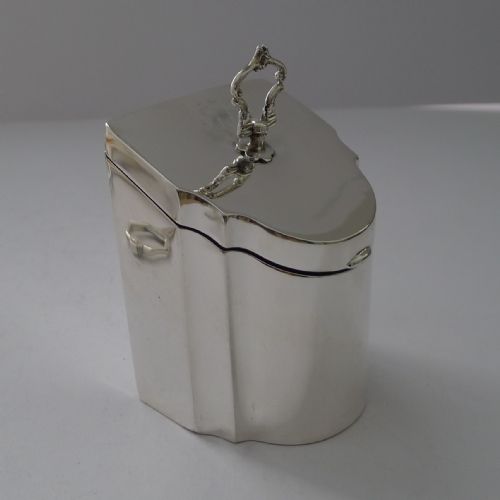


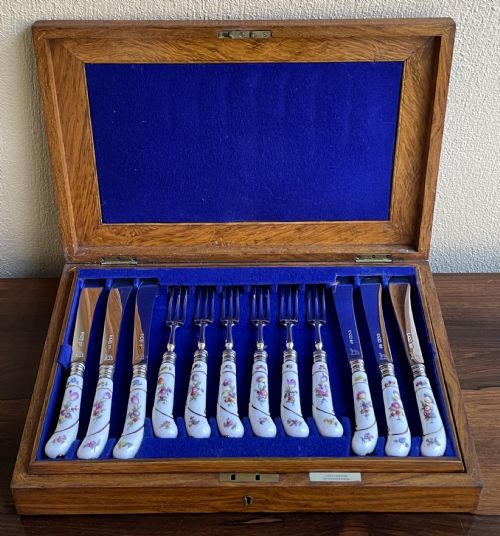


Victorian Knife Box
A Victorian knife box brings solid craftsmanship to the dining room table or sideboard, offering both practical storage and period character.
Victorian Knife Box
A Victorian knife box search brings up oak kitchen hanging boxes, coromandel cutlery boxes, and smaller novelty items shaped like miniature knife boxes.
The material selection spans from domestic oak to exotic coromandel and tortoiseshell, reflecting the varied domestic and vanity uses of the era.
Pieces range from simple hanging kitchen receptacles to velvet and silk-lined presentation boxes and novelty thimble cases.
Materials and construction
Wood construction relies on sturdy hardwoods like oak and decorative veneers such as coromandel, often shaped into specific sloped-lid or hanging forms.
Interior fittings frequently incorporate delicate linings of velvet and silk to cushion silver-handled cutlery, butter knives, or thimble sets.
Victorian Knife Box Retail Price Guide 2026
Typical asking prices for victorian knife box among the pieces listed under this phrase on Sellingantiques today, from the lower quarter to the upper quarter. They describe what is for sale here now, not the wider market.
Listings combine oak, coromandel, velvet, and silk across Victorian and Edwardian domestic items.
Judging quality in boxes and cutlery
Quality shows in the precision of the woodwork joints and the preservation of interior textile linings such as velvet and silk.
The distinction between standard utility items and finer examples rests on the choice of exterior timber, whether plain oak or figured coromandel.
George Unite·Carrington
The Victorian Knife Box Glossary
- Coromandel
- A dense, heavily grained tropical hardwood prized for decorative veneer work on nineteenth-century boxes.
- Tortoiseshell
- The mottled outer shell of certain sea turtles, utilised for small ornamental novelty cases during the Victorian period.
- Oak
- A durable domestic timber commonly employed for kitchen hanging boxes and utility furniture throughout the nineteenth century.
- Silk
- A fine natural textile fibre used to line the interiors of presentation cutlery sets and knife boxes.
Victorian Knife Box: Frequently Asked Questions
What were knife boxes used for?
Original knife boxes and wall-hanging variants served to store and organise domestic cutlery within the Victorian kitchen or dining room.
Smaller novelty versions functioned as needle and thimble cases rather than tableware storage.
How do I care for wooden boxes?
Keep wooden boxes away from direct heat sources and strong sunlight to prevent the timber and internal veneers from drying out or splitting.
Dust velvet and silk linings gently with a soft brush to preserve the fabric.
Are these pieces strictly Victorian?
While the majority date from the Victorian period, the evidence includes Edwardian items and pieces spanning from the 1870s through to 1920.
Stylistic shifts and date markers help distinguish mid-Victorian items from later Edwardian examples.
What timber was used?
Makers utilised robust domestic timbers like oak for utilitarian kitchen boxes, alongside imported decorative hardwoods such as coromandel for more formal receptacles.
These woods determine the weight and visual grain of each piece.