


Victorian Kitchen Seating
Victorian kitchen seating covers sturdy everyday wooden chairs, benches, and stools built to handle heavy use in domestic service and rural homes.
Victorian Kitchen Seating
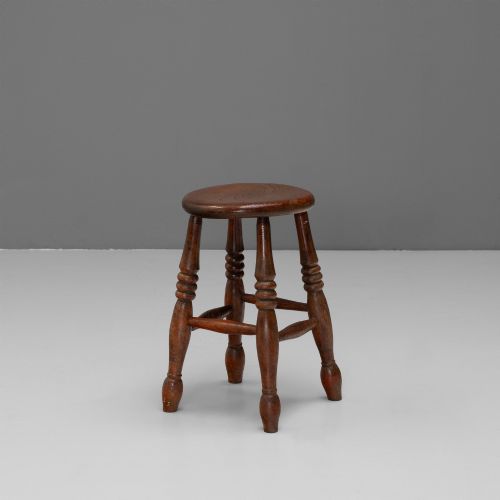
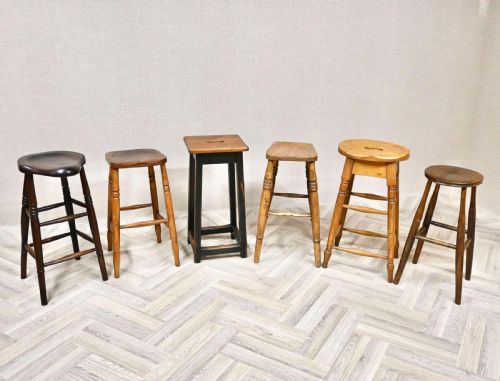
Victorian kitchen seating comprises practical wooden furniture created for domestic service, farmhouses, and country homes. When searching for victorian kitchen seating, buyers encounter robust dining chairs, armchairs, benches, stools, and dining tables.
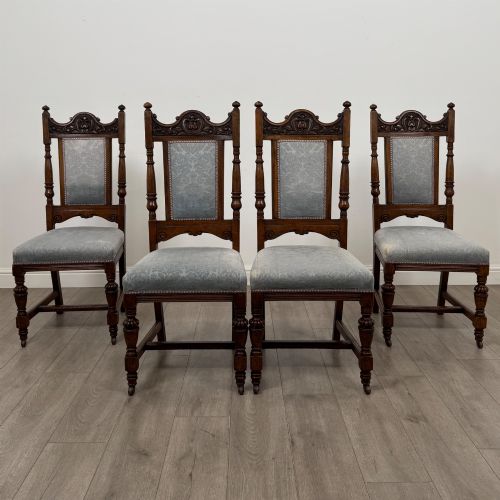
The selections span the nineteenth century up to the early twentieth century, showing influences from Victorian country, rustic farmhouse, Gothic revival, and Hungarian folk art styles. Single pieces, pairs, and large matched sets appear across these traditions.
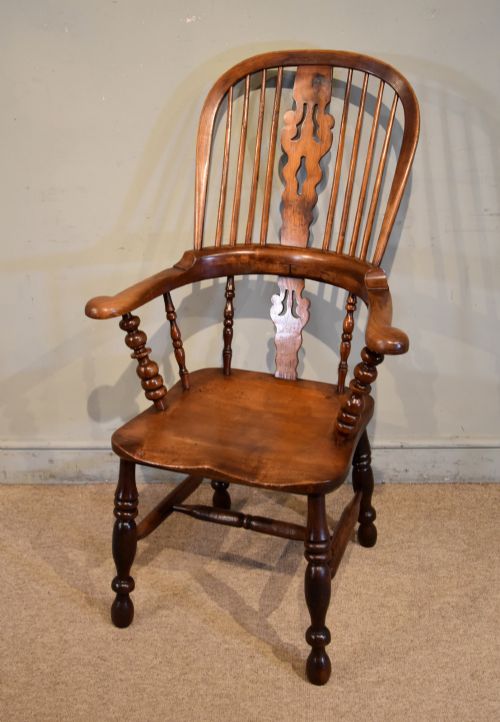
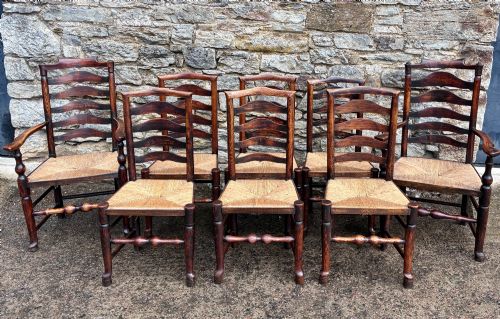
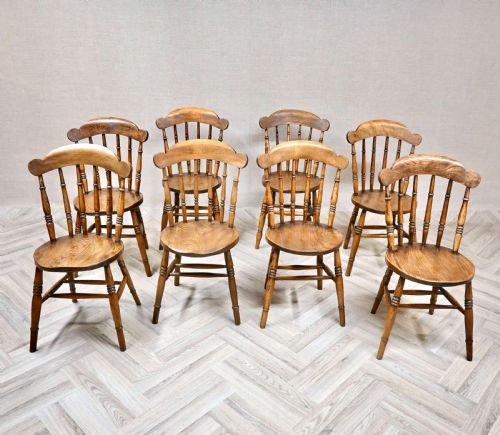
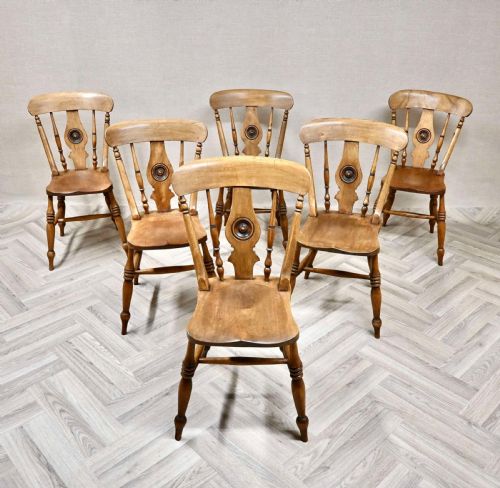
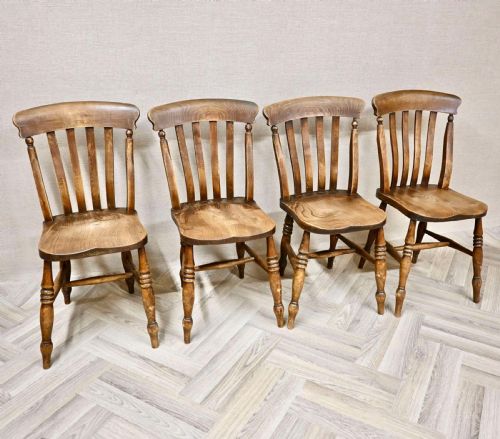
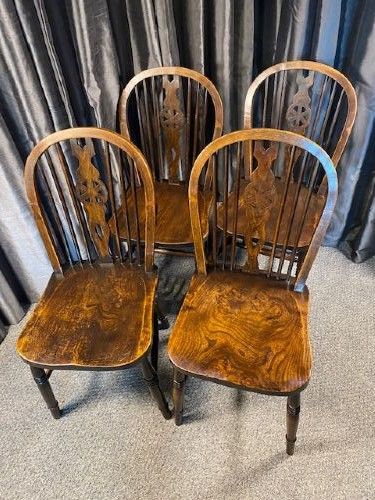
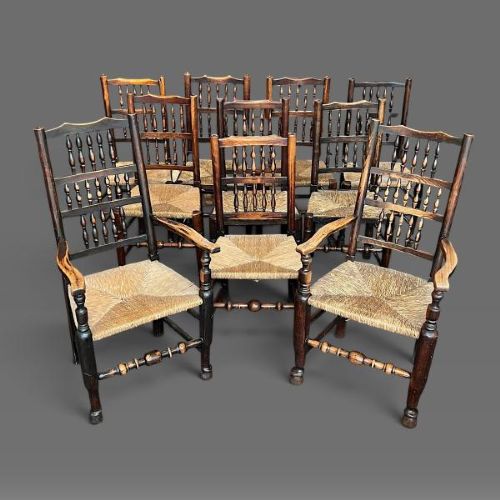
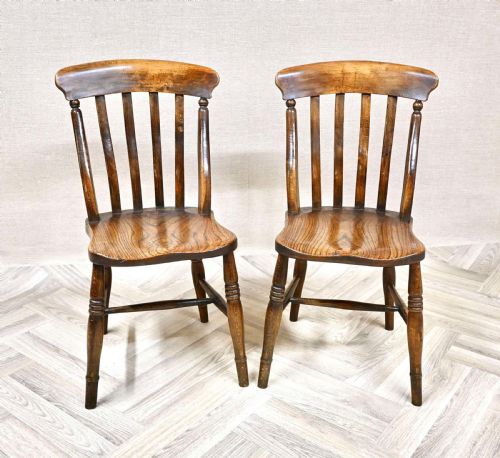
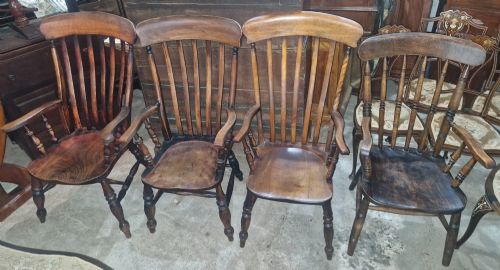
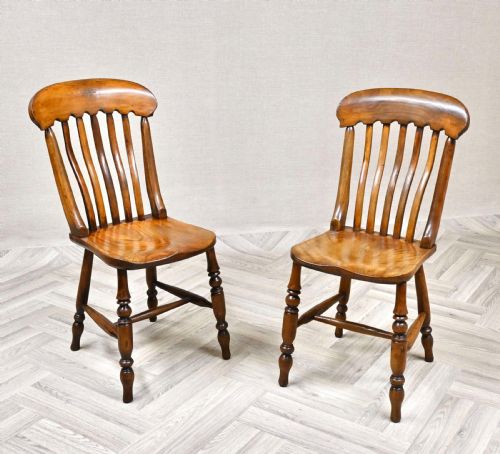
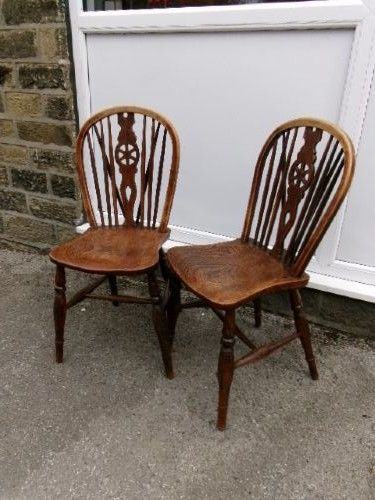
Windsor chairs dominate the selection, alongside spindle back, ladderback, lathback, wheelback, and fiddle back designs. Rush seats and solid timber seats feature prominently in these configurations.
Materials and construction methods
Makers utilised a combination of native timbers, frequently pairing elm for seats with ash, beech, and oak for spindles, legs, and frames. Pine, yew, and painted finishes also occur throughout the listings.
Joinery methods rely on traditional turned and steam-bent components, often utilising double stretchers and pegged joints to ensure stability. Solid timber seats are shaped with deep depressions for comfort during long hours of use.
Hungarian folk art benches arrive wearing coats of bright blue paint that survived a century of farm life.
Distinctions in construction and timber selection
Quality separates pieces by the choice of timber figure, such as richly grained elm seats paired with finely turned ash spindles. Uniformity across larger sets of dining chairs indicates careful selection by the original maker.
The integrity of the structural joints and the retention of original surface treatments define the standing of individual examples. Original painted finishes or unblemished patination elevate pieces beyond standard utility items.
Worksop best model
The Victorian Kitchen Seating Glossary
- Windsor chair
- A wooden chair built with a solid saddle-shaped seat into which the back and legs are separately bored and wedged. These chairs rely on a strong undercarriage with stretchers for rigidity.
- Lathback
- A chair design featuring horizontal wooden slats across the backrest rather than vertical spindles. This style provides solid lumbar support.
- Penny seat
- A saddle-shaped wooden seat depression formed with a circular scooping tool resembling a large coin. This shaping gives the seat its descriptive name.
- Double stretcher
- An undercarriage reinforcement system using two parallel turned stretchers between the legs instead of one. This adds significant strength to heavy use chairs.
- Rush seat
- A seating surface woven from dried marsh rushes around a wooden frame. This traditional technique creates a resilient and flexible platform.
Victorian Kitchen Seating: Frequently Asked Questions
What woods were used for victorian kitchen seating?
Makers built these pieces using native hardwoods and softwoods suited to daily domestic tasks. Elm frequently forms the solid seats due to its resistance to splitting.
Ash, beech, and oak provide the strength needed for turned legs, bent arms, and delicate spindle backs. Pine and painted finishes also appear on benches and tables.
How do you identify a Windsor kitchen chair?
A Windsor chair is distinguished by its heavy solid timber seat rather than a framed upholstery base. The back and legs are fitted directly into bored holes through the seat slab.
Underneath, a system of turned wooden stretchers ties the legs together for structural support.
Are large sets of antique kitchen chairs common?
Large sets of matching kitchen chairs survive from nineteenth-century dining environments and farmhouses. Sets ranging from four to ten pieces appear alongside pairs and single items.
Finding matched sets of six or eight requires careful matching of turning details and timber grain.
What styles exist within victorian kitchen seating?
The category encompasses diverse regional designs including wheelbacks, lathbacks, spindle backs, and ladderbacks. Gothic revival elements and Hungarian folk art benches also contribute to the variety.
Rustic farmhouse aesthetics and traditional country forms define the overall visual character.