


Victorian Jacobean Revival Chairs
These heavy, timber-framed seats bring seventeenth-century gravity into nineteenth-century rooms, offering stout construction and deep historical carving.
Victorian Jacobean Revival Chairs
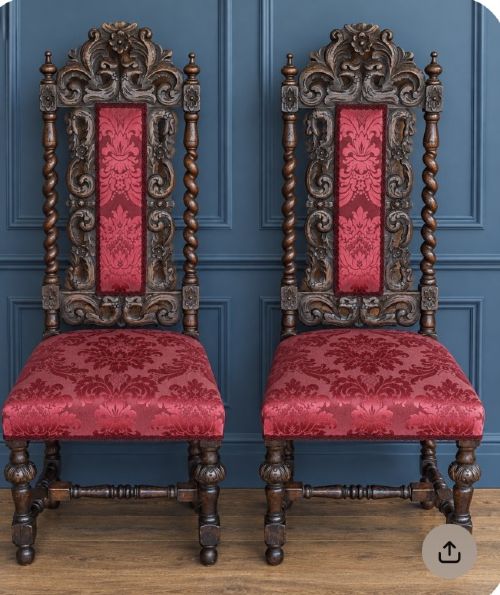
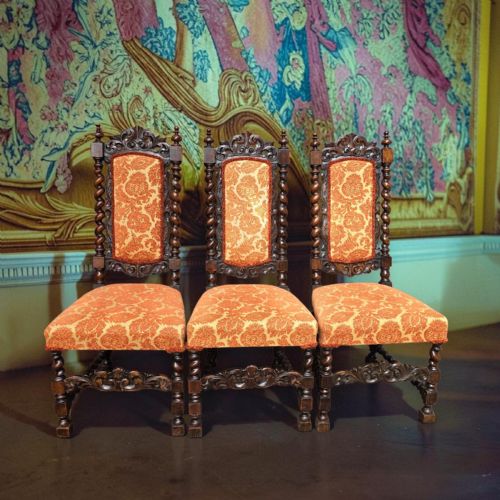
Victorian Jacobean revival chairs take their cues from seventeenth-century forms, reinterpreting earlier styles through nineteenth-century cabinetmaking. The pieces met most often on this page are dining chairs, hall chairs, and large throne armchairs built in sets or pairs.
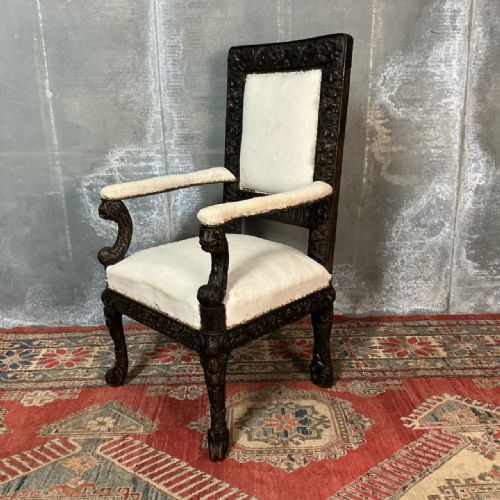
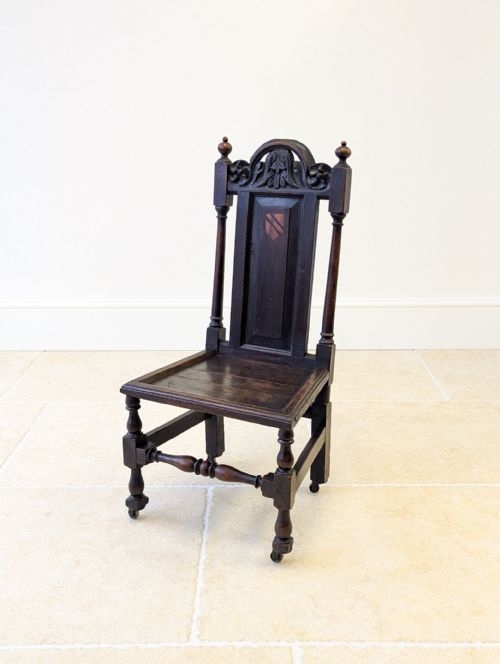
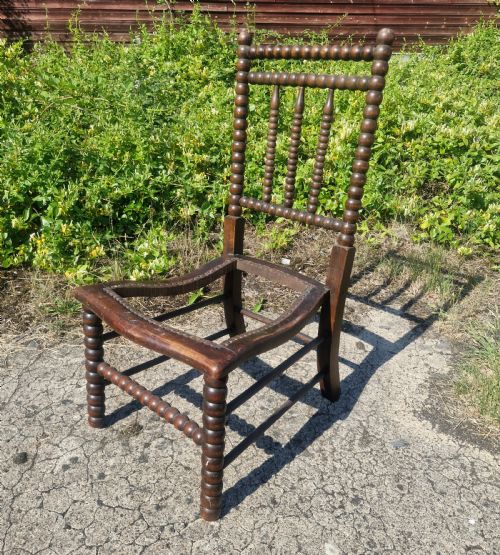
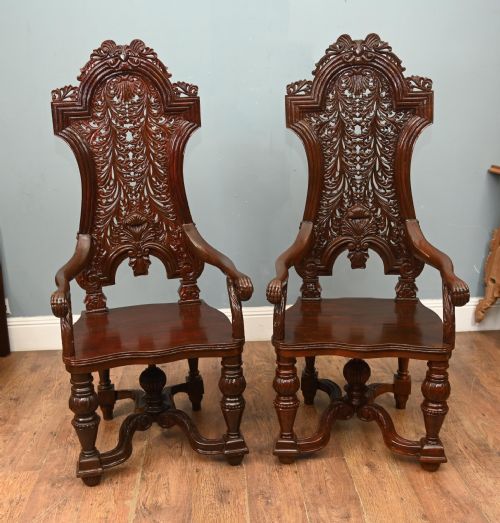
Makers drew on diverse historicist vocabularies, blending Jacobean framing with Gothic Revival, Carolean, and Renaissance elements. Pieces range from simple low-seat bedroom chairs to imposing high-back throne armchairs featuring green man carvings.
Origins trace across the nineteenth century, with production spanning the decades from eighteen fifty to nineteen twenty. Oak is the primary medium, supported by occasional walnut, ash, and rosewood constructions.
Materials and Techniques
Timber selection focuses heavily on oak, alongside walnut, ash, and rosewood. These woods support the deep relief carving, turned elements, and heavy framework characteristic of the revival.
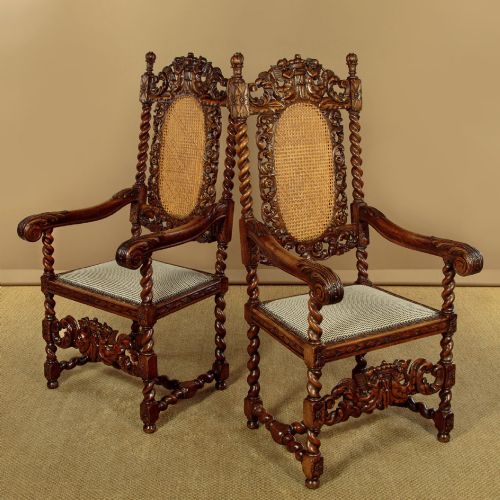
Construction relies on traditional joinery, incorporating turned members such as barley twist and bobbin framing. Surface details include carved crests, panelled backs, and applied upholstery in leather, velvet, fabric, and cane.
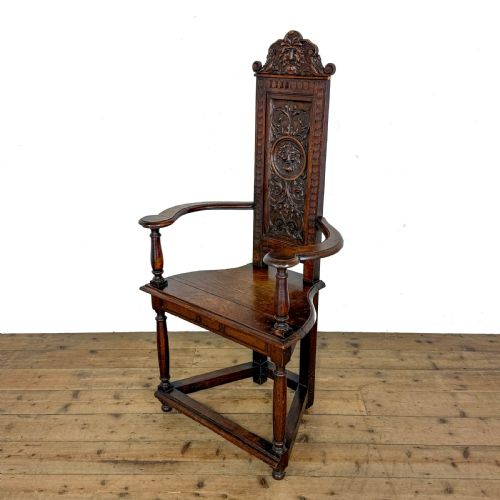
Several heavy throne chairs feature staring green man masks carved directly into the oak headrests.
Assessment of Quality
Depth and crispness of the timber carving distinguish standard workshop production from finer examples. Hand-chiselled relief work on high-back throne chairs and dining sets shows greater articulation than mechanical routing.
The integrity of the timber framing and the matching consistency within sets determine the standing of individual pieces. Matched sets of dining chairs and pairs of armchairs demand cohesive turning and uniform timber grain.
The Victorian Jacobean Revival Chairs Glossary
- Jacobean Revival
- A nineteenth-century historicist style reviving seventeenth-century Jacobean furniture design. It typically employs dark oak, geometric moulding, and strapwork carving.
- Barley Twist
- A turned column resembling a twisted rope. This detail appears frequently on the uprights and stretchers of revival seating.
- Wainscot Chair
- A heavy wooden armchair with a panelled back and solid seat, originating in the sixteenth and seventeenth centuries. Victorian versions emulate this stout form.
- Carolean Style
- A seventeenth-century aesthetic named after the reign of Charles the Second, known for ornate scrollwork and crown motifs. Revival pieces copy these elaborate carved crestings.
- Green Man
- A sculptural face carved from foliage or branches, representing rebirth. Large nineteenth-century throne chairs frequently feature this mask on the crest rail.
Victorian Jacobean Revival Chairs: Frequently Asked Questions
What is a Victorian Jacobean revival chair?
These seats are nineteenth-century interpretations of seventeenth-century domestic furniture, built with heavy timber frames and historicist decorative motifs. They recreate older forms like wainscot chairs and high-back hall seating using Victorian manufacturing methods.
Craftsmen utilised dark woods, turning lathes, and hand-carving chisels to mimic the age of oak. The results range from simple side chairs to monumental throne seats.
How were these chairs used historically?
Dining chairs and sets of side chairs furnished large Victorian dining rooms and formal reception spaces. Hall chairs stood in entranceways as architectural statements for visitors.
Throne chairs and heavy armchairs served as principal seats in studies, libraries, and parlours. Their imposing proportions projected status and historical appreciation.
How do I care for antique oak furniture?
Keep wooden surfaces away from direct heat sources and strong sunlight to prevent timber splitting and fading. Dust regularly with a dry cloth and apply occasional wax polish to nourish the grain.
Avoid liquid cleaners and silicone sprays, which degrade antique wax finishes over time. Maintain stable indoor humidity levels to protect glued joints and carved elements.
How can I tell the period of a revival chair?
Examine the timber underneath and behind for tool marks, saw patterns, and signs of fastener age. Nineteenth-century revival pieces combine machine-sawn timber components with hand-finished carving.
Compare the turned elements and upholstery methods against documented nineteenth-century cabinetmaking practices. Genuine seventeenth-century originals feature different joinery construction compared to Victorian copies.