


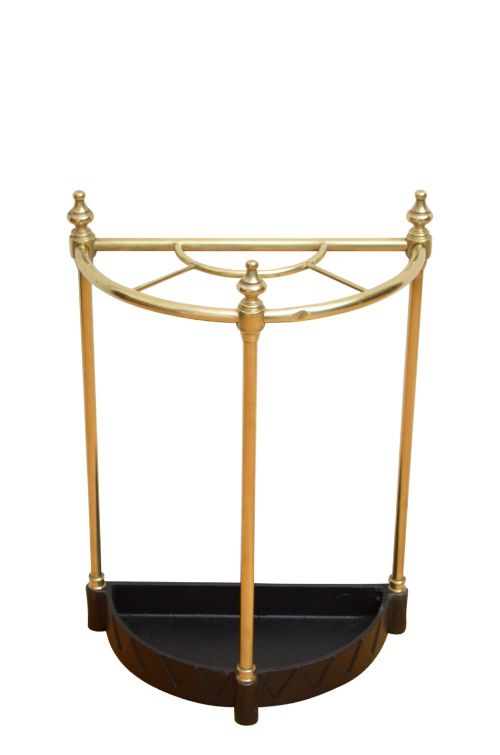


Victorian Iron Umbrella Holder
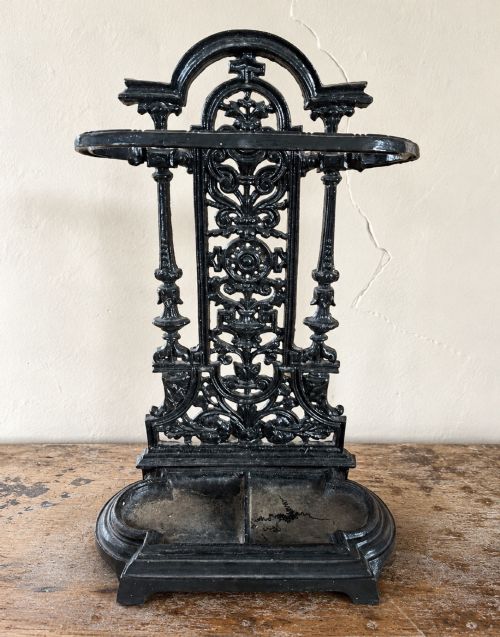
A victorian iron umbrella holder brings sturdy utility and architectural form into a hallway, designed to keep damp walking gear contained.
Victorian Iron Umbrella Holder
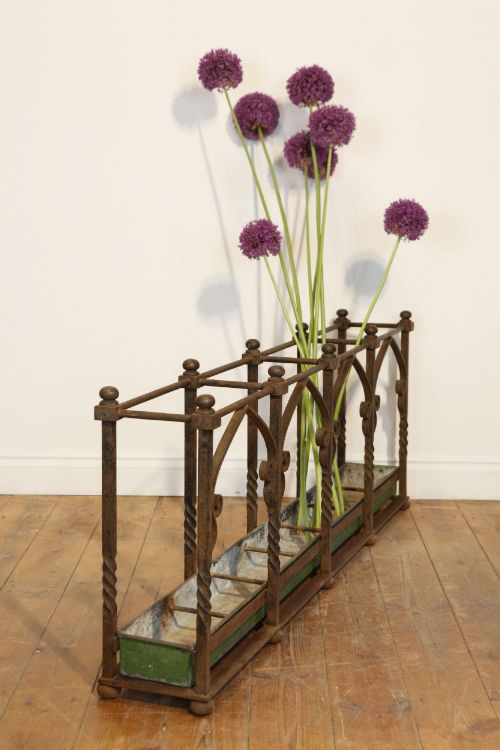
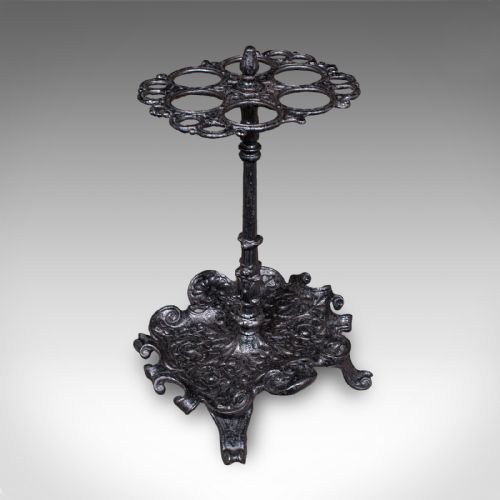
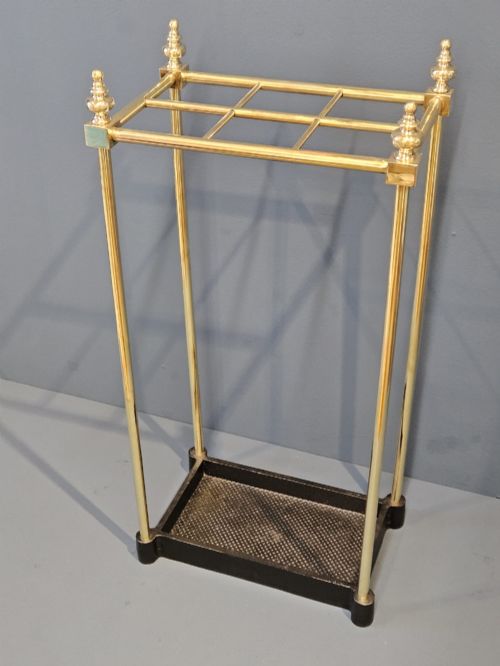
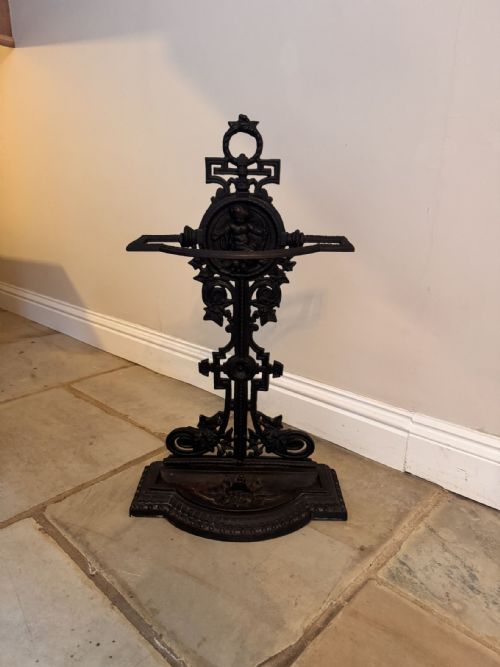
When someone searches for a victorian iron umbrella holder, they encounter practical hall furniture designed to hold walking sticks, parasols, and umbrellas in nineteenth-century homes. These items range from simple utilitarian frames to elaborate decorative pieces intended for grand reception areas.
The objects seen on this page primarily date from the Victorian and Edwardian periods, stretching from the mid-nineteenth century into the early twentieth century. Formats include dedicated stick stands, demi-lune shapes designed to sit flat against a wall, and combined hall stands integrating hooks and mirrors.
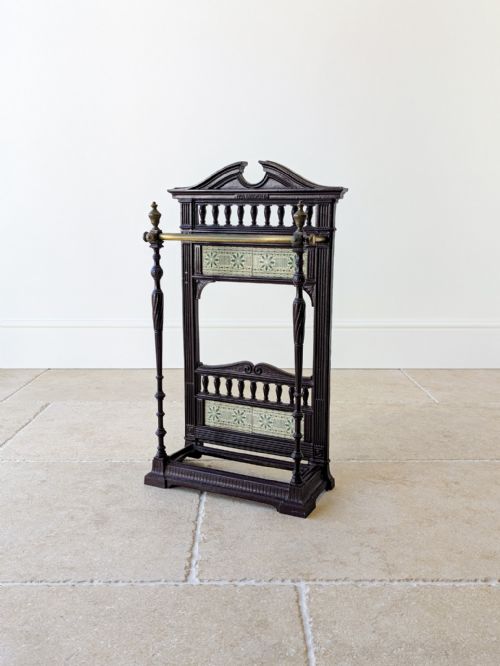
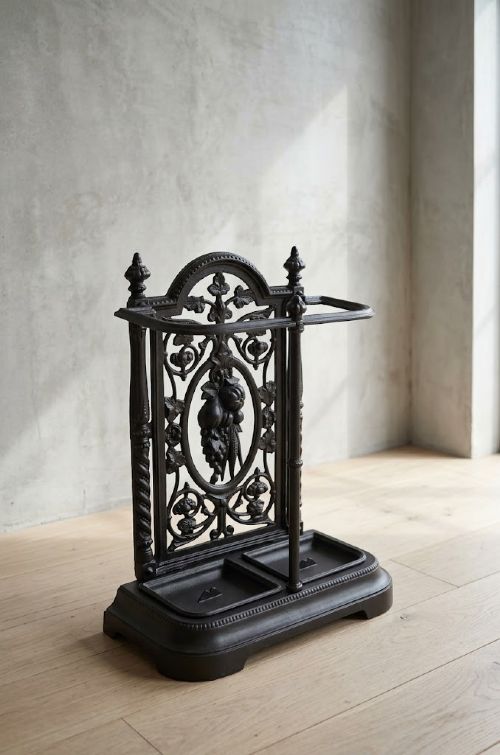
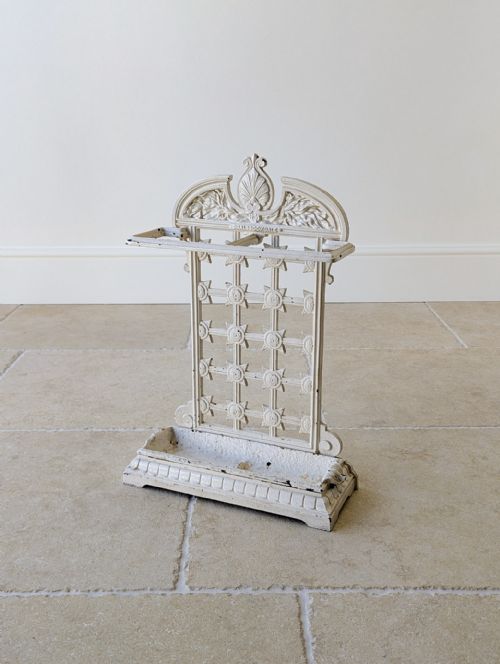
Cast iron serves as the defining structural material for these items, frequently paired with removable drip trays in zinc, ceramic, or enamel to catch rainwater. Makers utilised open-work scroll patterns, naturalistic plant motifs, and figural designs to turn a mundane hallway accessory into a decorative focal point.
Materials and construction methods
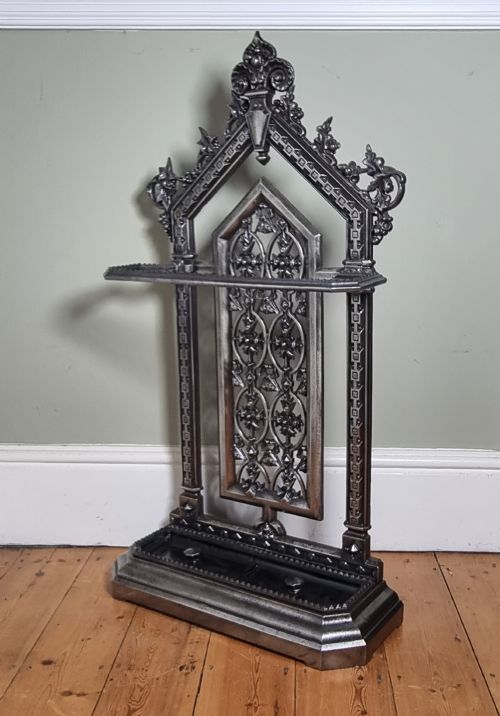
Foundries produced these pieces using traditional sand-casting techniques, pouring molten iron into packed sand moulds formed from master patterns. This method allowed makers to achieve intricate pierced foliage, lattice panels, and crisp manufacturer marks on the reverse.
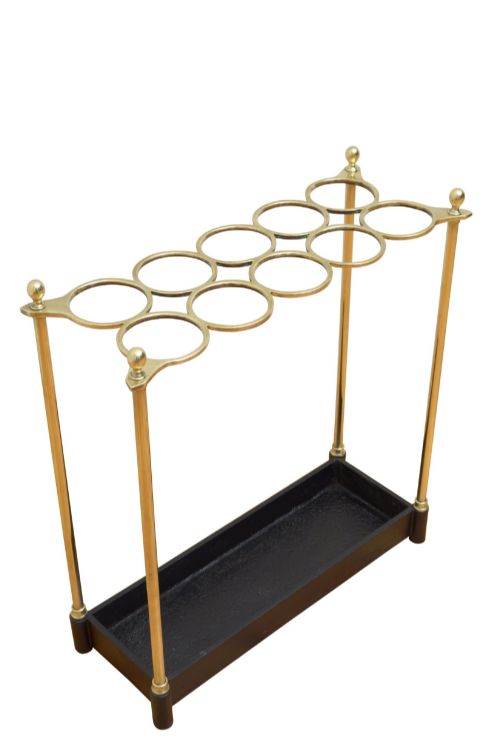
Makers combined cast iron with complementary metals and timbers, securing brass rails, ball finials, and steel rods to build rigid frames. Removable metal or ceramic trays were incorporated at the base to protect floors from moisture dripping off wet umbrellas.
Surface finishes applied in the period included black paint, japanning, and occasional polychrome enamelling to prevent oxidation and provide a uniform appearance. Over decades of use, these original finishes often developed patinas through natural wear and repainting.
Victorian Iron Umbrella Holder Retail Price Guide 2026
Typical asking prices for victorian iron umbrella holder among the pieces listed under this phrase on Sellingantiques today, from the lower quarter to the upper quarter. They describe what is for sale here now, not the wider market.
Some Victorian households welcomed visitors with cast iron footmen and eager-eyed gun dogs guarding their wet umbrellas.
Distinctions in manufacture and design
Quality in a victorian iron umbrella holder depends upon the crispness of the casting and the depth of relief in the ornamentation. Fine examples display sharp details in foliage and figures without the blurring or surface pitting seen in hurried foundry work.
The structural integrity of the frame and the presence of original components dictate the standing of a piece. Stands retaining their matching drip trays and secure joint fixings represent a more complete survival of the original design.
Attribution to documented foundries or designers elevates certain pieces above standard anonymous production. Items bearing maker stamps or recognizable stylistic designs by prominent manufacturers carry distinct marks of origin.
Coalbrookdale·Thomas Jeckyll·Falkirk Ironworks·A. Kenrick & Sons
The Victorian Iron Umbrella Holder Glossary
- Demi-lune
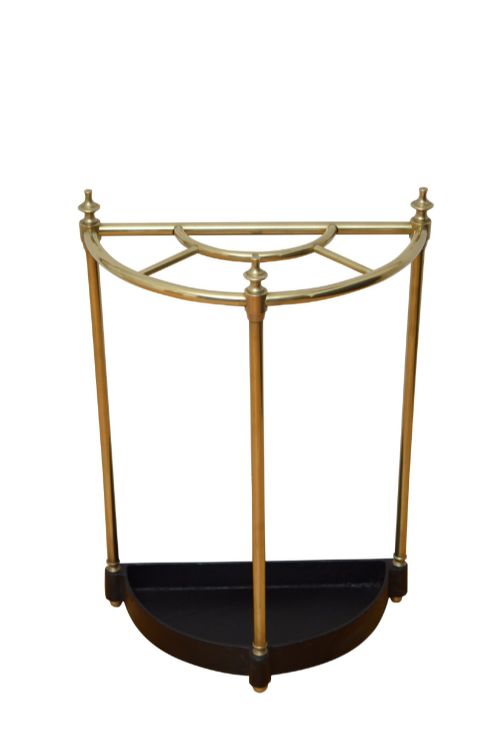
- A half-moon shape designed to stand flat against a hallway wall. This configuration saved valuable floor space in narrow Victorian corridors.
- Japanning
- A type of durable dark varnish finish applied to metalwork in imitation of Japanese lacquer. It served to protect iron surfaces from rust.
- Drip tray
- A shallow removable basin positioned at the base of the stand to catch water. These trays were commonly made from metal, ceramic, or enamel.
- Finial
- A decorative ornament topping the vertical posts or corners of a stand. They were frequently cast in brass or iron.
- Stick loop
- The upper framework divider that keeps walking sticks and umbrellas upright and separated. It prevents items from leaning hazardously or falling outward.
Victorian Iron Umbrella Holder: Frequently Asked Questions
How do I stop rust on an iron stand?
Keep the iron clean and dry by regularly emptying and drying the internal drip tray. Apply a light microcrystalline wax to the metal surfaces to protect the finish from moisture.
Avoid placing the stand in damp environments or using abrasive cleaners that strip the original surface patination. Gentle dusting preserves the historic finish.
Where were these stands placed?
Victorian households positioned these umbrella holders in entrance halls, vestibules, and reception corridors. They stood ready to receive wet gear immediately upon entering the house.
The demi-lune shapes were especially useful in narrow entrance passages where floor space was strictly limited against the wall.
Are drip trays usually original?
Many surviving stands have lost their original removable drip trays over decades of use and cleaning. Replacement trays in metal or ceramic are common.
A matching or period-appropriate tray enhances the completeness of the piece, though finding an exact contemporary match can require patience.
How do I identify a Coalbrookdale stand?
Coalbrookdale pieces often feature registration marks, diamond-shaped design patent stamps, or explicit factory lettering cast directly into the ironwork. The botanical and aesthetic designs frequently match documented nineteenth-century foundry catalogues.
The crispness of the casting and weight of the iron also point toward major foundry production rather than provincial copying.