


Victorian Iron Entrance Gate
A victorian iron entrance gate brings heavy forged presence to a boundary, offering robust security and striking architectural silhouette for a garden or driveway.
Victorian Iron Entrance Gate
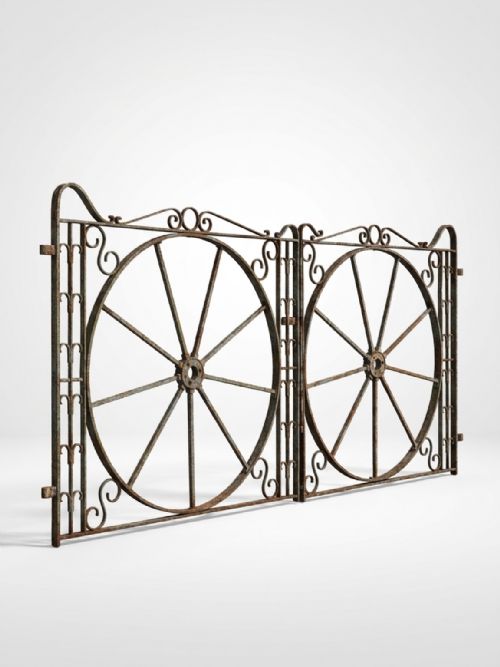
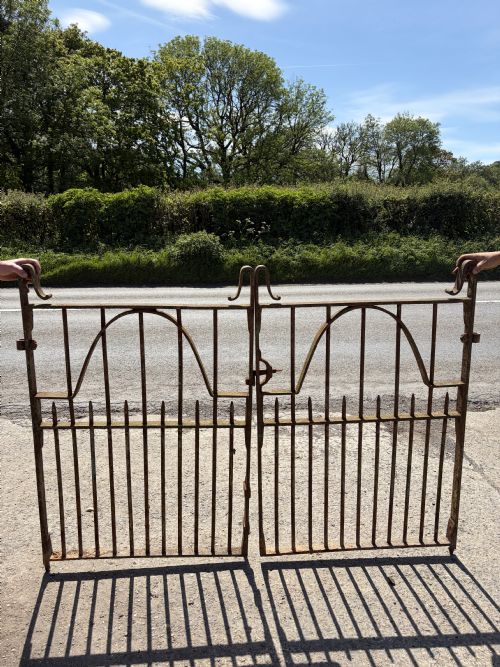
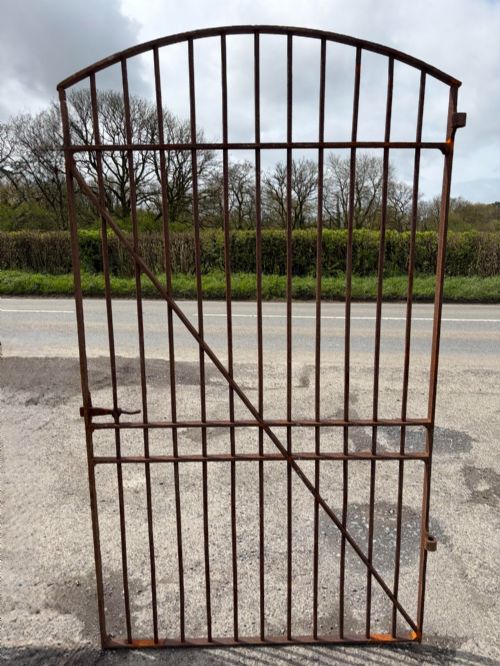
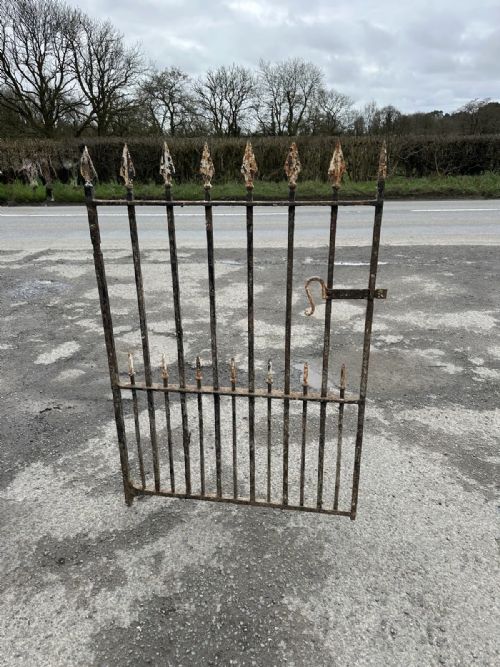
A victorian iron entrance gate encompasses sturdy garden gates, architectural salvage, and large driveway gates designed to secure a property boundary. These pieces originate predominantly from the Victorian and 19th Century periods, reflecting the heavy industrial output of the era. Buyers most commonly meet substantial wrought iron or cast iron examples, ranging from modest garden access points to monumental estate structures.
The surviving forms include single garden gates as well as imposing pairs built for carriage and driveway entrances. Many display characteristic detailing such as strapwork, trident motifs, or arched tops with riveted construction. Their primary function remains structural enclosure, though their surviving presence serves as a strong decorative feature for historic and traditional properties.
How they were made
Makers utilised durable metals, relying primarily on wrought iron and cast iron to build structural integrity into each entrance. Wrought iron elements were beaten and shaped by hand, allowing for flexible strapwork and resilient framing that could withstand heavy daily use. Cast iron components provided intricate decorative details and solid structural anchors, melted and poured into moulds before assembly.
Riveted construction joined heavy iron bars together, creating rigid frames designed to endure decades of exposure to the elements. Blacksmiths and ironfounders combined these techniques to produce tall arched tops, estate gates, and substantial garden barriers built to last for generations.
The listings show pieces spanning the 18th century, the 19th century, and around 1900, constructed from wrought iron and cast iron.
What varies in quality
The distinction between standard utility barriers and superior estate work rests upon the weight of the metal and the complexity of the forging. Heavier gauge ironwork with hand-hammered strapwork and intricate trident details demonstrates a higher standard of craftsmanship than simpler cast productions. Monumental scale and balanced symmetry elevate certain pairs into exceptional examples of period ironmongery.
Preservation of the original metal structure and minimal corrosion significantly affect the integrity of a gate. Pieces retaining their original riveted joints and uncompromised section thickness represent the finer end of surviving examples.
The Victorian Iron Entrance Gate Glossary
- Wrought iron
- A tough, malleable form of iron containing very little carbon, easily beaten and shaped by a blacksmith. It resists rust better than modern steel and forms the backbone of traditional estate gates.
- Cast iron
- Iron melted and poured into a mould to create rigid structural parts or decorative motifs. It offers great compressive strength but tends to be brittle.
- Strapwork
- Flat bands of iron riveted across joints or surfaces to reinforce the frame. This technique adds both structural rigidity and a distinct linear pattern.
- Architectural salvage
- Building elements rescued from older structures for reuse. These items preserve traditional craftsmanship that would otherwise be lost to demolition.
- Trident detail
- A decorative finial or terminal shaped like a three-pronged spear. It appears on the upper rails of period gates for added visual presence.
Victorian Iron Entrance Gate: Frequently Asked Questions
How do I hang a heavy iron gate?
Hanging a heavy metal gate requires substantial stone pillars or reinforced brick piers capable of supporting significant rotational weight. Pivots and hinges must be securely anchored into the masonry using resin or heavy anchor bolts to prevent sagging over time.
Professional installation is strongly advised for large estate pairs to ensure proper alignment and smooth ground clearance along the driveway.
Can these gates be restored?
Most historic ironwork can be carefully restored by removing surface oxidation and repairing any weakened riveted joints. A blacksmith can forge matching replacement sections if any strapwork or finials are missing.
Applying a protective paint finish after treatment prevents further corrosion and preserves the metal for decades of continued outdoor use.
How do I protect iron gates from rust?
Regular maintenance involves inspecting the metal surface for paint flaking and treating any exposed spots with a rust-inhibiting primer. Finishing the iron with a durable exterior-grade black paint seals the material against moisture.
Clearing accumulated dirt and leaves from the lower rails also stops dampness from lingering against the vulnerable joints.
Are these gates suitable for modern driveways?
Period ironwork adapts well to contemporary property entrances, providing robust physical security alongside historic character. Their generous widths and tall profiles accommodate standard vehicle access while framing the approach.
Buyers often pair these salvaged barriers with modern automated opening mechanisms tailored to fit heavy historic frames.