

Victorian Iron Cane Stand
A Victorian iron cane stand holds hallways together with heavy metal structure and decorative utility.
Victorian Iron Cane Stand
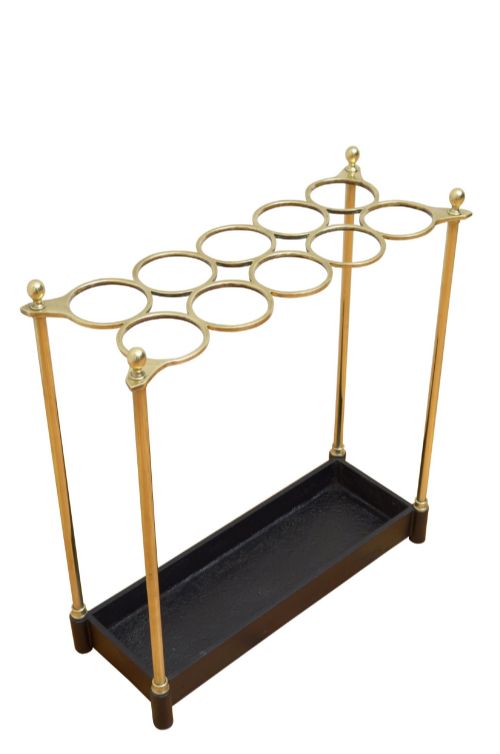
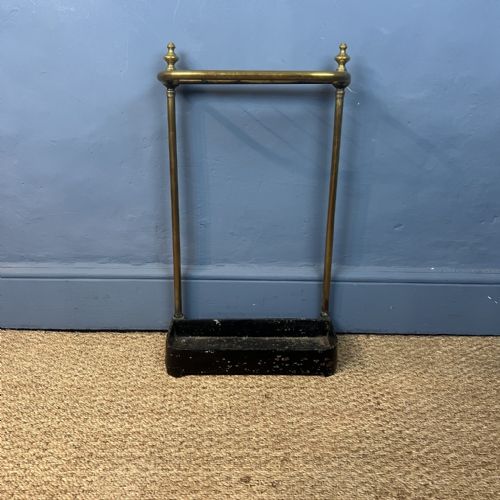
A victorian iron cane stand serves as a sturdy hallway furnishing designed to hold walking sticks, umbrellas, and parasols. These utilitarian items combine robust metal frames with drip trays to protect floors from wet weather.
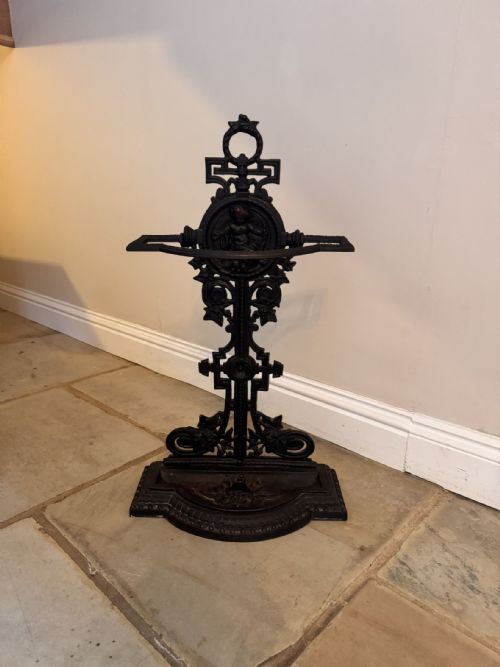
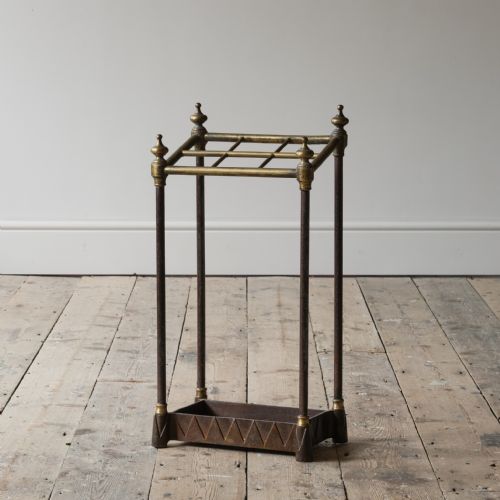
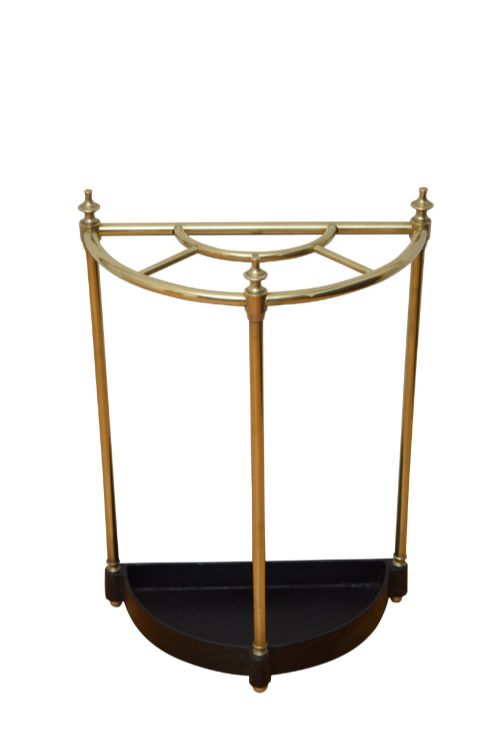
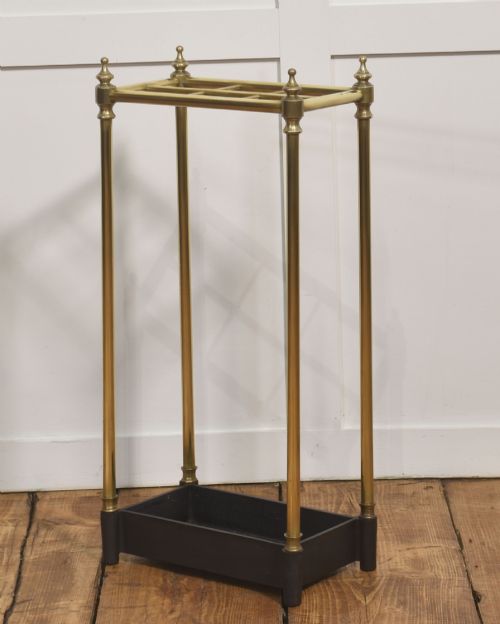
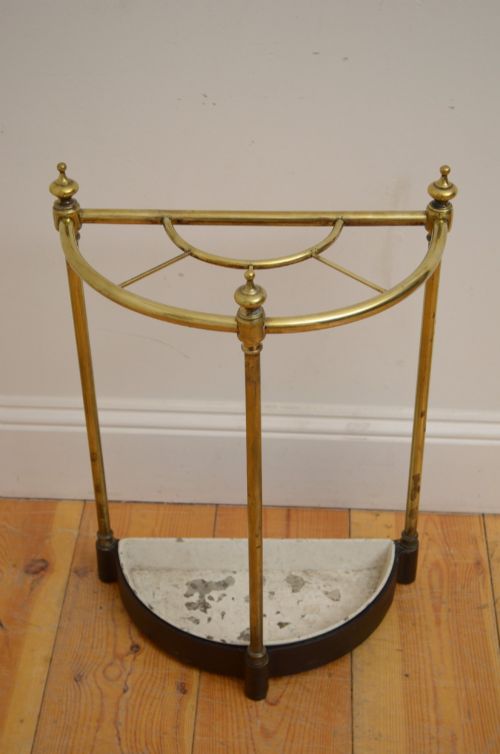
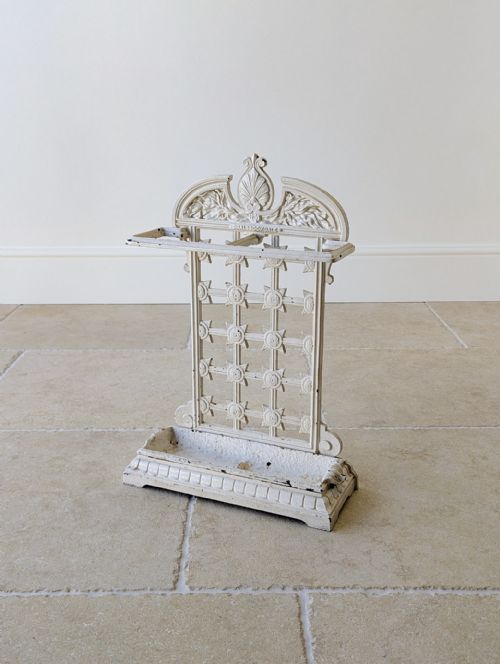
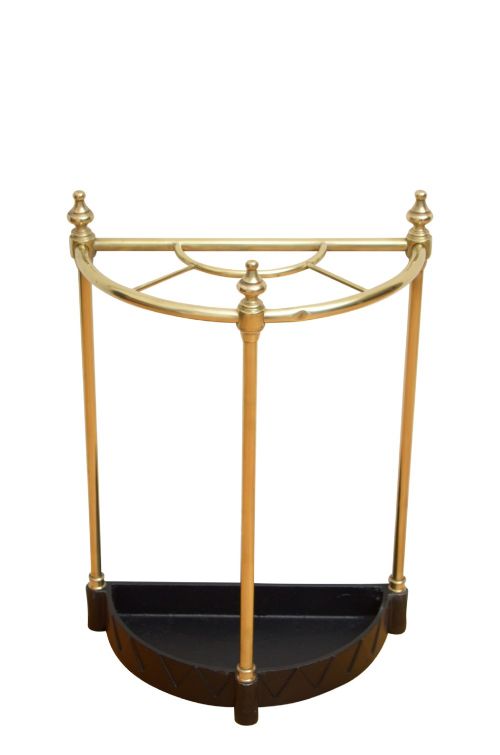
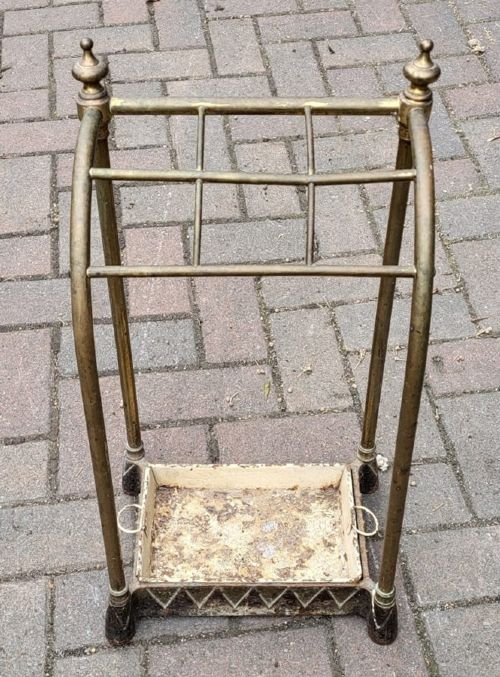
The pieces appearing on this page date primarily from the nineteenth century and the Edwardian era, spanning the Victorian period and subsequent decades. Common forms include demi lune shapes designed to sit flat against a wall, alongside upright rectangular frames.
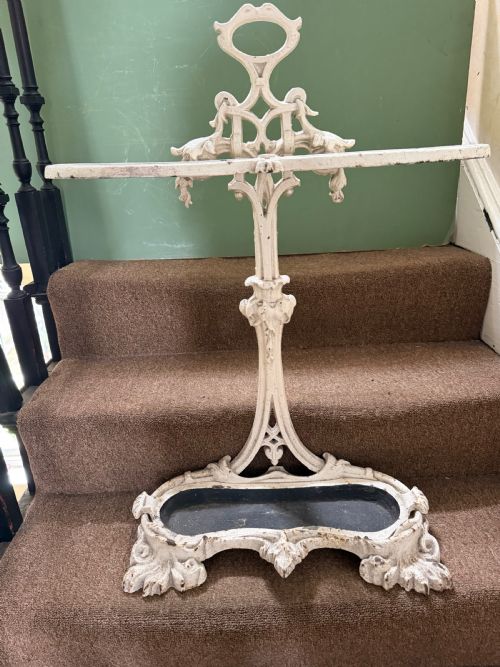
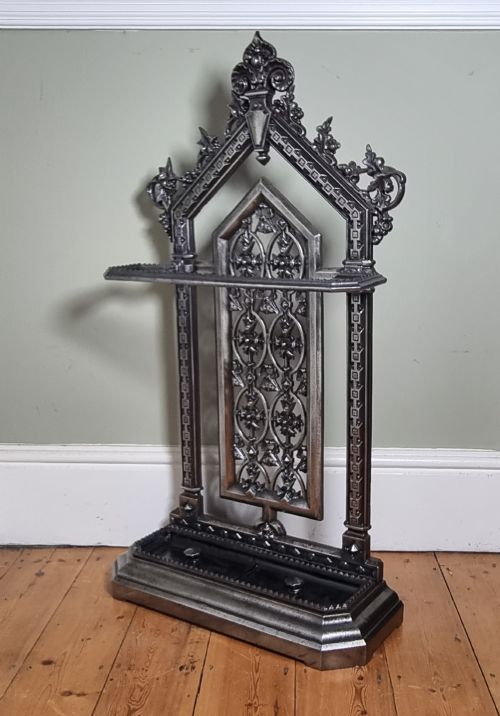
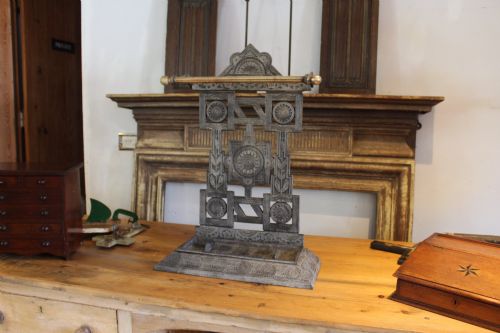
Makers often utilised iron, cast iron, and brass, sometimes pairing metal with oak or incorporating painted finishes and enamel. Aesthetic Movement, Gothic Revival, and Art Nouveau styles appear frequently among the diverse decorative motifs.
Assessing quality
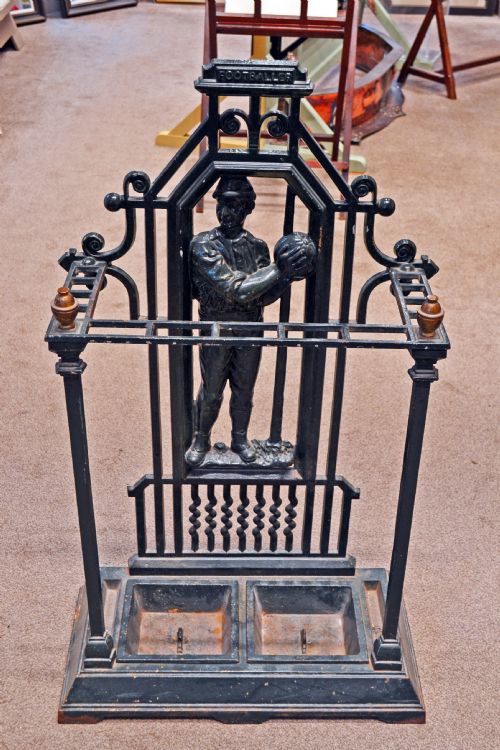
Quality in these pieces rests upon the crispness of the casting and the ambition of the design. Foundries that employed skilled modellers produced figures and foliage with sharp definition and clear undercut details rather than soft, blurred contours.
Heavier gauge metal and complete, original components indicate superior production standards. The presence of matching, original drip trays and maker marks stamped into the iron structure elevate the standing of an individual piece.
Listings feature iron, brass, and oak materials across Victorian, Edwardian, and Art Nouveau styles.
Coalbrookdale·Thomas Jeckyll·Falkirk Ironworks·A. Kenrick & Sons·Shoolbred
The Victorian Iron Cane Stand Glossary
- Demi lune
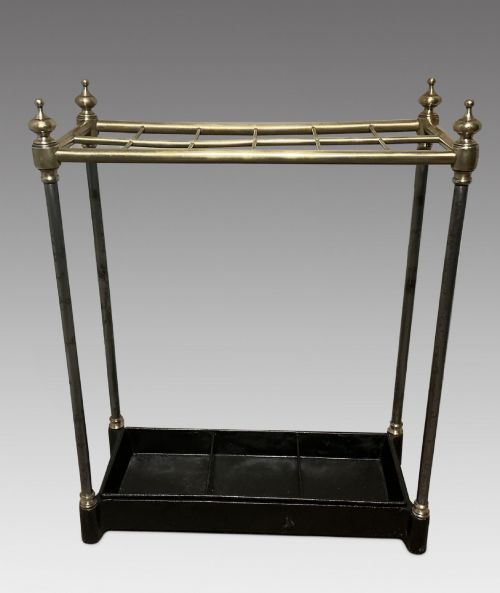
- A half moon shape allowing the stand to fit snugly against a hallway wall. This space saving profile is particularly common in brass and iron examples.
- Drip tray
- A shallow metal tray positioned at the base to catch water from wet umbrellas and walking sticks. These trays are frequently removable for easy emptying and cleaning.
- Japanning
- A type of durable black or dark varnish finish applied to ironwork to simulate Japanese lacquer and prevent rust. It provides a glossy surface that withstands daily hallway use.
- Finial
- A decorative ornament fixed to the top corners or terminals of the stand frame. Brass ball finials are typical on nineteenth century umbrella stands.
- Aesthetic Movement
- A late nineteenth century design style emphasising visual beauty over narrative subject matter. Stands in this style often feature stylized plant forms and geometric framing.
Victorian Iron Cane Stand: Frequently Asked Questions
Where were these stands placed in a Victorian home?
Victorian households positioned these stands in the entrance hall or vestibule close to the front door. This placement ensured guests and residents could easily store wet umbrellas and walking sticks upon entering.
The narrow demi lune shapes were especially useful in tighter hallway spaces, sitting flush against the wall while providing ample capacity for several sticks.
How do I prevent rust on a cast iron stand?
Keep the metal dry and wipe away standing water from the base tray regularly to prevent moisture accumulation. Maintaining a stable indoor humidity level protects both the painted surfaces and bare metal.
Avoid placing wet items directly against unpainted iron surfaces for extended periods. Gentle dusting preserves the original finish without stripping historic patination.
Are the drip trays usually original?
Finding a stand with its original matching drip tray adds significantly to the integrity of the piece. Many replacement trays exist due to decades of rust and wear in damp hallways.
Examine the fit, metal gauge, and wear patterns on the tray to assess whether it matches the age and construction of the main iron frame.
What styles are common in these iron stands?
Design styles range from plain utilitarian frames to elaborate Gothic Revival and Aesthetic Movement patterns. Foundries also produced figurative designs depicting animals, mythical characters, and literary figures.
Art Nouveau examples introduce flowing plant stems and whiplash lines typical of the early twentieth century. This variety reflects changing domestic tastes across the decades.