




Victorian Intaglio Jewellery
Victorian intaglio jewellery comprises carved seals and rings set in gold with hardstones, offering miniature classical artistry to wear daily.
Victorian Intaglio Jewellery
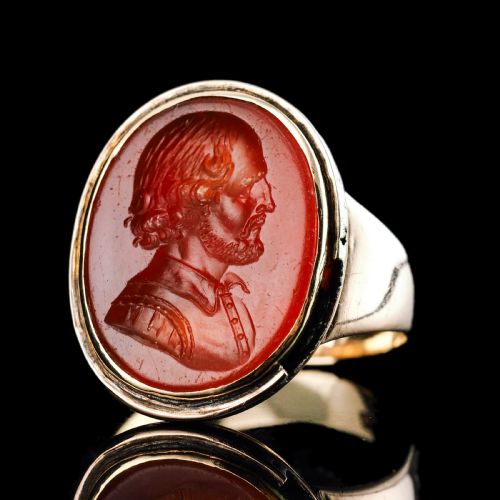
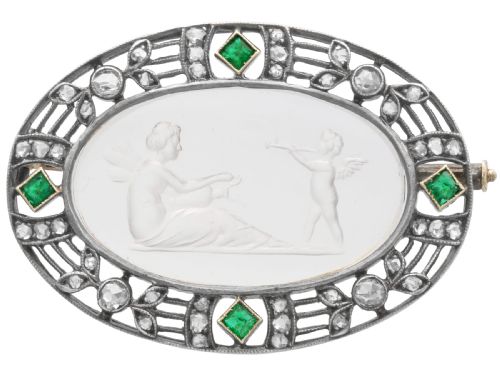
Victorian intaglio jewellery encompasses signet rings, fob seals, and pendants designed to press impressions into hot wax. The pieces span the Victorian, Georgian, and early twentieth-century periods, capturing a sustained taste for classical iconography and personal ciphers.
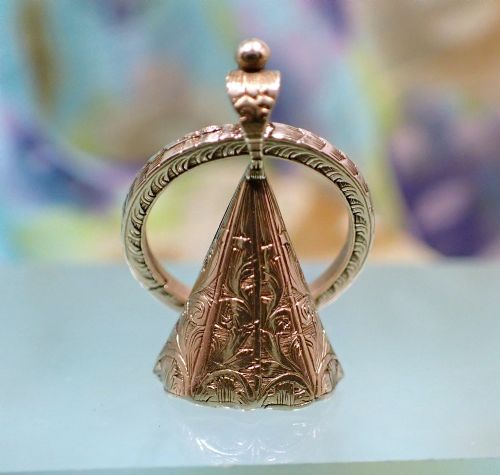
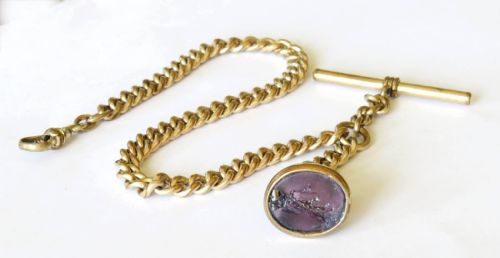
The most common forms on this page are fob seals and rings set into gold. These items combine utility and ornament, often featuring swivel mounts or hanging loops for watch chains and charm bracelets.
How they were made
Goldsmiths worked with yellow gold, predominantly in nine-carat and fifteen-carat purities, alongside rolled gold and gilt metal. Hardstones including carnelian, bloodstone, chalcedony, and sardonyx provide the durable grounds necessary for carving miniature scenes.
Lapidaries incised portraits, crests, and figures directly into the stones using abrasive drills and diamond dust. The resulting sunken relief produced crisp raised impressions when stamped into sealing wax.
Listings feature yellow gold, rolled gold, and gilt metal paired with carnelian, bloodstone, chalcedony, sardonyx, and rock crystal across Victorian and Georgian periods.
What varies in quality
The precision of the stone carving dictates the artistic merit of each piece, ranging from simple monograms to detailed portraits of Roman emperors and classical figures. Sharp edges and legible proportions show the hand of a skilled lapidary.
Mount construction and gold weight also define the grade of the piece, with heavy cast mounts and intricate chased borders separating bespoke items from lighter production work.
The Victorian Intaglio Jewellery Glossary
- Intaglio
- A design carved into a gemstone so that the relief is sunken below the surface. This technique allows the stone to leave a raised impression when pressed into sealing wax.
- Fob seal
- A small pendant designed to hang from a pocket watch chain, featuring a carved stone base used for stamping wax seals. They were essential desk accessories for correspondence.
- Carnelian
- A brownish-red variety of the silica mineral chalcedony, widely utilised for intaglio rings and seals due to its uniform colour and hardness.
- Bloodstone
- A dark green chalcedony flecked with red jasper inclusions, commonly set into Victorian signet seals and rings for a striking contrast.
Victorian Intaglio Jewellery: Frequently Asked Questions
What is victorian intaglio jewellery?
Victorian intaglio jewellery consists of rings, pendants, and fob seals featuring hardstones carved with sunken designs. These pieces served as both personal ornaments and functional tools for sealing letters.
Craftsmen set stones like carnelian and bloodstone into yellow gold mounts. The subjects range from monograms and family crests to classical Roman figures and animals.
How do you use a fob seal?
A fob seal is pressed firmly into melted sealing wax to leave a raised personal or heraldic impression. They hung from watch chains or pocket chains for easy access during letter writing.
Many examples feature swivel mechanisms so the stone can be turned to reveal different faces or simply display the decorative back of the mount.
What stones are used in these pieces?
Carnelian and bloodstone appear most frequently, offering durable surfaces for miniature carving. Chalcedony, sardonyx, and rock crystal are also used across the periods.
These hardstones resisted the wear of daily handling while providing contrasting colours that highlighted the intricate carved details.
How do I date an intaglio piece?
Dating relies on the gold purity marks, mount styles, and the specific character of the stone carving. Pieces range from the Georgian era through the Victorian period and into the early twentieth century.
Stylistic shifts, such as Neoclassical motifs or ornate Victorian chasing, help narrow the decade of manufacture alongside any hallmarks present on the gold.