


Victorian Inlaid Pedestal Table
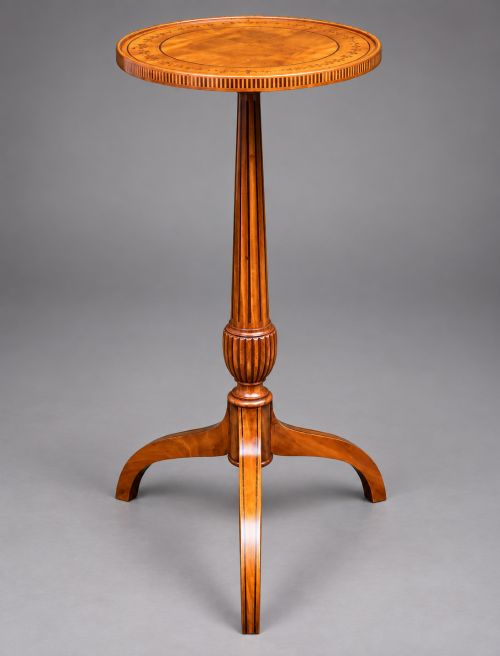
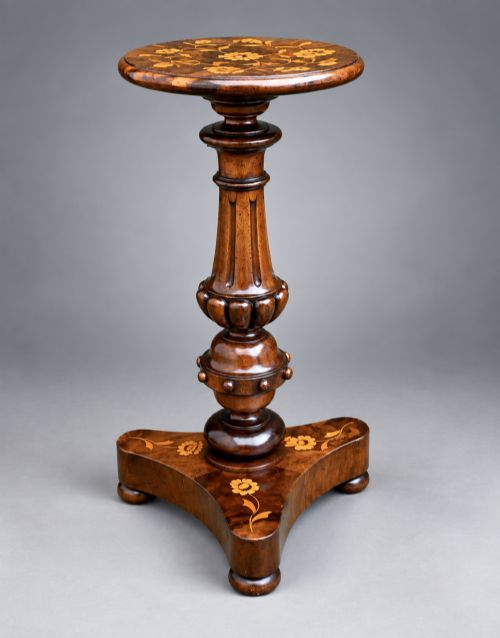
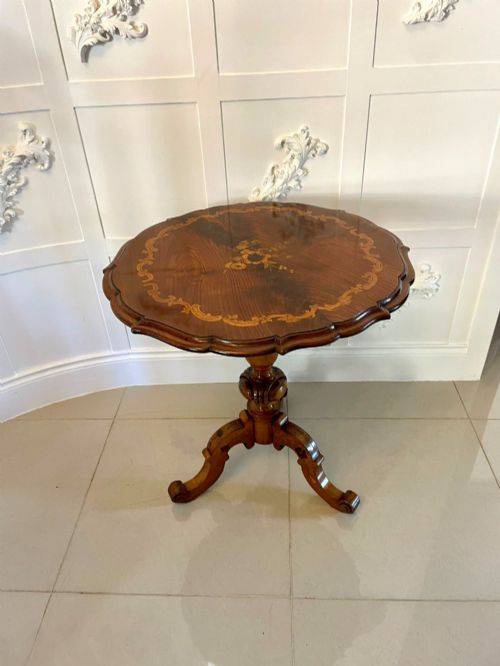
A victorian inlaid pedestal table combines the warmth of figured timber with precise decorative detail, offering a central pillar support and distinct surface marquetry.
Victorian Inlaid Pedestal Table
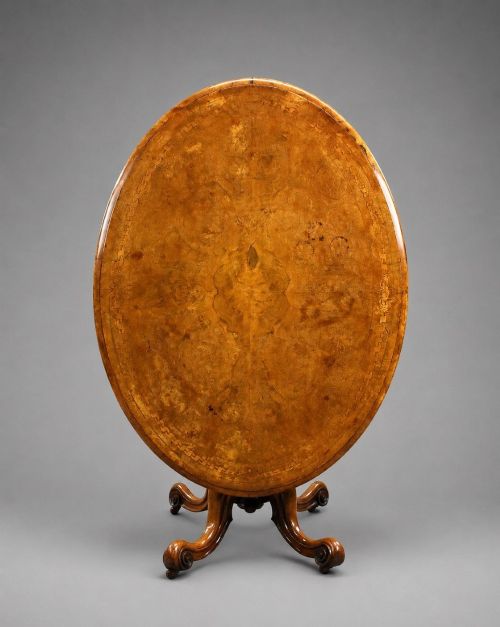
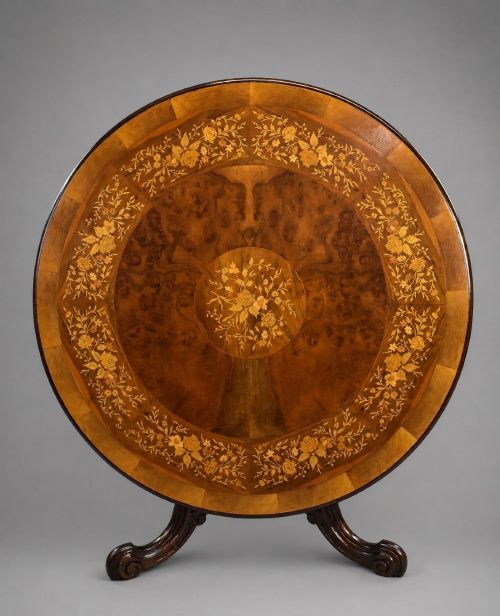
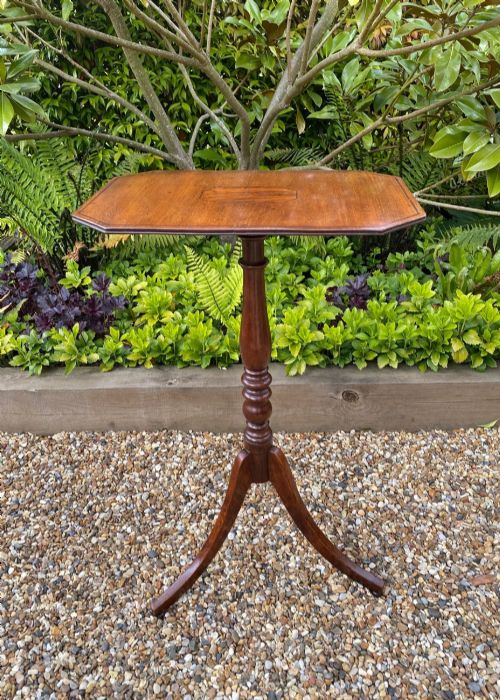
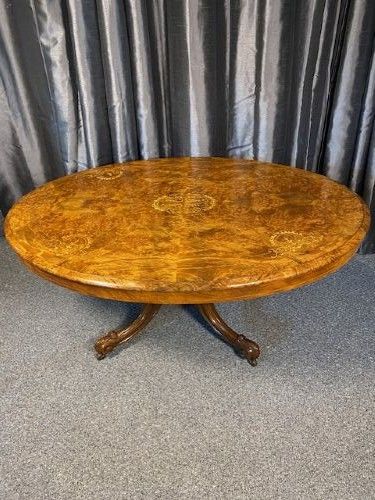
A victorian inlaid pedestal table appears in several distinct formats throughout the nineteenth century, including oval centre tables, breakfast tables, and tip-top occasional pieces. The walnut examples frequently feature burr grain surfaces combined with satinwood or boxwood decorative motifs.
The material evidence shows production spanning from the mid-nineteenth century into the Edwardian era, incorporating styles such as Sheraton Revival and Italian Sorrento alongside standard Victorian designs. Oval and circular top shapes dominate the pedestal formats, supported by carved columns and tripod or platform bases.
Materials and Technique
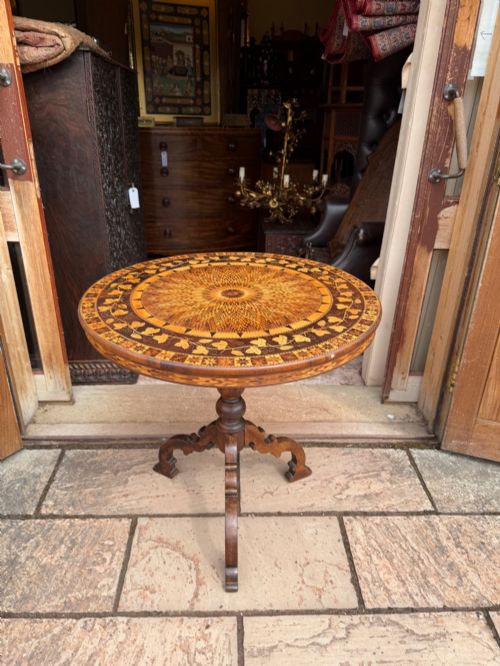
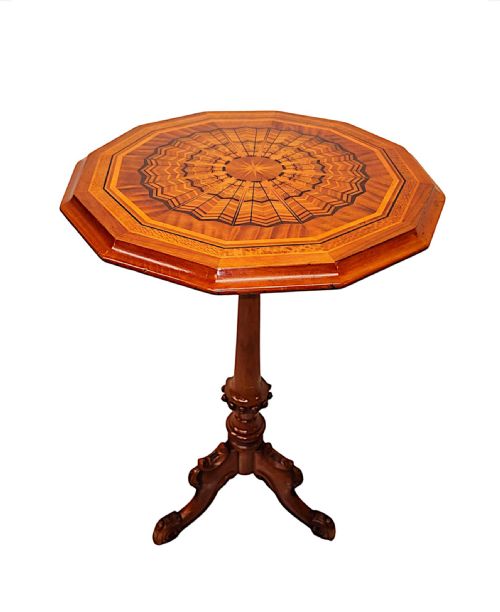
Cabinet makers utilised dense primary timbers like walnut, mahogany, and rosewood as the structural base, applying burr veneers to large surface areas for dramatic grain patterns. Marquetry and stringing incorporated contrasting light woods such as boxwood and satinwood directly into the top surfaces.
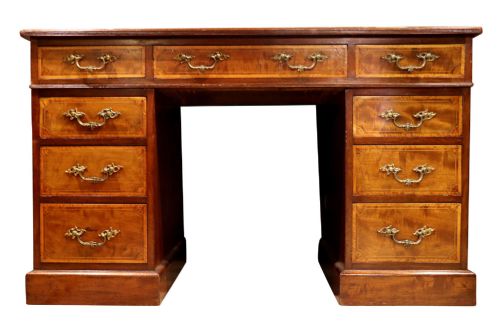
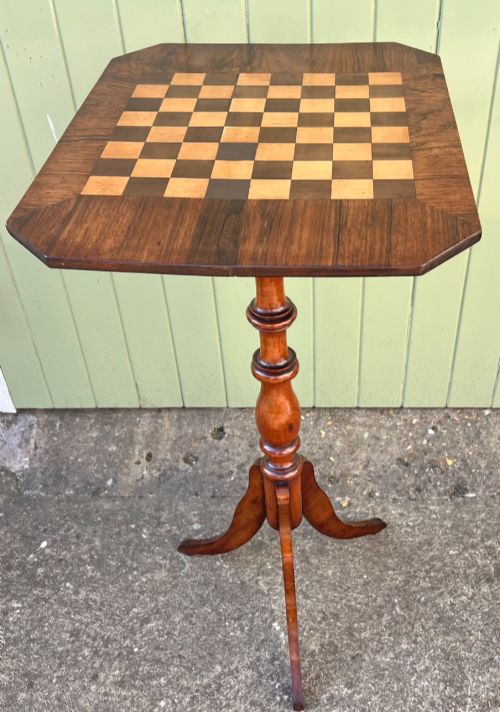
Pedestal supports combined turned timber columns with carved tripod legs or heavy platform bases, occasionally integrating brass hardware and leather inserts.
Current listings demonstrate a strong presence of burr walnut, mahogany, and satinwood across mid to late nineteenth-century pedestal forms.
Craftsmanship and Materials
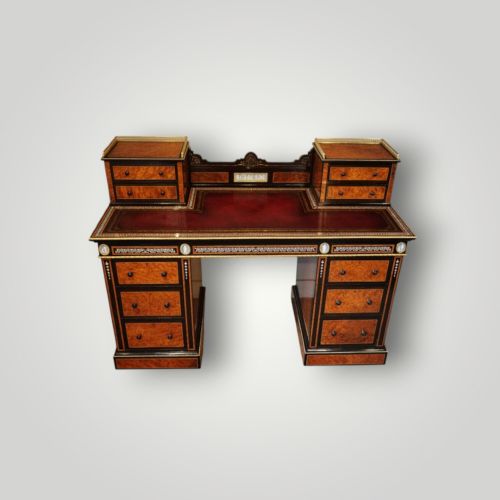
The standard of a victorian inlaid pedestal table rests primarily on the depth and complexity of the marquetry and the selection of the primary timber veneer. Burr walnut with crisp boxwood and satinwood stringing represents a finer tier of production than plain mahogany or later revival pieces.
Construction details such as the carving on the central pillar and the stability of the pedestal mechanism distinguish workshop pieces from mass-produced items.
Edwards and Roberts·Jackson and Graham·Holmes Baldock·Wolfe and Hollander·Egan Workshop
The Victorian Inlaid Pedestal Table Glossary
- Marquetry
- Decorative veneer work forming pictures or geometric patterns using various coloured woods and shell.
- Burr Walnut
- Timber taken from the abnormal growth of a walnut tree, producing swirling, highly figured grain patterns.
- Pedestal Table
- A standalone table supported by a single central column resting on a footed base.
- Stringing
- Thin lines of contrasting wood inlaid into furniture surfaces to create borders and geometric outlines.
Victorian Inlaid Pedestal Table: Frequently Asked Questions
What is a pedestal table?
A pedestal table is a piece supported by a single central column rather than four distinct corner legs. This design allows for unobstructed seating space around the perimeter.
In nineteenth-century examples, the central pillar frequently rests upon a tripod base or a carved platform with scrolled feet.
How do I identify Victorian marquetry?
Victorian marquetry involves cutting contrasting wood veneers into intricate patterns and fitting them flush into the surface of the table top. Look for natural grain variations and subtle colour shifts within the floral or geometric motifs.
Applied stringing lines often frame these central panels using boxwood or satinwood.
Where should I place a pedestal table?
These tables function effectively as freestanding centre pieces in hallways or reception rooms where the top surface and inlaid details remain visible from all sides. Occasional and lamp table variants suit corners or seating areas.
Their single central column makes them adaptable for placement without interfering with surrounding chair legs.
How do I care for burr walnut?
Burr walnut benefits from consistent indoor humidity levels away from direct heat sources to prevent timber movement and veneer lifting. Regular dusting with a soft, dry cloth preserves the polished finish.
Avoid commercial silicone sprays and excess moisture when maintaining the surface.