

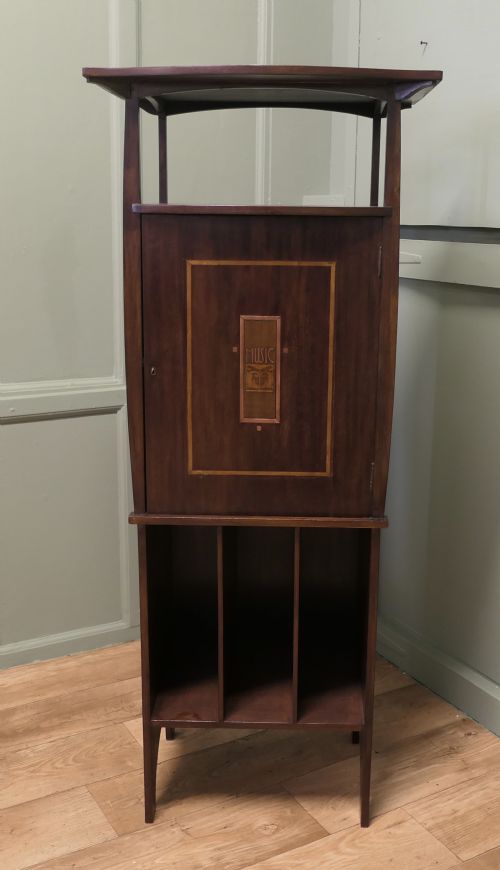
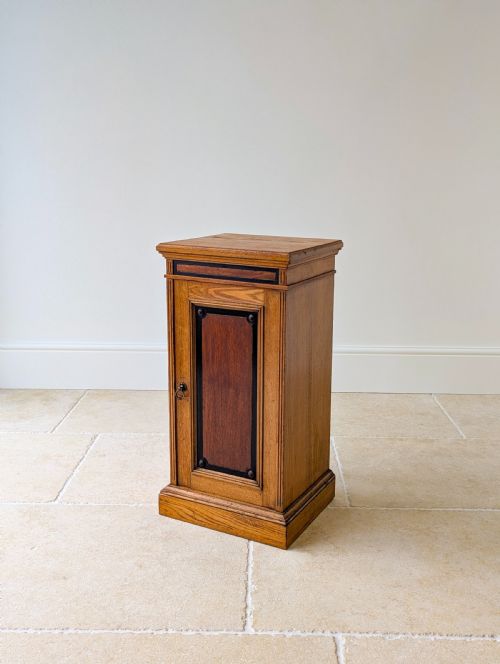


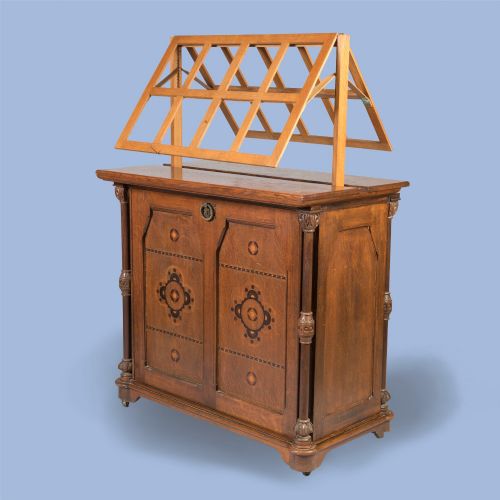


Victorian Inlaid Oak Cabinet
These Victorian inlaid oak cabinet examples range from bedside pieces to music cabinets, offering sturdy storage enriched with thoughtful wood inlay.
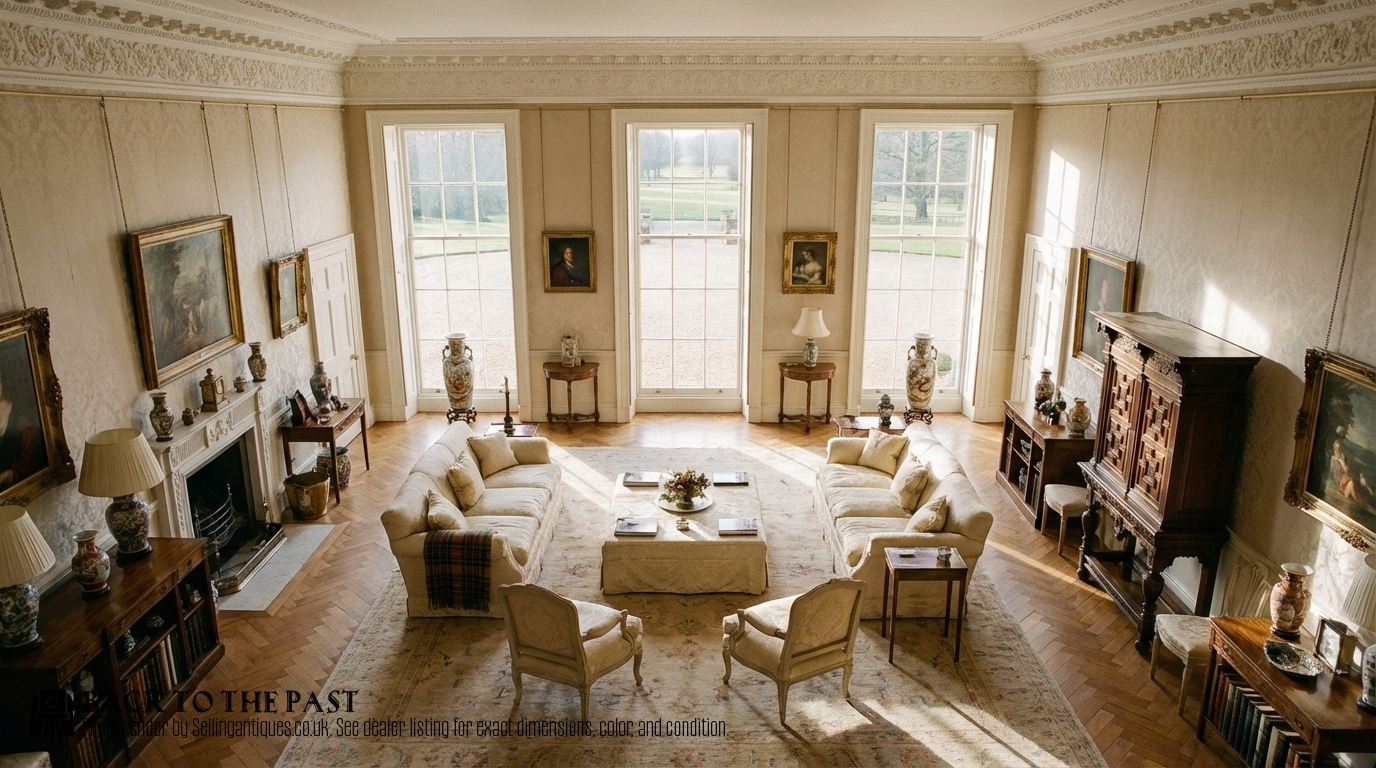
Victorian Inlaid Oak Cabinet
A Victorian inlaid oak cabinet combines the robust grain of native timber with decorative marquetry, serving both functional storage and aesthetic display within the nineteenth-century interior. These pieces emerge across distinct regional and design traditions, spanning domestic utility and refined parlour use.
Makers and workshops of the era employed durable woods such as oak and pollard oak, often accented with ebony, mahogany, and contrasting wood inlay. Each item demonstrates how cabinet makers adapted traditional storage forms to suit evolving Victorian domestic requirements.
How they were made
Construction relies heavily upon solid oak and pollard oak carcases, sometimes supplemented with pine or mahogany for internal elements and secondary framing. Cabinet makers selected timber for its natural grain pattern before applying contrasting wood inlay and ebonised details.
Surface ornamentation integrates carved architectural motifs alongside precise marquetry and brass hardware such as hinges and escutcheons. Joinery techniques from the nineteenth century ensure structural integrity across varied forms, from hanging boxes to large sideboards.
Victorian Inlaid Oak Cabinet Retail Price Guide 2026
Typical asking prices for victorian inlaid oak cabinet among the pieces listed under this phrase on Sellingantiques today, from the lower quarter to the upper quarter. They describe what is for sale here now, not the wider market.
Listings feature oak, pollard oak, mahogany, and ebonised wood combined with brass hardware.
What varies in quality
The standard of execution in a Victorian inlaid oak cabinet depends upon the precision of the marquetry and the selection of timber figures such as pollard oak. Superior examples display seamless integration of contrasting woods and crisp, hand-carved details.
Attribution to documented makers or specific design movements elevates a piece beyond standard commercial production of the period. The sophistication of the internal fittings, such as specialised drawers or original brass furniture, further distinguishes finer examples.
GM Elwood for JS Henry·Benjamin Taylor and Sons·Bruce Talbert attributed to Gillows
The Victorian Inlaid Oak Cabinet Glossary
- Marquetry
- Decorative patterns formed by inserting thin pieces of wood veneer into a background panel. This technique allows for intricate pictorial or geometric designs on cabinet doors and drawer fronts.
- Pollard Oak
- Timber taken from a tree that has been pruned at a height above livestock reach, producing a dense and highly figured grain. Cabinet makers valued this wood for its distinctive swirling patterns.
- Gothic Revival
- An architectural and decorative style drawing inspiration from medieval forms, characterised by pointed arches, heavy carving, and structural robustness. This aesthetic influenced many nineteenth-century case pieces.
- Aesthetic Movement
- A late nineteenth-century design ethos emphasising visual beauty over narrative subject matter, often incorporating simplified forms and contrasting dark woods. Pieces from this movement frequently display Japanese influence.
- Ebonised Wood
- Timber treated with a dark stain or finish to imitate ebony. This process provided sharp visual contrast against lighter oak panels and brass hardware.
Victorian Inlaid Oak Cabinet: Frequently Asked Questions
What is a Victorian inlaid oak cabinet?
A nineteenth-century storage piece constructed primarily from oak and embellished with decorative wood inlay, ranging from small bedside units to large bookcases.
These items reflect diverse stylistic movements of the Victorian era, including Gothic Revival and Arts and Crafts designs.
How were these cabinets used originally?
They served specific domestic functions such as storing sheet music, bedside belongings, tools, or household linen depending on the specific form.
Larger variations functioned as architectural sideboards or hall cupboards to display status and organise household goods.
How do I identify a Gothic Revival piece?
Gothic Revival examples typically feature architectural elements such as pointed arches, heavy mouldings, and robust structural forms reminiscent of medieval architecture.
They often incorporate dark oak and precise carving alongside brass mounts.
What woods besides oak are used?
Makers frequently incorporated pollard oak for highly figured surfaces, alongside mahogany, pine, and ebonised wood for structural or contrasting elements.
Inlay work often utilises ebony and various specimen woods to create geometric or floral patterns.