

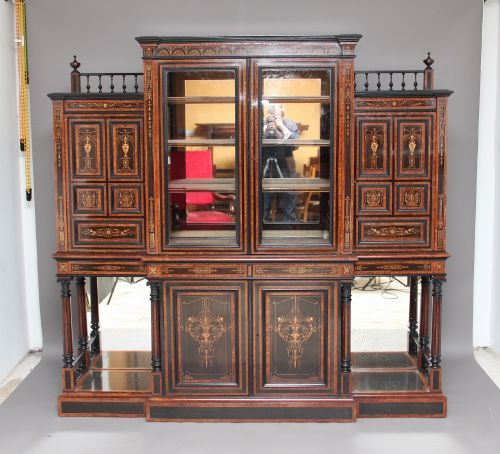
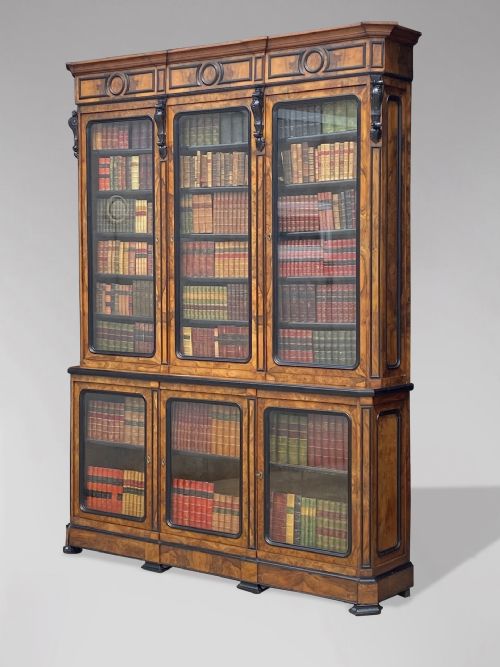
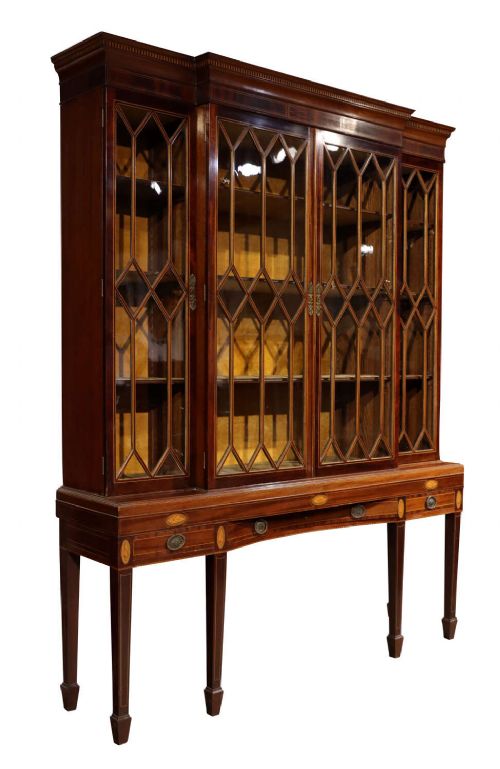
Victorian Inlaid Breakfront Cabinet
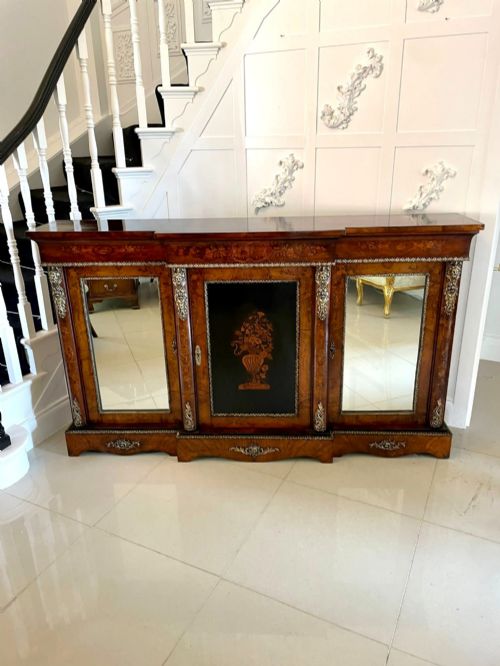
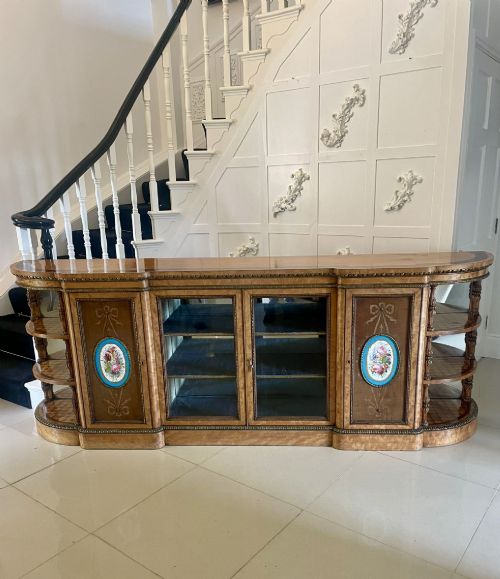
A victorian inlaid breakfront cabinet brings stately presence and precise craftsmanship into a room, offering display space wrapped in rich burr walnut and marquetry.
Victorian Inlaid Breakfront Cabinet
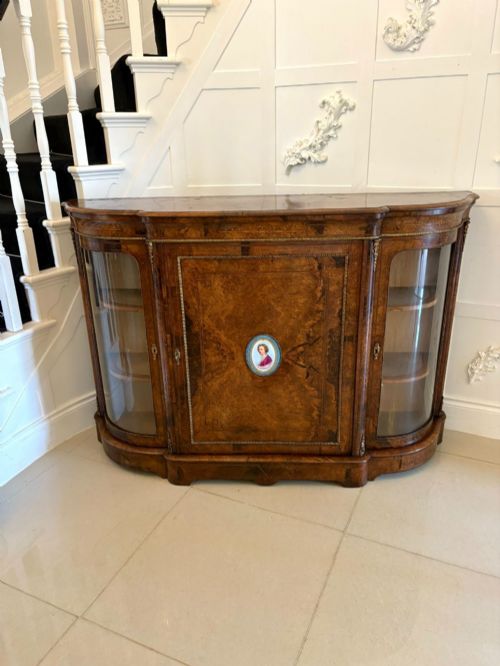
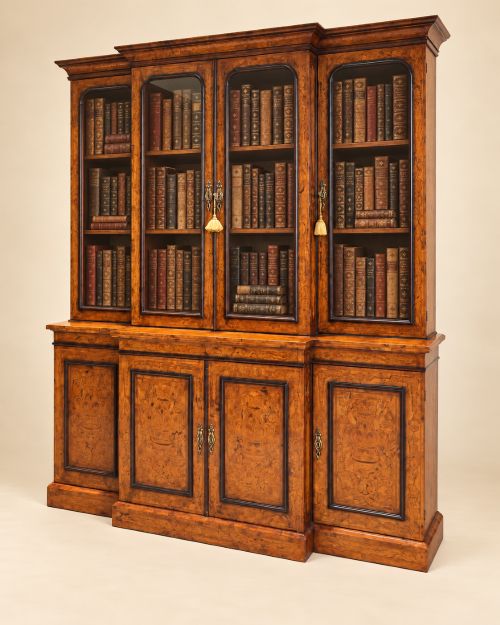
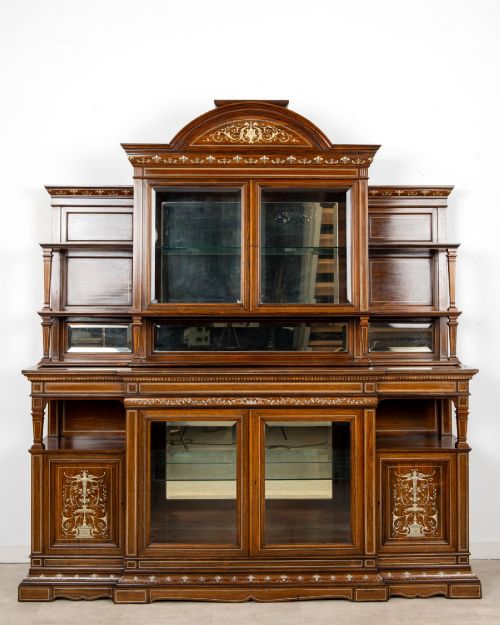
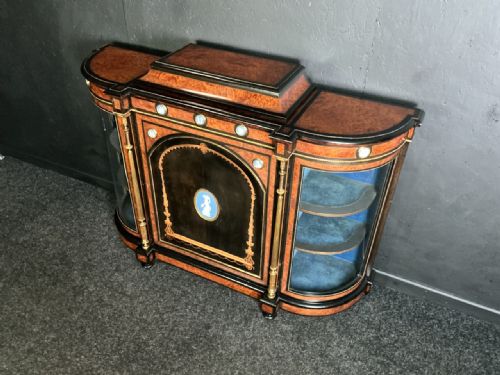
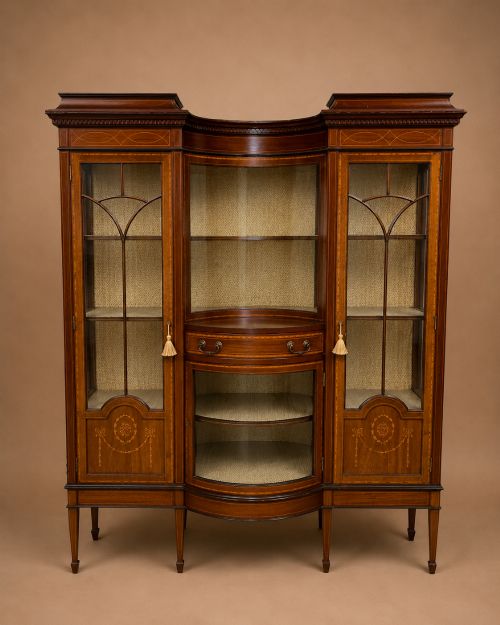
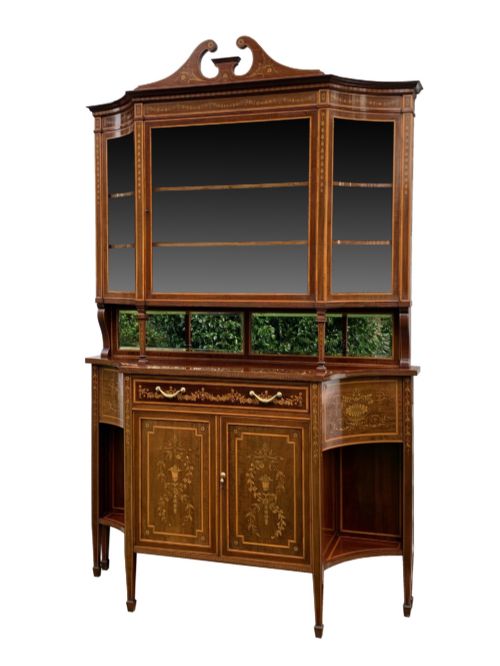
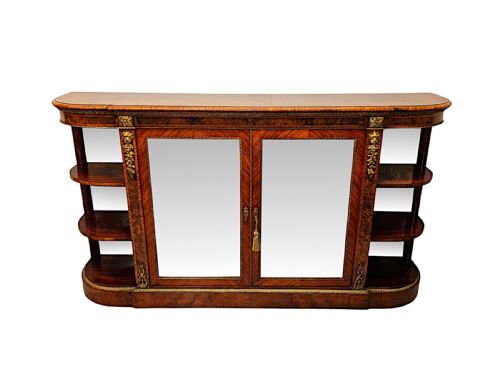
A victorian inlaid breakfront cabinet combines architectural presence with fine marquetry, appearing most frequently in forms such as credenzas, side cabinets, and glazed bookcases. These large display pieces anchor a principal room, often presenting curved or projecting centre sections that break up the linear mass.
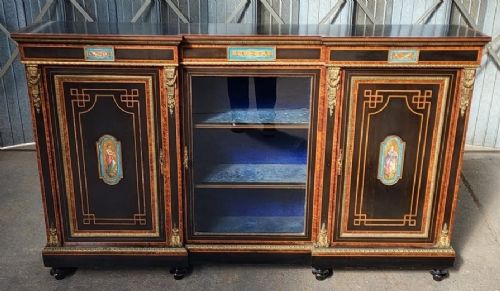
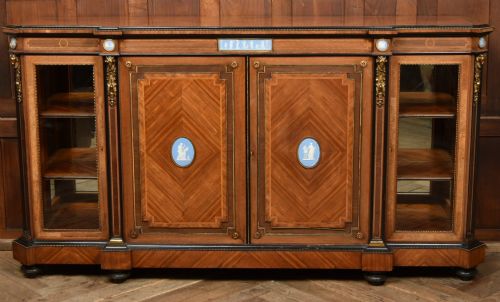
The material palette leans heavily on burr walnut, mahogany, and rosewood, frequently accented with ebonised wood or satinwood stringing. Makers deployed glass panels for display alongside enclosed cupboards, creating versatile storage for books and ornaments.
Originating predominantly across the nineteenth century, these cabinets reflect evolving tastes from mid Victorian revivalism to aesthetic movement restraint and Sheraton revivals. The surviving examples demonstrate how households combined utility with elaborate decorative surfaces.
Materials and construction
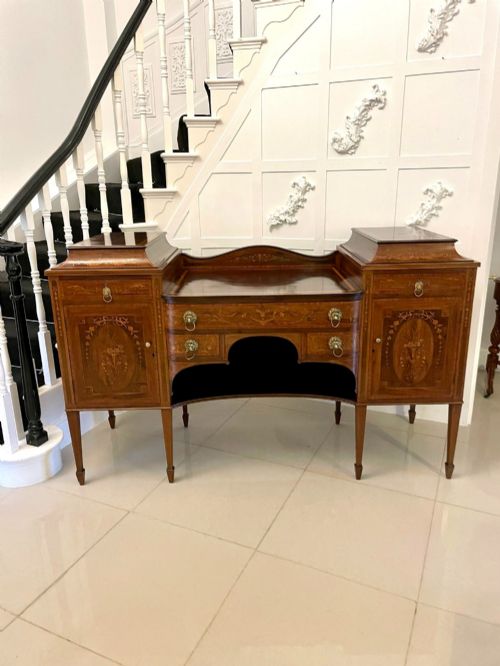
Cabinet makers built these pieces using solid foundational timbers like mahogany or walnut, veneered in highly figured burr walnut or exotic woods to create striking grain patterns on the principal surfaces. Marquetry panels used contrasting light and dark veneers cut into pictorial or geometric floral motifs.
Metal mounts in cast or chased ormolu and gleaming brass hardware defined the edges, framing glazed doors and supporting porcelain plaques. Ebonised finishes provided a dense black contrast to gilt metal and pale marquetry.
Listings demonstrate a strong preference for burr walnut and mahogany, frequently paired with ormolu mounts and glazed doors.
Judging the standard
Quality rests in the crispness of the marquetry cutting and the depth of the timber figuring rather than mere ornamentation. Superior pieces exhibit seamless veneer matching across projecting breaks and tightly fitted glass doors.
The refinement of the cast ormolu mounts and the weight of the timber framing separate workshop production from mass output. Well mounted porcelain plaques and original internal fittings further distinguish the better examples.
Hewetsons London·Collinson and Lock·Edwards and Roberts·Gillows·Lamb of Manchester
The Victorian Inlaid Breakfront Cabinet Glossary
- Breakfront
- A cabinet design where the central section projects forward from the flanking wings. This architectural arrangement creates shadow and depth across the facade.
- Marquetry
- The art of forming decorative patterns by fitting together thin slices of various coloured woods and other materials. It covers panel surfaces with complex floral or geometric designs.
- Ormolu
- Gilded bronze mounts applied to furniture for decorative accent. It provides a bright golden contrast against dark timbers like walnut and ebonised wood.
- Credenza
- A low cabinet, frequently featuring curved glass side doors and central cupboards. It serves as a principal display surface for ceramics and ornaments.
- Burr walnut
- Timber taken from the growth excrescences of walnut trees, yielding intricate swirling grain patterns. It forms the primary decorative veneer on many nineteenth century pieces.
Victorian Inlaid Breakfront Cabinet: Frequently Asked Questions
How do I style a credenza?
A credenza suits a living room or dining area as a focal point for displaying ceramics, books, and lamps.
The glass fronted sections protect delicate objects while the timber top holds larger decorative items.
How are ebonised finishes made?
Ebonised furniture uses a dense black stain or paint to imitate expensive ebony wood.
This dark finish provides high contrast for gilt mounts and marquetry inlay.
What wood was used most?
Burr walnut appears most frequently, prized for its swirling grain patterns and warm brown tones.
Mahogany and rosewood also feature prominently across the nineteenth century selections.