



Victorian Ice Pail
These victorian ice pail pieces are substantial entertaining vessels crafted to keep wine and provisions chilled with style.
Victorian Ice Pail
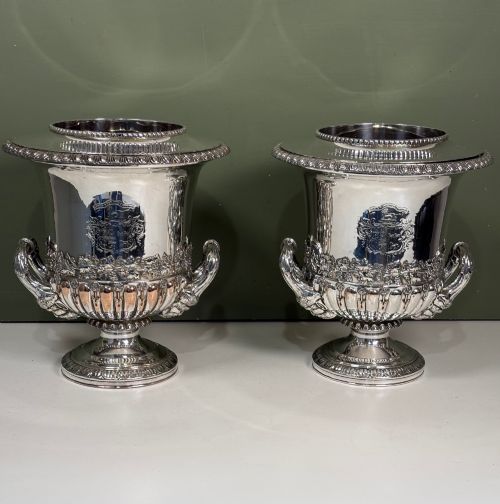
When you search for a victorian ice pail, you are looking at nineteenth century and early twentieth century barware and dining vessels. These objects include wine coolers, champagne buckets, and novelty biscuit barrels adapted for ice.
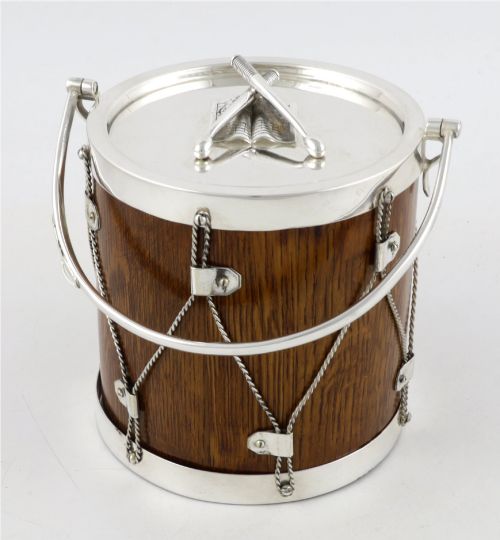
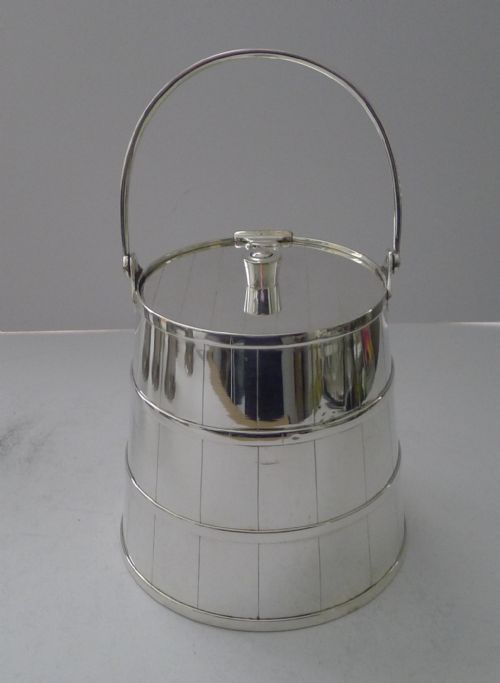
The versions you are most likely to meet on this page range from plain silver plated buckets to oak and silver plated barrels with ceramic or glass liners. Many pieces hail from the Victorian period, alongside Edwardian and later nineteenth century examples.
How they were made
Makers utilised silver plate, electroplated nickel silver, and sterling silver over robust internal cores of oak, mahogany, glass, and ceramic creamware. Stoneware and porcelain liners provided insulation and protection for the wooden staves.
Metal mounts, brass bands, and gilt highlights were applied to timber barrels, whilst glass bodies received extensive wheel cutting, frosting, and acid etching with botanical motifs like oak leaves.
Victorian Ice Pail Retail Price Guide 2026
Typical asking prices for victorian ice pail among the pieces listed under this phrase on Sellingantiques today, from the lower quarter to the upper quarter. They describe what is for sale here now, not the wider market.
Materials across these listings span silver plate, sterling silver, oak, mahogany, glass, and ceramic creamware.
What varies in quality
The standard of a victorian ice pail rests upon the weight of the metal, the integrity of the timber staves, and the clarity of the glass or ceramic liner. Heavier gauge silver plate and solid sterling silver command greater attention from collectors.
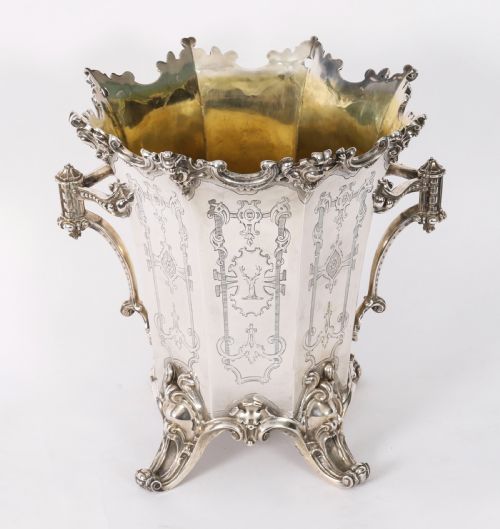
Design complexity also defines the tier, moving from utilitarian oak barrels with basic bands to elaborate rococo revival forms featuring cast handles, intricate chasing, and matching liners.
Elkington, Mason & Co
The Victorian Ice Pail Glossary
- Silver Plate
- A thin layer of silver fused to a base metal such as copper or nickel silver. This technique offered the appearance of solid silver at a lower cost.
- Electroplated Nickel Silver
- Commonly abbreviated as EPNS, this describes a base metal alloy coated in silver using an electrical current. It became widespread during the nineteenth century for durable barware.
- Creamware
- A fine earthenware developed in Yorkshire featuring a pale yellowish cream glaze. It frequently appeared as the inner vessel within oak ice buckets.
- Rococo Revival
- A nineteenth century design style characterised by asymmetrical scrollwork, C-scrolls, and naturalistic floral ornamentation. It heavily influenced the decoration of wine coolers.
- Stoneware
- A dense, vitrified ceramic fired at high temperatures to achieve impermeability. It provided a robust and thermally stable body for cooling vessels.
Victorian Ice Pail: Frequently Asked Questions
How were these ice pails used?
These vessels were filled with ice or iced water to chill wine bottles, champagne, and sometimes food provisions at the dining table or sideboard.
Servants would replenish the ice throughout long Victorian dinners to maintain the temperature of fine vintages.
Are glass liners original?
Many surviving ice pails retain their original cut glass, frosted glass, or ceramic liners designed to protect the outer wooden or metal structure from moisture.
Because liners were fragile, replacements are sometimes found in pieces that saw heavy service.
How do I care for silver plate?
Silver plate requires gentle cleaning with non-abrasive silver polish and a soft cloth to avoid wearing through the thin precious metal layer.
Storing pieces in a dry environment prevents the tarnish caused by airborne sulphur compounds.
How do I distinguish Victorian from Edwardian?
Victorian pieces often display heavier ornamentation, deep chasing, and rococo revival motifs, reflecting mid to late nineteenth century tastes.
Edwardian examples tend towards simpler oak staves with cleaner lines and restrained silver mounts.