




Victorian Hunting Accessories
Victorian hunting accessories are functional sporting gear and desk pieces crafted in brass, silver, and horn.
Victorian Hunting Accessories
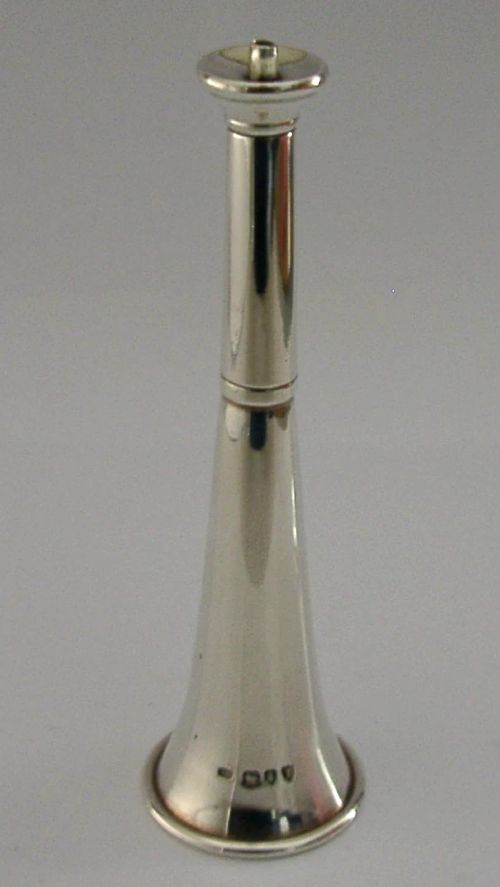
Victorian hunting accessories encompass a distinct category of 19th-century sporting and domestic objects connected to the field, including powder flasks, shot flasks, and table lighters shaped as hunting horns. These items bridge the gap between outdoor pursuits and the Victorian interior, finding new life on desks and side tables.
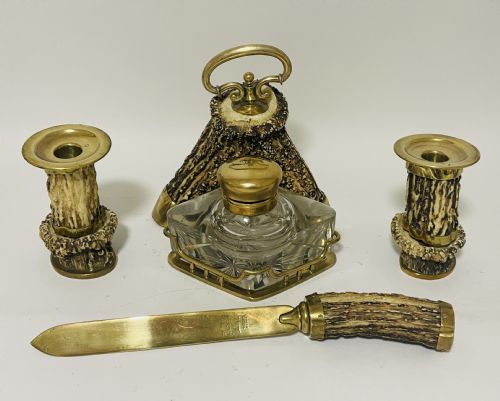
The versions most commonly met on this page include horn powder flasks with brass fittings, novelty table lighters in sterling silver, and desk accessories incorporating natural materials like boar hoof and antler. Such pieces reflect the robust sporting culture of the period through practical application.
Object types span from powder flasks and table lighters to letter openers, spoon warmers, inkstands, and table gongs. Each piece utilises traditional materials associated with the field, translated into domestic and ornamental forms from the 19th century onwards.
How victorian hunting accessories were made
Makers utilised natural animal materials such as cow horn, antler, and boar hoof, pairing them with structural elements in brass, copper, and silver plate. These organic components required careful shaping and mounting to endure both field use and indoor display.
Metalwork involved sterling silver and silver plate, seen in table lighters, letter openers, and novelty inkwells bearing hallmarks from assay offices such as Chester. Brass fittings secured powder flasks, including those featuring patented adjustable charges like the Boche-type mechanism.
Listings feature 19th-century periods including Victorian and Edwardian eras, utilising brass, sterling silver, horn, copper, and leather.
What varies in quality in victorian hunting accessories
Quality rests upon the integrity of the natural materials and the precision of the metal mounts. Horn and antler specimens retain their original texture and structural soundness without excessive splitting, while silver and brass components display crisp casting and secure fixings.
The distinction between standard utility items and finer decorative pieces lies in the complexity of the form and the presence of precious metals or maker marks. Hallmarked sterling silver items from known makers represent a higher tier of production compared to unmarked brass or plated equivalents.
BRAHAM
The Victorian Hunting Accessories Glossary
- Powder flask
- A container for gunpowder used with muzzle-loading firearms, typically fashioned from metal or horn. Many examples feature specialised dispensing mechanisms to measure precise charges.
- Table lighter
- A domestic lighting device designed for placement on a surface, frequently cast in the form of a hunting horn or sporting motif in silver.
- Silver plate
- A layer of silver applied to a base metal core, commonly utilised for decorative Victorian table wares and novelty items.
- Boche-type patent
- A specific mechanical system for adjusting powder charges on flasks, allowing the user to regulate the volume dispensed.
- Boar hoof
- An organic material sourced from wild swine, mounted in metal as a novelty desk accessory or inkwell during the 19th century.
Victorian Hunting Accessories: Frequently Asked Questions
How were powder flasks used?
Hunters carried them to store and dispense gunpowder safely into muzzle-loading firearms during sporting expeditions.
Fitted mechanisms, such as adjustable charges, allowed the sportsman to measure the correct amount of powder quickly in the field.
How do I date these pieces?
Dating relies on hallmarks stamped on silver components, maker marks, and stylistic indicators from the 19th century.
Materials like horn and brass paired with specific Victorian sporting motifs help assign pieces to distinct decades within the 1800s and early 1900s.
How do I display them at home?
These items integrate well into traditional desk setups, studies, and living spaces as decorative conversation pieces.
Smaller items like letter openers and inkstands function practically, while gongs and lighters serve as ornamental focal points on side tables.
What materials should I expect?
The selection is defined by natural animal products combined with worked metals typical of the 19th century.
Common materials include horn, antler, boar hoof, and leather, alongside brass, copper, sterling silver, and silver plate.