
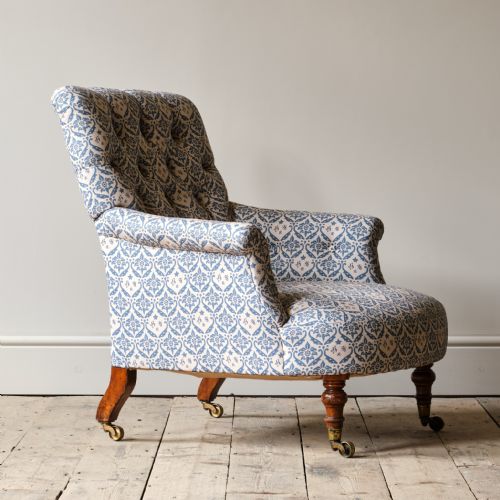
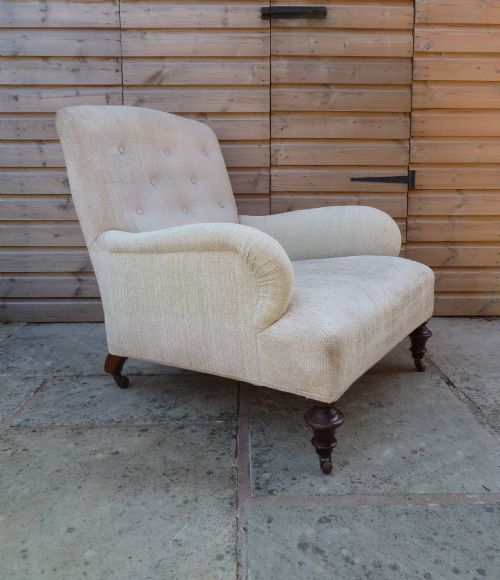
Victorian Howard Style Armchair
A victorian howard style armchair offers deep-seated comfort rooted in nineteenth-century English country house seating.
Victorian Howard Style Armchair
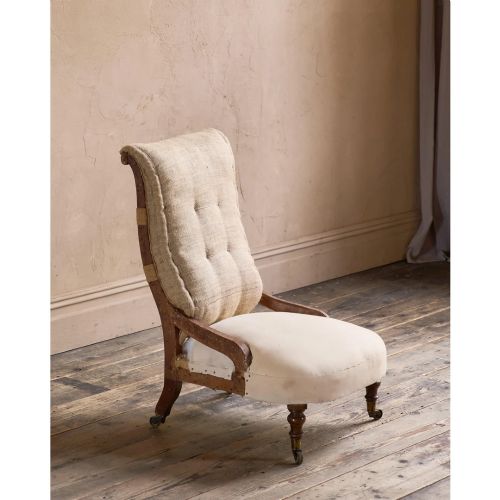
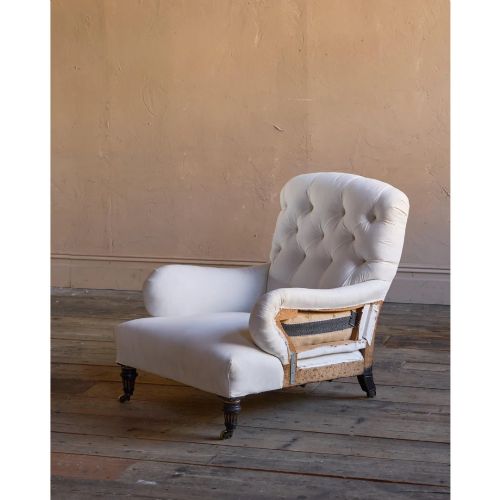
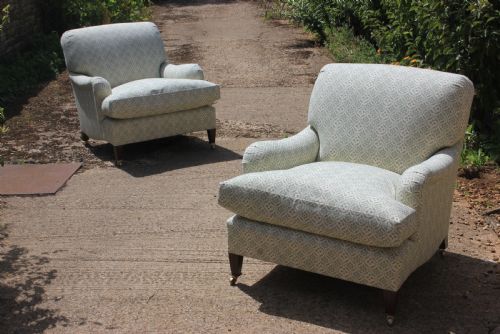
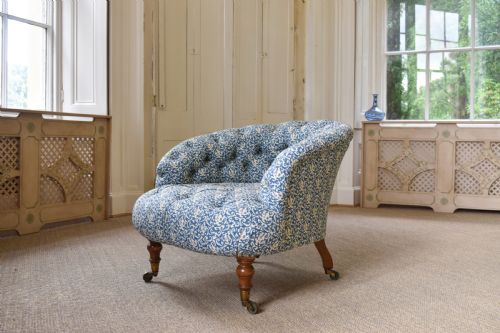
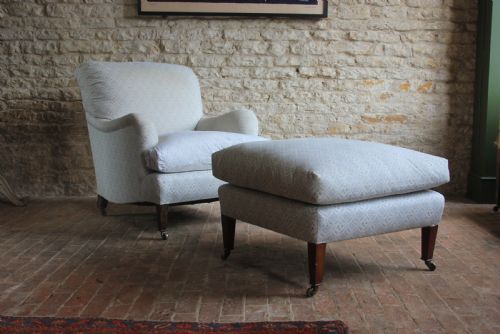
A victorian howard style armchair represents a distinct lineage of upholstered seating designed for comfort and relaxed drawing room elegance during the nineteenth century. These pieces encompass deep club forms, low slipper chairs, and open armchairs suited to English country house interiors.
Most examples encountered here span the Victorian and Edwardian periods, running from the mid-nineteenth century through to around nineteen hundred. They frequently feature low profiles, sprung backs, and generous proportions designed for lounging.
Materials and Construction
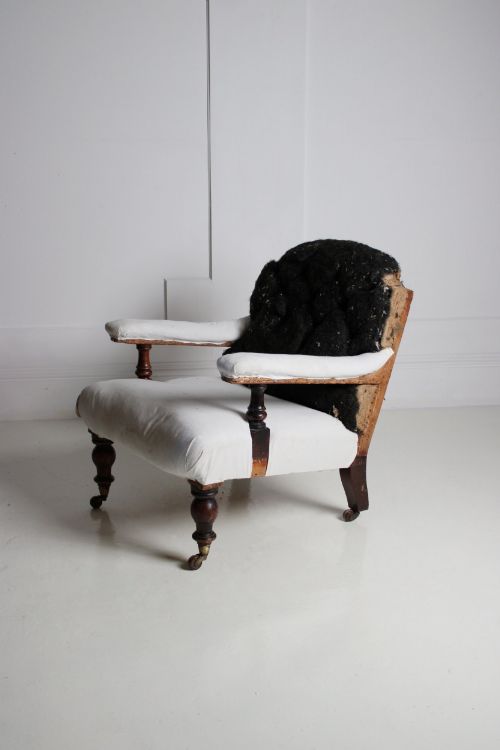
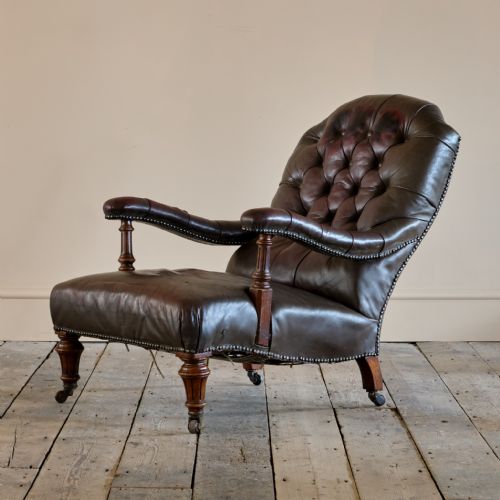
Frames are built from sturdy hardwoods such as walnut, mahogany, and oak, providing a hidden structural skeleton beneath generous padding. Exposed wooden components appear primarily on the legs, which often terminate in brass castors.
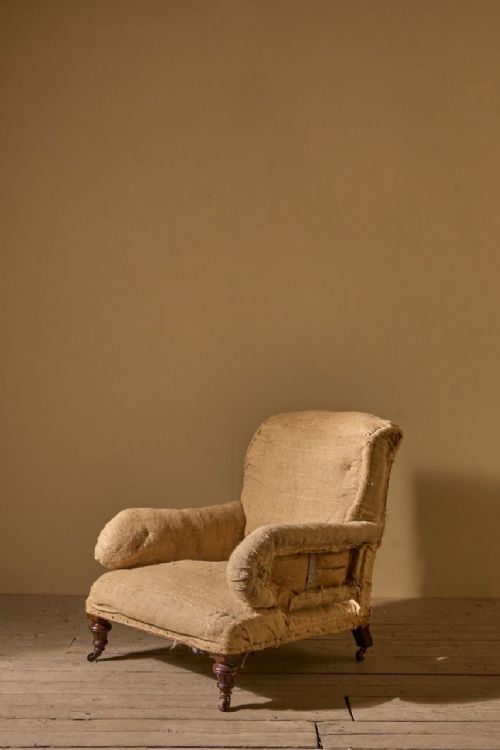
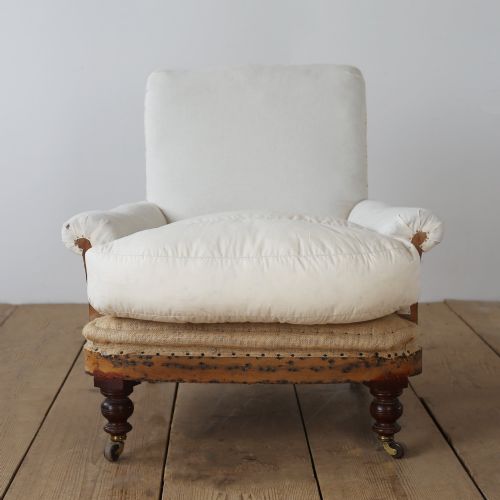
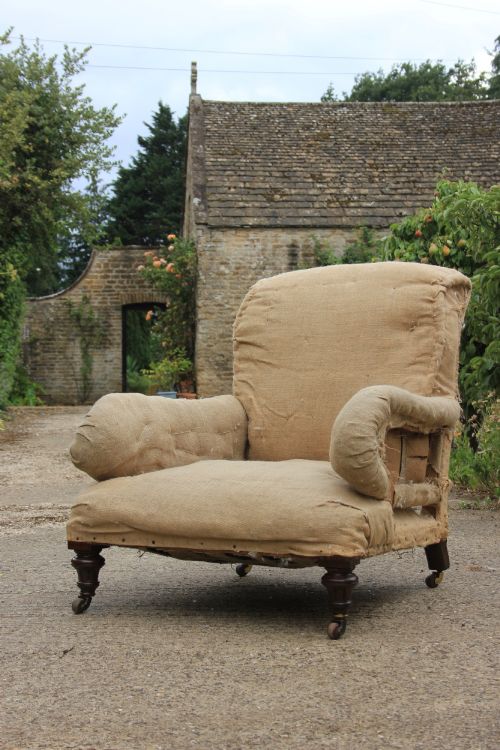
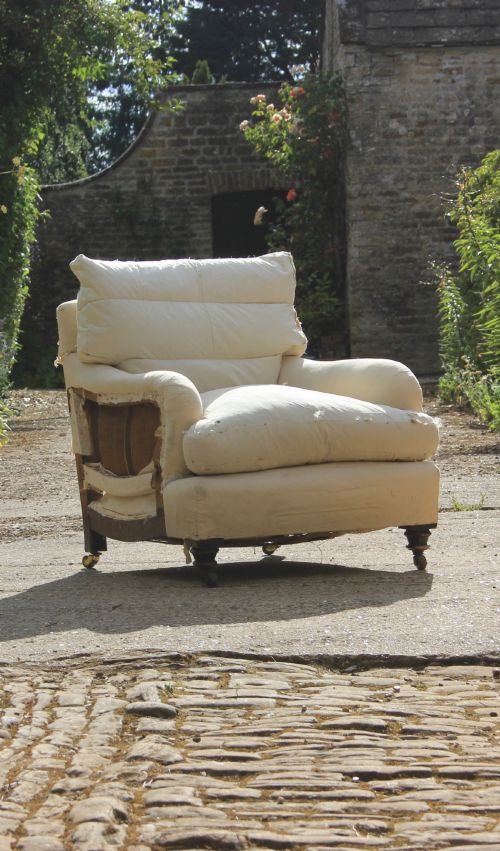
Traditional upholstery techniques rely on internal coil springing layered with materials like hessian, calico, cotton, and horsehair stuffing. Outer coverings range from plain ticking and woven fabrics to decorative textiles by makers such as William Morris.
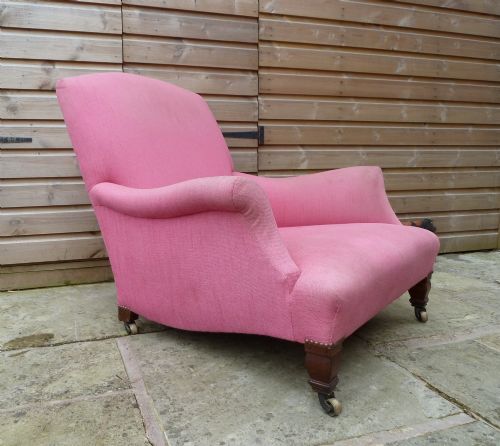
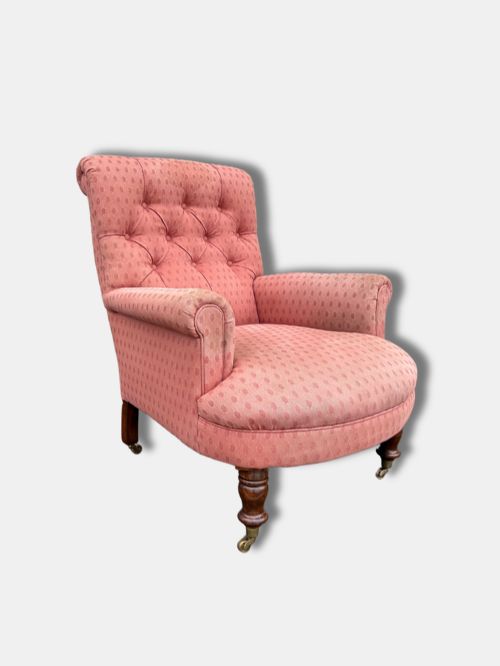
Listings feature walnut and mahogany frames supported by brass castors and upholstered in materials ranging from simple cotton ticking to patterned fabric.
Factors of Quality
The distinction between standard workshop output and top-tier pieces rests on the integrity of the frame construction and the responsiveness of the internal springing. Superior examples maintain a balanced proportion and substantial weight without feeling clumsy.
Attention to detail in the turning of the timber legs, the choice of original brass castors, and the precision of the hand-stitched upholstery edges elevate certain chairs above mass production. Maker attributions or stamps on the castors further distinguish premier pieces.
Howard and Sons·Robert Strahan·James Shoolbred·Trollope and Sons·Cornelius V Smith
The Victorian Howard Style Armchair Glossary
- Bridgwater
- A specific chair model featuring low rolled arms and a deep seat designed for maximum lounging comfort. This form became a staple of nineteenth-century domestic seating.
- Grafton
- A named armchair model associated with relaxed country house proportions and generous cushioning. It shares the low-slung stance typical of the maker's output.
- Ticking
- A tightly woven cotton or linen fabric traditionally used as a durable inner slip cover or outer upholstery. Its striped pattern is characteristic of utilitarian Victorian soft furnishings.
- Castor
- A small wheel attached to the base of the chair legs to facilitate movement across carpets and floorboards. Brass versions stamped with maker details are particularly sought after.
- Slipper chair
- A low-seated upholstered chair originally designed for bedrooms to allow ease when putting on footwear. These pieces lack arms and maintain a compact profile.
Victorian Howard Style Armchair: Frequently Asked Questions
What defines a howard style armchair?
These chairs are defined by deep seating proportions, low rolled arms, and robust internal coil springing built for relaxation. They embody the aesthetic of the nineteenth-century English country house.
Most examples date from the Victorian era, utilising sturdy hardwood frames concealed beneath layers of traditional upholstery materials like hessian, calico, and ticking.
How do I identify a period piece?
Period identification relies on examining the timber frame construction, the turning of the wooden legs, and the style of the brass castors. Nineteenth-century examples often carry maker stamps on the castor wheels.
The presence of traditional stuffing materials such as horsehair and wool wadding beneath the outer fabric further points towards authentic nineteenth-century manufacturing methods.
Were these chairs used in bedrooms?
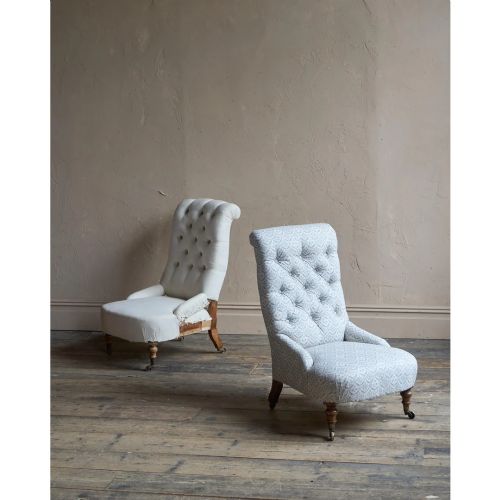
While the larger club models resided in libraries and drawing rooms, smaller variations such as slipper chairs and bedroom chairs were specifically designated for sleeping quarters. These lighter pieces offered comfortable seating without dominating smaller spaces.
Pairs of bedroom chairs frequently featured matching upholstery and shared the same low profile as their larger counterparts in the main reception rooms.
What fabrics were originally used?
Original upholstery varied from utilitarian grey linen ticking to patterned decorative textiles produced during the Aesthetic Movement. Fabrics designed by William Morris were also utilised on high-end frames.
Many pieces were originally supplied in plain calico or ticking intended to be covered by loose loose-fitting chintz or damask loose covers chosen to match specific interior schemes.