
Victorian Home Office
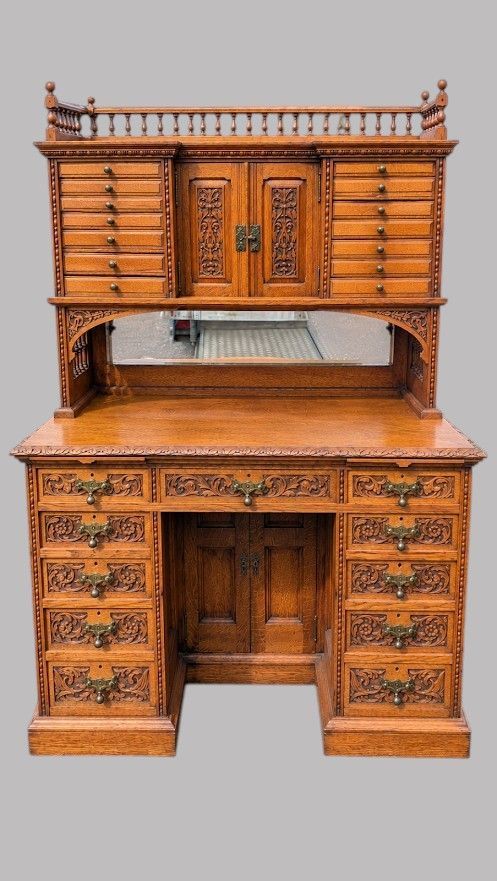
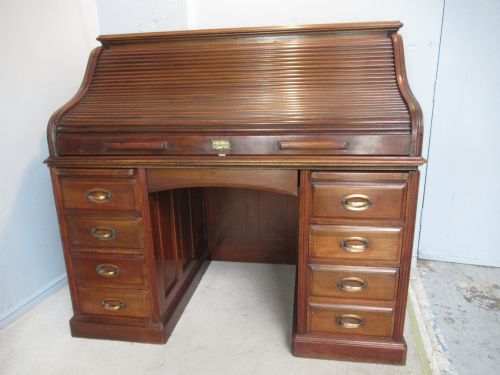
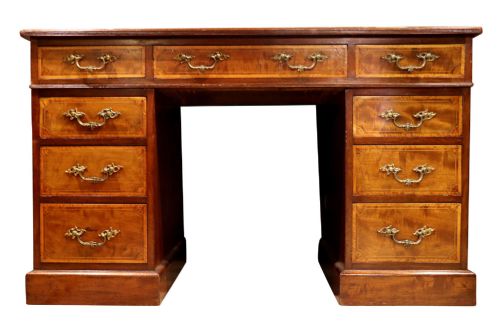
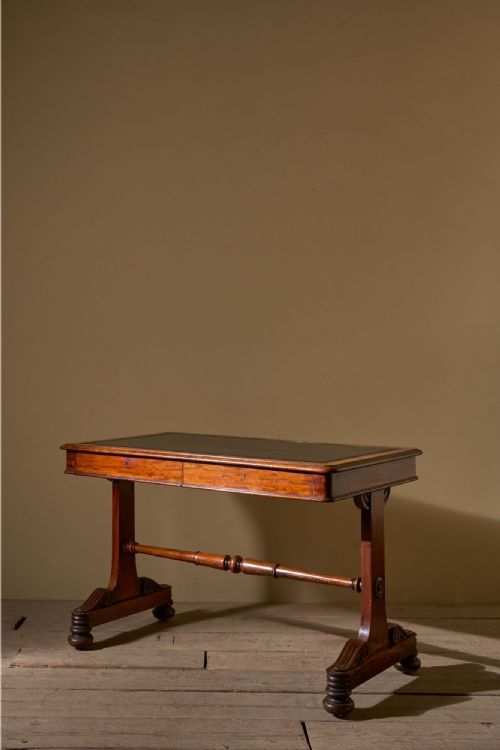
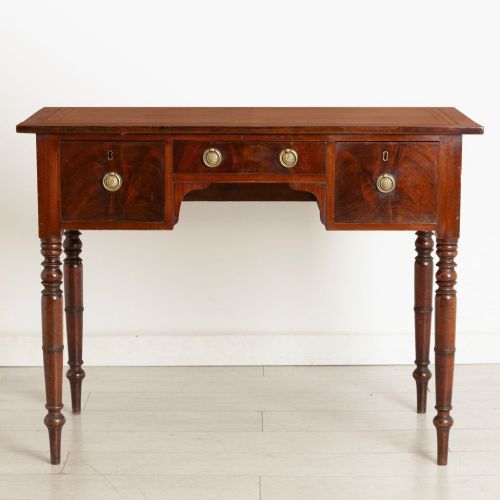
A Victorian home office brings together robust mahogany and burr walnut desks, writing tables, and partners desks designed for serious correspondence and study.
Victorian Home Office
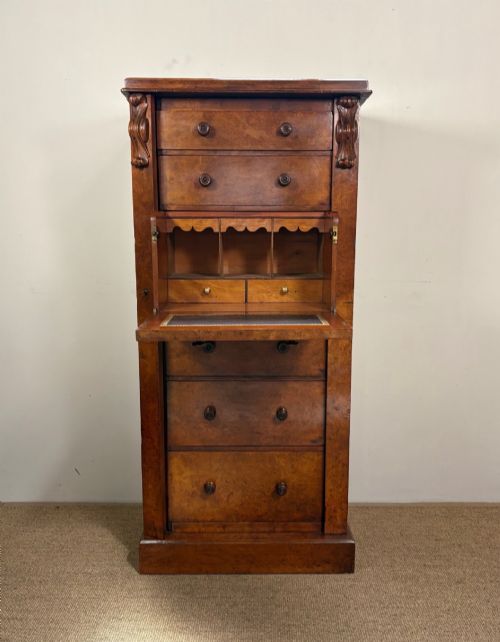
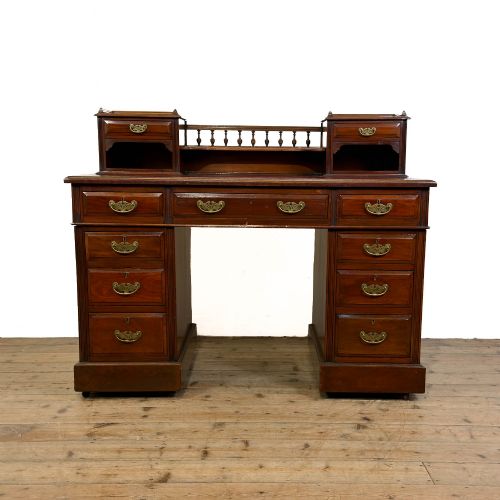
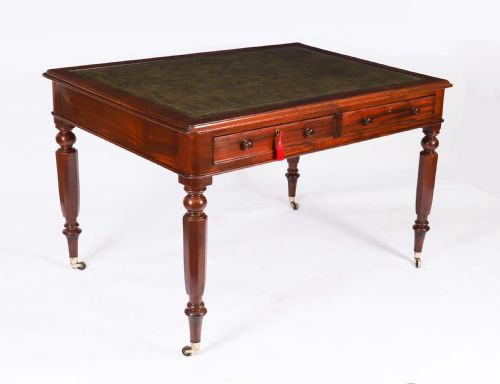
A Victorian home office centres on substantial workspace furniture built during the nineteenth century, ranging from pedestal desks and writing tables to partners desks and Davenport desks. These functional pieces accommodate the paperwork and study needs of a nineteenth-century interior.
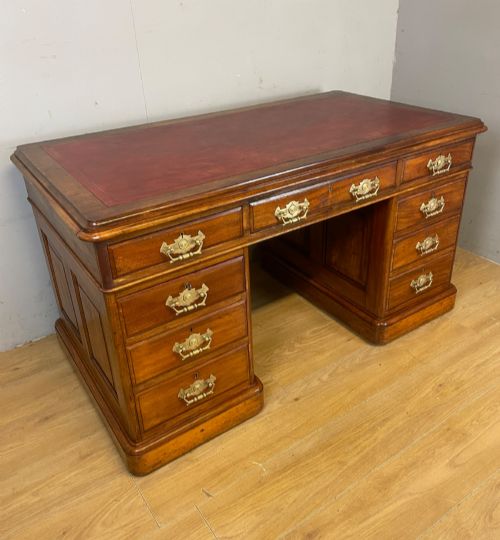
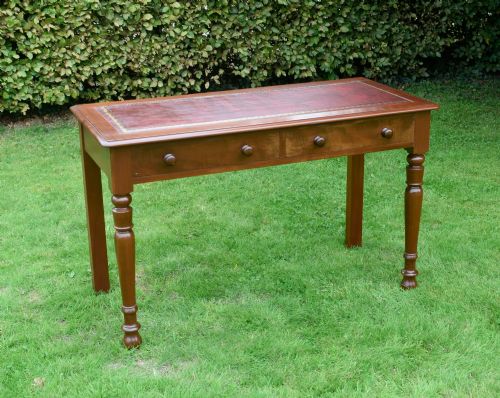
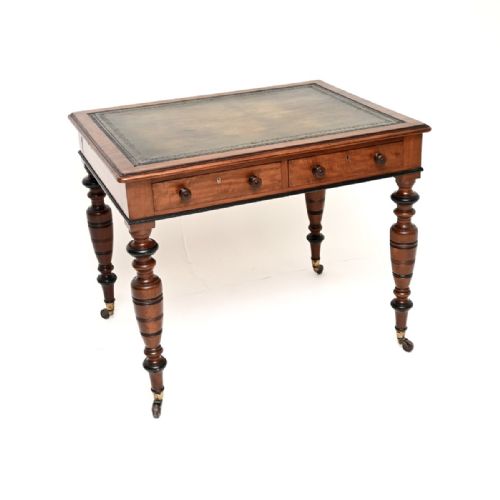
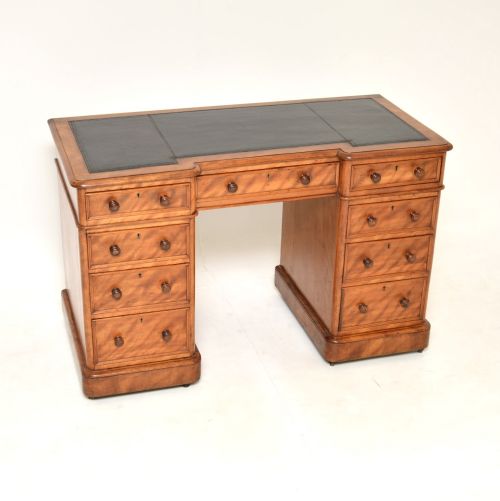
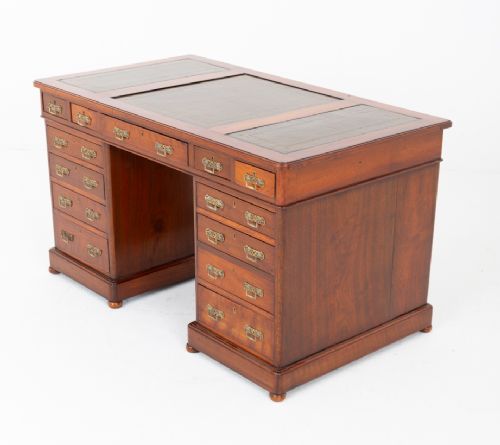
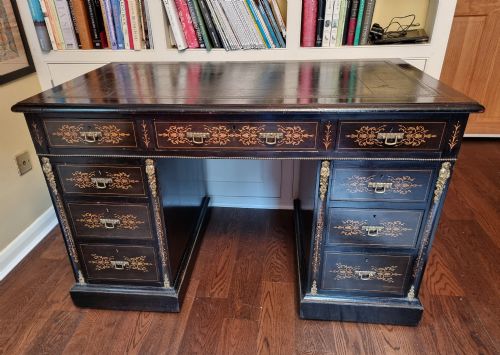
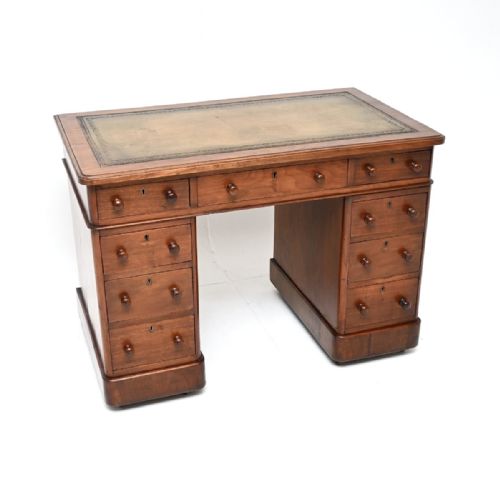
The pieces most frequently met on this page include mahogany and burr walnut pedestal desks fitted with leather writing surfaces and multiple drawers. Writing tables and kneehole desks in oak, satinwood, and walnut also appear across the selection.
Materials and Construction
Cabinet makers utilised dense hardwoods such as mahogany, oak, and walnut, frequently applying burr walnut and satinwood veneers to create figured surfaces. Secondary timbers support the internal drawer construction and framing of each desk.
Writing surfaces employ inset tooled leather bordered by blind tooling, whilst brass handles, locks, and castors complete the functional hardware of the period.
Some Victorian home offices included cedar waste paper baskets designed to keep the study tidy.
Assessing Quality and Execution
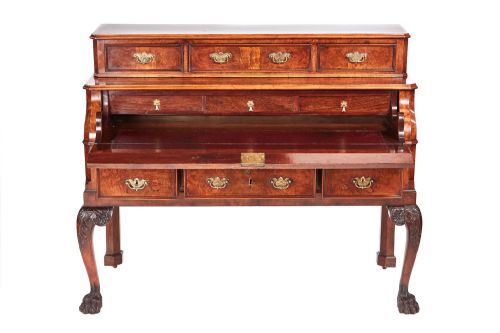
The standard of a Victorian home office piece depends upon the selection of timber veneers, the crispness of carved details such as paw feet or reeded legs, and the retention of original handles and locks. Superior examples display symmetrical figuring in burr walnut and precise marquetry inlay.
Structural integrity, smooth drawer action, and the preservation of original tooled leather writing surfaces distinguish finer workshop output from more utilitarian commercial production.
Edwards & Roberts·Johnstone & Jeanes·Hobbs & Co.·Maple & Co·Heal and son·Wolfe & Hollander
The Victorian Home Office Glossary
- Partners desk
- A large double-sided desk designed for two people to work opposite one another, featuring drawers and cupboards on both faces.
- Pedestal desk
- A freestanding desk comprising a top surface resting on two separate pedestals containing banks of drawers.
- Davenport desk
- A compact Victorian writing desk featuring a sloping hinged top above a bank of side drawers.
- Kneehole desk
- A small pedestal desk with a recessed central space beneath the writing surface, often flanked by narrow drawer columns.
- Burr walnut
- Timber taken from the warted growth of a walnut tree, highly prized for its swirling, decorative grain patterns.
Victorian Home Office: Frequently Asked Questions
How do I identify a Victorian pedestal desk?
A Victorian pedestal desk consists of a rectangular top resting upon two distinct columns of drawers. They typically feature inset leather writing surfaces and brass hardware.
Cabinet makers constructed these desks from dense timbers like mahogany and walnut, frequently incorporating lockable drawers secured by brass mechanisms.
What is a Davenport desk?
A Davenport desk is a compact writing cabinet featuring a sloping, hinged writing slope above a side bank of drawers. It offers enclosed storage within a small footprint.
Victorian writers used the sloping top for letters, lifting it to reveal stationery compartments and pigeonholes tucked inside the upper body.
How should I care for a leather desk top?
Leather desk inserts require gentle cleaning with a slightly damp cloth followed by dry buffing. Avoid harsh chemical cleaners that strip the original tooling.
Applying occasional leather wax preserves the suppleness of the hide and maintains the gold or blind tooling borders applied by period craftsmen.