



Victorian Heart Ring
A victorian heart ring carries centuries of sentiment in gold and silver, offering tangible romance through enduring gemstone and precious metal craftsmanship.
Victorian Heart Ring
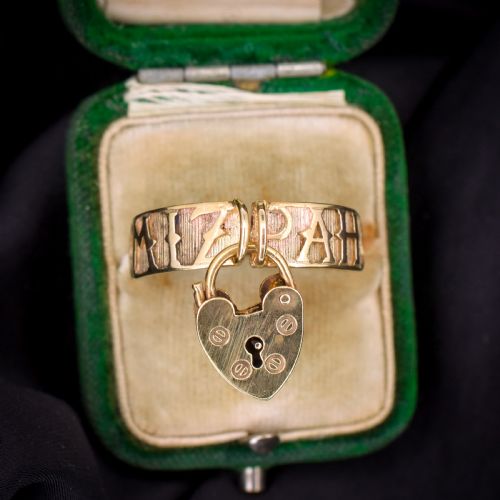
A victorian heart ring encompasses both band rings set with padlocks and delicate cluster configurations featuring diamonds, turquoise, or pearls. These pieces capture the sentimental aesthetic of the nineteenth and early twentieth centuries, blending symbolic motifs with wearable jewellery.
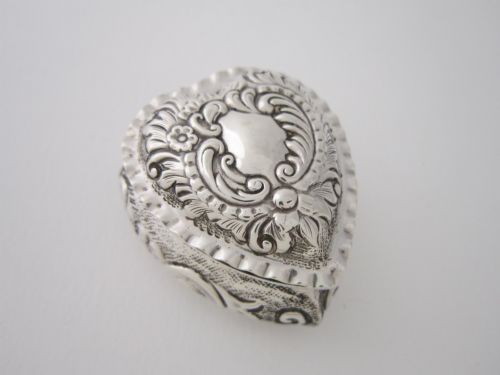
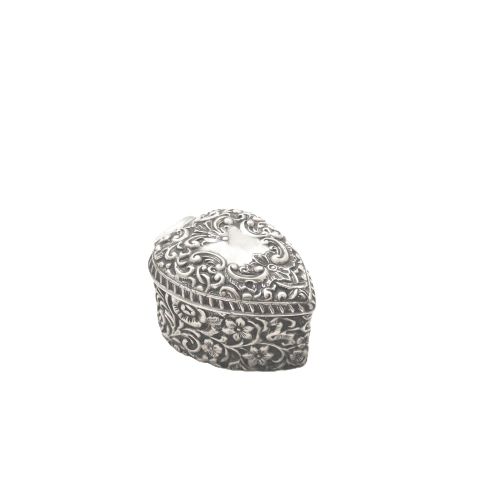
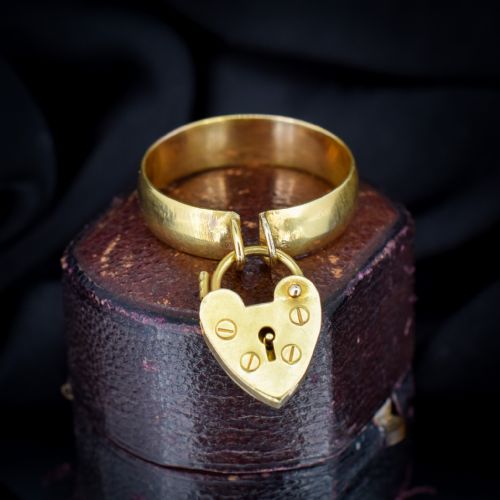
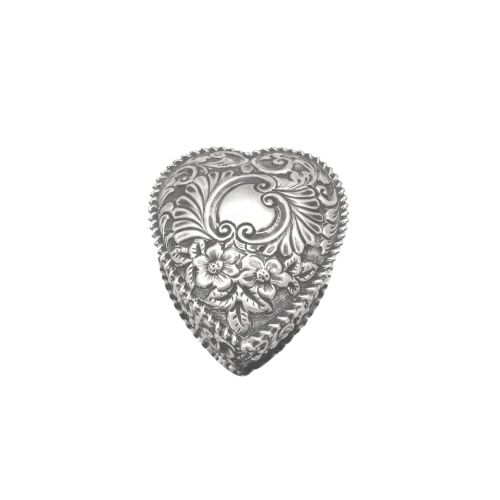
You are most likely to encounter gold band rings incorporating heart padlocks or dangles alongside silver trinket boxes fashioned in the same silhouette. The selection ranges from late nineteenth-century specimens to early Edwardian iterations, reflecting diverse material choices from yellow gold to sterling silver.
The assortment merges genuine period items with stylistic variations spanning Georgian influences up to Edwardian revivals. Each object serves as a physical archive of sentimental gifting traditions, utilising precious metals to immortalise affection.
Materials and Construction
Goldsmiths utilised varied purities including nine-carat, fifteen-carat, and twenty-two-carat yellow and rose gold to construct durable bands and settings. Sterling silver was similarly deployed both for finger ornaments and for hinged trinket boxes shaped to echo the motif.
Lapidaries set old cut diamonds, turquoise, rubies, and seed pearls into the metal frameworks to accentuate the central shape. Artisans also incorporated intricate engraving, repoussé work, and hair memorial compartments to personalise the jewellery.
Construction techniques balanced structural integrity with ornamental grace, securing drop dangles and padlock charms to rings via small jump rings. Boxes received velvet linings and secure clasps, while rings integrated split shanks and raised bezels.
Listings feature sterling silver, nine-carat gold, fifteen-carat gold, and twenty-two-carat gold across Victorian, Edwardian, and Georgian periods.
Defining Quality
The finesse of the engraving and the crispness of the repoussé detail separate standard production from superior craftsmanship. Artisans who invested time in hand-chasing motifs achieved greater depth and definition in the precious metal.
Gemstone selection dictates overall refinement, distinguishing simple metal bands from those adorned with matched rose cut diamonds or genuine turquoise. The integration of structural elements like functioning padlocks and secure stone settings demonstrates higher workshop standards.
The clarity of hallmarks and maker marks provides tangible evidence of origin and standard, lending historical weight to the better preserved examples. Preservation of original components, from drop dangles to interior box linings, anchors the integrity of each item.
The Victorian Heart Ring Glossary
- Padlock ring
- A band featuring a small padlock charm, often symbolising security in love during the Victorian period. These charms sometimes opened with tiny keys.
- Rose cut
- A diamond cut featuring a flat base and a domed crown with triangular facets, common in antique jewellery. This facet arrangement produces a soft, starry luminescence rather than modern brilliance.
- Repoussé
- A metalworking technique where the design is hammered into relief from the reverse side. This method allowed artisans to create three-dimensional heart motifs on silver boxes and rings.
- Memorial ring
- Jewellery commissioned to commemorate a deceased person, frequently containing hair work or inscriptions. These pieces served as tangible tokens of remembrance in nineteenth-century society.
- Sweetheart ring
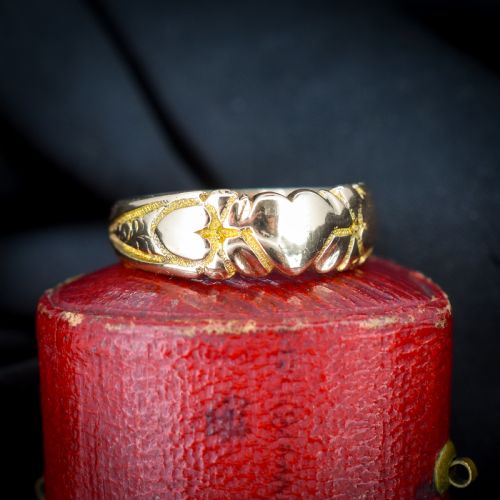
- A sentimental token exchanged between lovers, often incorporating bows, hands, or double heart motifs. They represent enduring affection popularised across the Georgian and Victorian eras.
Victorian Heart Ring: Frequently Asked Questions
What is a victorian heart ring?
A victorian heart ring is an antique finger ornament incorporating sentimental heart motifs, created during the nineteenth or early twentieth centuries. These jewels frequently served as tokens of romance or remembrance.
They appear in various forms, including gold bands with padlock drops, cluster settings with gemstones, and double heart designs. The materials range from sterling silver to high-carat gold.
How do I date a heart ring?
Dating relies upon official hallmarks stamped into the metal interior, which indicate assay offices and specific years of production. Stylistic clues such as gemstone cuts and manufacturing techniques also help determine the period.
Comparing the construction methods against known historical benchmarks narrows the timeframe of origin. Documentation and maker marks further clarify the age of the piece.
Can I wear antique heart rings daily?
Daily wear is possible for sturdier gold bands, though delicate items with fragile stones or hollow dangles require caution. Antique jewellery benefits from gentle treatment and removal during rigorous physical activities.
Assessing the thickness of the shank and security of the stone settings helps determine suitability for frequent use. Professional inspection ensures the structural integrity remains sound over time.
What do turquoise and diamonds signify?
Turquoise in antique jewellery often symbolised fidelity and forget-me-not sentiment, while diamonds represented enduring strength and eternal love. Jewellers combined these stones to layer romantic meanings into the design.
The choice of gems reflected both the personal message intended by the giver and prevailing aesthetic preferences. Such combinations elevated the sentimental value of the adornment.