


Victorian Sentiment Jewellery
Victorian sentiment jewellery carries the private messages of the nineteenth century in gold, pearl and gemstone.
Victorian Sentiment Jewellery
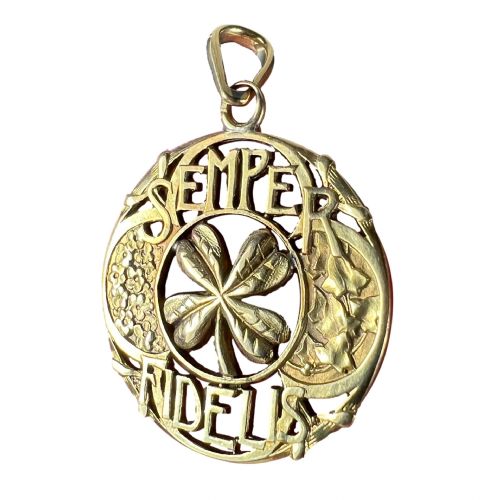
Victorian sentiment jewellery comprises wearable tokens of affection, remembrance and devotion produced during the nineteenth century. These pieces take the form of rings, pendants, lockets, brooches and necklaces designed to communicate specific emotional messages.
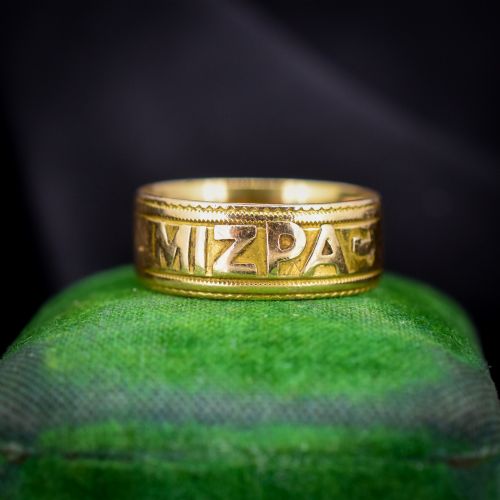
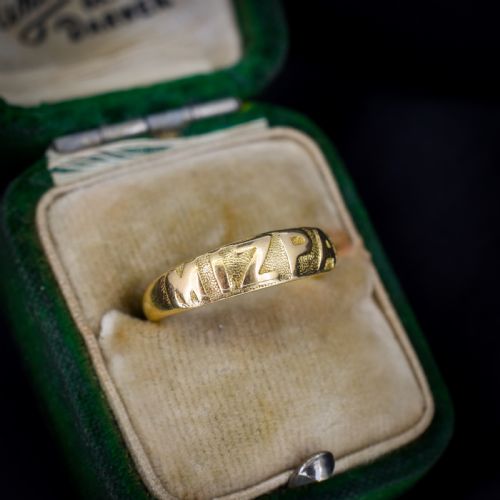
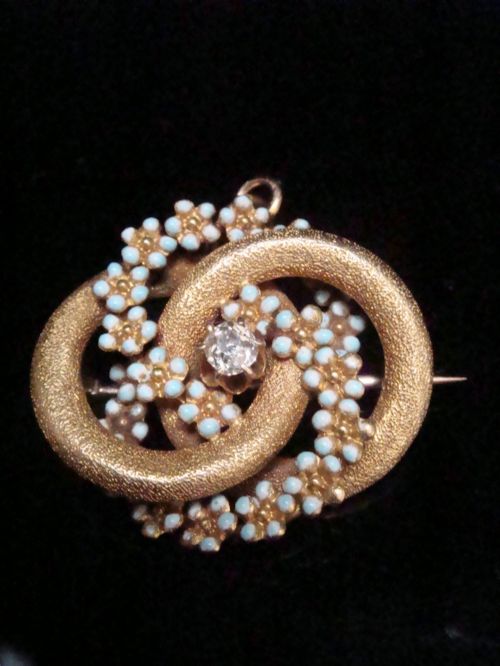
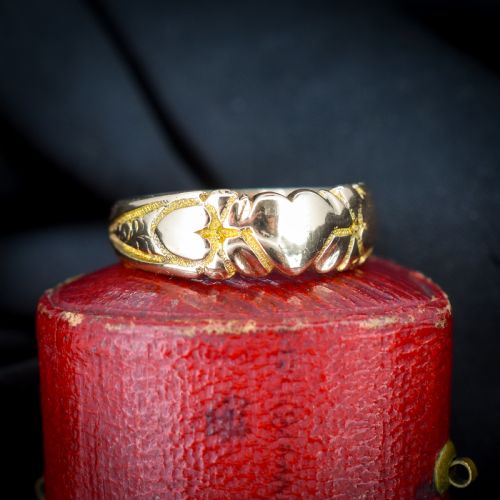
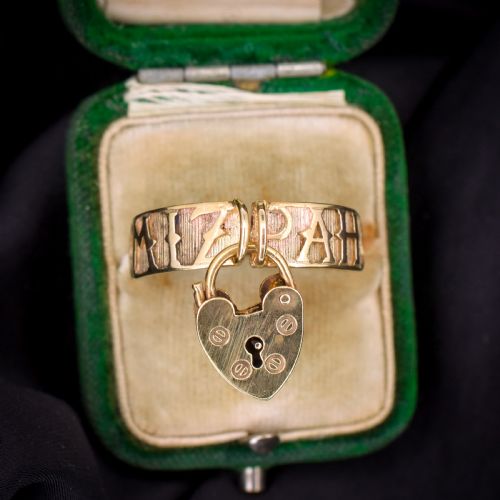
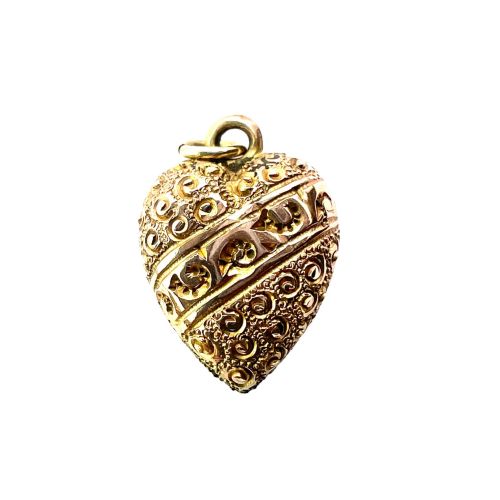
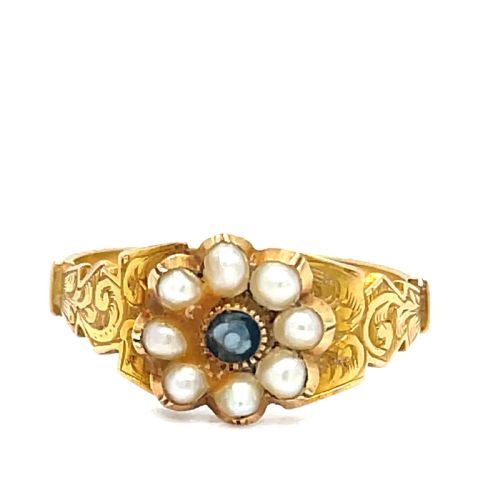
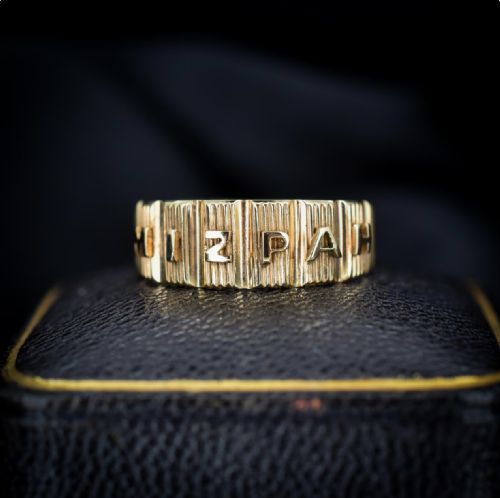
Band rings inscribed with the word Mizpah or bearing forget-me-knot motifs appear frequently across this selection. Heart shapes dominate the pendant and ring categories, often rendered in puffy gold or mounted with seed pearls and turquoise.
Mourning and remembrance objects also form part of this category, alongside acrostic pieces that spell out words like regard through gemstone initials. Most items date from the Victorian period proper, with occasional examples extending into the early twentieth century.
How they were made
Goldsmiths utilised varying purities of gold, ranging from nine carat and fifteen carat up to eighteen carat, alongside silver and silver gilt. Metalwork techniques included hollow-forming to create puffy heart pendants and intricate chasing for band rings.
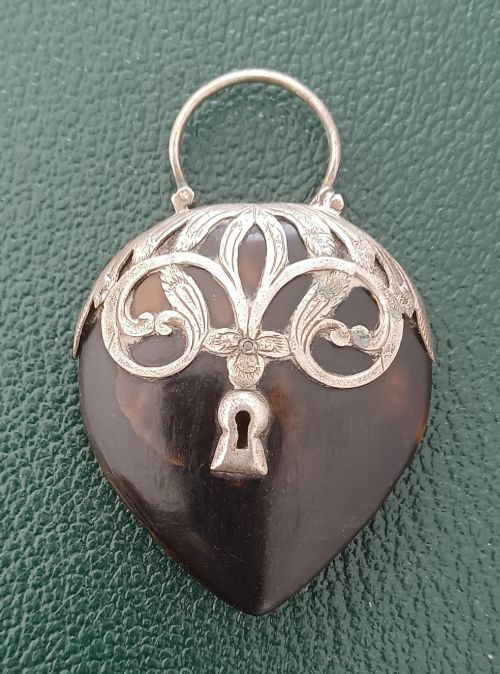
Gemstones and organic materials were meticulously hand-set into the metal frames. Seed pearls, turquoise, diamonds, rubies, emeralds, amethysts, garnets and agate appear alongside tortoiseshell, enamel and faceted glass within photo lockets.
Victorian Sentiment Jewellery Retail Price Guide 2026
Typical asking prices for victorian sentiment jewellery among the pieces listed under this phrase on Sellingantiques today, from the lower quarter to the upper quarter. They describe what is for sale here now, not the wider market.
Listings feature items in nine carat, fifteen carat and eighteen carat gold alongside silver gilt.
What varies in quality
The degree of refinement in the metalwork and the weight of the gold define the upper tier of these pieces. Higher carat gold and substantial gauge wire distinguish finer bands and settings from lighter alternatives.
The precision of hand-setting in seed pearls and small diamonds indicates the skill of the original maker. Intact enamel, well-matched turquoise stones and legible hallmarks or inscriptions add to the desirability of an object.
The Victorian Sentiment Jewellery Glossary
- Mizpah
- An inscription derived from the Hebrew Bible meaning an emotional watchtower or gathering place between absent friends. Such pieces serve as tokens of deep personal connection.
- Seed pearl
- A very small, naturally occurring pearl often drilled and threaded or glued onto jewellery. These tiny pearls form delicate floral and botanical patterns on nineteenth-century hearts.
- Acrostic jewellery
- Pieces where the first letter of each set gemstone spells out a sentiment or name. The appearance of ruby, emerald, garnet, amethyst and diamond spells regard.
- Pendant locket
- A hinged container worn around the neck designed to hold a miniature photograph or lock of hair. Many incorporate glass panels or sealed interior compartments.
- Forget-me-knot
- A decorative motif shaped like the small blue flower symbolising true love and remembrance. It appears twisted in gold across rings and brooches.
Victorian Sentiment Jewellery: Frequently Asked Questions
What does Mizpah mean on a ring?
Mizpah translates from Hebrew as an emotional watchtower or a protective bond kept between two separated people. Rings bearing this word were given as tokens of enduring fidelity during the nineteenth century.
Such pieces often feature engraved lettering across yellow gold bands, sometimes accompanied by intertwined hands or floral motifs. They were worn daily as private reminders of an absent partner or relative.
How do I wear a antique locket?
Antique lockets hang from chains or ribbons close to the heart, continuing their original nineteenth-century placement. Many owners continue to place miniature photographs or small paper mementos inside the hinged compartments.
Care should be taken with older gold hinges and glass panels during daily wear. Removing the piece before swimming or heavy physical activity protects the delicate metalwork.
What are acrostic rings?
Acrostic rings spell out words through the initial letters of the gemstones set into the metal. A standard arrangement uses ruby, emerald, garnet, amethyst and diamond to spell regard.
These coded messages allowed nineteenth-century wearers to express feelings discretely. The arrangement of the stones follows a strict sequence defined by the chosen sentiment.
How do I tell Victorian gold grades apart?
Victorian gold items often display stamped hallmarks indicating the purity of the metal in carats. Common tiers include nine carat, fifteen carat and eighteen carat yellow or rose gold.
Higher carat marks suggest a richer yellow colour and a greater weight of pure gold within the alloy. Hallmarks also frequently record the assay office and year of manufacture.