


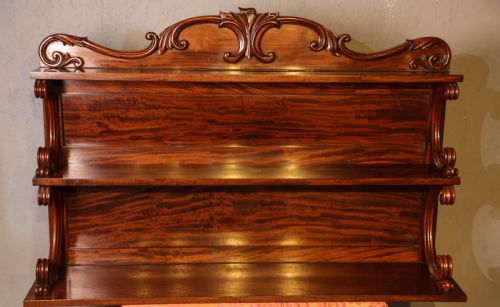


Victorian Hanging Etagere
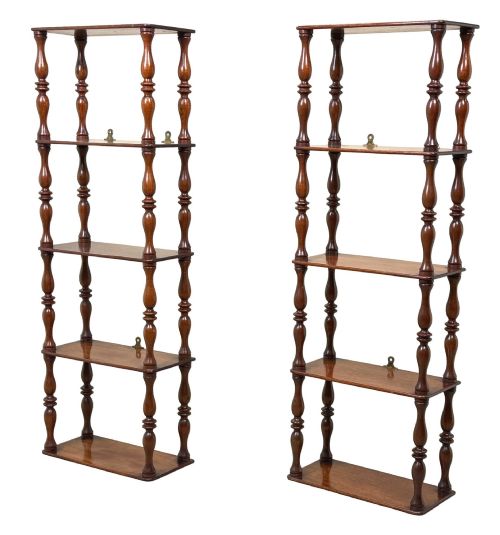
These Victorian hanging etagere pieces offer tiered wall storage crafted in mahogany, walnut, and satin birch to bring practical display space into domestic interiors.
Victorian Hanging Etagere
A victorian hanging etagere provides open wall storage through tiered shelves, corner brackets, and cabinet combinations designed to save floor space. The form appears primarily across the nineteenth century, encompassing Victorian, Regency, and French Chateau styles.
Buyers on this page most commonly encounter mahogany wall hanging shelves, often structured across multiple tiers or configured for corners. Variants include satin birch display shelves, walnut cabinets, and occasional brass fixtures.
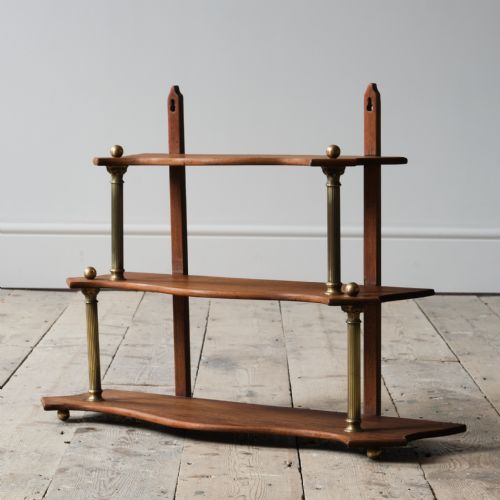
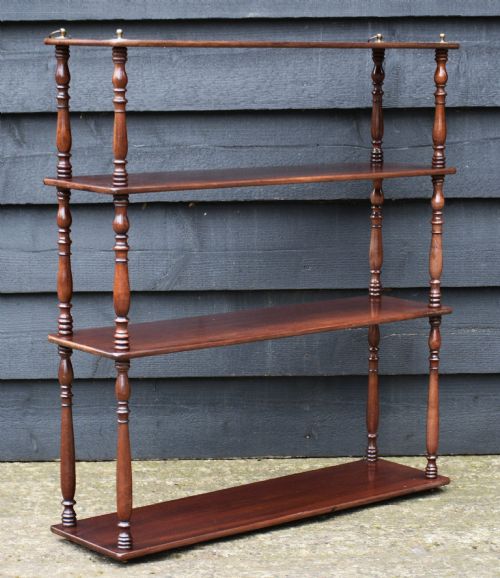
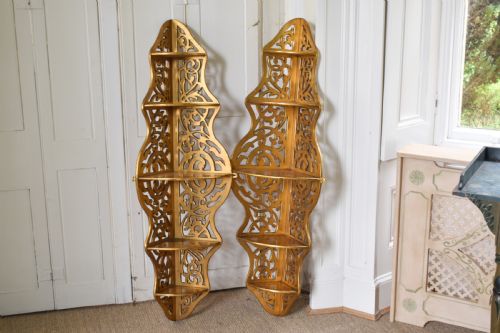
The selection ranges from small portable bookshelves and bobbin-turned designs to large wall cabinets and gilt corner brackets. These pieces function to exhibit small decorative objects or books while adding architectural interest to a wall.
How they were made
Cabinetmakers utilised dense timbers such as mahogany, walnut, and satin birch, frequently shaping them into graduated tiers or waterfall profiles. Ebonised wood, cherry wood, and giltwood also appear as structural materials within the inventory.
Construction techniques incorporate turned bobbin supports, brass fittings, and painted accents to articulate the shelves. Inlaid decoration and mirrored glass elements further distinguish the construction of later nineteenth-century examples.
What varies in quality
The sophistication of the timber selection and the complexity of the joinery define the distinction between standard and superior pieces. Mahogany with strong figuring or carefully matched satin birch indicates a higher grade of manufacture.
Ornamental execution separates simpler utilitarian hanging shelves from more ambitious designs. The inclusion of fine inlays, structural brass work, and balanced proportions across multiple tiers marks the upper tier of the range.
The Victorian Hanging Etagere Glossary
- Etagere
- A piece of furniture consisting of a set of open shelves for displaying small objects. This form is adapted for wall hanging in the examples seen here.
- Waterfall
- A style of shelving where each tier steps back progressively from the one below it. This creates a cascading silhouette often seen in mahogany wall units.
- Bobbin
- A turned furniture ornament shaped like cylindrical thread reels. These decorative turnings provide structural supports on nineteenth-century shelf uprights.
- Inlaid
- Ornamented by embedding pieces of contrasting material flush into the wood surface. This technique appears on late nineteenth-century wall shelves.
- Giltwood
- Wood that has been treated with gold leaf or a gold-coloured finish. This material enhances the decorative presence of corner shelves.
Victorian Hanging Etagere: Frequently Asked Questions
How were hanging etageres used originally?
These pieces functioned in nineteenth-century interiors to display small ornaments, ceramic plates, and books without occupying floor space. They were typically mounted in parlours and drawing rooms to utilise vertical wall areas.
Their open tiers allowed owners to curate small collections at eye level, combining decorative utility with the prevailing aesthetic taste of the period.
Are these shelves strong enough for books?
While portable bookshelves and sturdy mahogany tiers can support moderate weight, most hanging etageres are designed primarily for display rather than heavy library storage. The wall fixings and timber thickness dictate the actual capacity.
Buyers should inspect the mounting points and bracket construction before placing dense items on the upper or lower tiers.
How do I identify a Victorian piece?
Victorian pieces frequently employ dense timbers like mahogany, walnut, and satin birch combined with characteristic details such as bobbin turnings or inlaid surfaces. The nineteenth-century date range encompasses distinct revivals and aesthetic movement influences.
Examining the timber preparation and structural joinery helps connect an individual shelf to its nineteenth-century manufacturing context.
What is the difference between a corner shelf and a wall shelf?
Corner shelves are specifically angled to fit into the junction of two walls, making use of unused room geometry. Standard wall shelves feature flat backs designed for continuous wall surfaces.
Both variants utilise hanging brackets or suspension points, but their spatial footprint differs significantly upon installation.