

Victorian Hallstand
A victorian hallstand greets guests at the threshold, holding coats and walking sticks with practical nineteenth century authority.
Victorian Hallstand
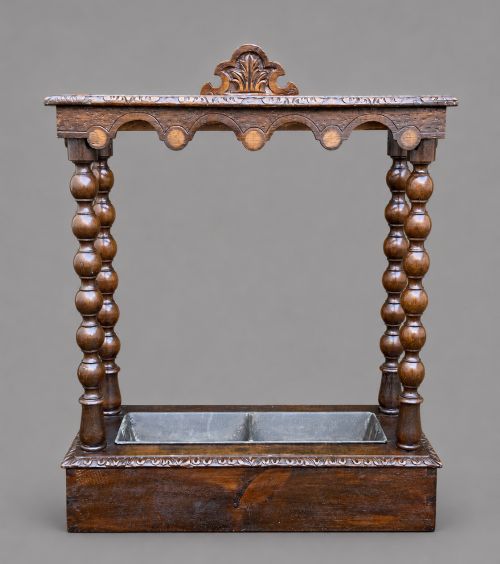
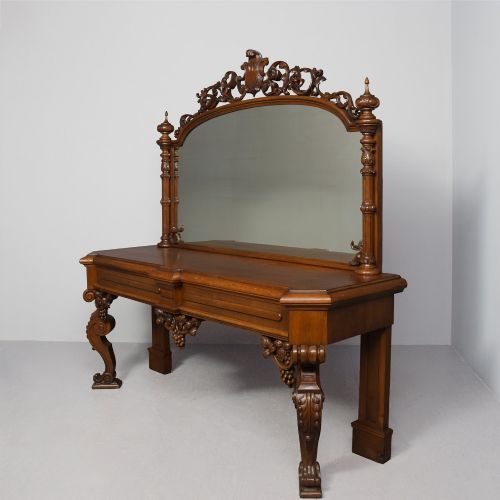
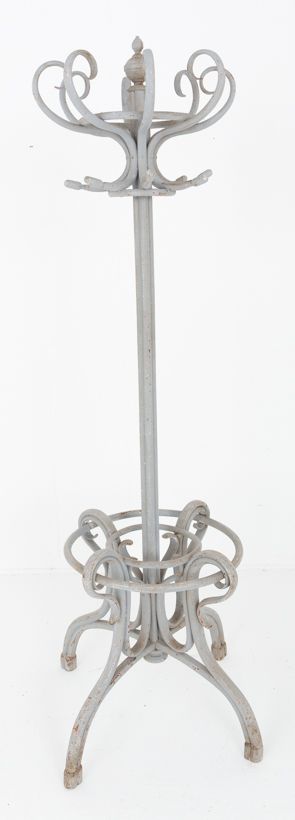
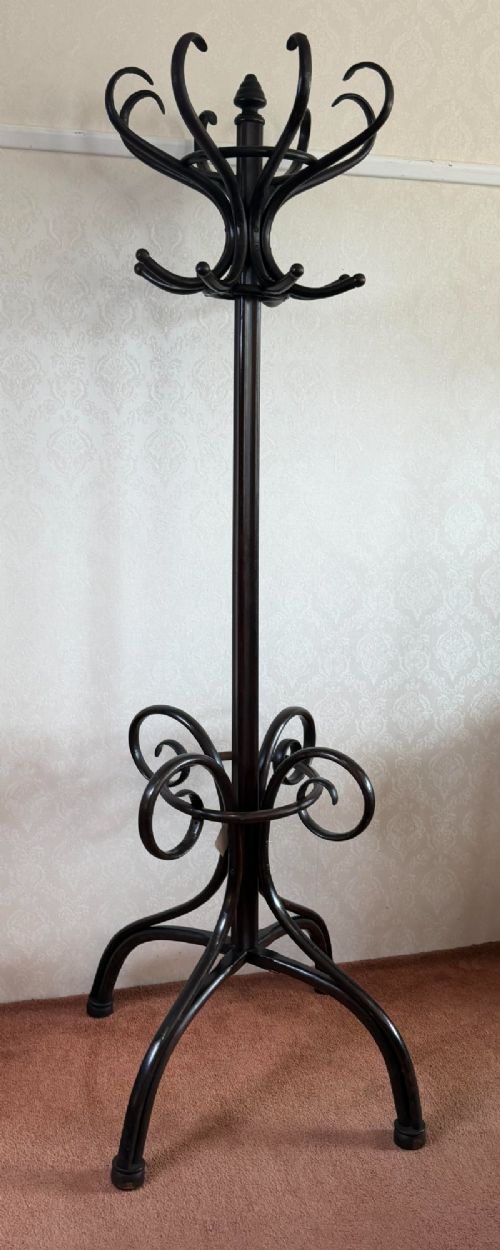
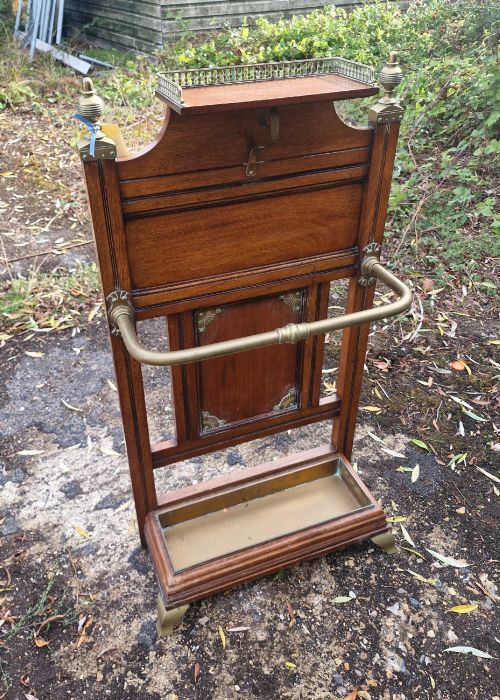
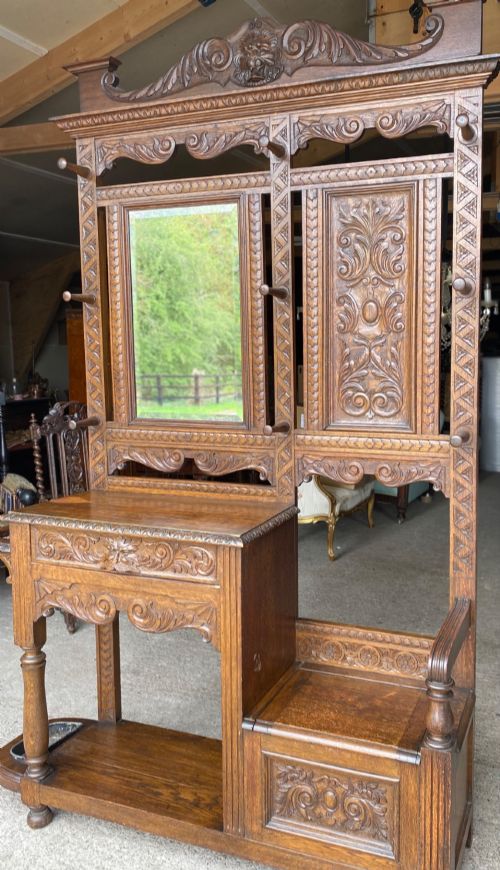
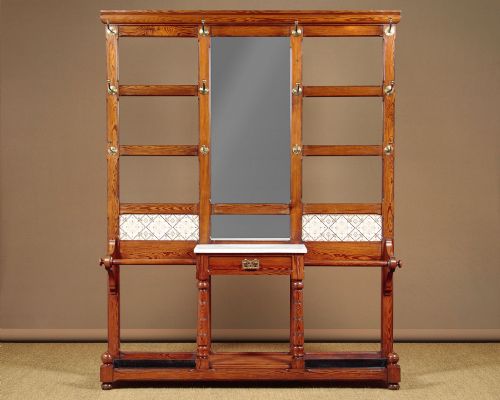
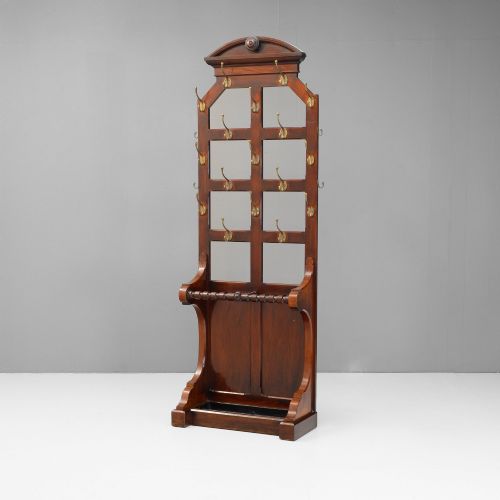
A victorian hallstand serves as the primary piece of entrance furniture for organising coats, hats, and umbrellas in domestic spaces. These pieces appear most frequently in solid oak, walnut, mahogany, and painted bentwood, often incorporating central mirrors and integrated drip pans.
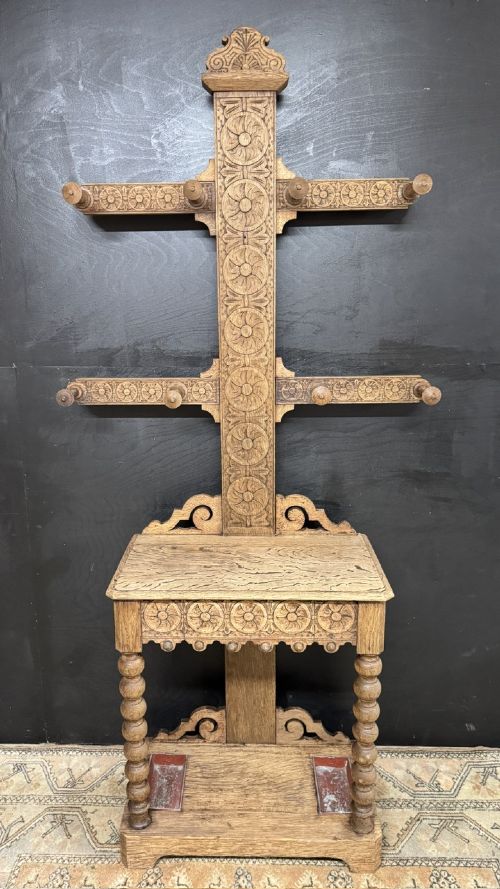
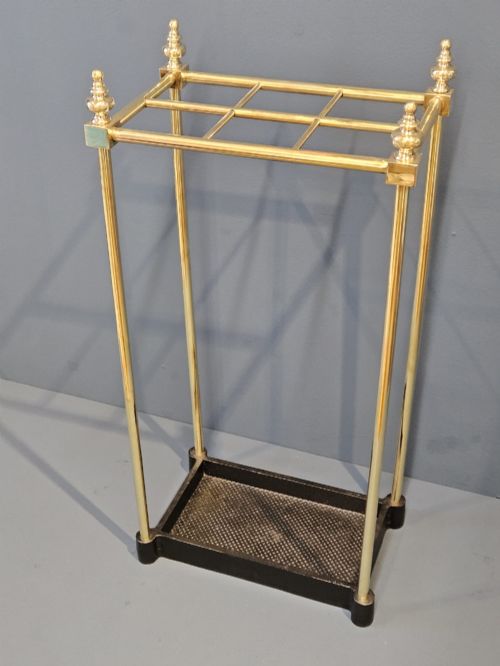
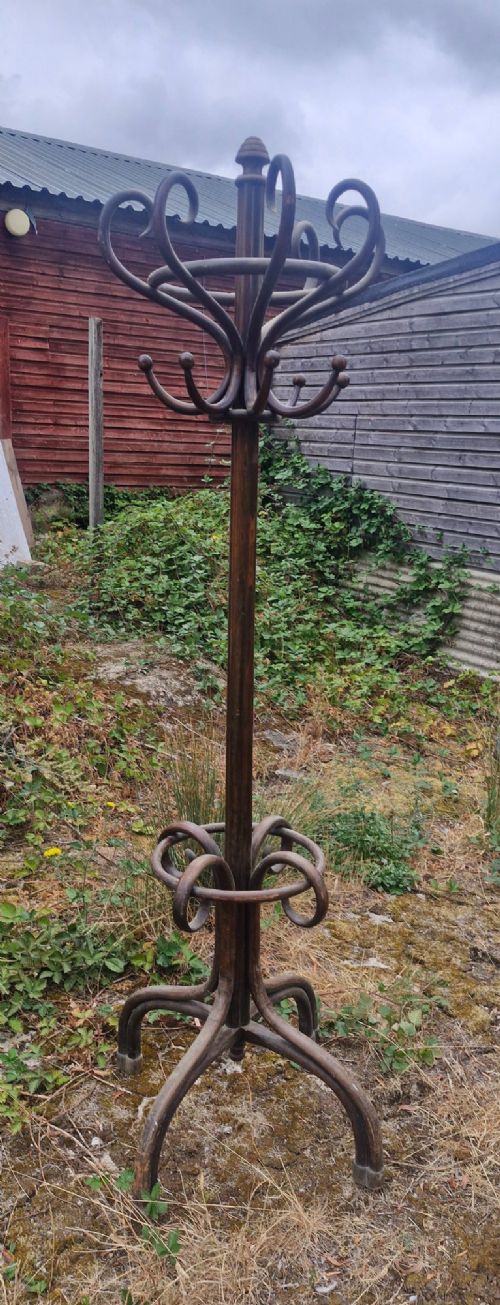
The selections span the nineteenth century into the early twentieth century, taking forms from carved oak country house examples to lighter bamboo and bentwood constructions. Stick stands and umbrella racks also feature prominently alongside multi-functional hat and coat units.
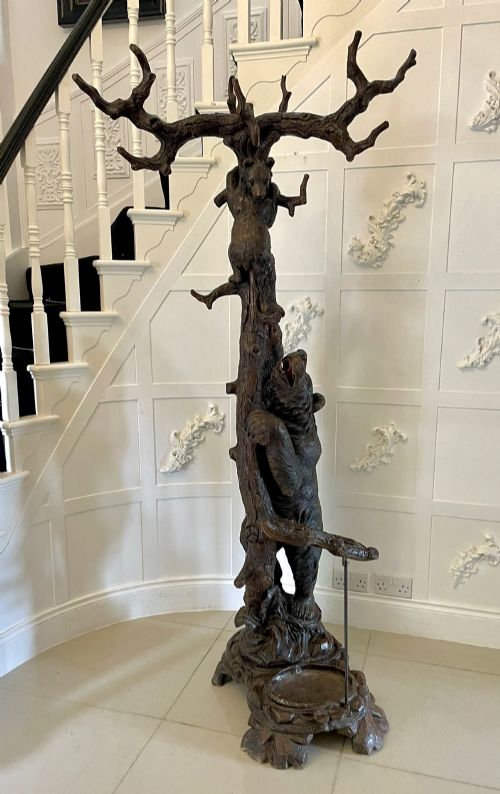
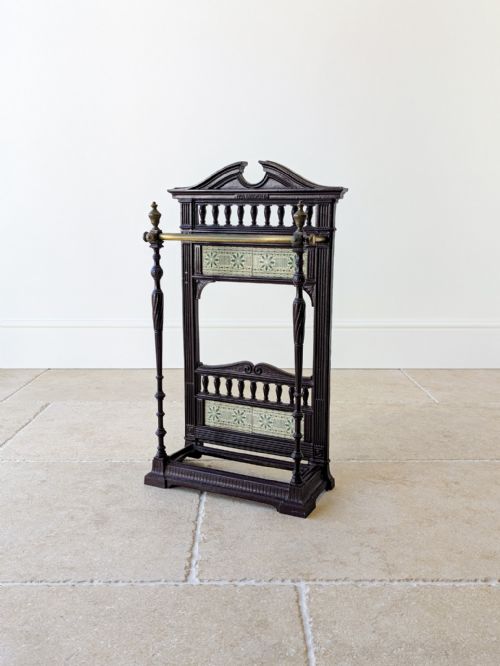
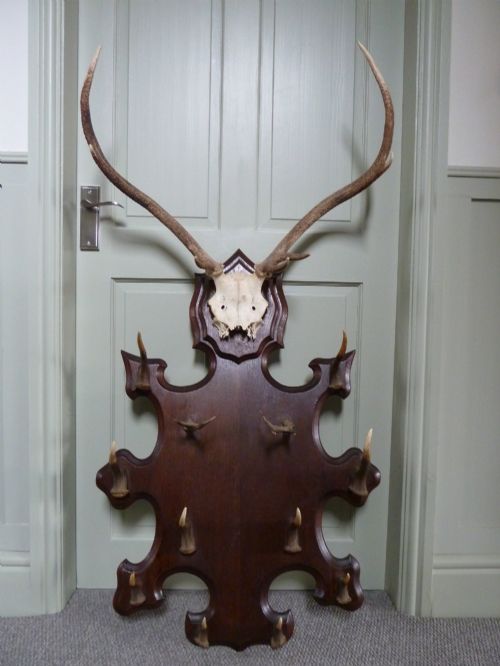
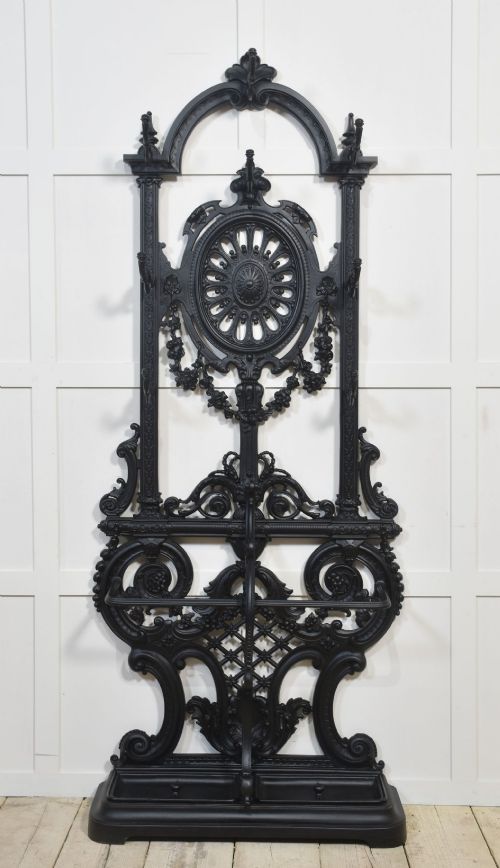
Stylistic influences range from Gothic Revival and Aesthetic Movement designs to Black Forest carvings and industrial cast iron frames. Buyers encounter both substantial architectural furniture and more compact hall storage suited to narrow vestibules.
Materials and Technique
Makers utilised heavy hardwoods such as oak and mahogany for structural stability, employing deep hand-carving for decorative panels and cornices. Bentwood construction relied on steam-heating flexible timber into curved profiles for lighter hat and coat stands.
Metalworking formed an essential part of production, utilising cast iron and brass for structural frames, drip trays, and hooks. Foundries like Coalbrookdale produced intricate patterned ironwork specifically designed to withstand damp umbrellas and heavy outdoor wear.
Mirrors were frequently bevelled and set into wooden backplates, while marble inserts provided durable surfaces for brushing or resting small items. Metal hardware, including coat hooks and stick rings, was commonly cast or forged and screwed directly to the timber frame.
Victorian Hallstand Retail Price Guide 2026
Typical asking prices for victorian hallstand among the pieces listed under this phrase on Sellingantiques today, from the lower quarter to the upper quarter. They describe what is for sale here now, not the wider market.
Several pieces feature carved bears gripping walking sticks.
Assessing the Pieces
Quality rests in the integrity of the timber framing and the crispness of any hand-carved ornamentation. Pieces featuring robust joinery and solid backs outlast lighter or veneered constructions that suffer from damp entrance environments.
The grade of metalwork distinguishes standard productions from finer foundry pieces. Intricately detailed cast iron frames and heavy brass hooks retain structural firmness and refined surface definition compared to softer, unbranded replacements.
Coalbrookdale·Falkirk Ironworks·James Shoolbred
The Victorian Hallstand Glossary
- Bentwood
- Timber shaped through steam-heating to create curved structural elements. This technique gained widespread popularity in the late nineteenth century for lightweight furniture.
- Drip pan
- A metal tray placed at the base of a stick stand to catch rainwater from wet umbrellas. These are frequently removable for emptying and cleaning.
- Gothic Revival
- An architectural and decorative style drawing on medieval forms. Pieces often display pointed arches, trefoils, and heavy carved mouldings.
- Aesthetic Movement
- A late nineteenth century design style emphasising visual beauty over narrative content. It frequently incorporated Japanese motifs and clean structural lines.
- Cast iron
- An iron-carbon alloy poured into moulds to create rigid components. It was heavily utilised for durable umbrella stands and decorative frames.
Victorian Hallstand: Frequently Asked Questions
How do I care for a wooden hallstand?
Keep wooden surfaces nourished with appropriate wax and avoid placing the piece directly against damp exterior walls. Ensure that umbrella drip pans are emptied regularly to prevent moisture damage to the base.
Hardware such as brass hooks should be dusted gently without harsh metal cleaners that strip the aged patina. Periodic checks of the wall fixings ensure the upright frame remains secure during daily use.
Where were hallstands placed in the home?
These pieces were positioned immediately inside the front entrance of Victorian homes to receive outdoor garments. They provided a designated drop-off point for visitors to leave coats, hats, and walking sticks upon arrival.
The inclusion of a mirror allowed residents a final check of their appearance before stepping out the door. Narrower vestibules often utilised compact wall-mounted racks or slim umbrella stands.
What is the difference between a hallstand and a stick stand?
A hallstand combines multiple functions including hat hooks, coat pegs, a central mirror, and a base for umbrellas or walking sticks. It acts as a comprehensive furniture unit for an entrance hall.
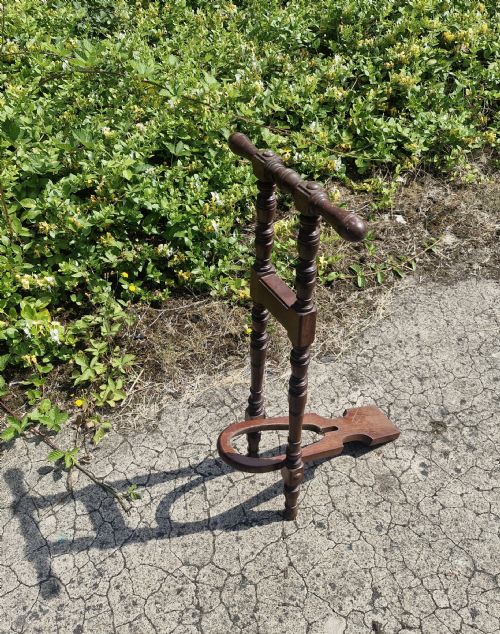
A stick stand focuses solely on holding long items like umbrellas and walking sticks, often constructed from cast iron or turned wood without backing panels or hooks.
How do I identify the period of a hallstand?
Examine the timber, construction methods, and stylistic motifs present on the piece. Mid-nineteenth century examples often display Gothic Revival or heavy oak carving, while later pieces incorporate bentwood or bamboo.
Cast iron components frequently bear registry marks or foundry stamps that narrow down the date of manufacture. Mirror bevelling techniques and screw types also provide clues to the age of the hardware.