



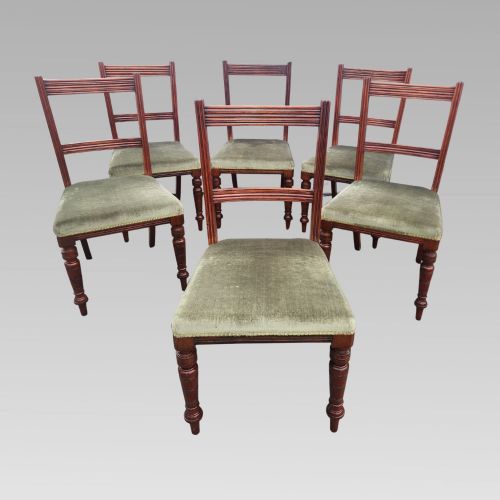

Victorian Green Dining Chairs
These victorian green dining chairs bring enduring nineteenth-century character to a room, offering sturdy timber frames upholstered in rich fabrics.
Victorian Green Dining Chairs
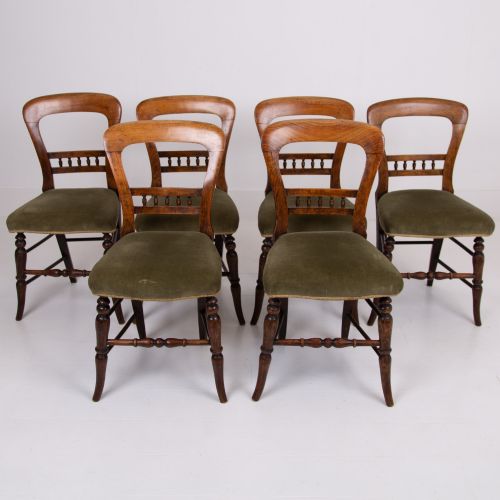
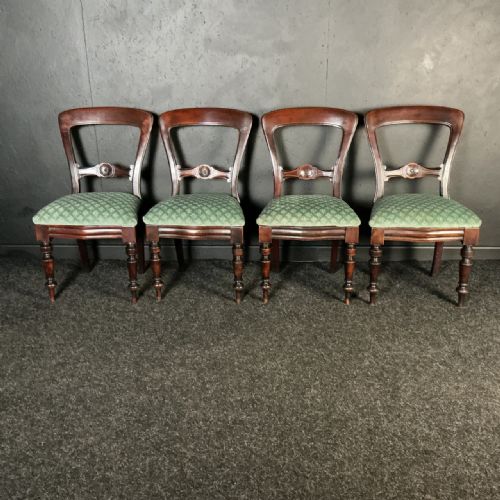
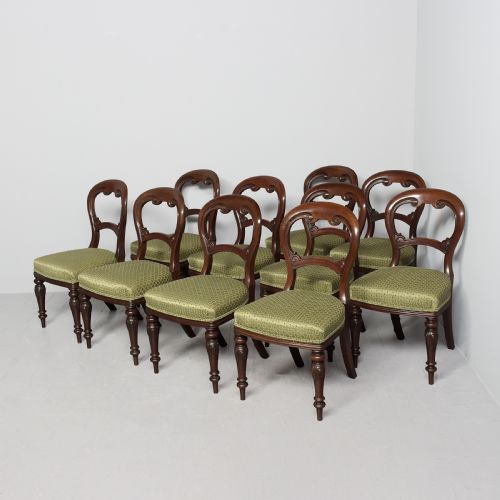
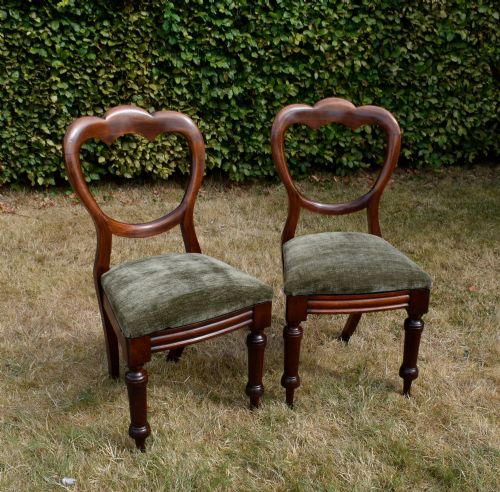
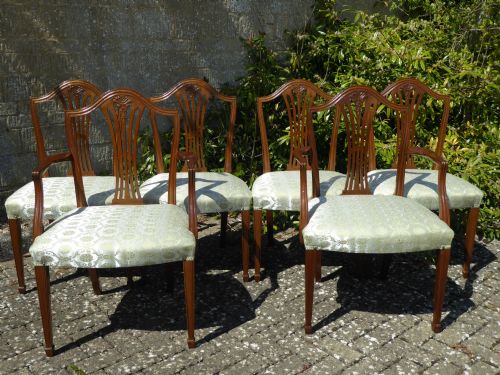
When buyers search for victorian green dining chairs, they encounter robust nineteenth-century seating shaped by revivalist tastes and traditional forms. The selection includes large matched sets alongside intimate pairs, originating from workshops across Britain during the mid and late periods.
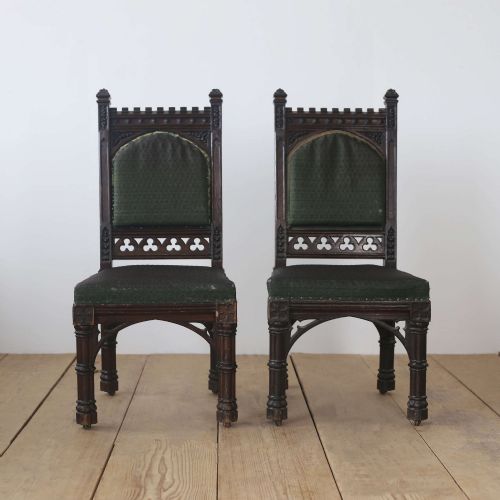
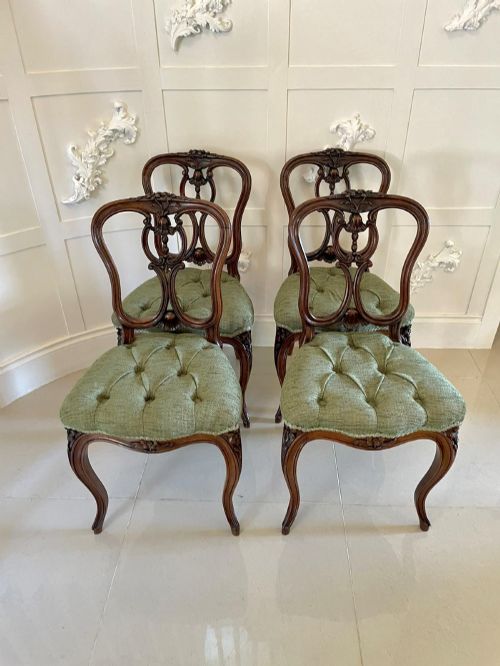
Mahogany and walnut form the structural backbone of these dining chairs, frequently paired with velvet or leather upholstery in deep botanical shades. Makers adapted earlier Chippendale, Gothic, and Rococo motifs to suit contemporary nineteenth-century dining rooms, resulting in diverse stylistic expressions.
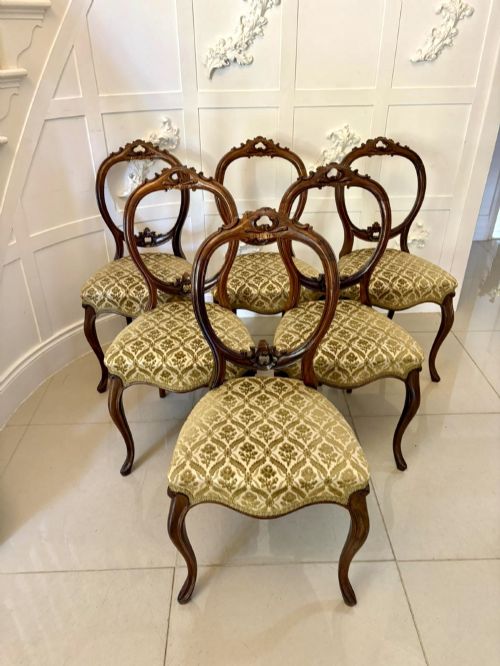
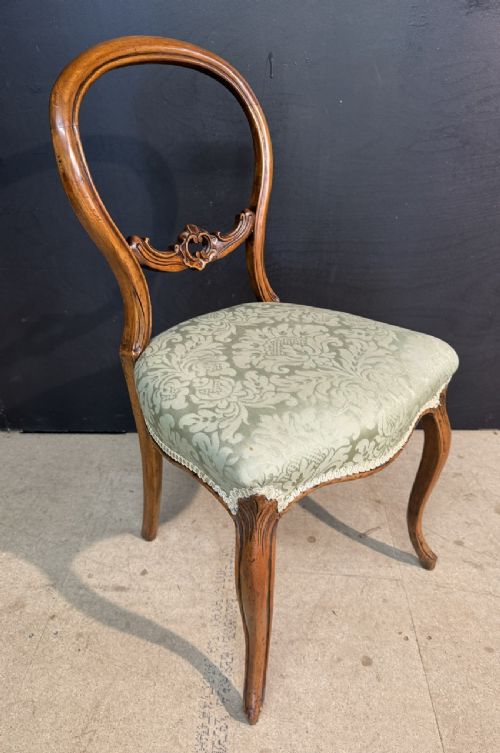
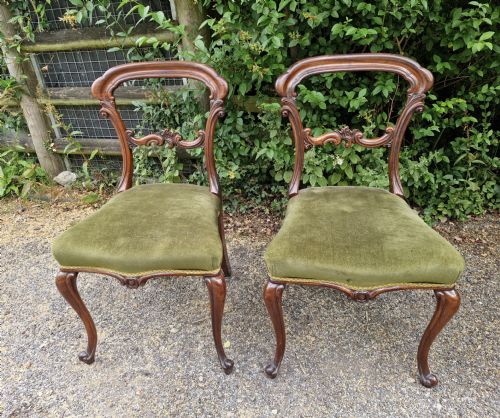
Balloon back and scroll arm configurations dominate the available seating forms, alongside carved side chairs and occasional carver chairs. Buyers will find both restrained architectural designs and heavily carved walnut or oak interpretations dating from the eighteen-fifties through the eighteen-nineties.
Materials and construction methods
Cabinetmakers utilised dense hardwoods such as mahogany, walnut, rosewood, and oak to construct durable frames that withstand daily use. Joinery typically relied on traditional mortise and tenon techniques, ensuring stability across large matching suites of dining seats.
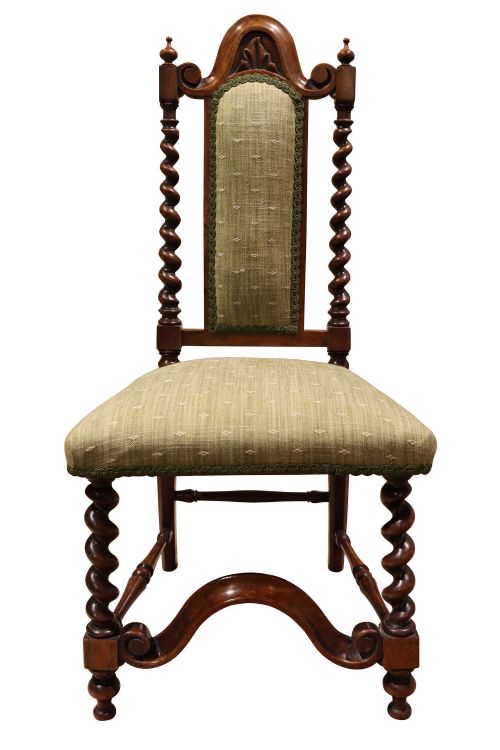
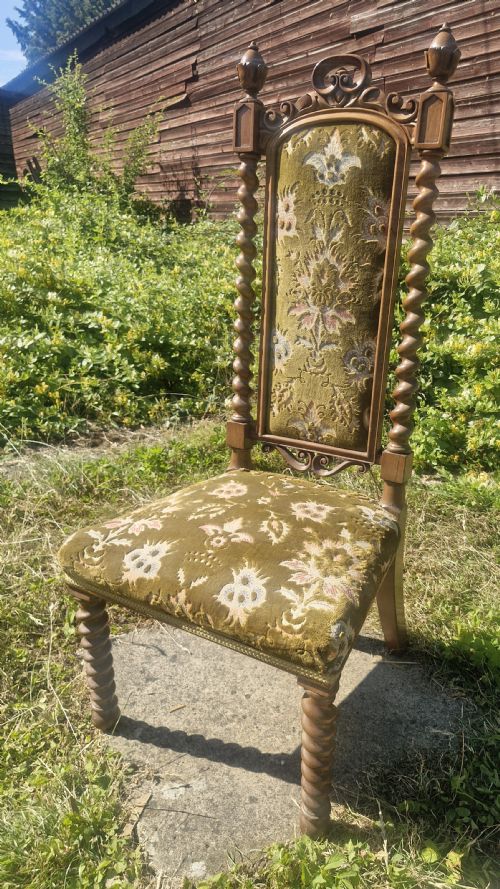
Carving was executed by hand on crest rails and cabriole legs, incorporating barley twists, crown backs, or elaborate scrollwork depending on the chosen revival style. Upholstery materials like velvet, fabric, leather, and brass detailing completed the construction, fastened securely to sprung or webbed bases.
Victorian Green Dining Chairs Retail Price Guide 2026
Typical asking prices for victorian green dining chairs among the pieces listed under this phrase on Sellingantiques today, from the lower quarter to the upper quarter. They describe what is for sale here now, not the wider market.
Dining chairs occasionally feature grimacing green man carvings, bringing medieval folklore straight into nineteenth-century dining rooms.
Differentiating quality in nineteenth-century seating
The standard of carving distinguishes standard production furniture from superior cabinet work, with crisp botanical and scroll details marking out the better examples. Timber selection also dictates grade, where tightly figured mahogany or richly grained walnut reflects greater investment of material.
Matching consistency across larger sets alters desirability, particularly when frames maintain uniform colour and grain distribution throughout the group. Original structural integrity and preserved joinery signal superior workshop execution compared to heavily restored framework.
Bruce Talbert·Gillows·Hewetson & Milner·Charles Roodhouse
The Victorian Green Dining Chairs Glossary
- Balloon back
- A rounded, oval-shaped wooden backrest curving outwards, popular during the mid-nineteenth century. This contour provides ergonomic support while presenting a continuous flowing wooden frame.
- Carver chair
- An armchair designed specifically for the heads of a dining table, featuring supportive armrests. These pieces match the smaller side chairs in a dining suite.
- Gothic Revival
- An architectural and decorative style drawing inspiration from medieval design. Pieces often incorporate pointed arches, trefoils, and heavy oak construction.
- Cabriole leg
- A furniture leg that curves out in a convex shape at the knee and tapers inward to a concave ankle. This classical form appears frequently on revival seating.
- William IV
- A transitional design period bridging Regency and early Victorian styles. Furniture from this era exhibits robust proportions and classical restraint.
Victorian Green Dining Chairs: Frequently Asked Questions
How do I care for nineteenth-century upholstery?
Protect the fabric by keeping seating away from direct sunlight and heat sources to prevent fading and timber splitting.
Regularly dust carved wooden elements with a dry cloth and consult a professional conservator for deep textile cleaning.
Can these chairs handle daily dining use?
Solid hardwood construction ensures these nineteenth-century seats remain structurally capable of regular use around the dining table.
Checking frame stability periodically helps preserve the original joinery over decades of family gatherings.
What defines a balloon back chair?
The defining characteristic is the continuous oval wooden loop forming the upper backrest, resembling a suspended balloon.
This form gained widespread popularity across Britain during the mid-Victorian era for both dining and bedroom seating.
How do I distinguish early from late Victorian styles?
Early Victorian pieces often retain heavier Regency influences with dark mahogany and restrained classical lines.
Later Victorian furniture frequently embraces elaborate carving, walnut timber, and varied revival aesthetics including Gothic and Chippendale motifs.