


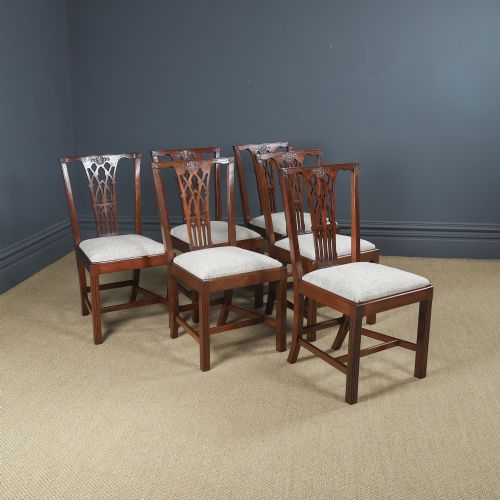

Victorian Gothic Chairs Set
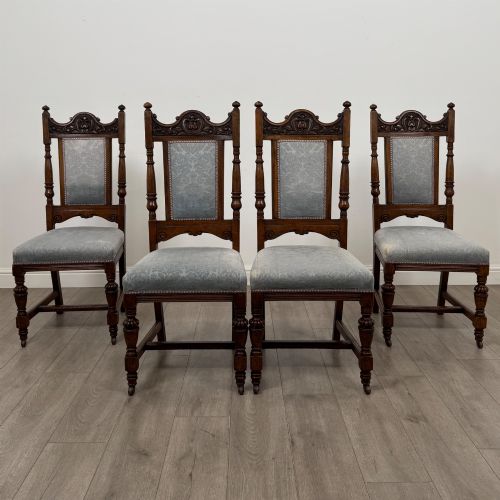
A victorian gothic chairs set brings severe ecclesiastical lines and deep-carved timber into domestic interiors, offering structured vertical presence.
Victorian Gothic Chairs Set
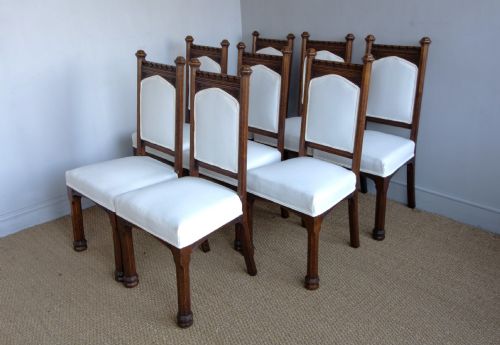
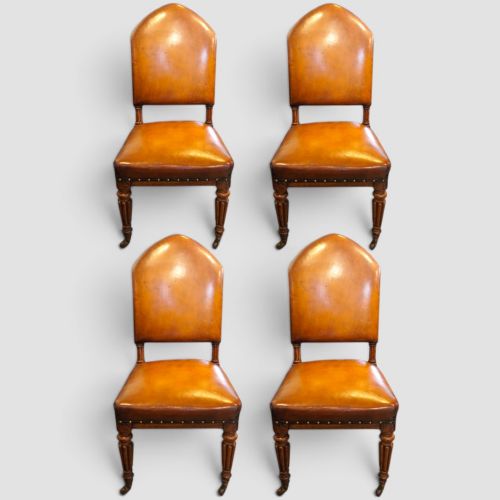
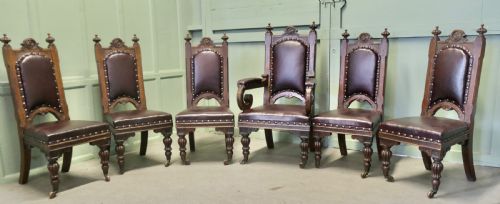
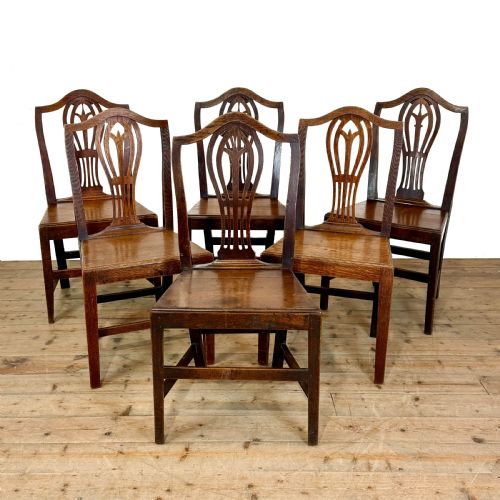
A victorian gothic chairs set comprises multiple seating pieces sharing pointed arches, quatrefoils, and heavy timber frames rooted in nineteenth-century revivalism. The records show dining chairs, armchairs, and hall chairs appearing most frequently in matched groups of four, six, or eight.
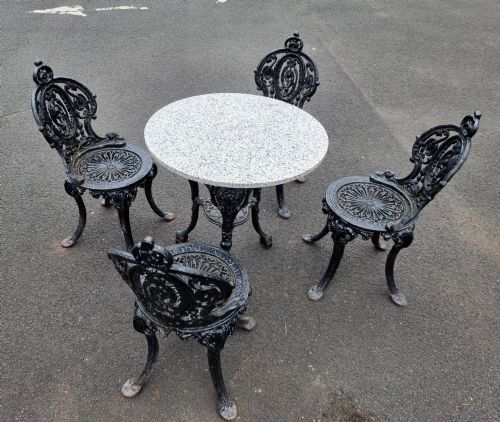
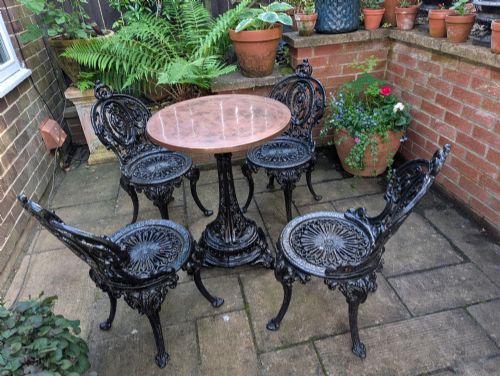
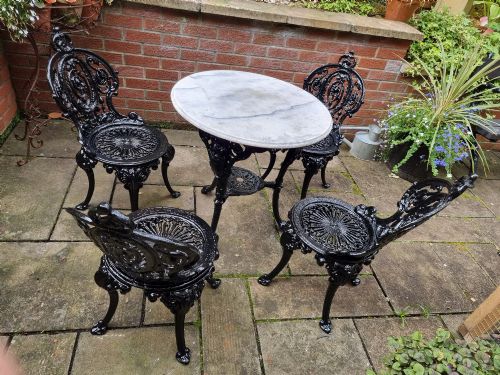
Makers drew on medieval architecture, producing high backs and linenfold panels. Oak predominates as the primary timber, occasionally supplemented by mahogany or cast iron for garden settings.
Buyers encounter sets configured for formal dining rooms or specialised parlour use, spanning periods from the mid-nineteenth century through to later revival interpretations.
Materials and construction
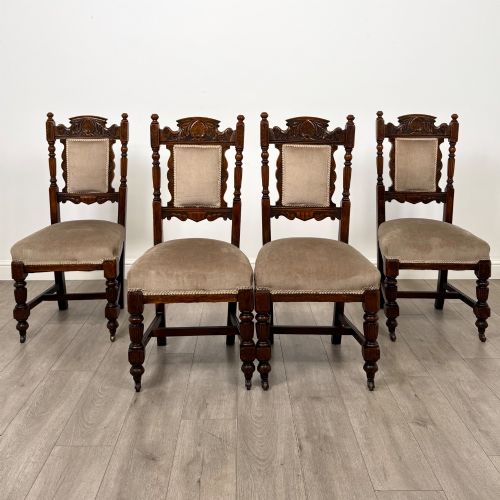
Cabinetmakers utilised solid English oak and mahogany, shaping heavy frames through mortise and tenon joinery to withstand daily upright sitting. Carvings were executed by hand directly into the dense timber, producing deep relief work along splats and crest rails.
Upholstery involved stuffed seats finished in leather, velvet, or heavy woven fabric, secured with brass tacks. Cast iron variants relied on foundry moulds to replicate gothic tracery for outdoor use.
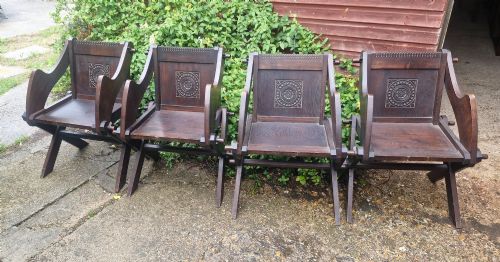
Cross-frame and X-frame constructions provided structural rigidity without relying on standard stretcher bars, distributing weight evenly across the legs.
Listings feature nineteenth-century oak dining chairs alongside cast-iron garden sets from eighteen-forty.
Assessing the craftsmanship
Depth and crispness of the timber carving separate standard production furniture from exhibition pieces. Superior sets display undercut mouldings and sharp architectural details rather than soft, rounded edges.
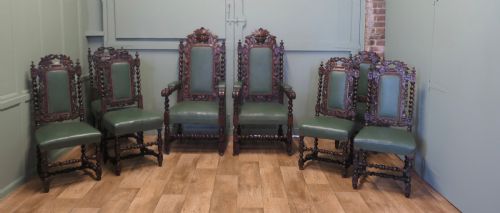
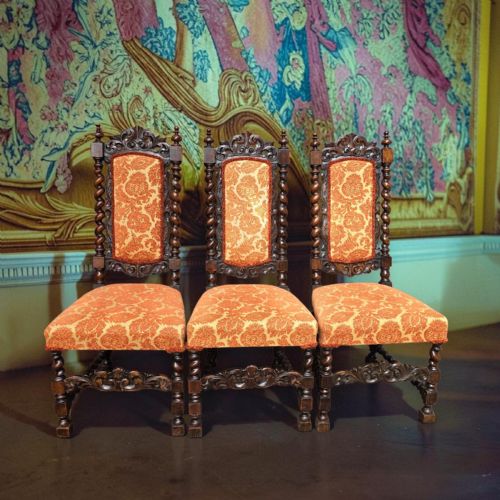
Uniformity across a group indicates whether pieces were conceived as a single commission or assembled later. Grain matching on oak backs and consistency in turned barley twist legs signal superior workshop standards.
Lamb Of Manchester·Norwich Maker·Liberty And Co·Charles Bevan·Goodall Lamb And Heighway·George Morant·Val D Osne
The Victorian Gothic Chairs Set Glossary
- Gothic Revival
- An architectural and decorative movement reviving medieval forms, pointed arches, and ecclesiastical motifs during the nineteenth century. It heavily influenced domestic seating design.
- Barley twist
- A woodworking technique turning timber into a spiral rope pattern resembling twisted columns. This detail frequently appears on nineteenth-century chair legs and stretchers.
- X-frame
- A structural chair design utilising intersecting diagonal members supporting the seat and back. It offers increased stability and medieval stylistic reference.
- Linenfold
- A style of woodcarving imitating folded parchment or fabric. It is commonly carved onto the back panels of oak chairs.
- Quatrefoil
- A decorative four-lobed shape derived from traditional gothic stone tracery. Makers pierced this motif into chair splats and crestings.
Victorian Gothic Chairs Set: Frequently Asked Questions
How do I care for antique oak dining sets?
Feed the dry timber with traditional beeswax to maintain the natural grain without building up heavy residue. Keep the seating away from direct heat sources and strong sunlight to prevent timber shrinkage and splitting.
Protect leather or fabric upholstery by brushing gently and avoiding harsh modern cleaning liquids. Check the joints periodically to ensure the frame remains rigid during daily use.
Were these chairs used for daily dining?
Middle-class and elite households utilised these heavy timber chairs primarily for formal dining and reception rooms. The tall backs encouraged upright posture during lengthy Victorian meals.
Some lighter side chairs and hall variants served in entranceways or parlours rather than around the main dining table. Their imposing frames reflected the social standing of the household.
How do I distinguish mid-nineteenth century oak from later revivals?
Examine the underside and interior joints for hand-cut tool marks, pegged tenons, and natural oxidation of the timber. Earlier pieces display dense grain patterns and hand-finished patination accumulated through decades of use.
Later revival sets often utilise more uniform machine sawing and standardised modern hardware. Comparing the carving depth also reveals the hand of nineteenth-century artisans versus later replication.
Can I mix different styles within a dining set?
Purists prefer matched sets sharing identical wood, period, and carved motifs from the same workshop. However, historic dining rooms often accommodated varied side chairs surrounding a central table.
Ensure that seat heights and back proportions align if combining similar gothic revival pieces. Consistent timber species helps unify visually distinct chairs gathered around one table.