



Victorian Gold Trilogy Ring
A victorian gold trilogy ring holds three stones for past, present, and future, bringing nineteenth-century hand-finished detail directly to the hand.
Victorian Gold Trilogy Ring
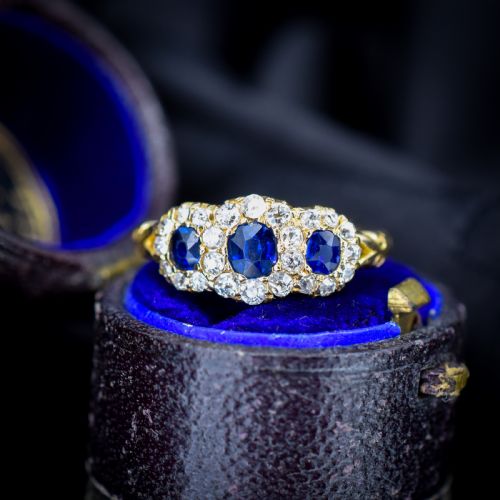
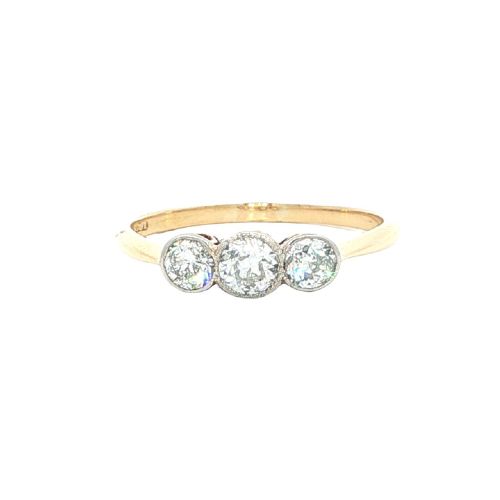
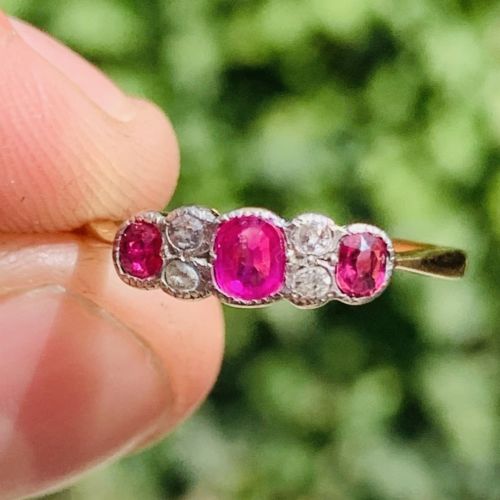
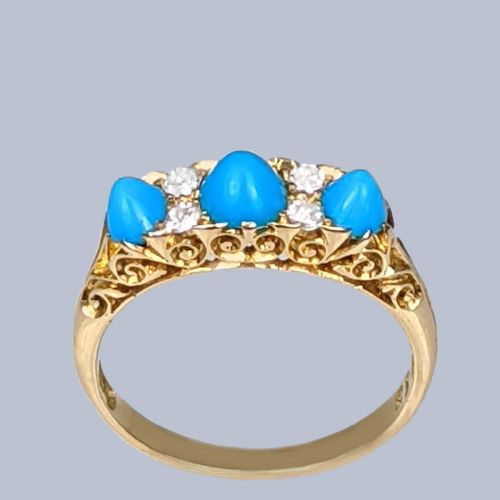
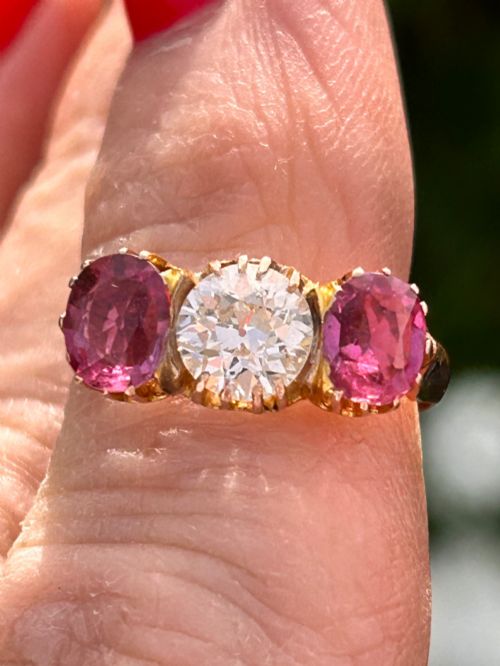
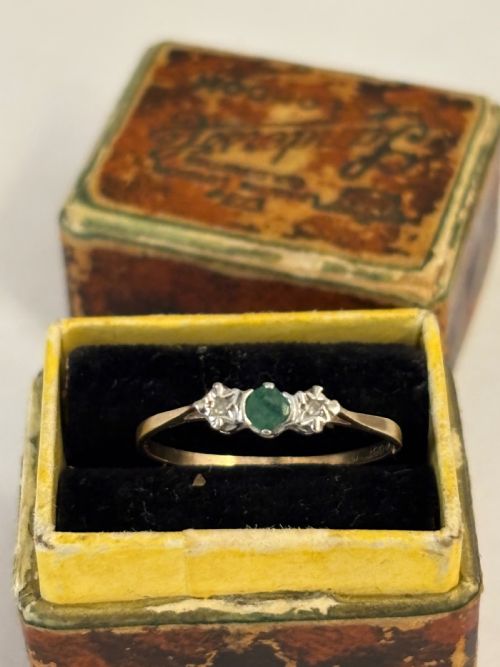
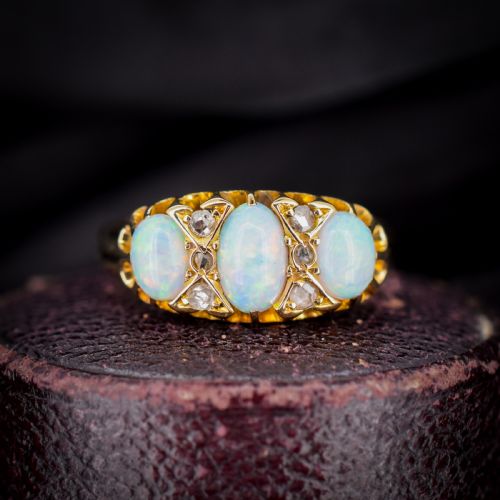
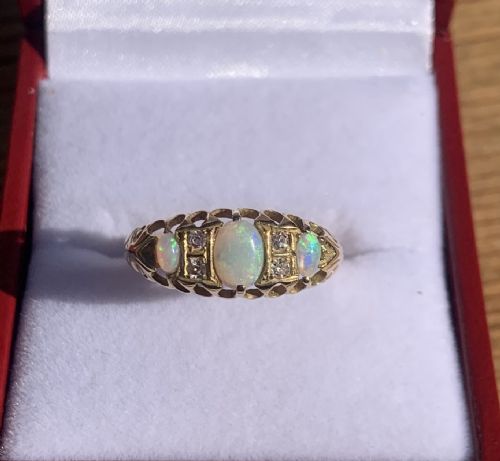
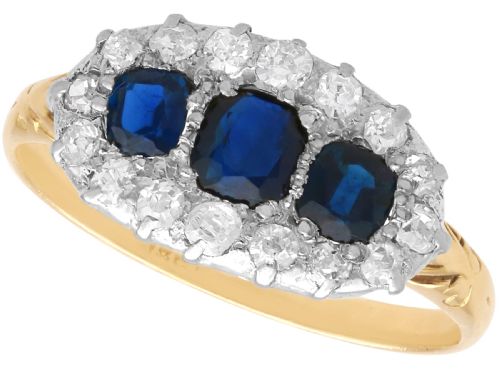
A victorian gold trilogy ring gathers three distinct gems across a horizontal band, most frequently pairing diamonds alongside rubies, sapphires, opals, or pearls. These pieces date principally from the late nineteenth century into the Edwardian era, spanning periods where multi-stone engagement settings gained immense popularity.
The format traditionally signifies a couple's past, present, and future, making these survivors enduring choices for modern commitments. Most examples encountered here utilise standard eighteen-carat yellow gold or fifteen-carat gold mounts, often carrying Birmingham, Chester, or London assay office hallmarks.
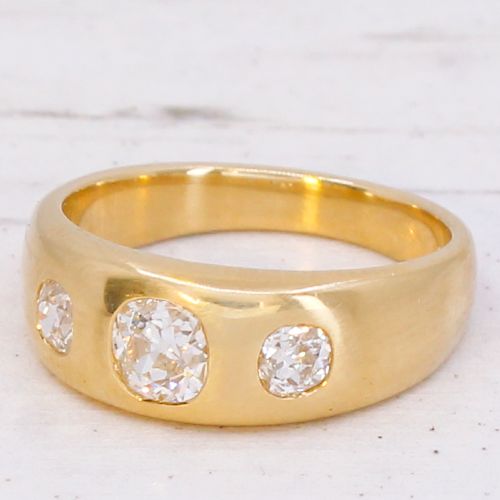
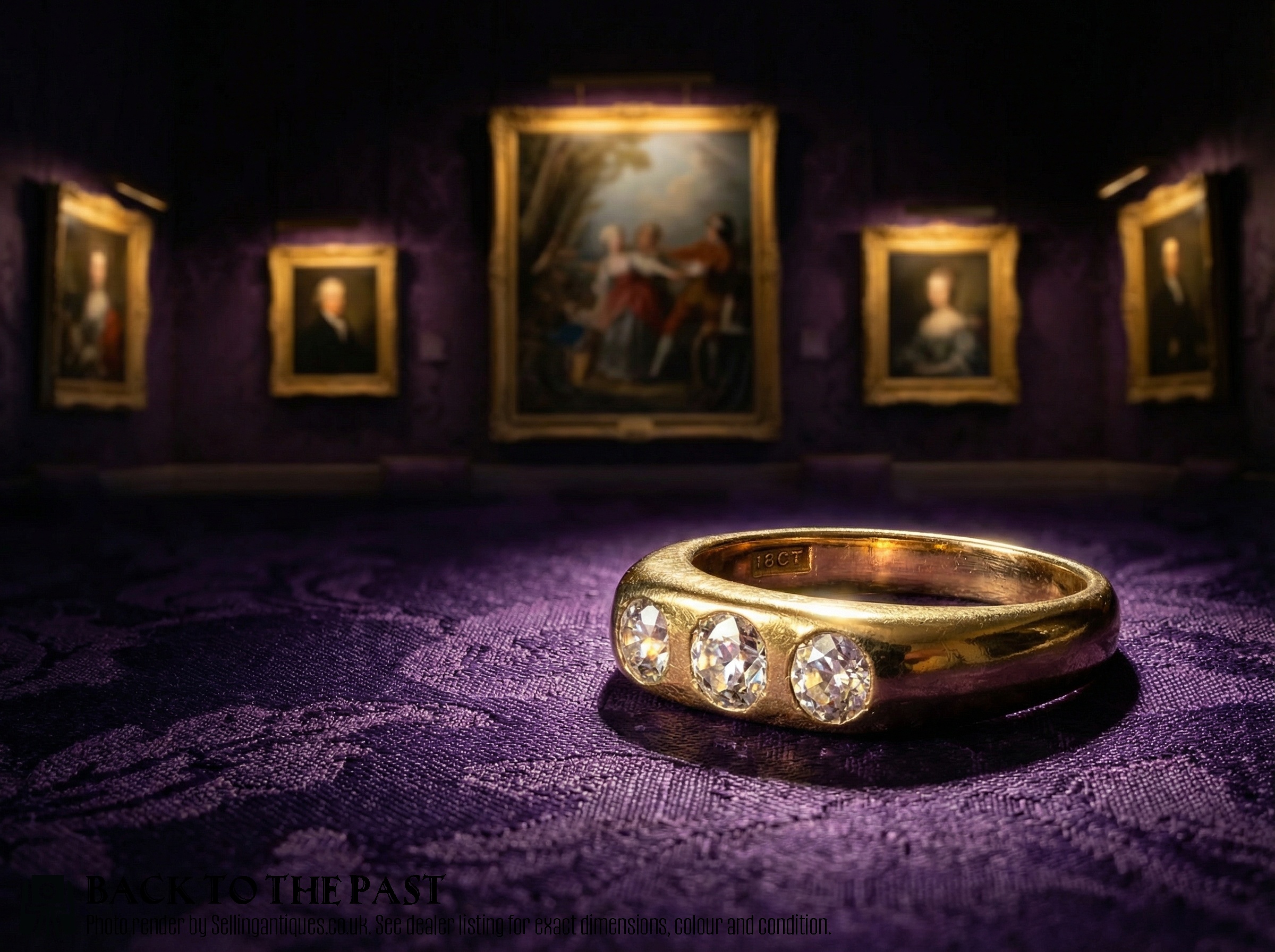
Makers utilised various mounting styles, ranging from traditional claw settings and carved half-hoop galleries to flush gypsy settings where stones sit level with the metal band. This variety ensures collectors find both delicate stone-heavy clusters and sturdy, everyday rings suited to continuous wear.
Materials and construction
Goldsmiths constructed the primary bands predominantly from eighteen-carat yellow gold, occasionally incorporating platinum accents around the gem clusters by the turn of the twentieth century. Stones were cut by hand rather than with modern machinery, resulting in characteristic old mine cuts or old European cuts that display deeper facets and softer light reflection.
Gemstones such as rubies, sapphires, opals, and natural pearls were secured manually using individual claws, low bezels, or gypsy starburst engravings. This manual bench work meant each ring possesses subtle irregularities in the metal thickness and stone alignment that distinguish hand-wrought items from mass-produced modern jewellery.
Victorian romantics frequently hid secret initials or dates inside the band, turning a simple three-stone engagement token into a personal diary.
Assessing the work
Quality rests upon the original proportions of the three central stones and the integrity of the surrounding gold galleries. Rings featuring matched stone sizes with minimal wear to the individual claw tips or starburst engravings represent superior survival.
The weight and purity of the gold band further define the tier of the piece, alongside legible assay office stamps indicating the exact year and city of manufacture. Finer examples maintain crisp chased shoulder details and secure stone beds that have endured a century or more of daily use.
The Victorian Gold Trilogy Ring Glossary
- Trilogy ring
- A ring set with three stones arranged in a row, traditionally symbolising the past, present, and future.
- Old cut diamond
- A hand-faceted diamond shape from the nineteenth century featuring a smaller table, higher crown, and open culet.
- Gypsy setting
- A mounting style where gemstones are flush-set directly into the thick gold band, often surrounded by starburst engravings.
- Half-hoop ring
- A design where the upper portion of the band carries a continuous line or cluster of stones.
- Assay office
- An official organisation that tested precious metal purity and stamped items with identifying hallmarks.
Victorian Gold Trilogy Ring: Frequently Asked Questions
How do I wear a delicate opal trilogy ring safely?
Opals possess a softer mineral structure than diamonds, requiring gentle care to avoid knocks against hard surfaces during daily tasks.
Removing the ring prior to manual labour or heavy lifting preserves both the central stone and the surrounding gold claws.
Can these rings be resized easily?
Most gold bands allow a skilled jeweller to adjust the circumference up or down by a few sizes without compromising the structural integrity.
However, rings featuring extensive hand-engraved shoulders require careful laser work to protect the historic decorative patterns.
What does an 1897 hallmark tell me?
An official assay mark from 1897 confirms the ring was tested and certified in Great Britain during the late Victorian period.
These stamps typically reveal the town of origin, metal purity, and specific date letter, establishing verifiable age.
Why do the diamond facets look different from modern stones?
Nineteenth-century lapidaries cut diamonds entirely by hand under candlelight to maximise warm scintillation rather than clinical brilliance.
This historic technique yields broader facets and a distinctive, softer glow under low light conditions.