






Edwardian Diamond Gypsy Ring
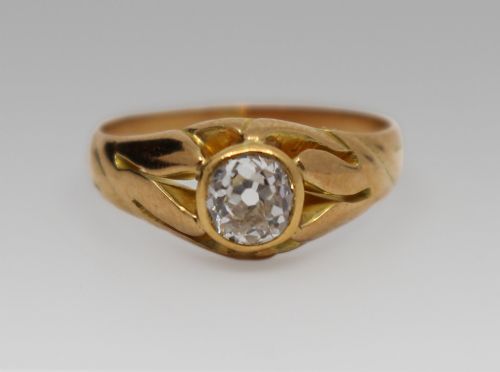
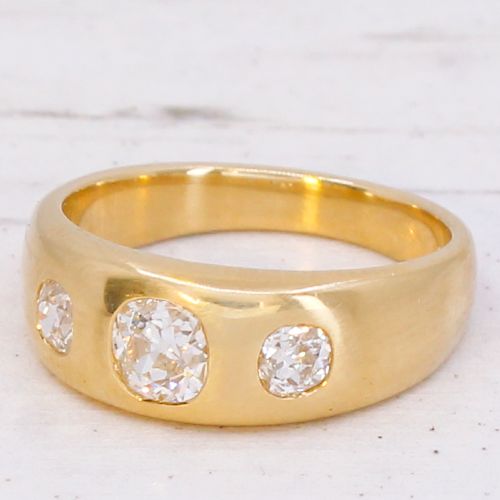
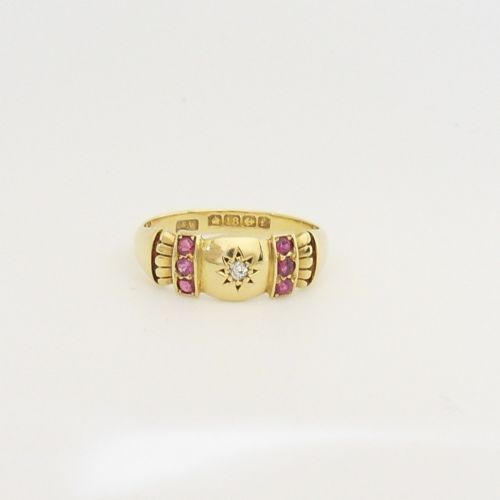
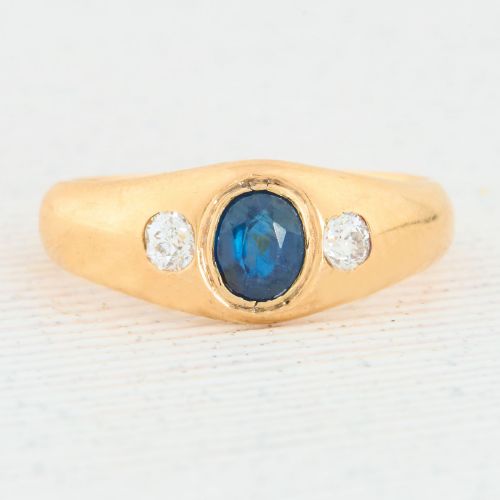
An edwardian diamond gypsy ring brings flush-set stones into a smooth gold band that slips against the finger without catching.
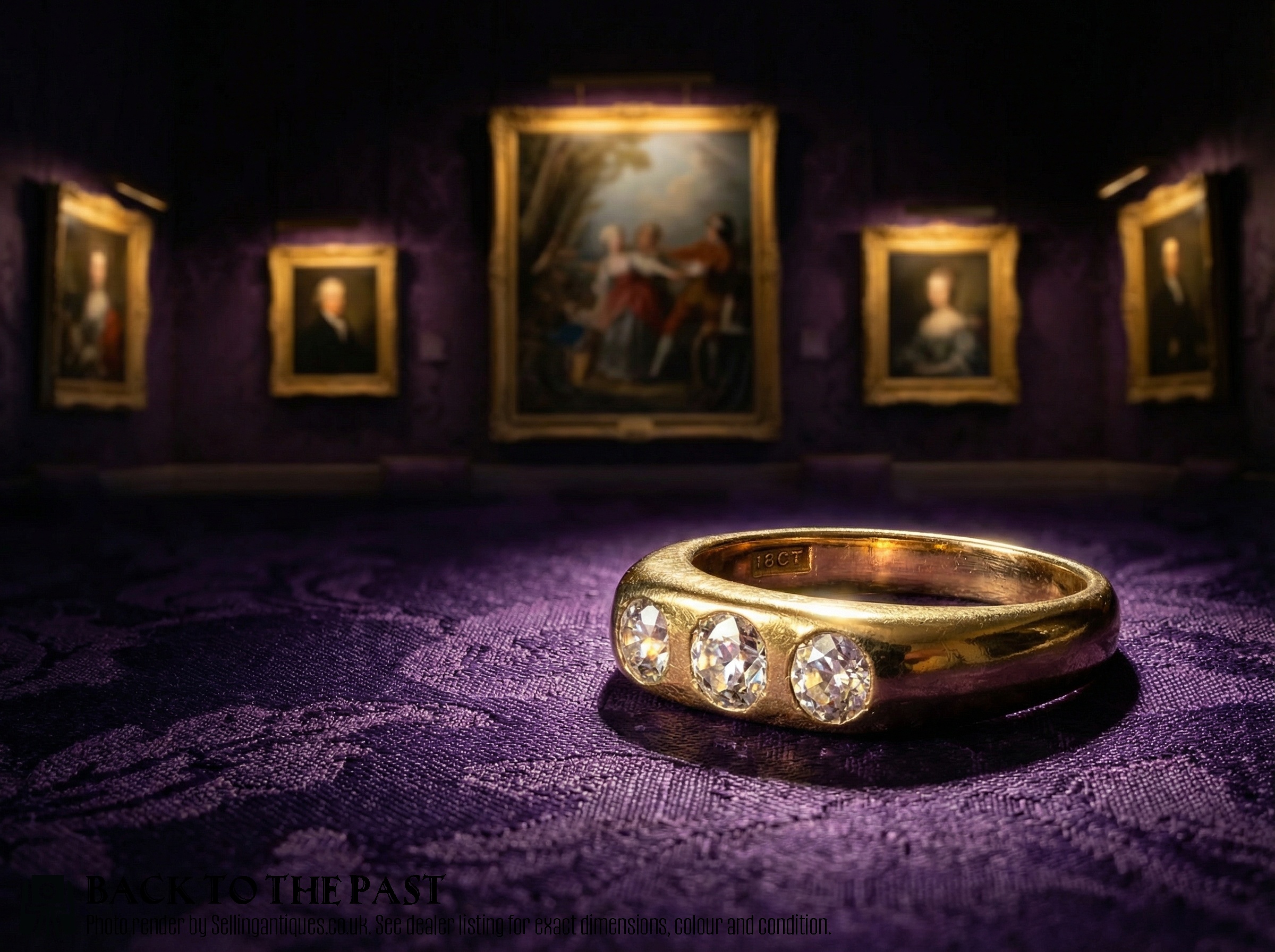
Edwardian Diamond Gypsy Ring
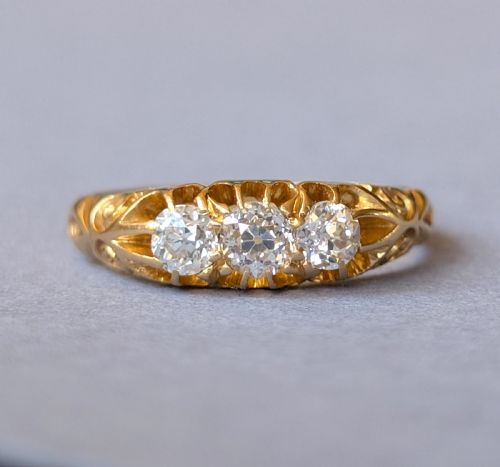
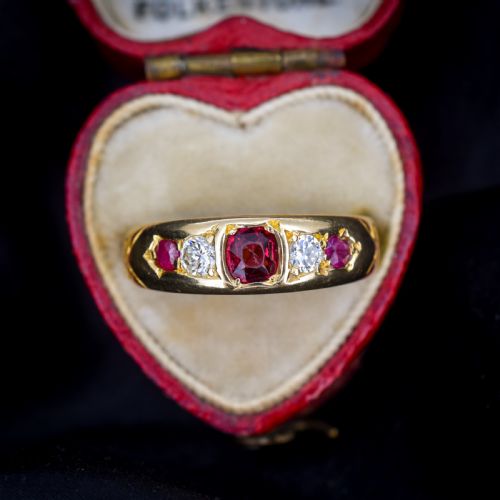
The edwardian diamond gypsy ring centres on low-profile mounts where diamonds sit flush with the metal surface. These pieces span single stones, trilogy layouts, and multi-stone arrangements set into heavy bands.
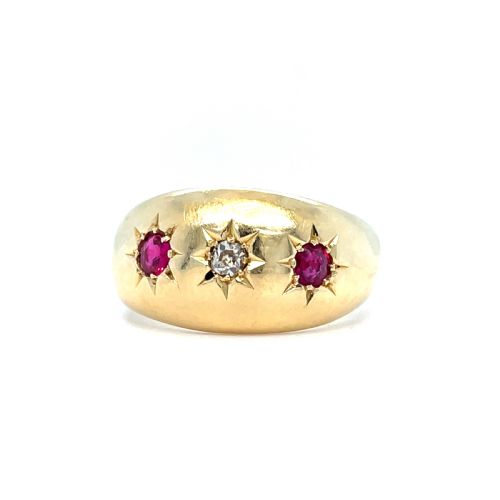
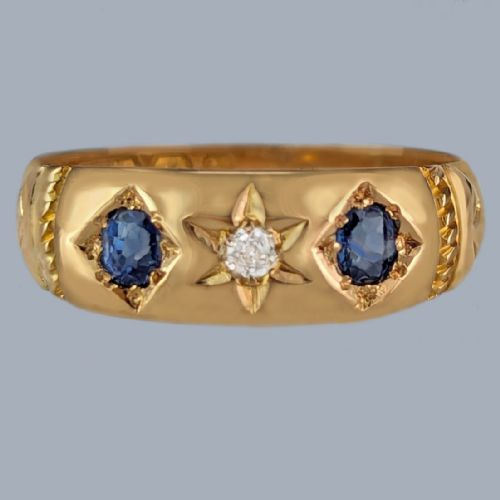
Most examples hail from the Edwardian era and the late nineteenth century, executed in yellow gold, rose gold, and occasionally higher caratages. They combine practical daily wear with meticulous starburst or celestial engraving around the gems.
Materials and Techniques
Goldsmiths shaped these bands from 18ct gold, 9ct gold, and occasionally 15ct gold, hammering and casting thick shanks to secure the stones. Old cut and rose cut diamonds were then hammered or burnished directly into tapered metal starbursts.
Craftsmen often integrated rubies, sapphires, or emeralds alongside the diamonds in trilogy and five-stone configurations. Hallmarks stamped in assay offices like Chester and Birmingham anchor the manufacturing dates.
Some nineteenth century rings bear hidden Chester assay office marks that survived a century of finger friction.
Evaluating Quality
Superior weight in the gold shank dictates longevity, separating substantial bands from thinner daily wear pieces that thin out over decades. The precision of the hand-graved starburst or celestial setting around each stone marks the hand of a skilled bench worker.
Diamond selection drives value through stone lively sparkle, matching carat sizes in multi-stone layouts, and secure flush retention without loose bezels.
The Edwardian Diamond Gypsy Ring Glossary
- Gypsy setting
- A mounting style where the gemstone is flush with the surrounding metal surface, secured by pushing the gold over the stone edge. This technique protects the girdle during manual work.
- Old cut
- A vintage diamond cut featuring a small table, high crown, and open culet, hand-faceted before modern proportions were standardised. These stones catch candlelight with broad, soft flashes.
- Rose cut
- A dome-shaped diamond cut with a flat base and triangular facets rising to a point. It produces a subtle translucency rather than deep brilliant sparkle.
- Trilogy ring
- A ring set with three stones representing past, present, and future. In this selection, they combine diamonds with rubies or sapphires.
- Belcher mounting
- A rounded, protruding prong or bezel setting rising from the band to elevate the stone. It forms a distinct variant alongside flush gypsy bands.
Edwardian Diamond Gypsy Ring: Frequently Asked Questions
Can I wear an edwardian diamond gypsy ring daily?
The flush setting protects the stone from knocks, making these bands exceptionally practical for continuous daily wear.
Heavier 18ct gold shanks withstand decades of friction without wearing thin against neighbouring fingers.
How do I identify an authentic period piece?
Examine the inner band for crisp assay office hallmarks indicating Birmingham or Chester alongside precise carat stamps.
Hand-cut old diamonds and dense yellow or rose gold fabrication distinguish genuine Edwardian and Victorian examples from later reproductions.
What stones are found with diamonds here?
Natural rubies and sapphires frequently accompany diamonds in multi-stone starburst and trilogy arrangements.
Occasional emeralds and garnets also appear nestled into the heavy gold bands alongside the central diamonds.
What is a starburst gypsy setting?
Engraved rays radiate outward from the flush-set diamond into the gold band to mimic a twinkling star.
This decorative chasing hides the burnished metal edge securing the stone while adding period character.