
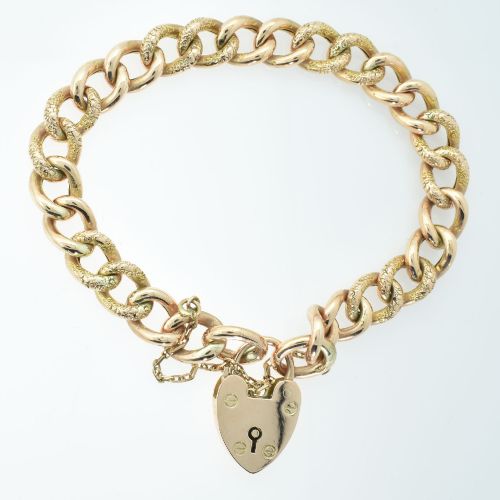
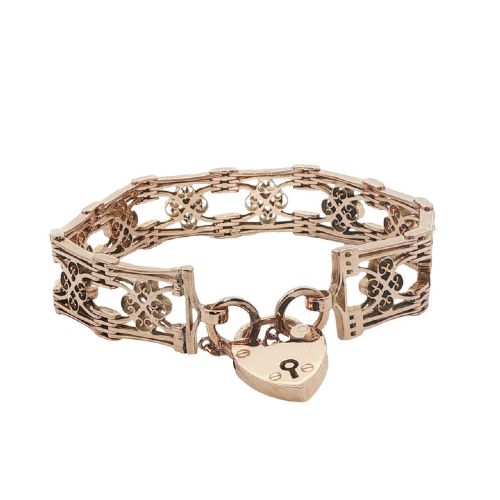
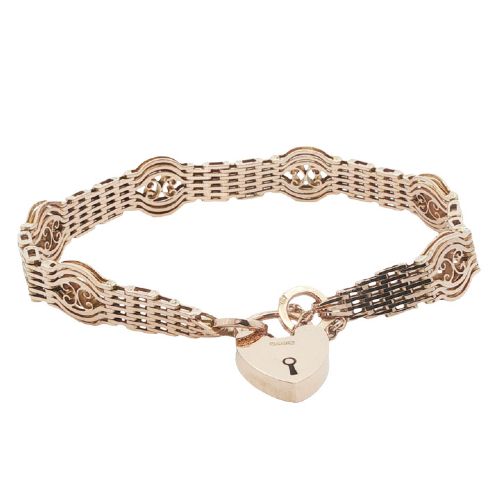
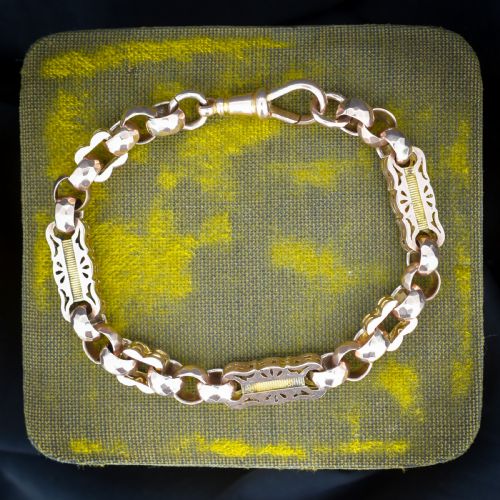
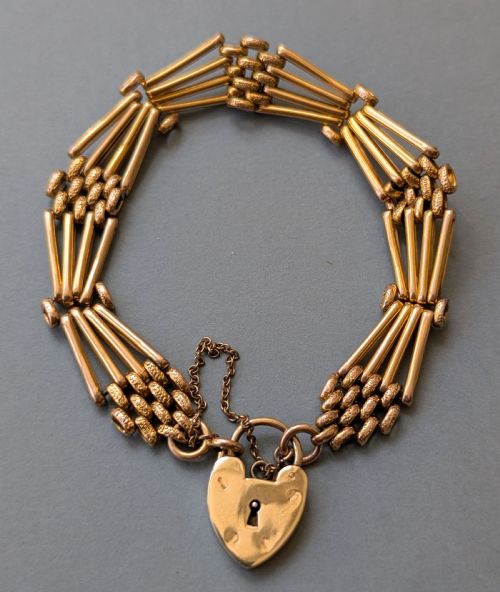


Victorian Gold Gate Bracelet
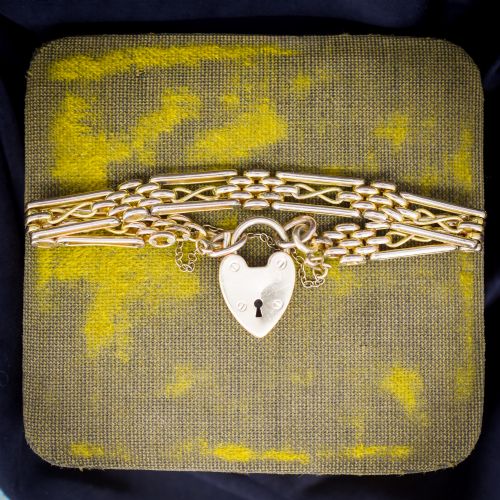
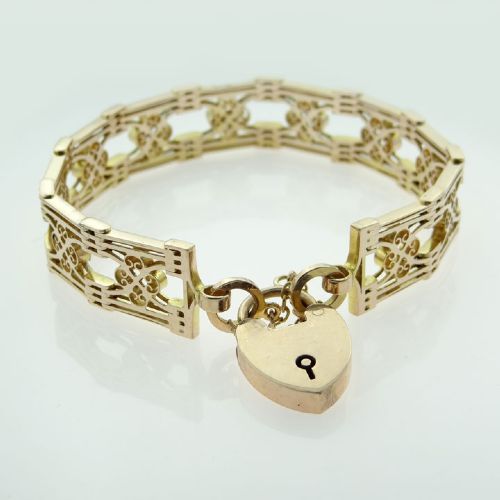
A victorian gold gate bracelet is a flexible linked wrist ornament secured by a heart padlock, prized for its distinctive interwoven design.
Victorian Gold Gate Bracelet
A victorian gold gate bracelet takes its name from the stacked metal bars that mimic a country gate, linked together in repeating rows. You will most frequently meet pieces from the Victorian era and the decades immediately following around nineteen hundred.
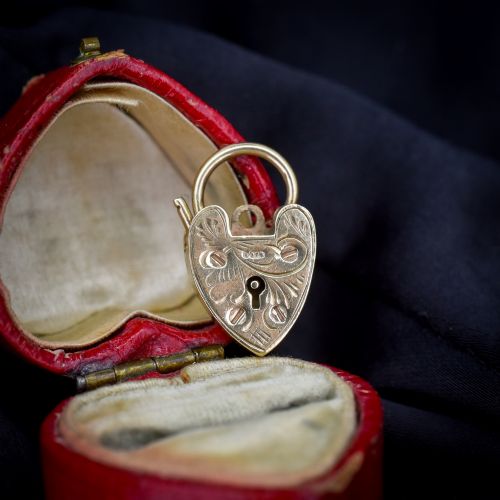
Many examples incorporate a heart-shaped padlock clasp alongside safety chains, whilst others feature central stations set with stones like amethyst, ruby, opal, turquoise, and agate. The underlying structure relies on multi-bar links, curb links, and fancy three-bar formations.
The format extends from plain yellow and rose gold strands to elaborate gemstone-set variations involving split pearls and lover knots. These bracelets span simple daily wear to intricate ceremonial pieces carrying substantial weight.
Materials and construction
Goldsmiths utilised nine carat and fifteen carat gold, alongside rolled gold alternatives, shaping the metal into hollow or solid tubular bars and mesh panels. Rose gold and yellow gold predominate across the surviving inventory.
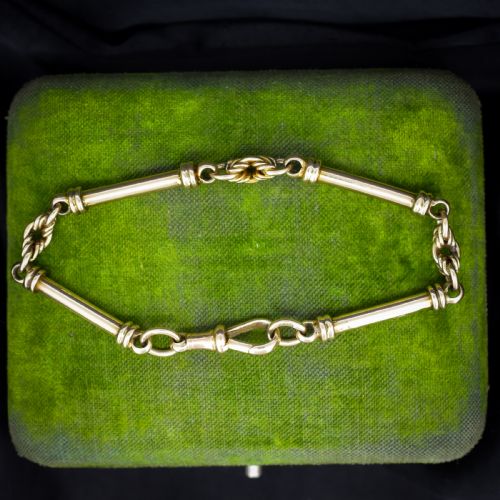
Individual links were joined by hand to create flexible chains capable of draping over the wrist without kinking. Padlocks and dog clips were cast and engraved separately before being fitted to the main body.
Assessing craftsmanship
The standard of a victorian gold gate bracelet rests on the weight of the metal and the precision of the link assembly. Solid gold construction and higher caratages distinguish superior examples from lighter rolled gold pieces.
Hand-engraved surface patterns and the inclusion of securely bezel-set natural gemstones indicate finer workshop production. The structural integrity of the individual gate bars and the secure snap of the heart padlock determine everyday durability.
The Victorian Gold Gate Bracelet Glossary
- Gate link
- A bracelet link style formed of parallel metal bars connected by vertical links, resembling a paddock gate. This design provides both flexibility and structural strength.
- Heart padlock
- A heart-shaped clasp mechanism used to secure Victorian bracelets, often functioning with a tiny key or a push-spring latch. It serves as both decoration and security.
- Rolled gold
- A composite material formed by bonding a thin sheet of gold to a base metal core under heat and pressure. It offers the appearance of solid gold with reduced weight and cost.
- Dog clip
- A spring-loaded swivel fastening commonly found on nineteenth-century watch chains and charm bracelets. It allows pendants and padlocks to be attached or removed easily.
- Lover knot
- A decorative twist of two cords or metal strands symbolising affection and unity. Found frequently in Victorian fine jewellery designs.
Victorian Gold Gate Bracelet: Frequently Asked Questions
How do I open the heart padlock?
Most padlocks operate via a spring-loaded side lever or a push-pin mechanism rather than a functional key. Pressing the internal hinge releases the shackle.
Take care not to force the metal if the mechanism feels stiff, as vintage springs can weaken over decades of use.
Are these bracelets safe for daily wear?
Solid gold pieces handle regular wear well, provided the links and safety chains remain secure. Checking the condition of the heart padlock clasp is essential.
Lighter rolled gold versions require more careful handling to prevent bending the delicate gate bars during active tasks.
What periods do these pieces date from?
The inventory spans the Victorian era through Edwardian times and into the early twentieth century. Later examples occasionally appear from subsequent decades.
Manufacturing dates are typically established through hallmarks, gold purity standards, and the specific style of the padlock or links.
What gemstones appear on these bracelets?
Common stones include amethyst, ruby, opal, turquoise, split pearls, and agate. These are often set into the central station or surrounding the padlock.
Gemstones were frequently chosen for their symbolic meanings or regional Scottish origins during the mid-nineteenth century.