


Rose Gold Padlock Chain
A rose gold padlock chain is a wrist ornament of enduring weight, combining a secure clasp with substantial links.
Rose Gold Padlock Chain
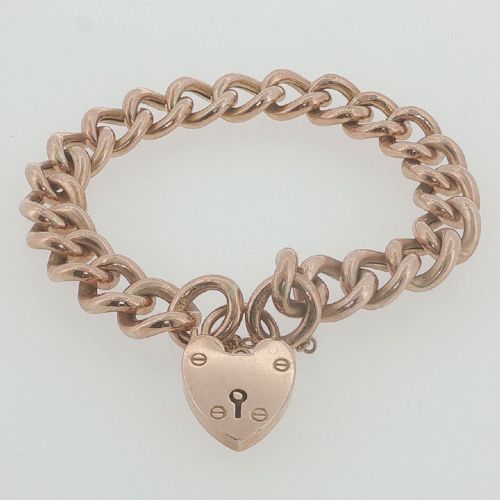
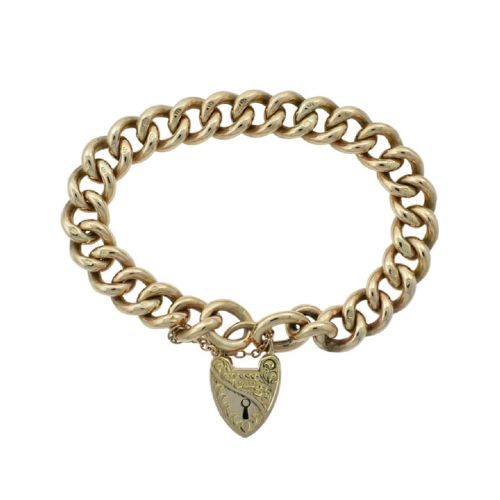
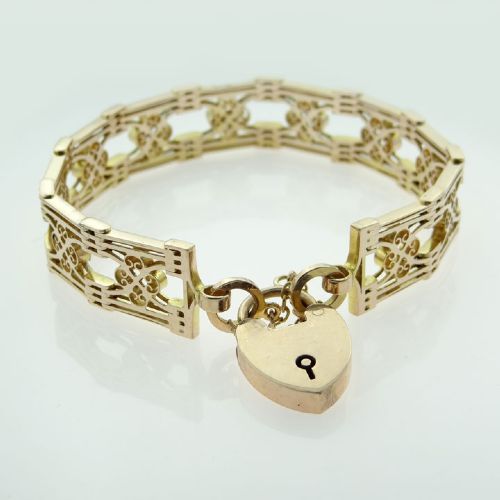
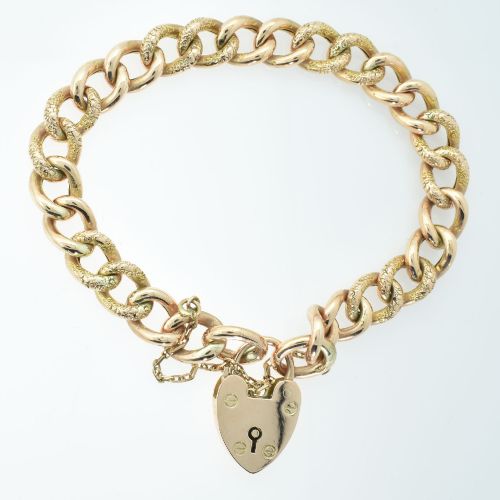
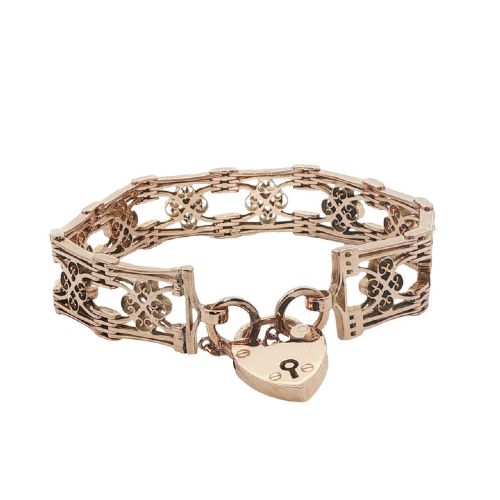
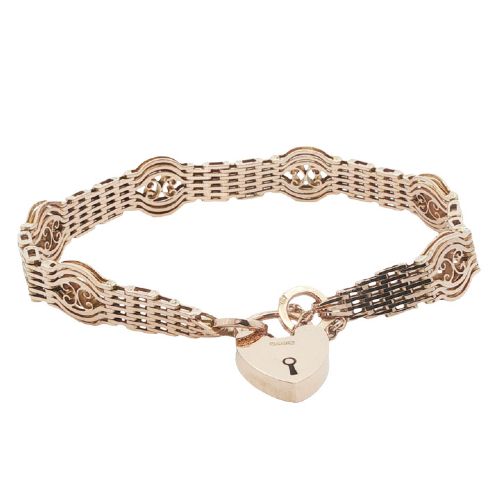
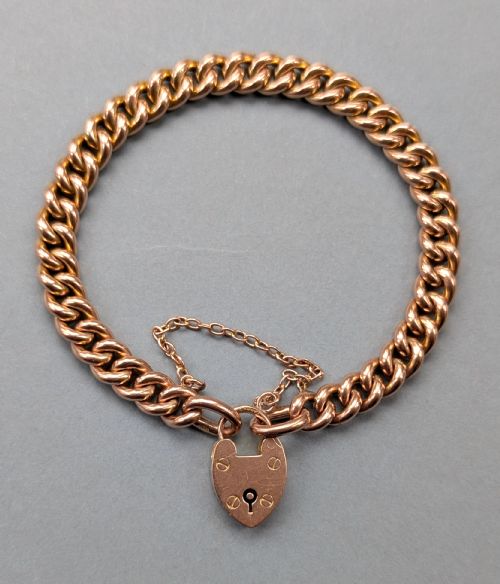
When you search for a rose gold padlock chain, you are examining robust bracelets originating from the Victorian and Edwardian eras. These pieces predominantly take the form of curb link chains and gate bracelets secured by heart-shaped padlocks.
The selections encountered here span the turn of the twentieth century, specifically around nineteen hundred and nineteen ten. They combine warm metal tones with practical fastenings that doubled as decorative centrepieces.
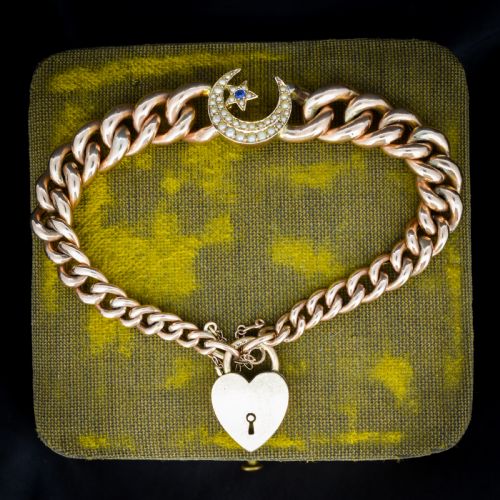
Beyond standard curb chains, variations include fancy links, half-engraved surface patterns, and occasional embellishments such as seed pearls, sapphires, or niello work. Each configuration represents the domestic jewellery output of its respective decade.
How They Were Made
The construction relies heavily on nine-carat and occasional fifteen-carat rose gold, beaten and shaped into interlocking curb links or structured gate panels. Metalwork techniques of the period involved hand-engraving surface details onto individual links or the central padlock.
Secure fastening mechanisms were integral, utilising functional heart padlocks that snapped onto designated jump rings or safety chains. Additional decorative elements like seed pearls and sapphires were flush-set or pinned into the gold framework.
Victorian makers ensured your heart was literally locked to your wrist, proving romance and security could share a single clasp.
What Varies in Quality
Quality in a rose gold padlock chain lies in the gauge of the metal and the crispness of the hand-engraving on the links and padlock. Heavier examples demonstrate a substantial density of gold per inch, whereas lighter versions utilise hollow or thinner wire components.
The integrity of the padlock mechanism and the tightness of the link connections dictate the durability of the piece. Superior examples retain sharp decorative chasing and secure clasp springs that withstand daily wear.
The Rose Gold Padlock Chain Glossary
- Curb link
- A type of chain comprising interlocked, uniform links that lie flat against the wrist. This pattern provides both flexibility and high tensile strength.
- Gate bracelet
- A style formed of parallel vertical bars connected by small links, resembling a historic garden gate. It is frequently paired with a padlock clasp.
- Heart padlock
- A locking mechanism shaped like a heart that secures the bracelet ends. It serves as both a functional clasp and a prominent decorative feature.
- Niello
- A black metallic alloy used as a contrast inlay on engraved metal surfaces. It highlights intricate patterns through dark linear definition.
- Seed pearl
- A very small, naturally or cultured half-pearl used in cluster arrangements. These are typically pinned into decorative motifs on Victorian jewellery.
Rose Gold Padlock Chain: Frequently Asked Questions
How do I open the padlock?
Most padlocks on these chains operate via a spring-loaded latch activated by pressing a small hidden lever or pushing the shackle inward.
Exercise caution when handling older clasps to avoid straining the hinge or the attached jump ring.
Are these bracelets solid gold?
The evidence shows items fashioned from nine-carat and fifteen-carat rose gold. Weights vary considerably across the selection, indicating differing internal volumes.
While constructed entirely of gold, individual links may be solid or hollow depending on the manufacturing style.
Can I wear mine every day?
These bracelets were built for regular wear during the Victorian and Edwardian periods. Their robust link construction accommodates daily movement.
Remove the bracelet during strenuous physical tasks to protect the engravings and the padlock mechanism.
How do I tell Victorian from Edwardian?
Victorian pieces often display heavier chased engraving and solid gauge links dating from the nineteenth century. Edwardian examples tend towards lighter framework designs produced around nineteen hundred to nineteen ten.
Assay marks and stylistic conventions in the links help clarify the specific period of manufacture.