


Victorian Gold Flower Brooch
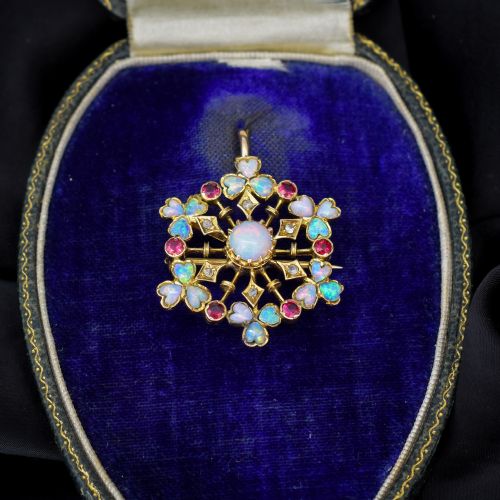
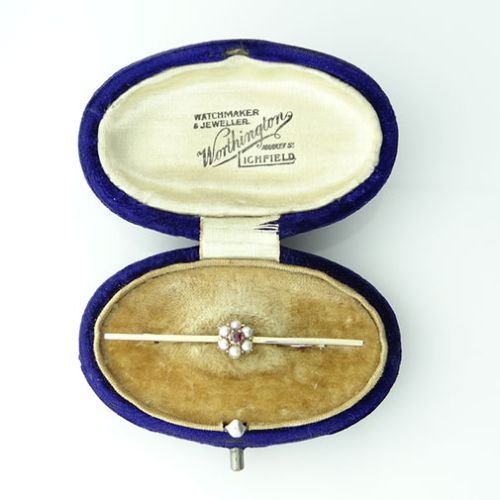
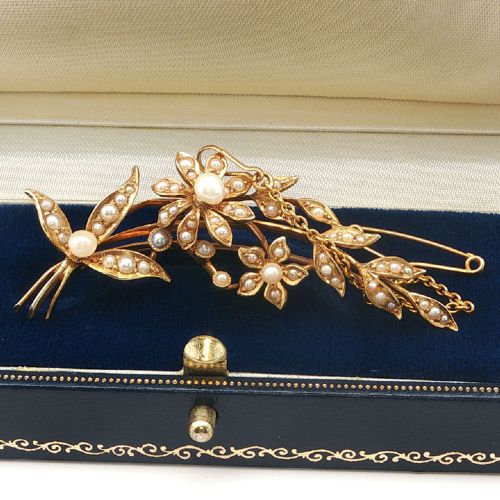
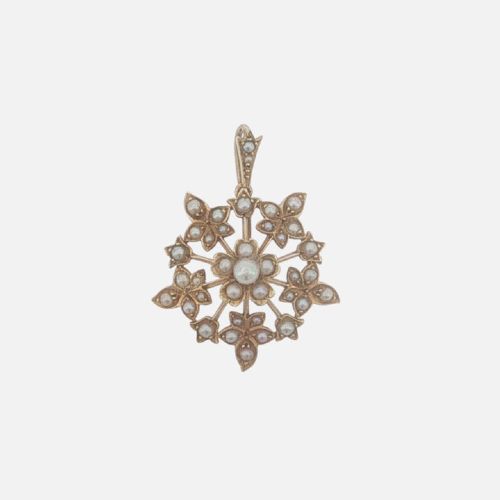
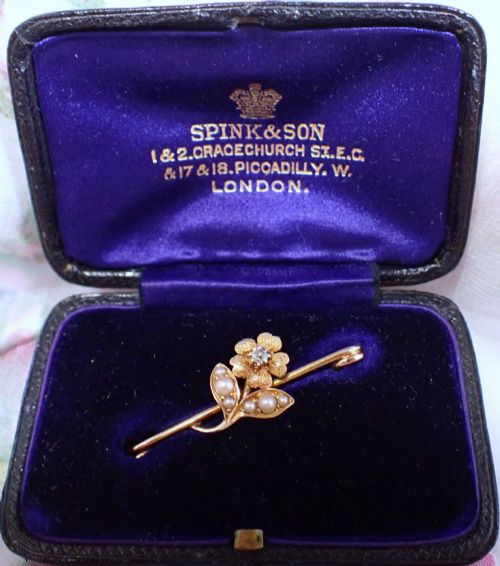
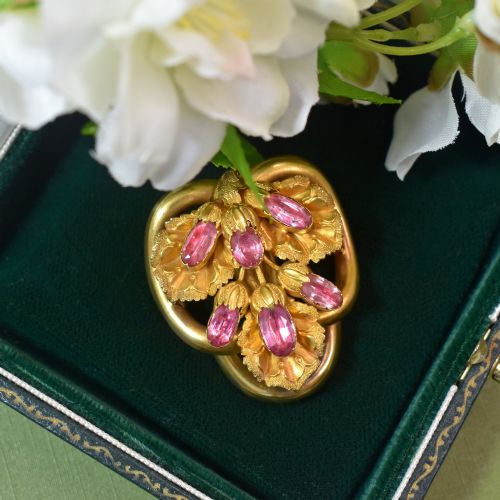
These victorian gold flower brooch examples bring together precious metals and floral motifs from the nineteenth century.
Victorian Gold Flower Brooch
A victorian gold flower brooch is a wearable ornament shaped around floral and botanical forms, utilising precious metals alongside stones like diamonds, garnets, and pearls. These pieces frequently double as pendants or incorporate convertible mountings for versatile wear.
The specimens seen here span various decades of the nineteenth century and extend into early twentieth-century revivals. Buyers encounter everything from delicate seed pearl sprays to substantial diamond and garnet cluster designs set in distinct yellow gold or silver-topped gold.
Early Victorian interpretations often lean toward heavier gemstone settings such as carbuncle garnets and pink foil-backed topaz. Later pieces shift into intricate diamond-set floral sprays and delicate pearl-accented blossoms characteristic of the late nineteenth and early twentieth centuries.
Materials and Construction
Makers utilised varying purities of gold, notably nine-carat, fifteen-carat, and eighteen-carat yellow and rose gold, often combining them with fine silver settings on the face to enhance the brilliance of old-cut diamonds. This silver-on-gold technique allows white metals to frame stones while retaining the warm tone of gold underneath.
Botanical details were rendered using seed pearls, almandine garnets, cabochon stones, and faceted paste alongside natural rubies, opals, and blue enamel. Components were individually shaped, chased, and secured to form dimensional petals, stems, and flower heads.
Secure pin stems, C-clasps, and integrated pendant loops were engineered directly into the reverse of the gold frames. This structural dual-purpose engineering allowed many floral brooches to function equally well as pendant necklaces.
The listings combine nine-carat, fifteen-carat, and eighteen-carat gold alongside silver-topped mounts, incorporating diamonds, pearls, garnets, and paste across the nineteenth century.
Evaluating Quality and Execution
The hierarchy of quality rests primarily on the calibre of the central gemstones and the fineness of the metalwork. Master jewellers employed old-cut diamonds and well-matched natural pearls, whereas more commercial pieces utilised paste or lesser stones.
The articulation and depth of the botanical carving dictate the level of craftsmanship within a piece. Superior examples display life-like dimensionality in the petals and leaves, avoiding flat stampings in favour of hand-modelled gold wire and sheet.
Integration of the mechanics, such as the neatness of the stone collets and the strength of the pin fittings, separates workshop-produced pieces from standard mass-market output. The structural integrity must support the weight of heavier stones without distorting the floral silhouette.
The Victorian Gold Flower Brooch Glossary
- Almandine garnet
- A deep red or brownish-red variety of garnet frequently used in nineteenth-century cluster jewellery. These stones provide strong colour contrast against yellow gold mounts.
- Old-cut diamond
- A hand-faceted diamond shape predating modern brilliant cuts, characterised by a smaller table, higher crown, and open culet. These stones catch candlelight and lower lighting particularly well.
- Seed pearl
- A tiny, naturally formed pearl drilled and strung or pegged onto pins within intricate floral clusters. They impart a soft lustre that complements the polished gold surfaces.
- Silver-topped gold
- A historical technique where a thin layer of silver is soldered to a gold backing to display diamonds against a white metal surface. The gold underneath prevents tarnish from contacting clothing.
- Giardinetti
- A style of jewellery translating to little garden, depicting flowers arranged within a vase or basket motif. These pieces often incorporate mixed gemstones to represent vibrant garden blooms.
Victorian Gold Flower Brooch: Frequently Asked Questions
How do I wear a convertible brooch pendant?
Most convertible pieces feature a hidden or fold-down loop alongside a secure pin mechanism on the reverse. You can thread a fine chain through the loop to wear the floral cluster as a pendant.
When worn as a brooch, the pin fastens securely through thicker fabrics where the weight of the gold and stones is properly supported.
What is the difference between early and late nineteenth-century styles?
Early examples often incorporate heavier gemstones like carbuncle garnets and coloured foils behind topaz. The mounts tend to be robust and deeply chased.
Later Victorian and Edwardian iterations favour lighter, airier floral sprays with pavé-set diamonds and delicate seed pearls. The metalwork becomes finer and more naturalistic.
Can I wear these everyday?
While these pieces were built to last, they incorporate antique stones and delicate pearl settings that require thoughtful care. Pearls are sensitive to cosmetics, perfumes, and harsh solvents.
Reserve them for gentle daily wear or special occasions, and store them flat in lined boxes to protect the pin stems and delicate petals.
How should I clean antique gold jewellery?
Use a soft, dry microfibre cloth to wipe away surface dust and skin oils after wearing. Avoid submerging pearl or paste pieces in liquid cleaning solutions.
Professional jewellers can check the security of old claw settings and prongs without damaging the original gold or silver surfaces.