


Victorian Gold Curb Bracelet
A victorian gold curb bracelet is a substantial wrist adornment featuring interlocking links that collectors prize for its secure weight and historic character.
Victorian Gold Curb Bracelet
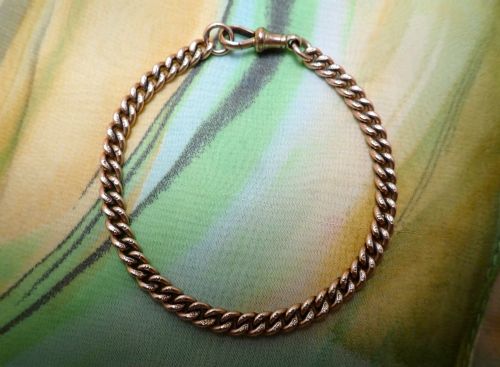
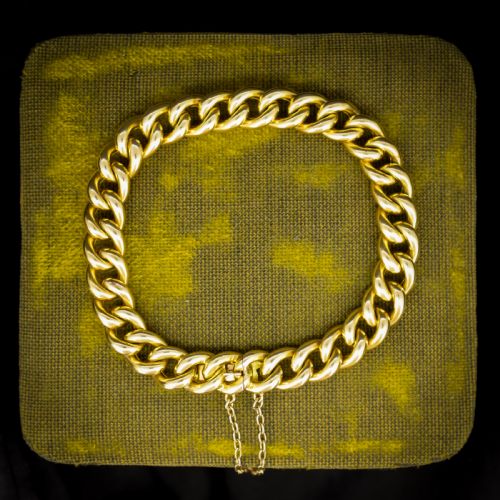
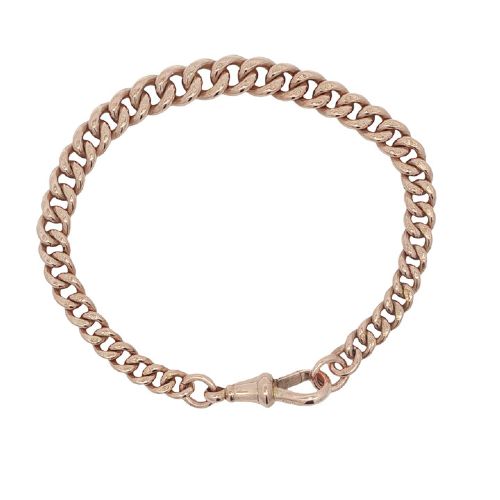
A victorian gold curb bracelet is typically formed of interlocking, uniform links that sit flat against the wrist. The pieces seen here span the later nineteenth century into the early twentieth century, encompassing both the Victorian and Edwardian periods.
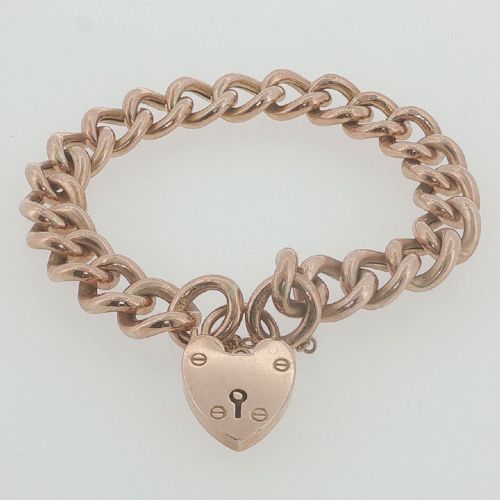
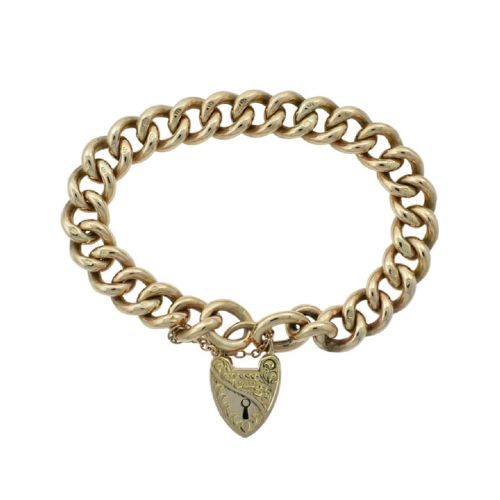
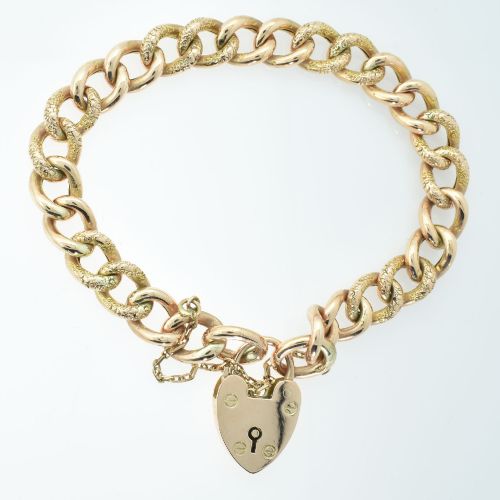
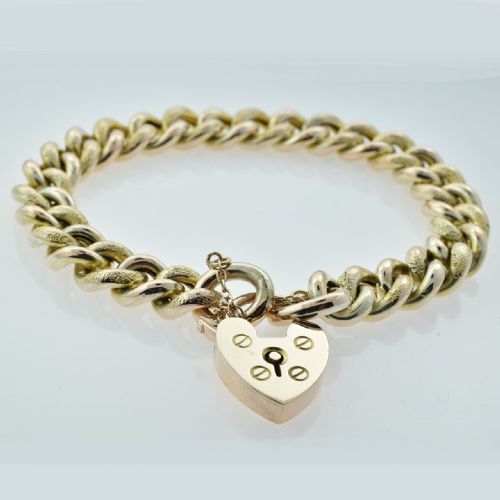
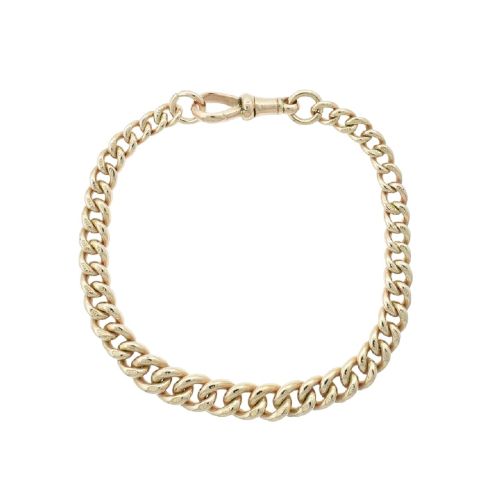
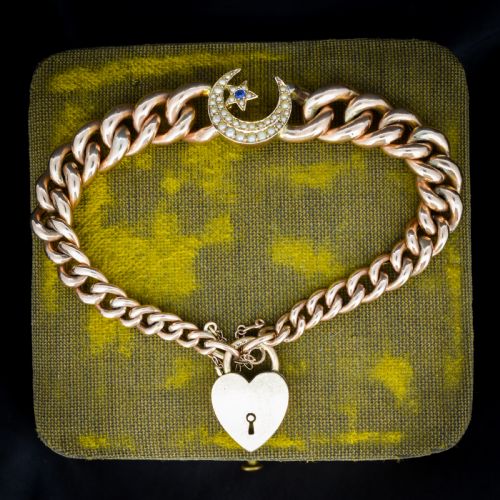
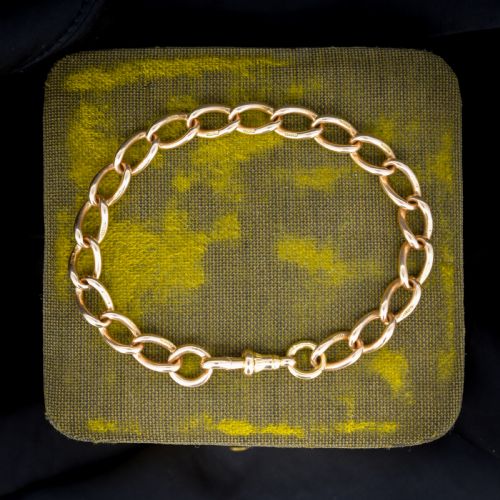
Many examples incorporate secure fastenings such as heart padlocks, dog clips, or concealed clasps. Variations range from plain polished chains to half-engraved links and pieces set with turquoise, pearl, or ruby.
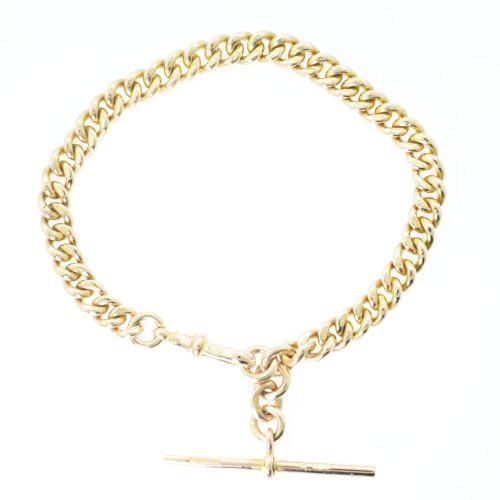
The format often extends to Albert styles complete with T-bars originally intended for pocket watches. Jewellery sets pairing bracelets with brooches also appear alongside standard chain designs.
Materials and Construction
Gold purity varies across the pieces, with 9ct rose gold and 9ct yellow gold appearing most frequently alongside 15ct gold and 18ct yellow gold. Rolled gold is also utilised in certain sets.
Goldsmiths constructed these chains from interlocking curb links, frequently applying hand engraving to alternate or surface sections. Gemstones including turquoise, seed pearls, diamonds, and rubies were integrated into clasps or decorative central motifs.
Several chains include miniature T-bars designed for Victorian waistcoats, now repurposed for modern wrists.
Evaluating Quality
Quality rests upon the heft of the gold and the crispness of any hand engraving on the links. Substantial weight and well-preserved chasing separate robust everyday pieces from lighter iterations.
The integrity of the clasp mechanism, whether a heart padlock or a swivel dog clip, contributes significantly to the overall standard. Settings involving turquoise and pearls require secure mounting to maintain their original presentation.
The Victorian Gold Curb Bracelet Glossary
- Curb link
- A type of chain made of interlocking links twisted to lie flat. This design forms the foundational structure of the bracelet.
- Albert bracelet
- A heavy chain style originally designed to secure a pocket watch to a waistcoat or clothing. It often incorporates a T-bar.
- Heart padlock
- A heart-shaped clasp used to secure the bracelet. These padlocks frequently feature engraved ornamentation.
- Dog clip
- A spring-loaded swivel fastening commonly found on watch chains and bracelets. It allows for secure attachment to loops or rings.
- Seed pearl
- A very small, naturally formed pearl often used in cluster settings. They appear alongside turquoise in nineteenth-century gemstone arrangements.
Victorian Gold Curb Bracelet: Frequently Asked Questions
How do I fasten a heart padlock bracelet?
The heart padlock functions by pressing a small lever or spring mechanism on the side to open the shackle. Once released, the shackle loops through the end ring of the bracelet.
Securing the padlock correctly ensures the heavy chain remains safely on the wrist during wear.
What is the difference between 9ct and 15ct gold?
Gold purity is measured in carats, with 15ct containing a higher proportion of pure gold than 9ct. This higher gold content often yields a richer colour in the metal.
Both purities were widely used by Victorian jewellers depending on the desired cost and durability of the piece.
Can I attach charms to an antique curb bracelet?
Many victorian gold curb bracelet designs were originally adapted to hold charms or pendants using the fitted padlock or dog clip. Adding charms aligns with period custom where chains accumulated tokens over time.
Care should be taken to ensure suspension rings match the scale and weight of the existing links.
How do I date a curb bracelet without hallmarks?
Dating relies on stylistic clues such as the presence of a heart padlock, engraving patterns, and the integration of turquoise or seed pearls. The transition from Victorian yellow gold to Edwardian rose gold tones also offers chronological hints.
Specific link profiles and the inclusion of T-bars point towards late nineteenth or early twentieth-century manufacturing practices.