


Antique Watch Chain Bracelet
An antique watch chain bracelet repurposes heavy pocket watch hardware into a wrist-worn piece of jewellery with genuine historical weight.
Antique Watch Chain Bracelet
An antique watch chain bracelet transforms functional nineteenth and early twentieth-century pocket watch hardware into substantial wristwear. These pieces draw directly from the heavy waistchains and pocket watch attachments worn during the Victorian and Edwardian eras, adapted later into the mid-century.
Originating across the Victorian, Edwardian, and later 1940 periods, these bracelets range from simple silver designs to complex multi-link gold constructions. They combine the utility of past timekeeping accessories with the robust craftsmanship typical of early twentieth-century goldsmithing and silversmithing.
Materials and construction methods
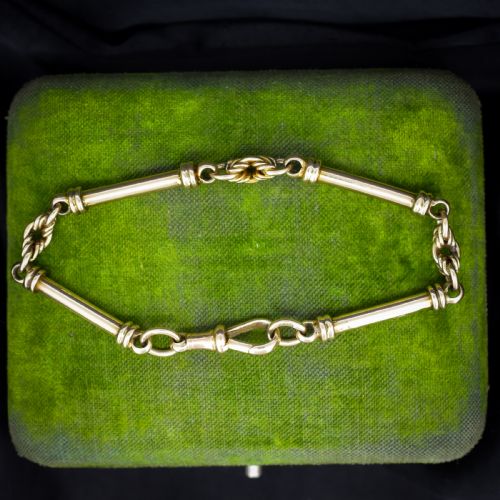
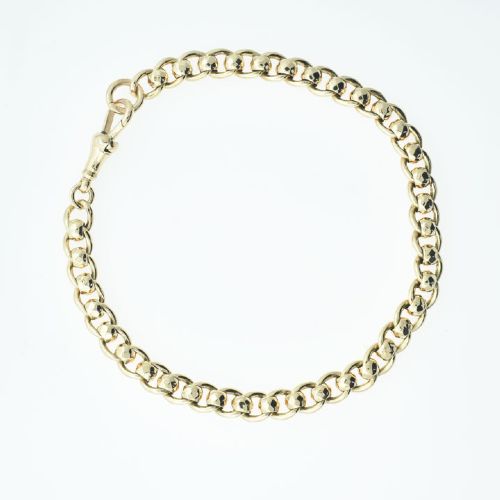
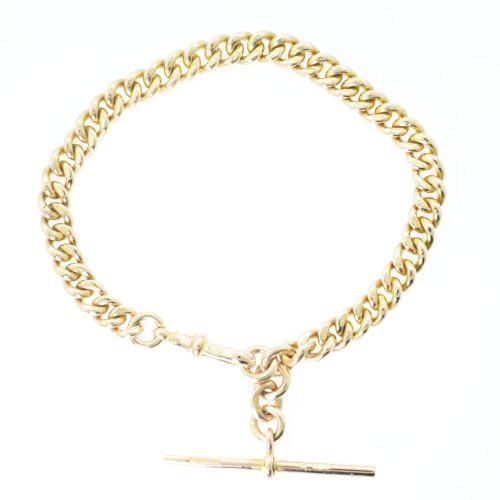
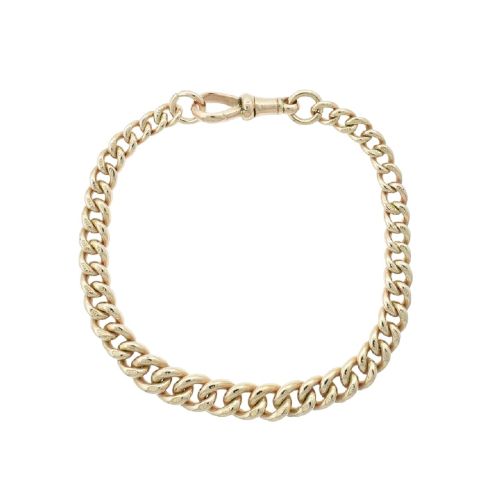
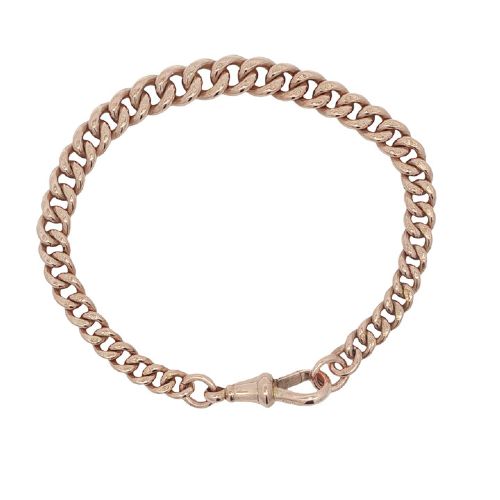
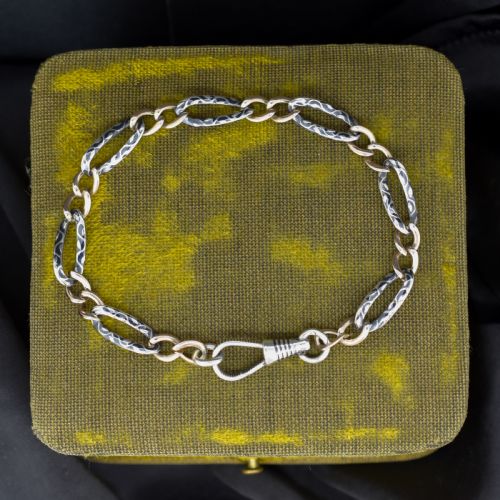
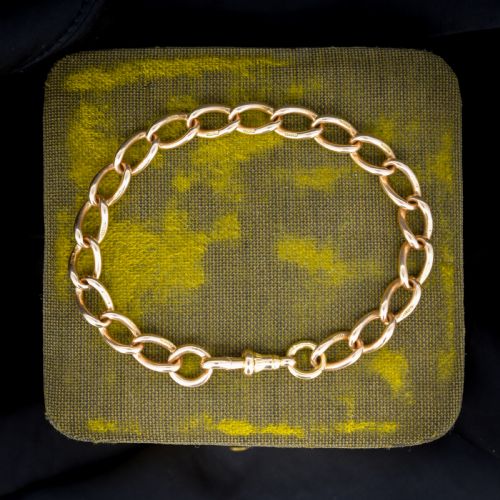
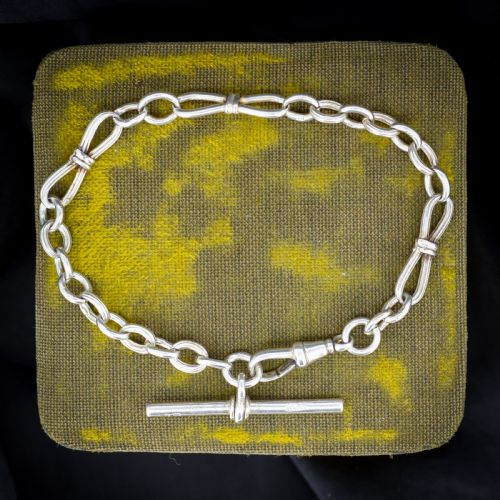
Construction relies on solid precious metals, predominantly 9ct rose gold, yellow gold, and sterling silver, sometimes accented with niello work. Individual links are hand-assembled, ranging from tubular bar and love knot patterns to heavy oval curbs and rollerball designs.
Functional components dictate the assembly, integrating spring-loaded dog clips and fixed T-bars directly into the bracelet structure. Graduated links require precise graduation in scale from the centre point down to the clasp, maintaining balance and comfort around the wrist.
Several bracelets retain their functional T-bars, leaving you ready to secure a pocket watch you probably do not own.
What separates the finest examples
Quality rests in the structural integrity of the individual links and the original working condition of the dog clips and swivels. Substantial gram weight and consistent hallmarks indicate superior metal density and original British assay office standards.
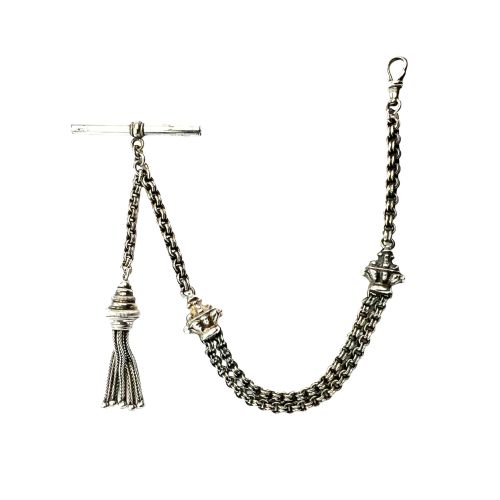
The complexity of the link pattern and the presence of complete original drops, such as tassels or T-bars, elevate the standard of a piece. Finer examples maintain crisp detailing on patterned links and secure tension in the spring mechanisms without replacement components.
The Antique Watch Chain Bracelet Glossary
- Albert chain
- A heavy pocket watch chain designed to be worn across a waistcoat or attached to a garment, which forms the basis of many converted bracelets. These chains frequently feature dog clips and T-bars.
- Albertina
- A delicate variation of the traditional watch chain, typically made of multiple fine strands rather than a single heavy link. It often terminates in decorative tassels or slides.
- Dog clip
- A spring-loaded swivel clasp originally used to secure a pocket watch to a chain. On bracelets, it serves as the primary fastening mechanism.
- T-bar
- A short transverse bar attached to a watch chain, originally designed to slip through a buttonhole. It remains on converted bracelets as a decorative pendant drop.
- Niello
- A black metallic alloy of sulphur, silver, lead, and copper used as an inlay on engraved metal. It creates striking contrasting patterns against bright silver surfaces.
- Rollerball
- A specific hollow or solid rounded link formation used in Victorian and Edwardian chain construction. It provides a fluid, tactile movement along the length of the bracelet.
Antique Watch Chain Bracelet: Frequently Asked Questions
Are these bracelets converted from pocket watch chains?
Many examples are historic pocket watch chains or Albert chains adapted for the wrist, retaining their original dog clips and T-bars. Some were manufactured specifically as bracelets during the Edwardian period and later eras.
This adaptation explains why many pieces feature heavy links and fastening hardware originally intended to secure timepieces to waistcoats.
How do I fasten a dog clip bracelet?
The spring-loaded lever on the dog clip is depressed with a fingernail to open the gate, allowing it to hook onto a suitable link, ring, or the opposite end of the chain. This mimics the original method used to attach pocket watches.
Checking the spring tension ensures the clip remains secure during daily wear on the wrist.
How can I tell the period of a gold chain bracelet?
Dating relies on hallmarks, link styles, and the specific gold karat standards used during different eras, such as 9ct, 15ct, or 18ct. Victorian and Edwardian pieces often display distinct hollow or solid curb formations and specific maker's marks.
Later pieces from the 1940s reflect mid-century transitions in weight, clasp design, and alloy coloration.