


Victorian Gold Clasp Necklace
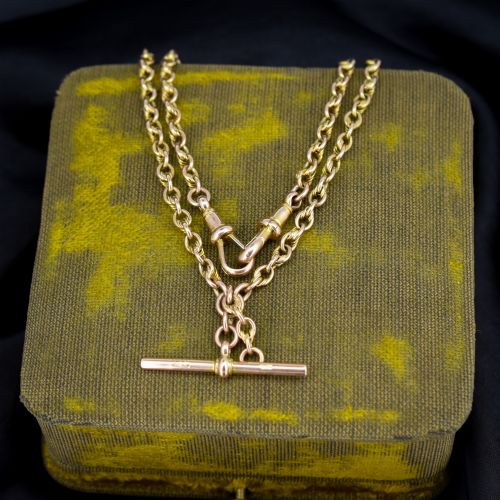
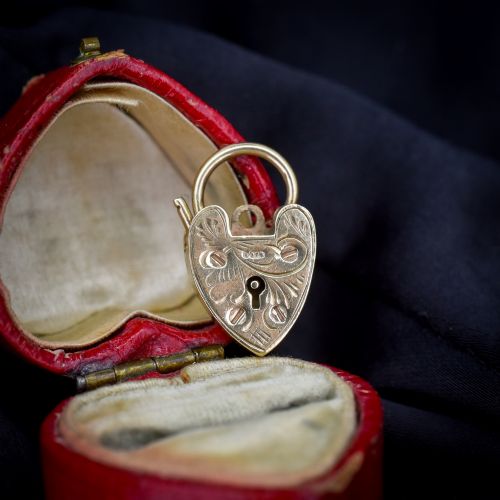
A victorian gold clasp necklace brings together substantial historical metalwork and functional fastenings like dog clips, barrel clasps, and padlocks.
Victorian Gold Clasp Necklace
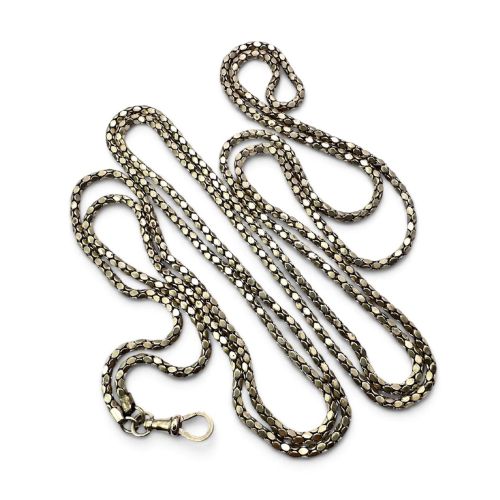
A victorian gold clasp necklace encompasses long guard chains, watch chains converted for neck wear, and shorter link necklaces fitted with secure fastenings. These pieces originate primarily from the Victorian period, alongside adjacent 19th-century and early 20th-century eras.
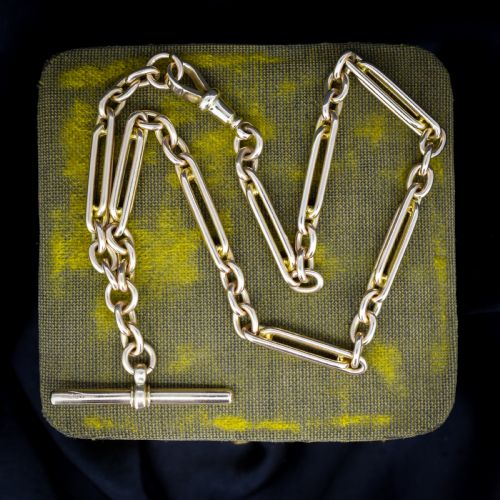
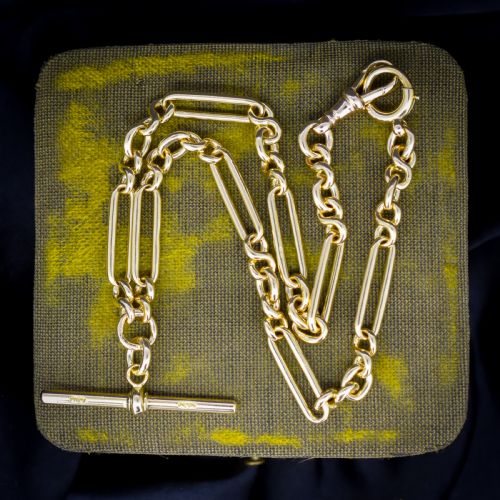
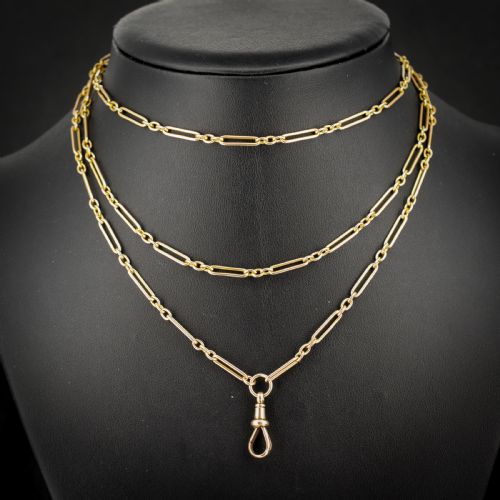
The most common forms on this page include trombone, paper link, curb, and belcher chain structures, frequently finished with a functional dog clip, swivel, or barrel clasp. Many incorporate pendants, charms, or gemstones such as turquoise and pearl.
Pieces span shorter lengths for collar wear as well as extremely long guard chains designed to be doubled around the neck. They reflect both everyday utility and decorative adornment from their respective periods.
How they were made
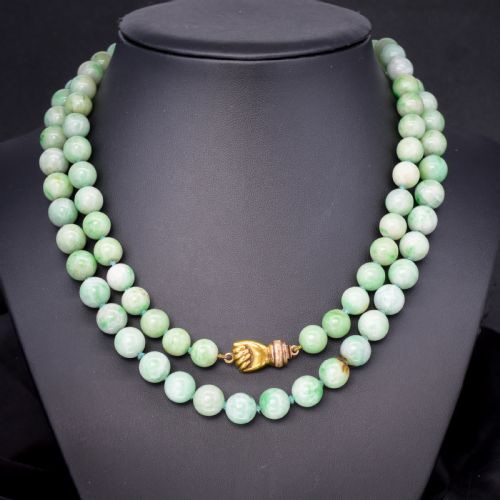
Materials span various gold purities, including 9ct, 10ct, 12ct rolled gold, 15ct, 18ct yellow, white, and rose gold. Some constructions also integrate platinum or incorporate materials like turquoise, coral, jade, and Whitby jet.
Link types are fashioned through specialised wire-working and mechanical forming, yielding hollow or solid formations such as faceted curb, paper link, and trombone patterns. Clasps are engineered as mechanical components, featuring functional springs, swivels, and threaded or push-in barrel mechanisms.
Recorded periods across the site span the Victorian era, the 19th century, 1890, 1900, 1920, and 1960.
What varies in quality
The standard of execution depends on the weight and integrity of the gold links, ranging from lightweight hollow formations to heavy, solid gold wirework. Finer examples retain crisp detailing on engraved components and sturdy structural integrity at stress points.
Clasp functionality dictates a significant portion of overall excellence, with superior pieces featuring spring mechanisms that snap firmly shut without slack. The integration of original supplementary elements, such as matching dog clips or integrated lock mechanisms, elevates the construction.
The Victorian Gold Clasp Necklace Glossary
- Dog clip
- A spring-loaded fastener with a small lever, commonly found on watch chains for securing pocket watches or charms. This mechanism allows the clasp to be easily opened and attached to another link or ring.
- Trombone link
- A specific elongated chain link shape resembling the slides of a trombone, often interspersed with smaller round or oval links. It provides a distinct geometric pattern characteristic of period neckwear.
- Longuard chain
- An exceptionally long chain designed to be worn doubled around the neck or draped to the waist. These pieces frequently terminate in a swivel clasp or dog clip.
- Barrel clasp
- A cylindrical fastening device that screws or pushes together to form a seamless barrel shape. It is typically utilised on shorter Victorian chain necklaces.
- Belcher chain
- A type of chain featuring wide, uniform links that are slightly broader than they are thick. This robust form provides a steady structure for daily wear.
Victorian Gold Clasp Necklace: Frequently Asked Questions
How were these chains originally worn?
Many of these pieces functioned as watch chains, securing pocket watches to waistcoats or garments via dog clips and swivel clasps. Others served as long guard chains draped over clothing for decorative effect.
Over time, many watch chains transitioned into conventional necklaces worn directly around the neck. Their substantial lengths often permitted them to be doubled over depending on the preference of the wearer.
What gold purities appear in these necklaces?
Gold standards vary across the selection, ranging from 9ct and 10ct up to 15ct and 18ct yellow, white, and rose gold. Rolled gold also appears in specific pieces from the period.
Higher carat ratings indicate a greater proportion of pure gold within the alloy. The visible colour of the metal often shifts depending on the specific alloy mixture used by the maker.
How do I secure a dog clip clasp?
A dog clip operates via a small internal spring lever that retracts when pressed with a fingernail. Releasing the lever allows the gate to snap back into a closed position.
This mechanism enables the chain to attach securely to a matching jump ring, another link, or a pendant bail. Ensuring the spring retains proper tension is essential for keeping the necklace fastened during wear.