



9ct Gold Clip Chain
A 9ct gold clip chain bridges the practical needs of the past with the versatility demanded by modern wearers.
9ct Gold Clip Chain
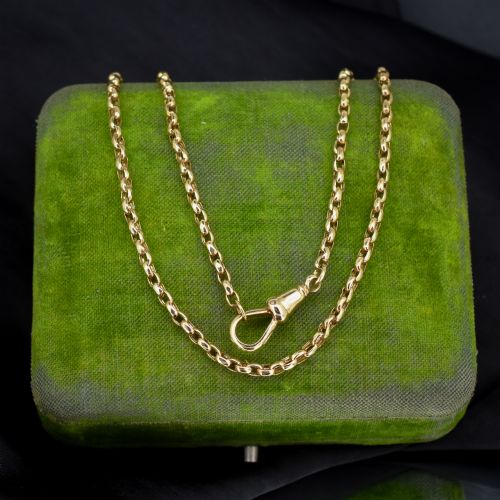
When searching for a 9ct gold clip chain, buyers encounter pieces originating primarily from the Victorian and Edwardian eras, alongside early twentieth-century examples. These items span functional origins as watch chains, Albert chains, and longuards, repurposed today as versatile necklaces and bracelets.
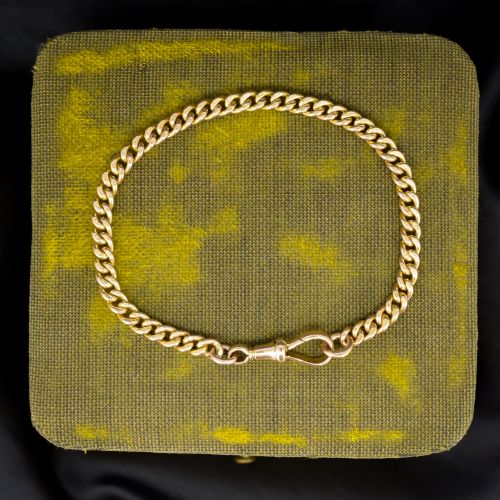
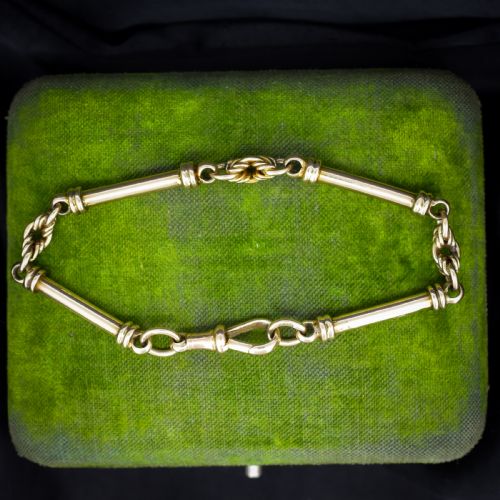
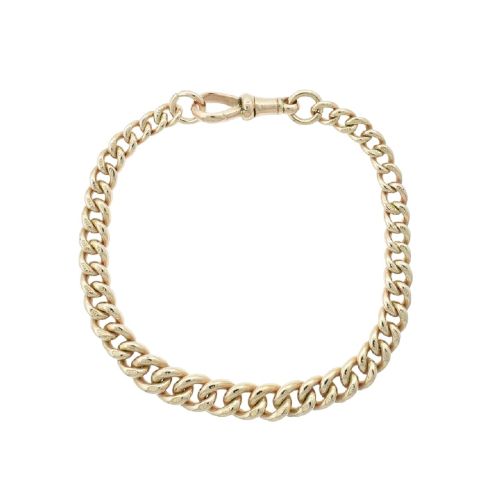
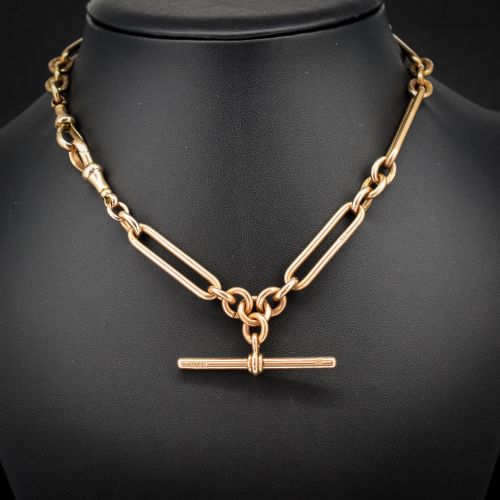
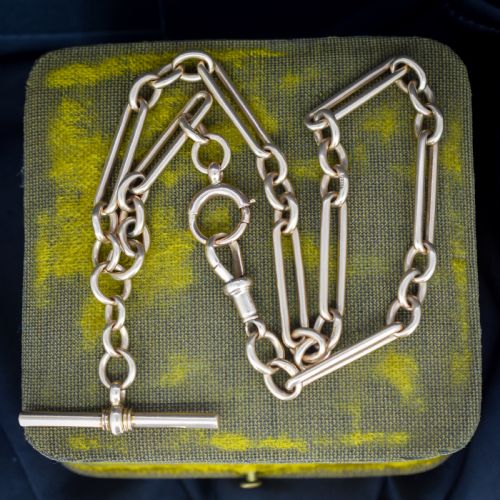
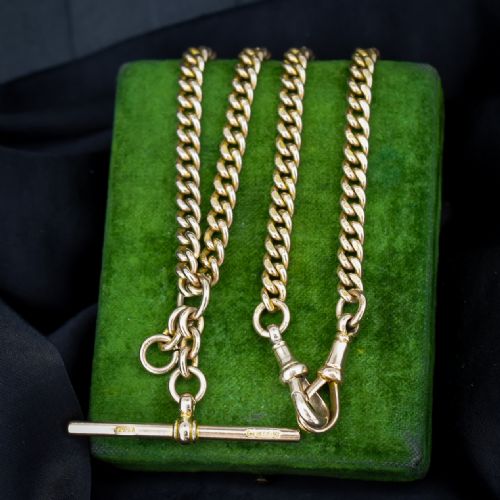
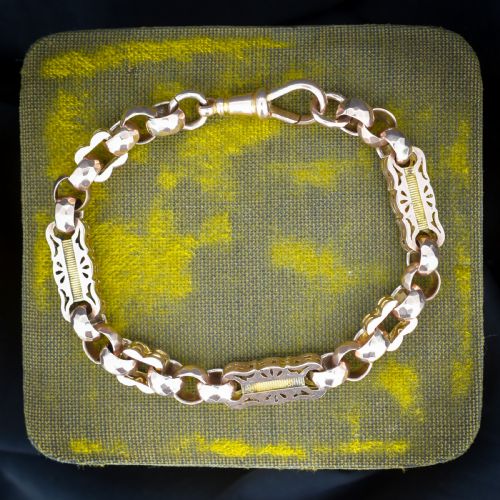
The most common formats met on this page include curb link, paper clip or trombone link, and fancy link variations. Many retain original attachments such as dog clips, T-bars, and spring rings.
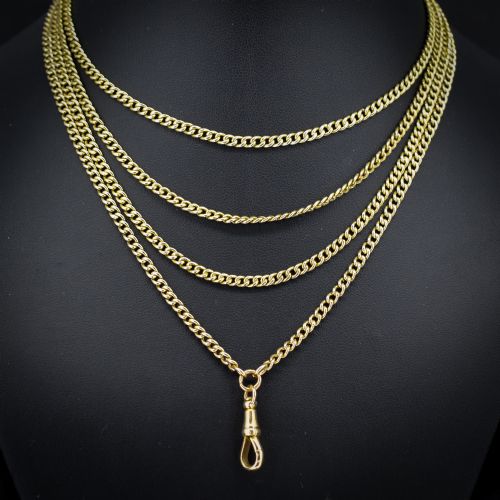
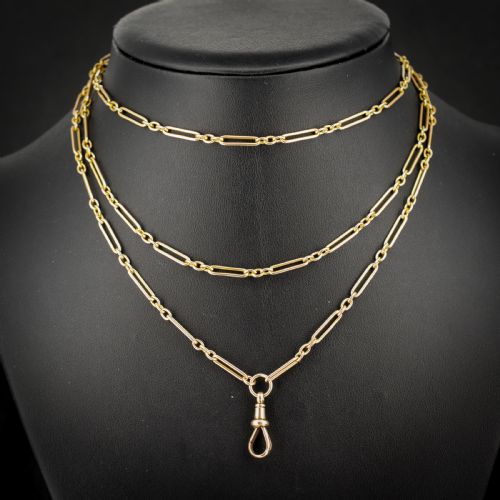
Lengths vary significantly, from shorter bracelet formats and sixteen-inch neck chains to longuards stretching past fifty inches. Construction formats encompass solid links, hollow forms, and graduated designs.
How they were made
Goldsmiths utilised 9ct gold in various hues, predominantly yellow and rose gold, with occasional white gold and turquoise or seed pearl embellishments. Metal components were shaped into hollow or solid links, curb patterns, paper clip forms, and intricate fancy links.
Assembly relied on manual wire-forming, stamping, and soldering techniques to construct individual links and robust fastening mechanisms. Functional hardware such as swivel dog clips and T-bars were integrated directly into the design to secure pocket watches or lapel ornaments.
Some guard chains stretch past fifty inches, offering enough gold length to test even the most ambitious layering ideas.
What varies in quality
Quality differences depend on the gauge of the gold and whether the links are solid or hollow. Heavier gram weights and solid construction command greater permanence against daily wear.
The precision of the link work and the originality of components define the standard of a piece. Intricate variations like star motifs, filigree, or multi-colour gold combinations elevate the craftsmanship.
The 9ct Gold Clip Chain Glossary
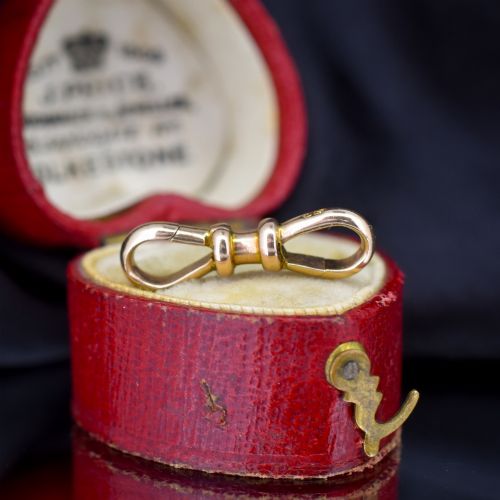
- Dog Clip
- A spring-loaded swivel fastener commonly used on watch chains to secure pocket watches or charms. This mechanism allows the attached item to rotate freely without twisting the chain.
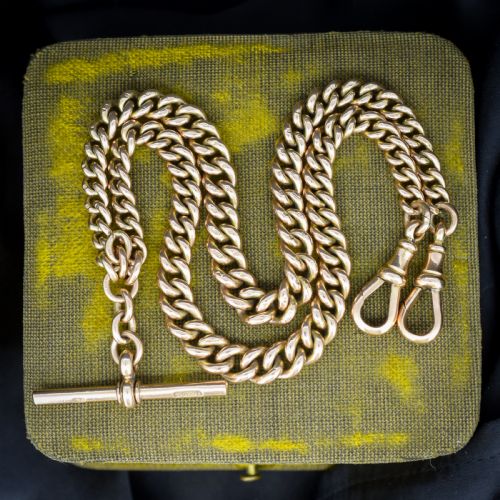
- Albert Chain
- A type of watch chain designed to be worn across a waistcoat or attached to a pocket, featuring a T-bar at one end and a clip at the other. Victorian gentlemen utilised these daily.
- Longuard
- An extra-long chain designed to be worn doubled around the neck or suspended with a watch or locket. These pieces often measure over fifty inches in length.
- T-Bar
- A small horizontal metal bar attached to the centre or end of a watch chain. It slotted securely through a buttonhole on a waistcoat.
- Paper Clip Chain
- A link style characterised by elongated, flattened rectangular links resembling office paper clips. This design provides an open, geometric look on the neckline.
9ct Gold Clip Chain: Frequently Asked Questions
How do I wear a longuard chain?
Longuard chains are typically long enough to loop twice around the neck for a layered appearance. They often feature dog clips that allow you to attach pendants or secure the ends together.
Alternatively, you can wear them fully extended as a single continuous strand. Many buyers pair them with antique sliders or watches.
What is the difference between an Albert chain and a standard necklace?
Albert chains were originally engineered to secure pocket watches for Victorian gentlemen. They usually incorporate a T-bar and one or two dog clips.
Standard necklaces lack these specific watch-securing hardware pieces, though modern wearers frequently repurpose Albert chains as statement necklaces.
Are these chains solid or hollow?
The inventory includes both solid gold construction and hollow manufactured links. Heavier pieces list exact gram weights which indicate solid metal density.
Lighter chains often utilise hollow tubing or stamped components to achieve substantial visual volume without excessive weight.
How do I identify the period of a chain?
Victorian and Edwardian pieces often display distinct characteristics like paper clip links, rose gold hues, and Chester assay marks with specific date letters. Maker marks and the presence of traditional dog clips also help establish the era.
Later pieces from the 1920s tend to feature uniform curb links or Art Deco styling conventions.