
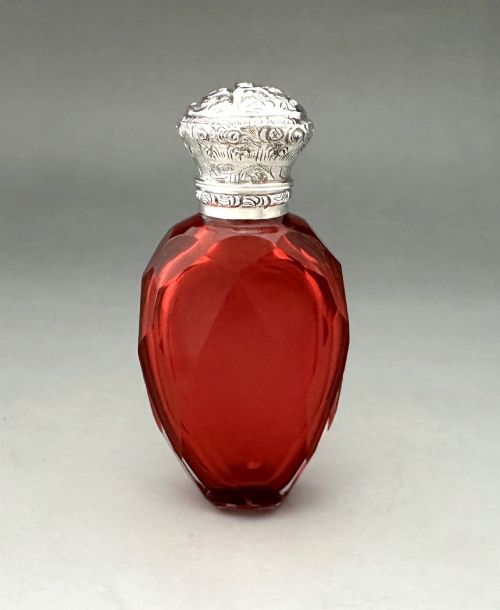
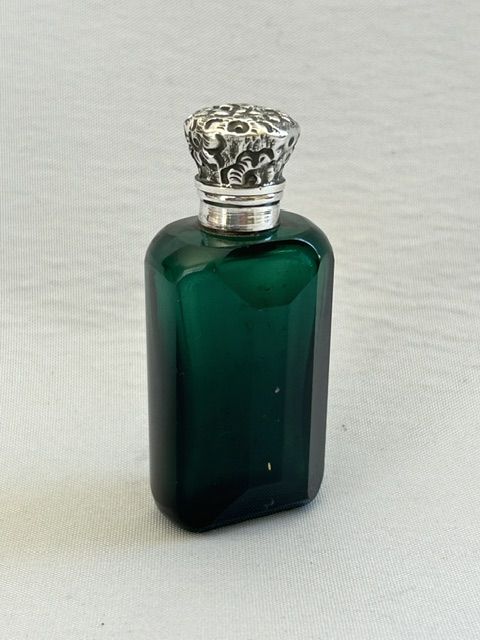
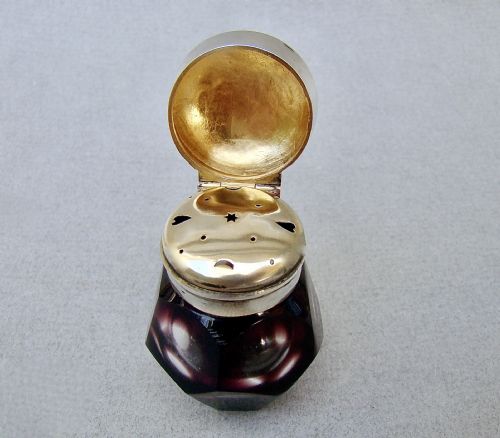


Victorian Glass Smelling Salts Bottle
These Victorian glass smelling salts bottles combine coloured glass and silver mounts to hold reviving salts.
Victorian Glass Smelling Salts Bottle
A victorian glass smelling salts bottle is typically a small vessel designed to hold aromatic ammonia compounds used to revive someone from fainting. The pieces found here span the nineteenth century, including specific dates such as eighteen seventy, eighteen ninety, and eighteen ninety two, alongside general Victorian and Edwardian examples.
The forms vary between single compartments and double ended configurations that accommodated both perfume and smelling salts. Collectors frequently encounter ruby glass, amethyst glass, Bristol green, blue opaline glass, cranberry glass, and cut glass bodies.
Mounts and lids are fashioned from silver, sterling silver, and silver-gilt, often featuring engraved detail or hallmarks from makers like Sampson Mordan. The assortment ranges from miniature sizes to larger bottles housed in silver cases.
Materials and construction
The bodies of these bottles rely on blown or moulded glass, frequently enriched with colour pigments such as ruby, amethyst, green, cranberry, or opaline hues. Overlay glass techniques and cut or etched patterns add texture and visual depth to the exterior surfaces.
Silver components, including hinged caps, screw tops, and decorated collars, are secured to the glass necks. These metal mounts are often hallmarked for specific assay offices and years, whilst internal stoppers prevent the volatile salts from escaping.
Listings feature nineteenth century materials including ruby glass, opaline glass, and sterling silver.
Assessing quality and craftsmanship
Quality in a victorian glass smelling salts bottle rests upon the depth and clarity of the coloured glass and the precision of any cut or etched decoration. Rich hues like deep ruby or vibrant cranberry combined with heavy, clear glass indicate superior production standards.
The weight and detail of the silver mounts distinguish finer examples, particularly when they feature crisp hand engraving or bear the marks of notable makers like Sampson Mordan. Double ended bottles with intact interior stoppers and undamaged metal hinges represent higher tiers of craftsmanship.
Sampson Mordan
The Victorian Glass Smelling Salts Bottle Glossary
- Smelling salts
- Chemical compounds containing ammonium carbonate used historically to relieve dizziness or fainting. They are housed inside secure glass bottles fitted with tight metal lids.
- Vinaigrette
- A small ornamental box or bottle containing a perforated grille soaked in aromatic vinegar. These serve a similar restorative purpose to smelling salts.
- Double ended
- A bottle design featuring a compartment at each end for dual contents such as perfume and salts. Both ends usually possess independent silver caps.
- Opaline glass
- An opaque or translucent glass developed in pale tints like blue or white. It provides a smooth, porcelain-like finish popular in nineteenth century vanity items.
- Silver-gilt
- Silver that has been coated with a thin layer of gold on its surface. This technique prevents tarnishing and adds a rich warm tone to the metal mounts.
Victorian Glass Smelling Salts Bottle: Frequently Asked Questions
What are smelling salts bottles?
These are small nineteenth century containers made to hold pungent ammonia compounds. People carried them to revive individuals experiencing faintness in warm rooms or tight clothing.
The glass bodies keep the volatile salts contained while decorative silver tops allow easy access when needed.
How do I identify a Victorian bottle?
Victorian examples rely on characteristic glass colours like cranberry, ruby, and opaline, paired with heavy silver mounts. Hallmarks stamped on the metal lids provide exact assay years and maker marks.
Cut glass patterns and engraved silver details further point to nineteenth century manufacturing techniques.
How should I display these bottles?
These pieces suit display on mirrored trays, dressing tables, or within glass cabinets where light can pass through the coloured glass. Position them securely away from shelf edges.
Keep silver mounts polished lightly and ensure interior glass remains dry to preserve the material integrity.