




Victorian Glass Shop Showcase
These Victorian glass shop showcase pieces are timber-framed counters and wall cabinets designed to display retail goods.
Victorian Glass Shop Showcase
A victorian glass shop showcase serves as a commercial display case designed to protect and present merchandise in a retail setting. These items originate from the nineteenth and early twentieth centuries, spanning the Victorian and Edwardian periods.
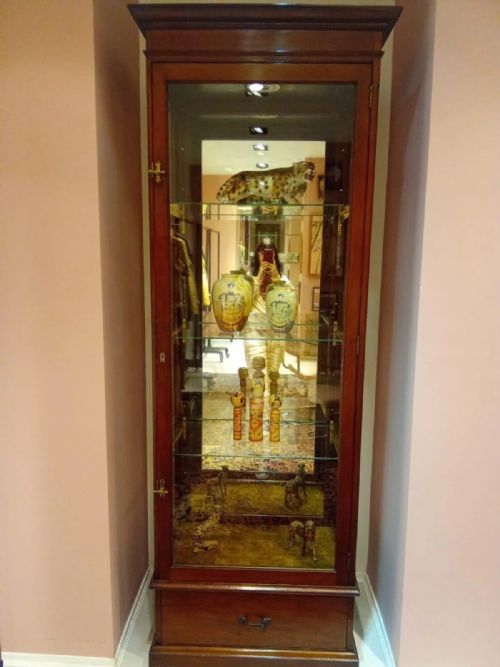
The most common examples on this page are mahogany and oak counter-top cabinets, alongside wall-hanging and floor-standing display units. Many feature glazed doors and panels to allow customers a clear view of the contents inside.
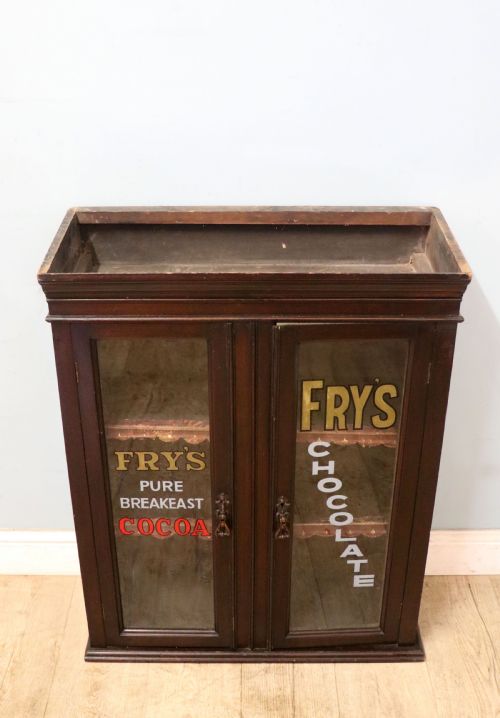
Commercial pieces often bear hand sign-written advertising for brands such as Fry's chocolate, Rowntree's cocoa, and Cadbury's, reflecting their original use in past shops and tea rooms.
How they were made
Cabinet makers constructed these display cases primarily using solid timber frames of mahogany, oak, walnut, and other hardwoods. Glass panels and shelves were integrated into the frames to create visible storage for goods.
Interiors frequently incorporate mirrored glass backs to reflect light through the display space, while brass fittings and gold leaf accents appear on select commercial examples.
Several cabinets retain their original commercial purpose, advertising chocolate and cocoa to customers who stopped by a century ago.
What varies in quality
The choice of primary timber and the robustness of the structural joinery separate standard commercial cabinetry from finer examples. Solid mahogany and walnut construction indicates a higher standard of manufacture than secondary hardwoods.
The Victorian Glass Shop Showcase Glossary
- Vitrine
- A glass-fronted display cabinet used for exhibiting objects or goods. This term often applies to refined commercial showcases.
- Counter-top cabinet
- A small display case designed to sit upon a shop counter for customer browsing. These units typically feature glazed tops or front panels.
- Sign-written
- Lettering painted by hand directly onto the timber or glass surface. This technique was used historically for period commercial branding.
- Haberdashery cabinet
- A multi-drawer or glazed unit originally utilised in cloth and drapery shops. These pieces often feature glass doors to display small wares.
Victorian Glass Shop Showcase: Frequently Asked Questions
Where were these shop showcases used?
These cabinets originally stood on counters or hung on walls within nineteenth-century shops, tea rooms, and commercial premises to merchandise small goods.
Merchants utilised them to keep merchandise visible yet secure from handling by customers.
How do I clean the glass?
Clean the glazed panels with a gentle glass cleaner applied to a cloth rather than directly sprayed onto the frame. This prevents moisture from damaging the historic timber and painted sign-writing.
Take care around hand-painted advertising so the historic pigment remains undisturbed.
Can I adjust the shelves?
Certain cabinets include adjustable glass shelves resting on timber or metal supports inside the glazed compartment. You can reposition these to accommodate items of varying heights.
Fixed shelves remain stationary as originally built into the cabinet structure.
How do I date these cabinets?
Dating relies on timber selection, construction methods, and the style of hardware fitted to the frame. Pieces from the Victorian and Edwardian eras show distinct joinery characteristics typical of nineteenth-century workshops.
Commercial lettering and brand names also help place the period of use.