
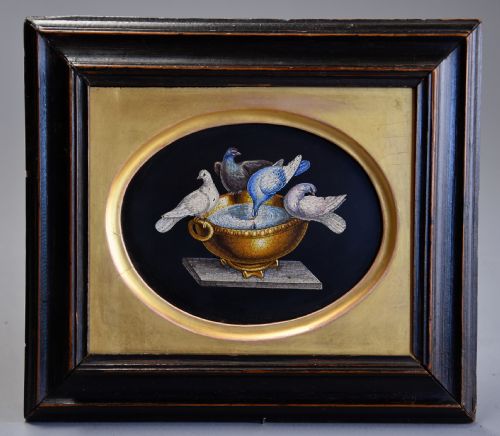


Victorian Glass Picture
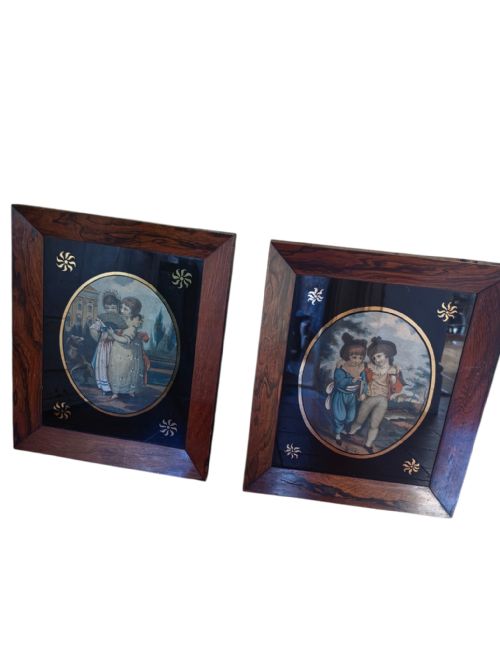
These Victorian glass picture examples bring together reverse painting, crystoleum and glazed frames, offering a glimpse into nineteenth-century domestic wall decoration and personal portraiture.
Victorian Glass Picture
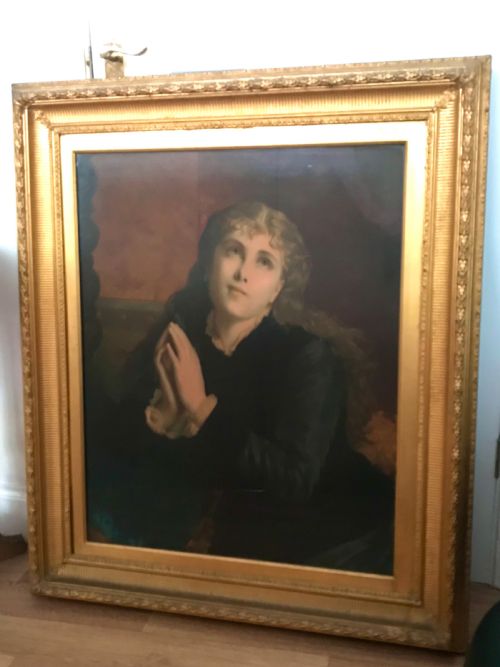
A victorian glass picture covers a diverse range of wall art, frames and small personal items where glass protects or forms the medium itself. Pieces on this page span reverse glass paintings, religious portraits, armorial crests, and layered crystoleoms.
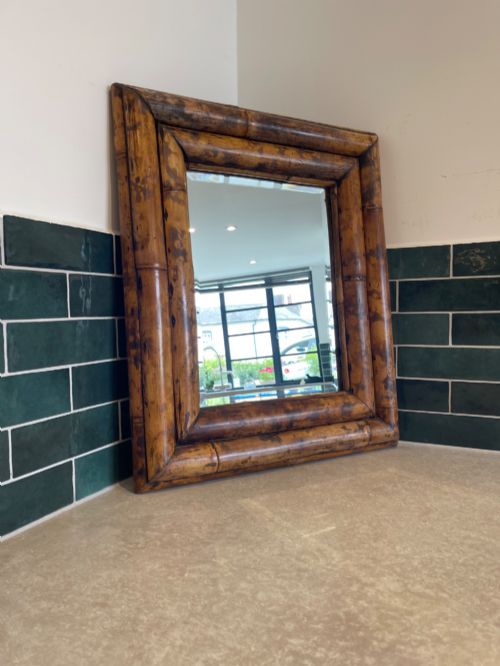
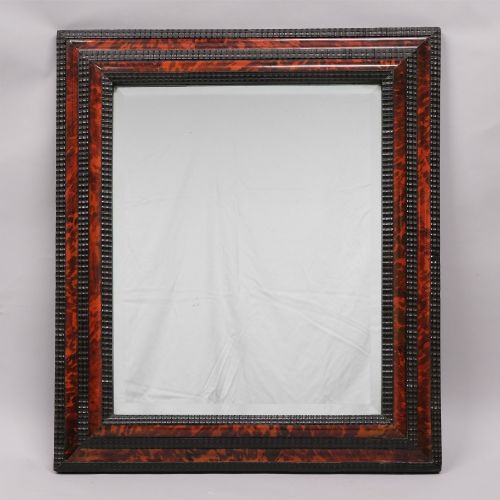
Buyers will encounter framed prints, wall mirrors, and glazed photo pendants alongside specialist items like reverse silhouette paintings on glass. The selection draws primarily from nineteenth-century production, incorporating varied revival styles.
Objects range from large decorative wall pieces to intimate jewellery like lockets and pendants set with faceted glass. The overarching connection is the use of glass as a primary display or protective medium for imagery.
Materials and construction methods
Makers utilised glass paired with supportive structures of wood, ebonised wood, canvas, and precious metals such as yellow gold. Frames often feature giltwood, gesso, or ormolu to enhance the visual weight of the display.
Techniques varied by form, including reverse painting, etching on mirror glass, and the crystoleum process where hand-tinted prints were applied to glass and thinned for further colouration. Smaller items like lockets relied on fine metalwork to secure glazed panels over miniature portraits or hair work.
One listed crystoleum depicts a courtship, preserving a Victorian romance securely beneath convex glass.
Distinctions in craftsmanship
Quality rests in the precision of the execution, whether in the delicate brushwork of a reverse painting or the careful application of translucent colours in a crystoleum. Finer examples display disciplined handling of detail rather than mechanical repetition.
The enclosure itself dictates much of the standard, with hand-carved giltwood and gesso frames or substantial ormolu mounts indicating superior commissioning compared to plain moulded surrounds.
Schweninger
The Victorian Glass Picture Glossary
- Crystoleum
- A specialised Victorian method of applying a colourless print to the inside of a glass convex sheet, then hand-painting it with oils before backing.
- Reverse glass painting
- An artwork painted directly onto the back of a glass panel so that the final image is viewed correctly through the front.
- Gesso
- A plaster-like mixture applied to wood frames and moulded into decorative relief patterns before gilding.
- Ormolu
- Gilded bronze or brass mounts used extensively on French frames and luxury decorative objects during the nineteenth century.
- Oleograph
- A mechanical colour lithograph produced on canvas to imitate an oil painting.
Victorian Glass Picture: Frequently Asked Questions
What is a crystoleum picture?
A crystoleum is a coloured photograph or print mounted face down on glass, having its paper backing rubbed away until thin, and then hand-painted from behind.
This layered technique gave the image a luminous depth that standard framed prints of the period lacked.
How do you clean antique glass pictures?
Cleaning requires extreme caution, particularly with reverse paintings and crystoleoms where the pigment sits directly on the inner surface and can lift easily.
Use a dry microfibre cloth only on the exterior glass and avoid applying any liquid or pressure near frame edges.
Are these pieces fragile?
The glass elements and delicate interior layers make these items vulnerable to impacts, rapid temperature changes, and moisture ingress.
Wall-hung pieces require secure fixings to prevent accidental falls, while pendants and lockets need careful handling during wear.
Can I replace the glass?
Original glass, especially convex or antique float plates with minor imperfections, forms part of the object's historical authenticity.
Replacing it with modern glass diminishes the character and can alter how light interacts with the hand-painted layers behind.