


Victorian Glass Oil Cruet
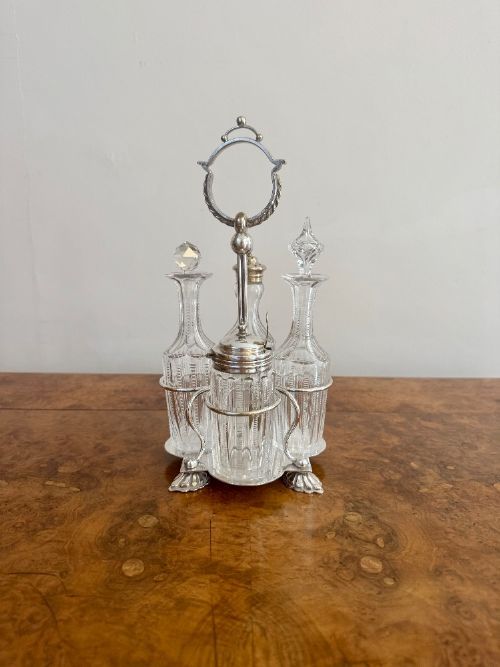
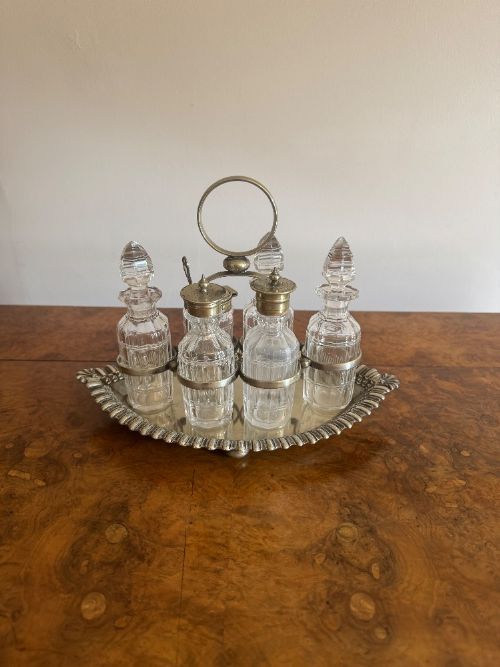
A victorian glass oil cruet brings functional elegance to the table, combining heavy cut glass with polished metal stands.
Victorian Glass Oil Cruet
When you search for a victorian glass oil cruet, you encounter a variety of tabletop vessels designed to hold condiments such as oil and vinegar. These pieces range from individual matched bottles to multi-bottle cruet sets housed within ornate silver plated or sterling silver stands.
The selections on this page span the Victorian and Edwardian eras, alongside a few Georgian and early examples. Most common are multi-bottle sets featuring cut glass bottles fitted with silver or silver plated mounts, though paired oil and vinegar bottles also appear.
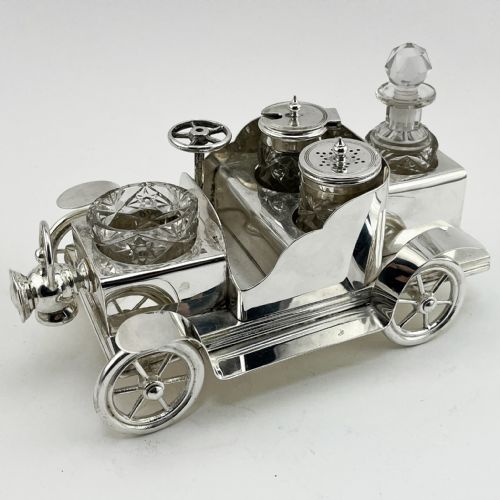
Forms vary from standard bachelor cruet sets to larger stands holding up to seven bottles, as well as occasional novelty and car cruet designs. Each piece reflects the formal dining habits of the nineteenth century, where condiments were served directly from the table.
Assessing quality
Quality rests upon the crispness of the glass cutting and the weight of the metal stand. Finer examples display deep, sharp facets on the glass and substantial silver plating or solid sterling silver mounts that remain steady in the frame.
The integrity of the complete set matters, as matched bottles belonging originally to the stand command greater interest than assembled replacements. Finer pieces also exhibit careful maker execution, particularly in the cast handle details and secure bottle collars.
Object forms include standalone cruet bottles alongside comprehensive condiment sets, bachelor stands, and novelty car frames.
Mappin Brothers·Walker & Hall·Elkington & Co·Wade Wingfield Wilkins·William Hutton & Sons
The Victorian Glass Oil Cruet Glossary
- Cruet set
- A matched collection of bottles and jars for holding table condiments, usually fitted into a dedicated metal stand. These sets typically included receptacles for oil, vinegar, mustard, and pepper.
- Bachelor cruet
- A smaller scaled cruet set designed for one or two diners rather than a large household. These compact pieces often held four or fewer bottles.
- Silver plate
- A layer of silver fused to a base metal such as copper or Britannia metal. This technique provided the appearance of solid silver at a more accessible cost during the nineteenth century.
- Sterling silver
- An alloy containing ninety-two point five percent silver by mass, with the remainder consisting of other metals for durability. British pieces of this standard typically bear the hallmark lion passant.
- Gilt
- A thin layer of gold applied to the surface of silver or base metal to provide a rich golden colour. It is frequently found on the interior mounts or rims of condiment bottles.
Victorian Glass Oil Cruet: Frequently Asked Questions
What is a victorian glass oil cruet used for?
These vessels were placed upon the dining table to hold and dispense table oils and vinegars during meals. Diners would use them to dress salads or season dishes to personal taste.
The metal stands allowed servants or hosts to transport multiple condiment bottles around the table safely and easily during dinner service.
How do I clean an old silver plated cruet stand?
Silver plate requires gentle cleaning with a soft cloth and a specialised silver polish formulated to preserve the metallic layer. Avoid harsh abrasive cleaners that can wear away the thin silver coating over time.
The glass bottles can be washed separately in warm soapy water, taking care around any original silver collars or mounts.
Are these glass bottles dishwasher safe?
Original antique glass is delicate and prone to thermal shock or surface hazing, making machine washing unsuitable. Hand washing in lukewarm water with mild detergent is the safest method.
Harsh dishwasher detergents can also damage nineteenth century silver mounts and weaken any cemented bottle collars.
How can I tell a Victorian cruet from an Edwardian one?
Victorian pieces often display heavier, more ornate ornamentation including gothic influences or elaborate figural designs. The manufacturing techniques and hallmark date letters help pinpoint the exact decade of production.
Edwardian items tend to lean towards lighter forms and refined silver plating, reflecting changing tastes at the turn of the twentieth century.
Can I use these cruets for daily dining?
Many of these pieces remain robust enough for regular use provided they are handled with care and washed by hand. The glass and metal mounts are durable when treated with respect.
However, some collectors prefer to display them as decorative items to preserve their antique condition and prevent accidental damage.