




Victorian Glass Hip Flask
A Victorian glass hip flask is a pocket vessel for spirits, combining cut glass and silver mountings for outdoor pursuits.
Victorian Glass Hip Flask
A Victorian glass hip flask serves as a portable container for spirits, often utilised during outdoor pursuits, shooting events and travel. The pieces appearing here span the late nineteenth century and the Edwardian period, typically taking an oval or pocket-friendly form.
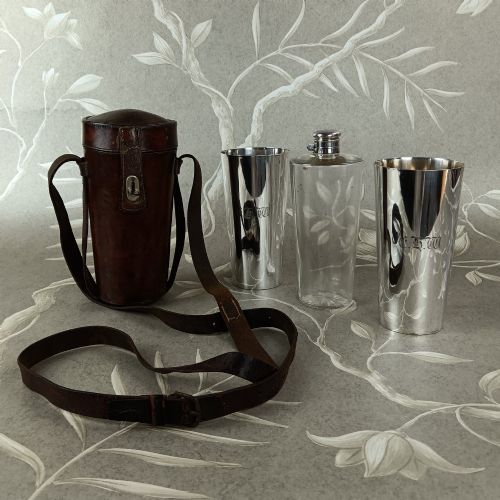
Collectors encounter various configurations, including standard glass bodies with silver mounts, examples featuring removable cups at the base, and more complex campaign sets complete with beakers. The materials combine transparent or cut glass with sterling silver, silver plate and occasionally leather casing.
Originating primarily from English workshops and assay offices in London, Birmingham, Sheffield and Glasgow, these spirit flasks reflect the social habits of the period. Buyers selecting a Victorian glass hip flask seek both a functional antique and a tangible piece of barware history.
How They Were Made
Makers produced the glass bodies using heavy-duty pressing or intricate hand-cutting techniques, creating clear, star-cut or textured surfaces that resisted breakage during transit. This robust glass construction ensured the vessel could withstand the rigours of field sports and daily carriage.
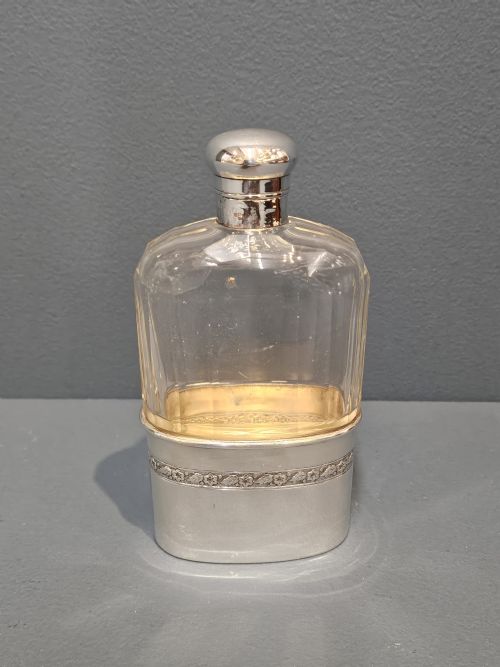
Silversmiths fashioned the mounts, caps and removable cups from sterling silver or silver plate, often applying a hammered finish, floral engraving or gilt interior. These metal components were engineered to secure tightly against the glass neck, preventing leaks while fitting snugly in a pocket.
Listings feature items dated from 1870 through the Edwardian period, incorporating sterling silver, cut glass, leather and silver plate.
What Varies in Quality
The distinction between standard examples and superior pieces rests on the depth of the glass cutting and the weight of the silver mounts used by the maker. Heavier gauge silver and elaborate internal gilding on the removable cup indicate a higher grade of production.
The presence of crisp hallmarks, maker marks from renowned silversmiths and complete accompanying sets, such as nesting beakers, elevate the standing of a flask. Engraved detailing and the overall clarity of the cut crystal body further separate utilitarian items from luxury pieces.
James Dixon & Sons·Asprey London·Sampson Mordan
The Victorian Glass Hip Flask Glossary
- Removable cup
- A metal drinking vessel fitted to the base of a hip flask that slides off for consuming spirits. It adds height and utility to the piece.
- Sterling silver gilt
- Silver that has been coated with a thin layer of gold on the interior surfaces. This treatment prevents the spirit from reacting with the base metal.
- Cut crystal
- High-clarity glass shaped by grinding geometric or floral patterns into the surface. The faceting catches the light and adds grip.
- Assay office
- An official body responsible for testing the purity of precious metals and stamping them with hallmarks. Marks from London, Birmingham, Sheffield and Glasgow appear frequently.
- Campaign set
- A portable collection of spirit flasks and matching beakers housed together for travel. These configurations were designed for military officers and travellers.
Victorian Glass Hip Flask: Frequently Asked Questions
How do I use a Victorian glass hip flask?
These flasks are designed to hold spirits securely in a pocket or bag during outdoor activities. Ensure the screw cap or bayonet closure is tightly sealed before carriage.
When pouring drinks, the removable base cup can be detached for immediate use. Hand washing is recommended to preserve the vintage glass and silver components.
Were these flasks used by the military?
Many campaign spirit flasks and sets were produced specifically for officers and travellers on the move. Their robust construction and fitted beakers made them practical for field use.
Civilian sportsmen also carried similar pocket flasks during hunting, shooting and equestrian events across the nineteenth century.
How do I date a silver mounted flask?
Dating relies heavily on the assay office hallmarks stamped into the silver mounts and caps. These marks indicate the specific town and year of testing.
Stylistic elements like floral engraving, cut glass patterns and maker marks also help narrow down the period of manufacture between 1870 and the Edwardian era.
What is the difference between silver and silver plate?
Sterling silver consists of solid precious metal meeting official purity standards, bearing standard hallmarks including a lion passant. Silver plate involves a thin layer of silver bonded to a base metal core.
Solid silver flasks generally carry higher status among collectors and retain their material value over time.