


Victorian Glass Front Sideboard
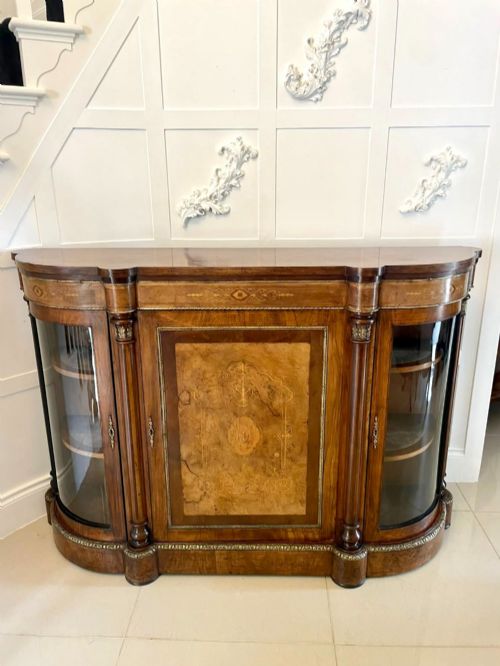
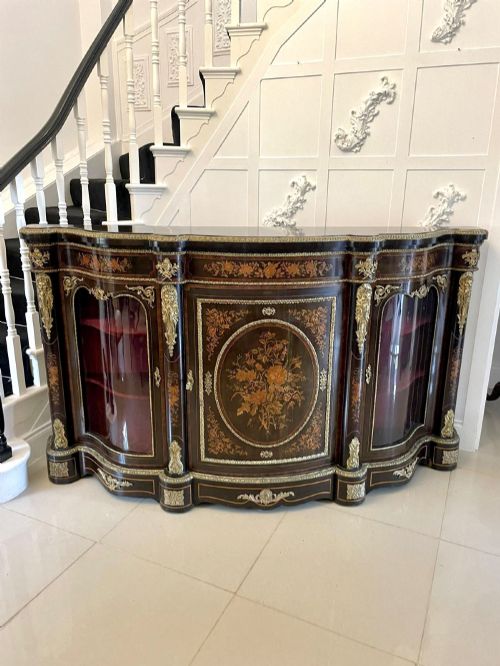
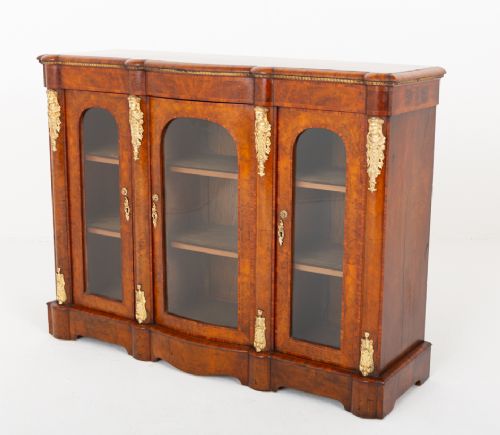
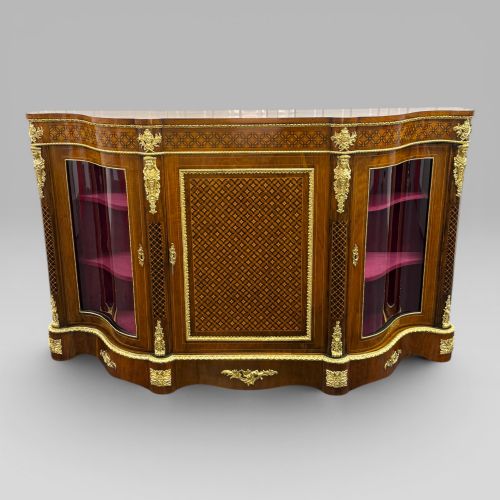
A victorian glass front sideboard delivers grand nineteenth-century display space through serpentine curves and rich burr walnut veneers.
Victorian Glass Front Sideboard
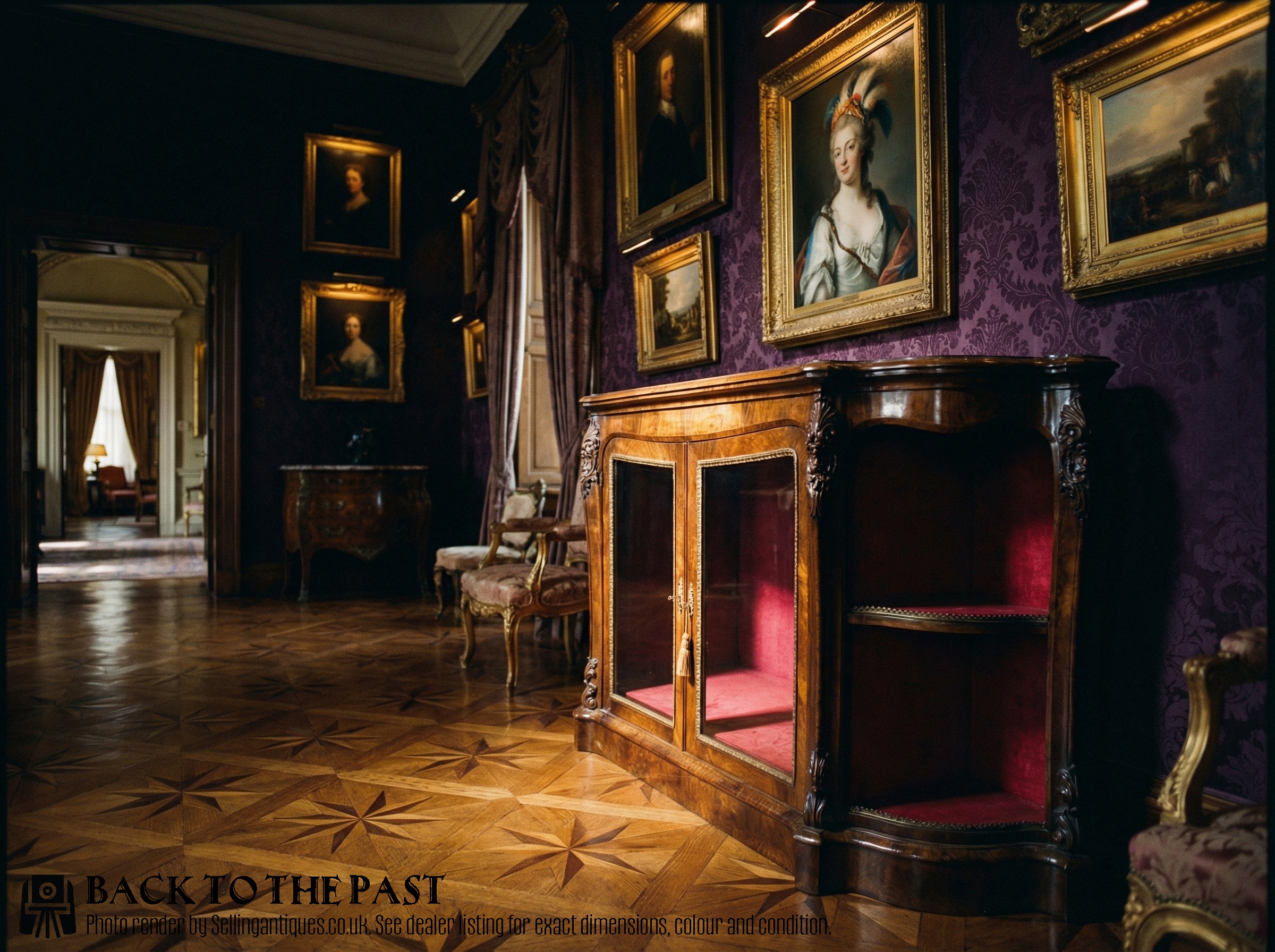
A victorian glass front sideboard encompasses sophisticated credenzas, side cabinets, and display pieces designed for formal reception rooms. These furnishings emerge predominantly from the Victorian period, featuring central glazed doors flanked by curved side cupboards.
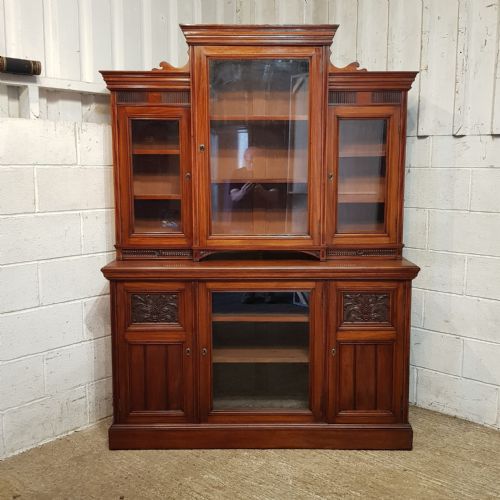
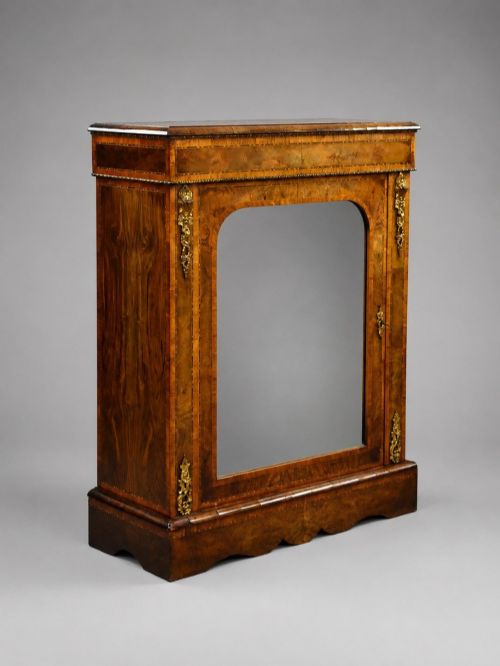
Makers of the era utilise forms such as the credenza and pier cabinet to showcase fine ceramics and books behind glass panes. The inventory leans heavily towards burr walnut and rosewood constructions shaped with serpentine or bow fronts.
How they were made
Cabinet makers construct these pieces using solid foundational timbers faced with highly figured burr walnut, rosewood, and mahogany veneers. Artisans apply intricate floral marquetry inlay alongside cast ormolu mounts to enrich the architectural surfaces.
Glazing techniques secure curved and flat glass panels within polished timber frames, while brass details and velvet linings complete the interior presentation.
Materials recorded across the current selection include brass, ormolu, velvet linings, and ebonised wood alongside glazed panels.
What varies in quality
The choice of veneer figuring and the precision of the marquetry inlay set superior examples apart from standard workshop output. Dense burr walnut and meticulous floral detailing indicate high craftsmanship.
The integration of heavy cast ormolu mounts and well-executed serpentine shaping elevates the sculptural presence of the cabinet. Finer pieces demonstrate seamless door alignment and balanced proportions across the entire front elevation.
Maison Gagneau·Edwards and Roberts
The Victorian Glass Front Sideboard Glossary
- Credenza
- A low cabinet, often featuring glazed central doors and curved side compartments, designed for display and storage in Victorian reception rooms.
- Ormolu
- Gilded bronze mounts cast in decorative scrollwork or foliate motifs, applied to enrich the corners and borders of furniture.
- Marquetry
- Decorative patterns formed by fitting together thin slices of various coloured woods and veneers onto a solid surface.
- Serpentine
- A furniture front characterised by a wavy contour, curving outward in the centre and inward at the sides.
- Burr walnut
- Wood taken from the gnarled growths of a walnut tree, yielding a swirling and highly decorative grain pattern.
Victorian Glass Front Sideboard: Frequently Asked Questions
What rooms suit a victorian glass front sideboard?
These low cabinets suit formal dining rooms, grand hallways, and spacious living areas where display and surface space are required.
Their elongated proportions allow them to sit against large walls while offering interior shelving behind glass doors.
How do I care for burr walnut veneer?
Keep these timber surfaces away from direct sunlight and excessive heat fluctuations to prevent the delicate veneer from drying or cracking.
Apply a traditional wax polish occasionally and buff gently with a soft cloth to maintain the natural lustre of the wood.
What is the difference between a credenza and a side cabinet?
A credenza typically denotes a low-profile piece originating from mid-nineteenth-century designs featuring glass-fronted compartments flanked by curved side cabinets.
Side cabinets encompass a broader range of upright storage forms, including mirror-back designs and bookcase variations.
How do I identify a mid-nineteenth-century piece?
Examine the construction materials, noting the widespread use of figured burr walnut, rosewood, and hand-cut marquetry popular during the Victorian era.
Stylistic markers such as serpentine fronts, ormolu mounts, and Aesthetic Movement influences also point toward this period of manufacture.